
Deck Contractors in Aurora
Aurora is flat, open, and east-facing, and that changes everything about how a deck should be built.
Out past E-470 — Southshore, Tallyn’s Reach, Painted Prairie, The Aurora Highlands — the subdivisions are new and the trees are young. There is no canopy. There is nothing to break the wind coming across the plains. A west-facing deck in one of these neighborhoods takes direct, unfiltered sun from mid-afternoon until sundown, at a mile of elevation, with nowhere for anyone to sit. Homeowners here don’t call us because they want a deck. They call because they have one and cannot use it after 3 p.m.
Underneath, there’s a second problem. The eastern metro sits on some of the most active expansive clay in Colorado — soil that swells when it takes on water and shrinks when it dries, moving hard enough to lift a foundation. It will absolutely move a deck footing that wasn’t engineered for it. Sun and soil. Get both right and you have a deck that lasts. Miss either one and you have an expensive structure nobody sits on.


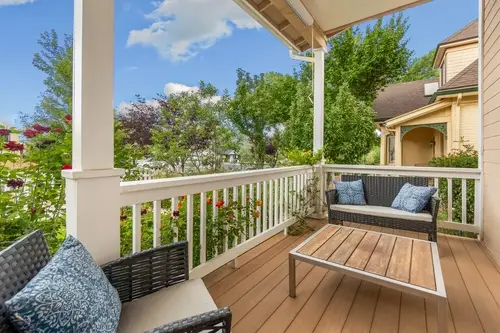
Custom Deck Building in Aurora
On most Front Range projects, shade is a feature. In Aurora it’s frequently the entire brief.
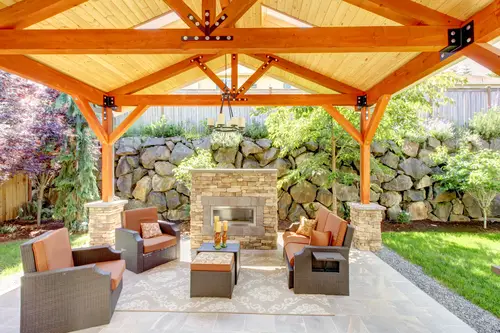
We ask one question early and it reorganizes the whole design: when do you actually want to be out here? If the answer is “evenings,” and your back yard faces west across open ground, then an uncovered deck is a mistake no material selection can fix. The design has to start with the roof.
That opens up real choices. A full attached cover extends the roofline and gives you a genuine outdoor room — usable in rain, usable in July at 5 p.m. A louvered pergola lets you dial the sun in and out by season, which suits Colorado better than people expect, since the same deck that’s brutal in August is pleasant in October if you can open it back up. A partial cover — roofed over the seating, open over the grill — is often the smart middle, and it’s cheaper than covering everything.
On the older side of Aurora — Hoffman Heights, Village East, Aurora Hills, the neighborhoods closer in — the equation flips. Those lots have 50 years of tree growth on them. Shade isn’t the problem; the trees are the design partner. Here we’re working around root systems, planning for leaf debris in the board gaps, and often replacing a deck that’s simply reached the end of its service life.
As custom deck builders in Aurora, we design for the lot you have, not the one in the brochure. Where a deck should tie into a patio or fire area, we coordinate it as one plan through our hardscaping services.
Decking Materials for Aurora Sun
In most of the metro, “composite gets hot” is a footnote. On an unshaded, west-facing Aurora deck, it’s a decision that determines whether the deck gets used barefoot.
- Composite — Excellent material: no annual staining, strong resistance to fading, moisture, and splintering. But on full exposure, color choice is a functional spec. Dark boards absorb serious heat in direct Colorado sun. Lighter tones run meaningfully cooler. If you’re set on a dark composite deck in an unshaded east Aurora back yard, we’ll build it — but we’ll want to talk about a cover first, because the two decisions are connected. Composite also requires tighter joist spacing than wood, which is a framing cost some bidders quietly omit.
- Cedar — Runs cooler underfoot than dark composite and still looks better than anything imitating it. Naturally rot-resistant. Wants resealing every couple of years, and unfiltered Aurora UV will gray it fast if you skip that.
- Redwood — Cedar’s strengths, richer color, higher price.
- Pressure-treated — The value option and a legitimate one, and it’s what’s holding the whole thing up regardless of the surface. We buy it dry so it doesn’t twist on you by August.
We aren’t a dealer for any one brand, so the tradeoffs you get — heat, cost, upkeep, service life — are the real ones.
A DECK COMPANY IN AURORA THAT ANSWERS ITS OWN PHONE
The industry’s common failure isn’t bad carpentry. It’s a company that sells the job, then hands it to whichever subcontracted crew is free that week. The salesperson who made promises is gone. The crew never heard them. You learn this in week two.
- Ricardo is on your build. Thirty-plus years of structural experience, personally checking the footings and the ledger — the work you’ll never see once the boards are down, and the only work that determines whether this deck is still solid in fifteen years.
- In-house crews, demo to walkthrough. The same people.
- A proposal you can actually read. Line-item scope, named materials, a real timeline. Change orders get approved before the work, not after.
- We handle the City of Aurora — permits, drawings, inspections — plus HOA and metro district architectural review, which in the newer master-planned communities can take longer than the city does.
- Licensed and insured, proof on request. Ask every deck contractor in Aurora for their certificate of insurance before you sign. How quickly it shows up tells you most of what you need to know.
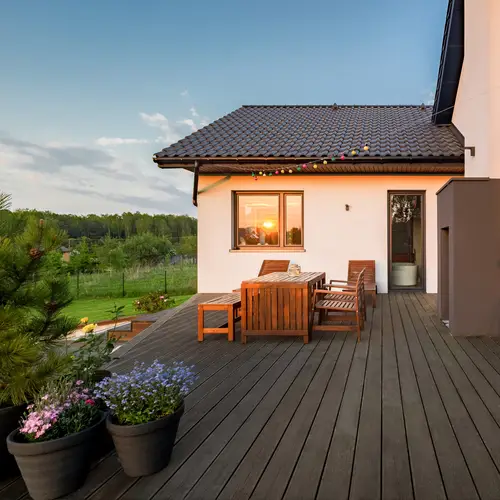
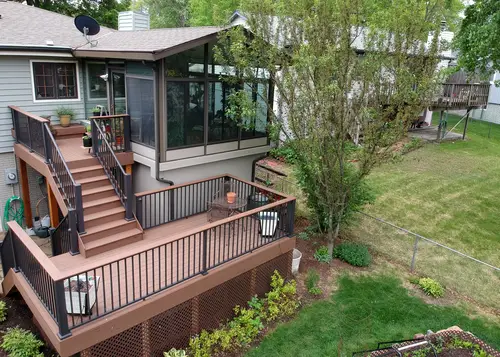
Recent Work Across Aurora and the East Metro
A recent homeowner described our team as courteous and thorough on a balcony and deck project, and specifically noted how well the crews were coordinated by the project manager.
That’s the consistent theme in our reviews — crews that arrive when they said they would, keep the site clean, and finish on the timeline they quoted. It’s not a flashy reputation. It’s the one homeowners tell us they couldn’t find anywhere else. Explore our recent outdoor projects.
Deck Contractor Services in Aurora
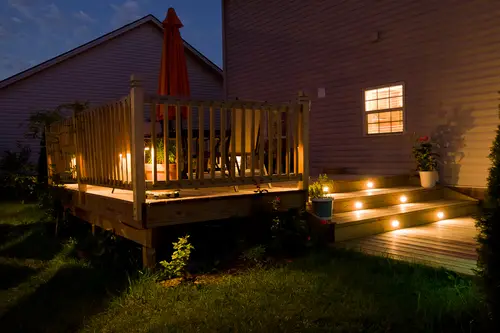
Custom Deck Construction
Designed around sun exposure, lot orientation, and how you actually want to use the space.
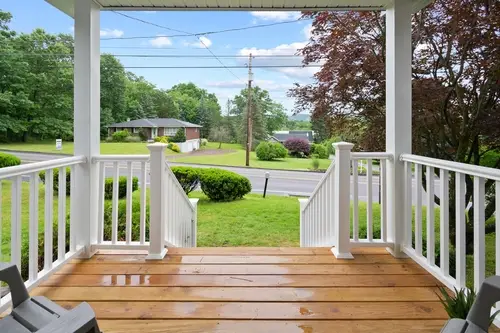
Composite Deck Installation
Footings to railing, engineered for expansive clay and permitted through the City of Aurora.
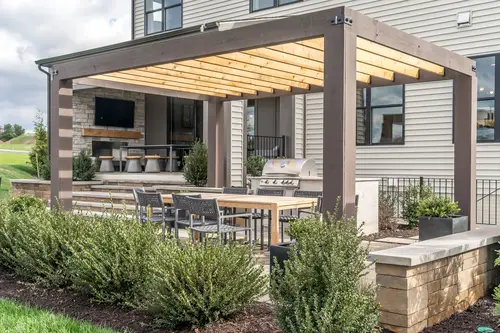
Builder-Grade Deck Expansion
Outgrown the small deck your house came with? We extend, upgrade, and cover.
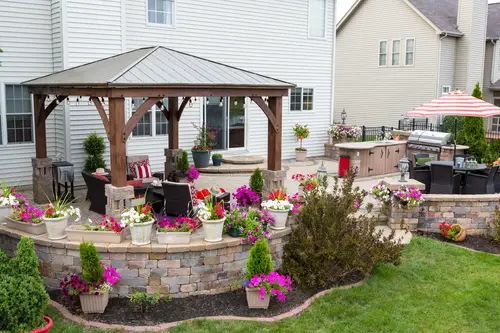
Deck Railings and Outdoor Stairs
Cable, powder-coated metal, composite, and wood. Code-compliant, and built to hold up to full sun.
Covered Decks & Pergolas
The most-requested build in Aurora, and for good reason. Shade is what makes an east-metro deck usable.
Outdoor Living Features
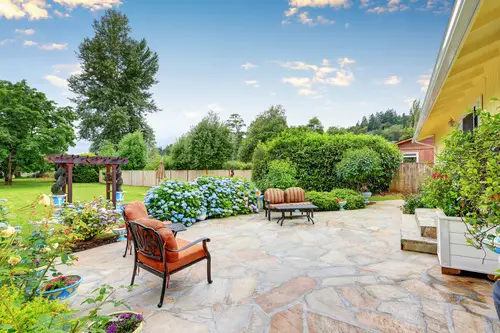
Built-in seating, deck lighting, privacy screening, outdoor kitchens, fire features.
How an Aurora Deck Project Runs
Consultation and Site Assessment
We walk the property and read the things that decide the build: lot orientation and afternoon sun angle, drainage and downspout discharge, soil conditions, existing structure, and access for materials. We ask your budget honestly and tell you what it buys.
Design and Itemized Proposal
A layout and a written scope with materials, timeline, and price. If there's a covered option and an uncovered one at two price points, you see both, with the honest tradeoff.
City of Aurora Permits & HOA Approval
We prepare drawings and manage submission, including HOA and metro district architectural review in the newer communities. We start that early because it's usually the long pole.
Professional Deck Construction
Crews arrive when we said. Site cleaned daily. One point of contact who actually responds.
Walkthrough and Care Guidance
We fix anything that isn't right before calling it done, then give you a maintenance plan specific to your materials.
Deck Installation in Aurora: Engineered for Expansive Clay
Expansive clay moves, and it moves with real force. When the bentonite-bearing clays common across the eastern metro take on water, they swell. When they dry out, they shrink back. That cycle is powerful enough to crack foundations, and a standard shallow deck footing has no answer for it. What you get is a deck that’s level in year one, has a noticeable dip by year four, and a ledger slowly tearing at the house by year eight — because the house isn’t moving and the deck is.
How we build against it:
- Footings sized and set for the actual soil, not the minimum. On active clay lots, that can mean going deeper — sometimes to drilled piers — to reach stable bearing beneath the zone that’s cycling wet and dry. We assess in the hole, not on the plan.
- Drainage away from the structure, aggressively. Expansive soil problems are water problems. Downspout discharge, grading, and how water leaves your deck’s footprint are structural concerns here, not landscaping preferences.
- Framing that tolerates differential movement rather than fighting it into failure.
The other fundamentals still apply. Footings below the frost line — Colorado’s freeze-thaw will heave anything shallow. Ledger through-bolted to code and flashed above and behind, because that connection is responsible for a disproportionate share of catastrophic deck failures. Hot-dip galvanized or stainless hardware, since modern treated lumber corrodes the wrong fasteners from the inside. Joist spacing sized for wet spring snow, tightened further under composite.
Permits: Aurora spans three counties — Arapahoe, Adams, and a slice of Douglas — but building permits go through the City of Aurora’s building division regardless of which county your address technically sits in. That trips up contractors who don’t work here often. We file, we schedule inspections, and we build to pass the first time.
Aurora produces two distinct jobs, and they’re not the same conversation.
- The builder-grade deck. If you bought new construction in the last decade or so, there’s a decent chance your house came with a small, plain deck that was the cheapest thing that satisfied the plan. It’s often barely large enough for a table. Owners outgrow it in a season. This isn’t a failure — it’s an undersized starting point, and the fix is expansion: extending the footprint, adding a covered section, replacing the builder railing with something you’d actually want to look through. Sometimes the existing structure gives us something to build from. Often it’s cheaper to start clean than to graft onto framing that was never sized for what you now want.
- The end-of-life deck. In the older neighborhoods, we’re looking at structures 30 or 40 years old, built to codes that have since changed in meaningful ways.
Not every old deck needs demolition. If the substructure is genuinely sound, resurfacing costs a fraction of a rebuild and we’ll tell you so. But we inspect the frame first — new composite over failing framing is the worst outcome available, because it looks solved and isn’t.
Building Across Arvada and the Northwest Metro
We build throughout the surrounding east metro — Centennial, Parker, Commerce City, and Green Valley Ranch — and across the wider Denver metro area.
Aurora is the third-largest city in Colorado and it does not build the same way from one end to the other. A deck behind a 1960s home off Colfax and a deck on a new build near the reservoir are two different engineering problems. We treat them that way.
Frequently Asked Questions
Almost always — particularly for anything attached to the house or raised above grade. Aurora spans Arapahoe, Adams, and a portion of Douglas County, but permits go through the City of Aurora’s building division regardless of your county. We handle the application and the inspections.
Yes, and it’s more acute in the eastern metro than most homeowners realize. Expansive clay swells when wet and shrinks when dry, with enough force to move structures. A deck footing set shallow into that zone will heave and settle over time, which shows up as an uneven deck and, eventually, stress at the ledger where it meets your house. The fix is reaching stable bearing below the active zone and managing water away from the structure. Ask any bidder how they’re handling soil. If they don’t have an answer, that’s the answer.
Cover part of it. On a west-facing lot with no mature trees, no decking material will save you — the surface isn’t the problem, the sun is. An attached cover, a louvered pergola, or even a partial roof over the seating area is what turns a deck you look at into a deck you use.
Usually. Sometimes we can extend the existing footprint; sometimes the original framing was sized so minimally that starting clean is both better and cheaper than grafting onto it. We’ll look and tell you which.
One to three weeks of active construction for most residential decks. The longer variable is before that — city permit review plus HOA or metro district architectural approval, which in the newer master-planned communities can add several weeks. We build that into the timeline we quote.
Let's Look at Your Lot
Whether you need shade over a west-facing deck near the reservoir, a rebuild behind an older home in central Aurora, or an honest answer about the soil under your back yard, it starts with someone standing on the property.
Ricardo will walk your lot, tell you what’s actually buildable there, and give you a real number.