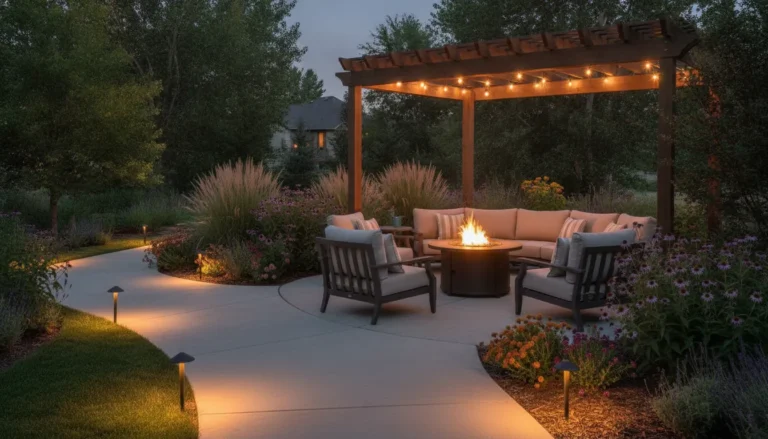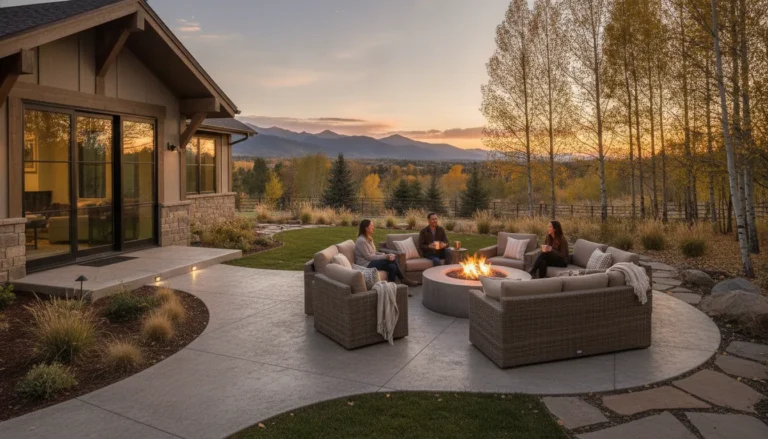

Concrete patio finish options shape more than the appearance of an outdoor living space. The surface affects traction, how the patio meets the rest of the yard, how well it fits your home’s style, and how comfortable it is to use through Denver Metro Area sun, snow, and seasonal weather. Comparing the finish before construction helps homeowners and property owners choose a surface that supports the way they actually plan to use the patio.
Talk with Faros Construction Services about your concrete patio plan.
What are the main concrete patio finish options?
The main concrete patio finish options include broom texture, exposed aggregate, stamped patterns, integral color, salt texture, smooth trowel work, and decorative saw cuts. Each creates a different combination of appearance, traction, maintenance needs, and compatibility with the surrounding outdoor living design.
A finish is the treatment applied to the visible surface of the slab. It is not a substitute for sound site preparation, correct drainage, appropriate joints, or a concrete mix selected for the project. A beautiful surface still needs a well-planned base and careful installation beneath it.
How does a broom finish perform on a patio?
A broom finish creates shallow, consistent lines across the concrete while it is still workable. It is one of the most practical choices for a patio because the texture gives the surface visual movement and useful traction without competing with furniture, landscaping, or architectural details.
- Appearance: Fine linear texture provides a clean, traditional look that works with many home styles.
- Traction: The texture can help provide a more secure walking surface than a very smooth finish, especially when the patio is damp.
- Design flexibility: Broom direction, border details, joint layout, and color can make the finished slab feel more intentional.
- Everyday use: The relatively quiet pattern works well beneath dining sets, lounge furniture, grills, and play areas.
For a Denver Metro Area patio that needs to support frequent gatherings and straightforward maintenance, a well-executed broom finish is often a dependable starting point. The best broom texture depends on the intended use, slope, edge conditions, and the look the property owner wants to create.
When is exposed aggregate a good fit?
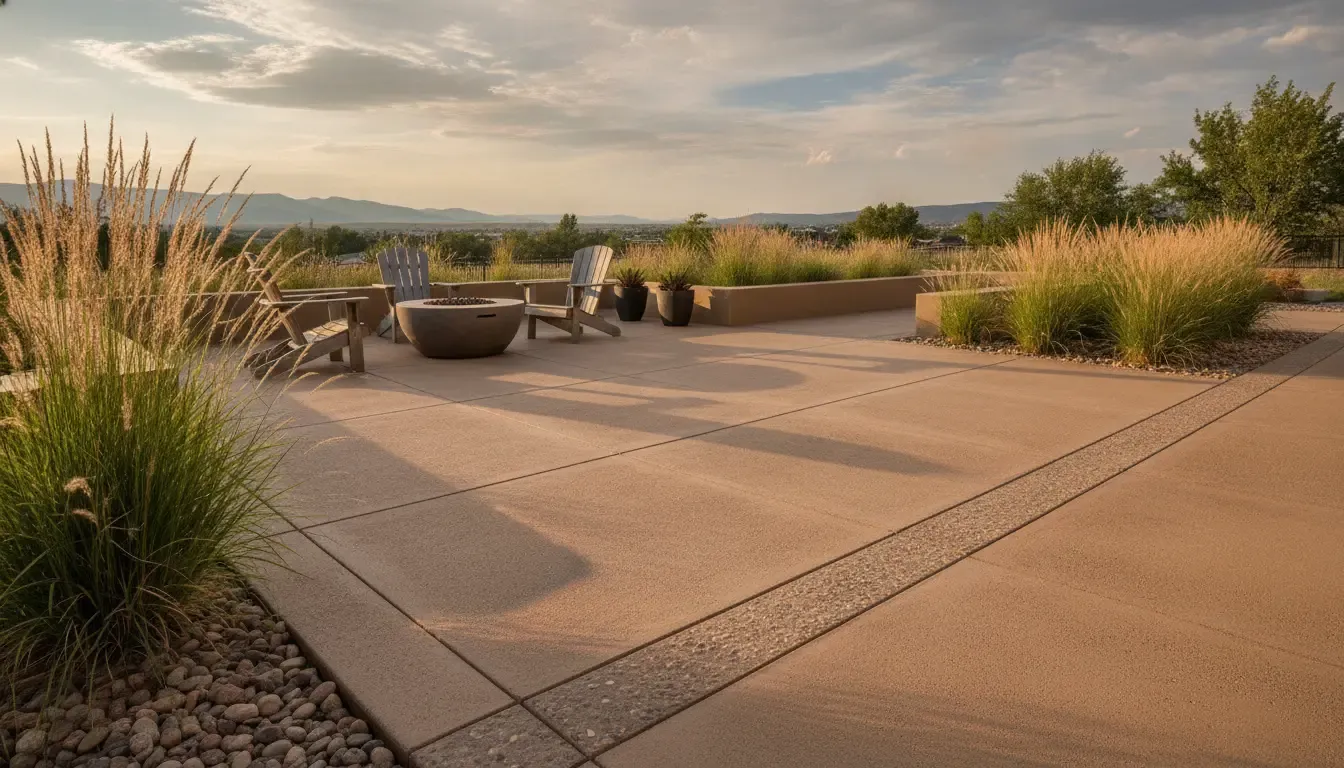
Exposed aggregate reveals selected stone near the top of the slab, creating a textured surface with a natural, dimensional appearance. It can connect a concrete patio to stone walls, planting beds, gravel accents, or other hardscape elements without trying to imitate a different material.
The visual character of exposed aggregate depends on the stone blend, color balance, exposure level, and finishing technique. A subtle blend may support a calm, contemporary setting, while a stronger aggregate can become a focal point around an outdoor kitchen or entertaining area.
- It can provide strong visual texture without a repeated stamped pattern.
- Its varied surface can help disguise small amounts of everyday soil and debris.
- It works well when the patio should feel connected to natural landscape materials.
- Its texture should be reviewed in person or through representative samples before selection.
Exposed aggregate is not automatically the right answer for every household. Consider how bare feet, rolling furniture, pet use, snow removal, and cleaning will interact with the texture. The surface should feel appropriate for the people and activities that will use the patio most.
What does stamped concrete add to outdoor living design?
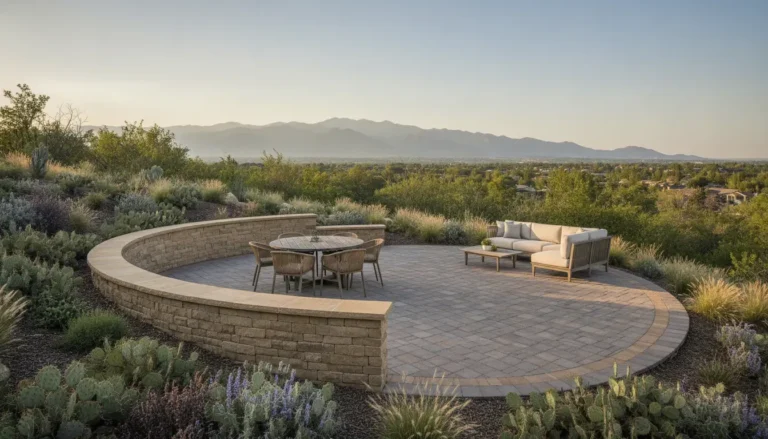
Stamped concrete uses tools and patterns to create a surface that resembles slate, stone, brick, or other visual references. It can give a large patio a more structured design language while keeping the layout unified instead of dividing it into many separate pieces.
Stamping is most successful when the pattern supports the architecture and does not overwhelm the rest of the backyard. A restrained border, a simple field pattern, or a carefully chosen color variation may provide enough definition without making the patio feel busy.
Plan the pattern around real use
Furniture placement, walking routes, grill locations, steps, doors, and transitions should be considered before the pattern is chosen. Repeating lines that run directly into a doorway or an awkwardly placed post can make the finished patio look less intentional. A thoughtful layout keeps the decorative treatment aligned with how people move through the space.
Review color and texture together
Stamped surfaces often combine a base color with accents or release color. The goal is not to create a surface that looks identical to natural stone from every angle. It is to create a durable, coordinated finish that fits the home, planting, furnishings, and surrounding hardscape.
Faros can also help coordinate a patio with broader outdoor living spaces, where the concrete is one part of a larger plan for seating, cooking, shade, planting, and circulation.
Bring your preferred patio look to Faros for a practical finish and layout discussion.
Are salt, smooth, and textured finishes right for a patio?
Salt, smooth, and lightly textured finishes each create a different surface character, but they should be evaluated for use rather than selected from appearance alone. A finish that looks appealing in a photograph may not feel right under patio chairs, near a pool or water feature, or on a route that becomes wet during regular use.
Salt finish
A salt finish is made by pressing rock salt into fresh concrete and removing it after the surface has set. The result is a pattern of small indentations with a gently weathered character. It can offer more visual interest than plain concrete while remaining quieter than a strong stamped pattern.
Smooth trowel finish
A smooth finish can create a clean, minimal appearance that works with modern architecture. Because the surface has less texture, the design team should review traction, slope, exposure to moisture, and the locations where people will enter and exit the patio. Smooth does not mean maintenance-free, and it may not be the best choice for every use area.
Light texture and custom tooling
Subtle tooling, decorative saw cuts, borders, and controlled texture can add structure without turning the patio into a highly patterned surface. These details are useful when the homeowner wants a custom look but prefers the concrete to remain a supporting element in the outdoor design.
How should Denver Metro Area homeowners choose a finish?
The right finish starts with the patio’s use, setting, and connections to the rest of the property. A finish should look good on day one and continue to make sense as furniture, planting, weather, and daily routines change.
- Start with the primary activities. Decide whether the space is mainly for dining, lounging, grilling, entertaining, play, or a combination of uses. The answer affects how much texture and visual complexity is helpful.
- Study the surrounding materials. Look at siding, masonry, roofing, fencing, retaining walls, steps, and landscape materials. A coordinated finish usually feels more lasting than one chosen in isolation.
- Consider traction and comfort. Think about wet shoes, bare feet, children, pets, snow, and furniture movement. Ask how the texture will feel and how it will be cleaned.
- Review color in the actual setting. Concrete color can read differently in direct sun, shade, and beside nearby materials. Samples are more useful when viewed outdoors rather than only on a small screen.
- Plan drainage at the same time. Surface appearance cannot correct water that moves toward a doorway or remains near the foundation. Slope, edges, downspouts, and transitions belong in the early plan.
- Account for seasonal movement. Denver Metro Area projects should be planned with local weather, soil conditions, construction timing, joints, curing, and surface protection in mind. A qualified contractor can explain which details apply to the specific site.
These decisions are easier when the patio is reviewed as part of the property instead of as an isolated slab. Faros’ concrete contracting service can be part of a coordinated plan for durable outdoor improvements.
What installation details protect the selected finish?
The visible finish is only one part of a successful patio. Site assessment, excavation, base preparation, reinforcement where appropriate, formwork, slope, joints, placement, curing, and sealing all influence how the finished surface performs.
Before work begins, confirm how the patio will meet the home, steps, walkways, lawn, planting beds, drainage features, and other hardscape. Edges that are clear on the plan are easier to build cleanly. Transitions should also account for everyday movement, furniture, maintenance equipment, and seasonal conditions.
Timing and curing matter too. Concrete needs appropriate care while it develops strength, and the surface should not be treated as ready for every activity immediately after placement. The project plan should explain access, protection, cleaning expectations, and any ongoing care recommended for the selected finish.
For homeowners comparing options, the American Concrete Institute’s Guide to Decorative Concrete describes decorative methods, surface preparation, curing, sealing, and protection. The Portland Cement Association also provides a guide to finishing concrete with color and texture. These resources are useful background, while the project-specific recommendation should come from a site review.
Which finish works best for everyday outdoor living?
There is no single best finish for every patio. The strongest choice is the one that balances appearance, traction, comfort, maintenance, drainage, and the way the space will be used in the Denver Metro Area.
- Choose broom texture when you want dependable traction and a versatile, understated surface.
- Choose exposed aggregate when natural stone texture and landscape connection are central to the design.
- Choose stamped concrete when a defined pattern and architectural character are important.
- Choose salt finish when you want gentle texture and a lightly weathered look.
- Choose smooth or lightly textured work when a clean modern appearance is important and the site conditions support the choice.
- Add integral color or saw-cut details when the patio needs more definition without a fully patterned surface.
Many patios combine treatments. A more textured field can be paired with a quieter border, or a consistent base can be organized with saw cuts that reflect the shape of the home. The combination should be tested against the full layout, not chosen only from individual samples.
Concrete patio finish options FAQ
These common questions help narrow the decision before a patio design and construction conversation.
What is the most practical finish for a concrete patio?
A broom finish is often a practical choice because it offers a simple appearance, useful texture, and flexibility with many patio layouts. The best selection still depends on the site’s slope, moisture exposure, activities, and surrounding materials.
Can a concrete patio have more than one finish?
Yes. A project may combine a primary field finish with a border, saw-cut layout, color treatment, or other detail. The transitions should be planned together so the surface feels coordinated.
Is stamped concrete suitable for Denver Metro Area outdoor living?
Stamped concrete can be suitable when the installation plan addresses site preparation, drainage, joints, curing, sealing, and the specific conditions of the property. Pattern, texture, and color should also fit the way the patio will be used.
How do I compare patio finishes before construction?
Compare physical samples or representative examples for texture, color, traction, maintenance, and how the finish relates to the home and landscape. A contractor site review can connect those design choices to grading, transitions, and construction planning.
What should I bring to a patio finish consultation?
Bring photos of the home and yard, examples of finishes you like, a list of planned activities, and any concerns about drainage, steps, furniture, pets, or seasonal use. This gives the design conversation a practical starting point.