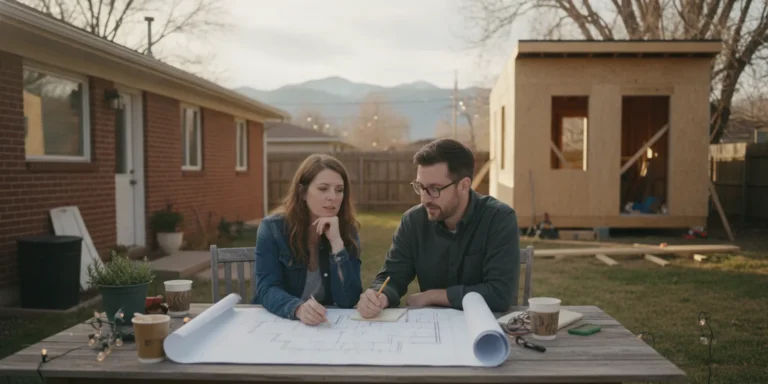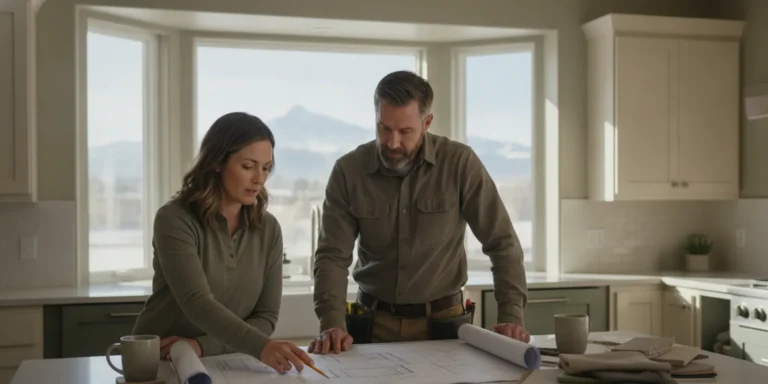

A general contractor helps organize a construction project from early planning through completion. If you are asking what is a general contractor, the short answer is a professional who coordinates the agreed scope, sequence, people, communication, and decisions. For Denver Metro Area homeowners, understanding that role makes it easier to plan a remodel, addition, new home, or outdoor project.
Discuss your construction project
What is a general contractor responsible for?
A general contractor coordinates work covered by an agreed project scope and helps connect planning with activity on site. Responsibilities differ by project, so confirm who handles each task and how questions are resolved before work begins.
A concrete patio, for example, can involve layout, site preparation, forming, placement, and finishing. An addition may involve design decisions, approvals, framing, and coordination among specialized trades. The general contractor helps organize these parts in a workable order and provides a clear point of contact.
This does not mean the contractor personally performs every task. A general contractor may do some work directly and coordinate subcontractors for specialized tasks. The useful distinction is accountability: homeowners should know who is responsible for the overall plan, who performs each portion, and how handoffs are managed.
Faros Construction Services describes its construction and outdoor-living work on its services page. Its project examples offer a sense of the types of completed work shown by the company.
What is a general contractor compared with a trade contractor?
A general contractor coordinates the project as a whole, while a trade contractor focuses on a defined kind of work. The difference matters most where one task must be ready before another can begin.
| Role | Main focus | Useful question |
|---|---|---|
| General contractor | Project scope, sequence, coordination, and communication | Who tracks connected work and communicates changes? |
| Trade contractor | A particular discipline or defined portion | Who performs this task and confirms it is ready for the next stage? |
| Homeowner | Goals, selections, access, and timely decisions | What information or approval is needed from me? |
Consider a deck with stairs and a nearby concrete landing. Individual providers may handle separate installations, but the landing location, stair access, and finished heights need to work together. Ask who coordinates those interfaces. If you hire providers separately, clarify who will manage the handoff and what happens if one task changes.
The decks, pergolas, and porches information and the concrete work page describe two categories that can meet in an outdoor project.
What should you settle before construction starts?
Before work begins, align on the scope, site conditions, open decisions, and responsibility for approvals. A written outline gives everyone a shared reference when questions come up.
Define the scope and boundaries
Describe the result you want and identify the areas affected. For an outdoor project, discuss dimensions, access routes, drainage concerns, connections to the home, and how the finished space should function. For a remodel or addition, identify rooms, features to retain, and work that remains undecided.
Ask for included tasks, exclusions, and unresolved items to be distinguished. A project outline might identify the deck structure and stairs while leaving a lighting selection open. Naming that decision prevents an assumption from being mistaken for an agreement. Also ask how a change will be recorded and how it could affect other decisions or the sequence.
Review existing conditions
Access, slopes, utilities, drainage, nearby structures, and occupied areas can affect a work plan. Walk the site together where practical. Ask what needs further investigation, who will arrange it, and which decisions depend on the answer.
A visual review may not resolve a technical question. Some work calls for design input, local review, or information from another specialist. A clear project conversation identifies what is known and what remains uncertain rather than presenting an assumption as fact.
Clarify approvals and responsibilities
Applicable requirements depend on the project and jurisdiction. Ask which approvals may apply, who prepares and submits required information, and what must happen before construction starts. An initial discussion is not a permit or final approval, and an informal schedule estimate is not a guaranteed review date.
Building codes are adopted and administered through jurisdictional processes. The International Code Council provides information about model codes and building safety. For a particular property, confirm current requirements with the relevant local authority rather than assuming a general explanation settles the rules.
Faros shares information about home building and remodeling and hardscape and landscape work. For a project that combines several scopes, ask how approvals and work interfaces will be coordinated.
How does a general contractor coordinate a project?
Coordination keeps scope, people, work sequence, and homeowner decisions connected as a project moves forward. It should make responsibilities visible and raise questions before they disrupt the next activity.
A typical process may include consultation and site assessment, planning and proposal development, approvals and preparation, construction, a final walkthrough, and follow-up guidance. The order and details depend on the project. Treat these stages as a planning framework, not a promise that every job follows the same calendar.
- Planning: Confirm goals, boundaries, existing conditions, and unanswered questions.
- Preparation: Develop the plan, coordinate required information, make selections, and prepare the site where appropriate.
- Construction: Complete tasks in sequence, share progress, and address changes through a clear decision process.
- Review: Walk through completed work, record remaining items, and explain relevant care or follow-up guidance.
Homeowners help by providing access, making requested selections, and raising concerns promptly. Keep significant decisions in writing, especially when they affect the agreed scope or another task. Ask how often updates will arrive, who will send them, and how urgent questions should be handled.
For example, if a finish must be selected before it can be ordered and installed, the project lead should explain the decision deadline and which later work depends on it. The homeowner can then select an option or discuss another sequence. A clear explanation of the dependency is more useful than a vague assurance that everything is proceeding as planned.
For work involving a patio or other integrated outdoor area, review Faros’s outdoor living spaces information. Its project gallery can help start a discussion about how separate elements relate.
What questions help you choose a general contractor?
Ask questions tied to your project that reveal how responsibility, communication, and uncertainty will be handled. Specific explanations are more useful than broad assurances.
- Who will be my main point of contact?
- Who is expected to perform each major part of the work?
- How will the scope and later changes be recorded?
- Which site conditions or decisions still need investigation?
- Which approvals may apply, and who coordinates them?
- How will schedule adjustments and pending decisions be communicated?
- What will the final walkthrough cover?
Ask for relevant examples and references where available. Listen for plain explanations of what is known, what remains open, and who will follow up. If an answer is unclear, ask for it to be added to the project outline. Faros provides information about decks, pergolas, and porches and home building projects that can help frame questions about your own scope.
Learn about the company’s background on its About page. When speaking with any prospective contractor, ask who will oversee your particular work and how you will receive updates.
What should you expect while work is underway?
Expect active coordination and occasional decisions, not a process where every detail is fixed in advance. The contractor should explain current work, identify questions needing your input, and make clear when a proposed change affects the agreed plan.
Before work starts, ask about site access, work areas, protection of nearby surfaces, and the best way to raise a concern. If actual conditions differ from expectations, pause to understand the issue and available choices. Ask what each option changes, whether another task depends on it, and how the decision will be documented.
Weather, material availability, reviews, and concealed conditions can affect sequencing. Ask what can proceed while an answer is pending and when you should expect an update. This keeps communication practical without treating a particular completion date as certain.
For work involving walls, walkways, or planting, Faros outlines its hardscape and landscape services. Ask how the particular project will address the interfaces between site work and other construction.
Talk with Faros about your project
What happens at closeout?
Closeout is the opportunity to review completed work, note remaining items, and understand care or follow-up guidance. A walkthrough compares the result with the agreed scope and gives both sides a chance to record questions.
Prepare a short list before the meeting. Ask how to operate or care for new features, what maintenance is appropriate, and whom to contact if a workmanship question appears later. Faros states that workmanship is covered for one year, or 12 months, on all workmanship. Confirm how that coverage applies to the work described in your project documents.
Keep copies of the scope, approved changes, relevant product information, and closeout notes. Those records help you understand what was completed and give useful context for maintenance or future planning. The services overview can also help you identify which service area your project relates to.
What is a general contractor? Frequently asked questions
These answers address common questions about project coordination and a homeowner’s role.
Does a general contractor do all the work personally?
Not necessarily. A contractor may perform some work and coordinate subcontractors for specialized tasks. Ask who handles each part and who is responsible for overall coordination.
Can I hire trade contractors directly?
That may be possible for a narrowly defined task, but the homeowner then coordinates handoffs, sequence, and communication among providers. For connected work, clarify who manages the complete scope and how each task is timed against the next.
When should I contact a general contractor?
Start when you can describe the goal, even if details remain open. An early conversation can identify questions about site conditions, scope, approvals, and the order of decisions.
What should I bring to an initial conversation?
Bring photos, rough measurements if available, a list of goals, and notes about existing conditions or constraints. Explain what you want the finished space or home to do, and point out decisions you have not made.
Discuss your construction plans
Understanding what is a general contractor helps you ask clearer questions about scope, coordination, and accountability. Faros Construction Services serves homeowners and property owners in the Denver Metro Area with construction and outdoor-living services. Learn more about Denver project oversight, then discuss how your goals fit the work ahead.
Request a project consultation
Author: Ricardo Alfaro
Start with a clear conversation about your goals, site, responsibilities, and decisions needed to move the project forward.