
Deck Contractors in Commerce City
If you bought new in north Commerce City — Reunion, Buffalo Run, Second Creek, Turnberry — you probably have a sliding glass door on the back of your house with nothing behind it. Four feet of air, then dirt. The deck was an upgrade you skipped, and you’ve been meaning to deal with it ever since.
Here’s what nobody told you: the ground right there is the least trustworthy soil on your entire lot.
When your foundation went in, the builder dug a hole, poured the walls, and pushed the dirt back in. That backfill is loose and disturbed, and it is exactly where a deck contractor is about to dig your footings. Set a footing in it and the footing settles — because the soil under it was never compacted to carry anything.
A year later the deck has dropped away from the house. The ledger is straining. The stairs don’t sit right. We dig past it.


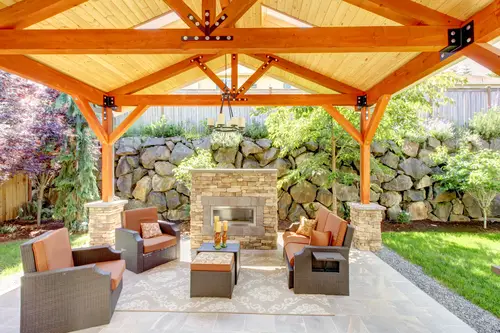
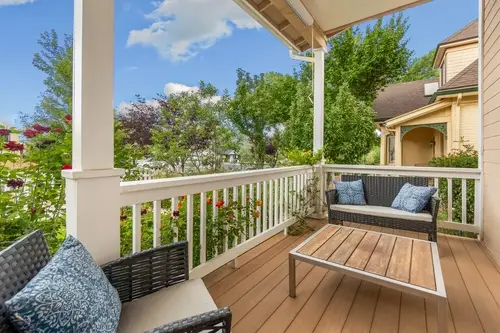
Decks for New-Construction Homes
The slider four feet above dirt is the most common thing we see in north Commerce City, and it’s an opportunity, not a problem.
Because nothing is there yet, you get to build what you actually want rather than expanding around a minimal builder deck someone else designed. Size it right the first time. Put the stairs where they should go. Frame it now for a cover you’ll add in three years. Two things worth deciding up front:
- Do you want a cover eventually? If so, we size the structure for it now. Retrofitting a roof onto a deck that wasn’t framed for it means opening the whole thing back up.
- How high is the door, really? A tall deck needs real lateral bracing — sway on an elevated deck is a structural issue, not a quirk — and the stair run will eat more yard than people expect. Sometimes a two-tier design solves both.
Most of these neighborhoods have HOA or metro district architectural review. We prepare and submit that alongside the city permit, and we start it early because it’s usually the slower half.
Where a deck should meet a patio at grade, we plan it as one design through our hardscaping services.
Why New Homes Need Deeper Footings, Not Shallower Ones
It’s counterintuitive. A brand-new house feels like the easiest thing to build on. It’s often the hardest ground to get right.
- The backfill zone runs along the entire perimeter of your foundation — the exact strip where a deck attaches. It’s disturbed soil, placed quickly, and it is not engineered to bear load. On top of that, Adams County’s expansive clay swells and shrinks with moisture, and loose backfill takes on water more readily than undisturbed ground does.
- What has to happen: the footings go through the backfill to competent bearing below — undisturbed native soil, at proper depth, confirmed in the hole rather than assumed from a plan. That means a deeper dig and more concrete than a bidder pricing a “standard deck” has in their number.
- How to spot the shortcut: ask any bidder how deep the footings go and how they’re accounting for backfill next to a new foundation. If they look at you blankly, you’ve learned everything you need to know. It’s the cheapest possible corner to cut and it’s completely invisible until the deck starts dropping.
- And your house is still moving. New homes settle for their first several years. A well-built deck accommodates that. A badly built one fights it — and the ledger loses.
Why Faros Construction
The industry’s usual failure isn’t bad carpentry. It’s a company that sells the job, then hands it to whichever subcontracted crew is free that week. The person who made promises is gone. The crew never heard them.
- Ricardo is on your build. Thirty-plus years of structural work, personally in the footing holes — which on a new-construction lot is the entire ballgame.
- We dig deeper and we say why. If our number is higher than a competitor’s, the difference is usually underground.
- In-house crews, demo to walkthrough.
- Licensed and insured, proof on request. Ask any deck contractor in Commerce City for their certificate of insurance before you sign.
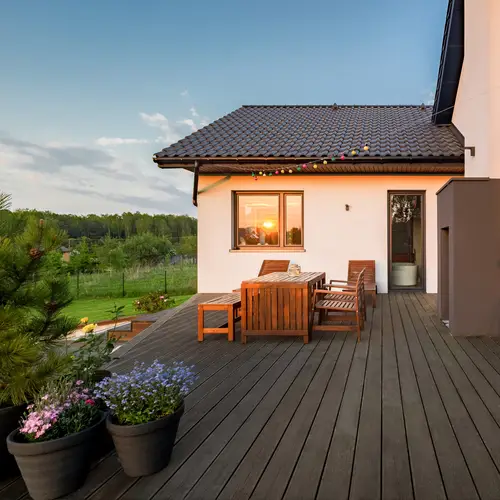
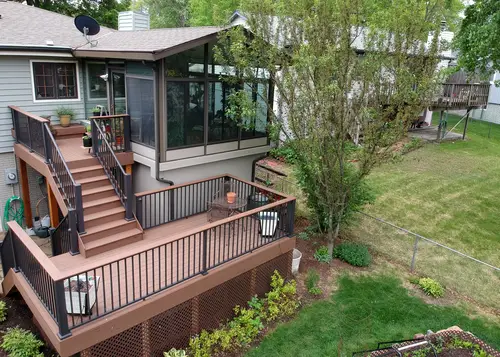
Recent Work Across Commerce City and the North Metro
A recent homeowner described our team as courteous and thorough on a balcony and deck project, and specifically noted how well the crews were coordinated by the project manager.
That’s the theme across our reviews: crews that show up when they said they would, keep the site clean, and finish on time. Explore our recent outdoor projects.
Elsewhere in the metro: Thornton, Aurora, Northglenn, and Denver.
Deck Contractor Services in Commerce City
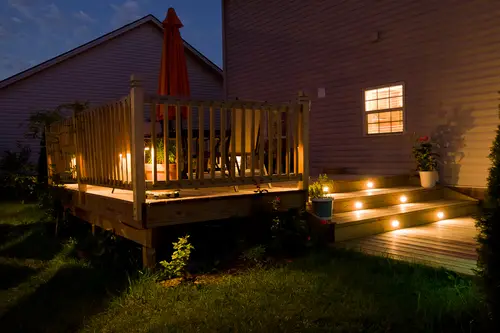
Custom Deck Construction
Sized right the first time, and framed now for what you'll add later.
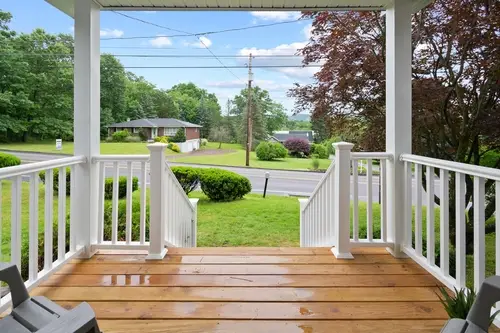
Composite Deck Installation
Footings to railing, permitted through the City of Commerce City.
Deck Replacement
In the older neighborhoods, with an honest read on which you need.
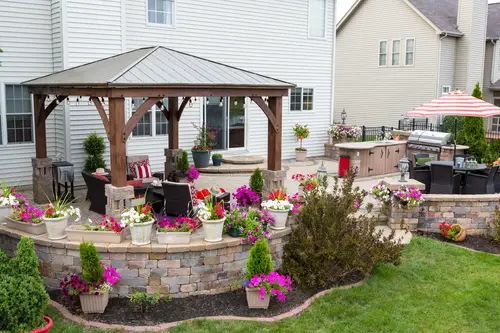
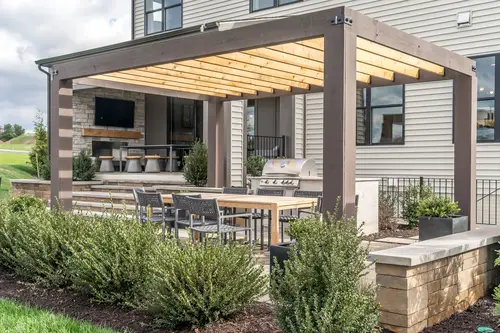
Covered Decks & Pergolas
Detailed for wind uplift, or framed now and added later.
Railings, Stairs
Cable, metal, composite, wood; lighting, seating, kitchens.

New-Built Decks
Built for the disturbed soil around a young foundation.
How an Englewood Deck Project Runs
On-Site Consultation
We look at the age of the house, the backfill zone, the door height, and the grade. On a new-construction lot, the soil conversation happens first.
Design and Itemized Proposal
Layout, scope, materials, timeline, price — with footing depth stated, not buried.
Permits & HOA Approval
Filed through the City of Commerce City, with metro district or HOA architectural review handled in parallel. We start that early.
Construction
Crews arrive when we said. Site cleaned daily. One point of contact who replies.
Walkthrough and Care Guidance
We fix anything that isn't right, then hand you a maintenance plan for your materials.
Deck Installation in Commerce City
- Footings to competent bearing, below frost line and below disturbed backfill. Confirmed in the hole.
- Ledger through-bolted to code and flashed above and behind. That connection causes a disproportionate share of catastrophic deck failures.
- Lateral bracing on elevated decks. These new homes sit high off the yard.
- Uplift detailing on any covered structure. The northeast plains get real wind.
- Hot-dip galvanized or stainless hardware, because modern treated lumber corrodes the wrong fasteners from the inside out.
- Framing sized for wet spring snow, and tightened further under composite.
Permits go through the City of Commerce City. We file, schedule inspections, and build to pass the first time.
South and west Commerce City is older, modest, and long-settled — which means the soil is no longer the problem. The decks are.
Most were added decades after the house. What we find: ledgers nailed rather than bolted and never flashed, rotting the wall behind them. Post bases rotted where they meet soil. Undersized framing. Guardrails that flex, with baluster gaps wider than current code allows.
If the frame is genuinely sound, resurfacing costs a fraction of a rebuild — and we’ll tell you when that’s the case, even though it’s the smaller job. We inspect the substructure first. New boards over failing framing is the worst outcome available, because it looks solved and isn’t.
Building Across Commerce City and the North Metro
Reunion, Buffalo Run, Second Creek, Turnberry, Belle Creek, Fronterra Village, River Run, and the established neighborhoods on the south and west sides.
We also build throughout the north and east metro — Thornton, Northglenn, Aurora, and Brighton — and across the wider Denver metro area.
Frequently Asked Questions
Actually harder, in one specific way. The soil along your foundation is builder backfill — disturbed, loosely compacted, and not engineered to carry load. It’s exactly where deck footings go. They have to be dug through it to competent bearing below, which means deeper holes and more concrete than a “standard deck” quote assumes.
Ask how deep the footings go and how they’re handling backfill next to a new foundation. You don’t need to evaluate the answer — you need to see whether they have one. If they don’t, that’s the corner they’re cutting, and it’s invisible until the deck starts dropping.
Almost always settlement — footings that were set in uncompacted soil and sank. It’s a footing problem, not a decking problem, and resurfacing won’t touch it. It needs a real assessment.
That’s a good position to be in — nothing to demo, and you get to size it right the first time. The two decisions to make early: how tall the deck really needs to be, and whether you want a cover eventually, because we’d frame for it now.
In most of the newer neighborhoods, yes — usually a metro district or HOA architectural committee. We prepare and submit it alongside the city permit.
Let's Find Out What Your Deck Can Take
On a new-construction lot, everything depends on what’s under the footings. Ricardo will walk your property, tell you what he expects to find, and give you a real number.