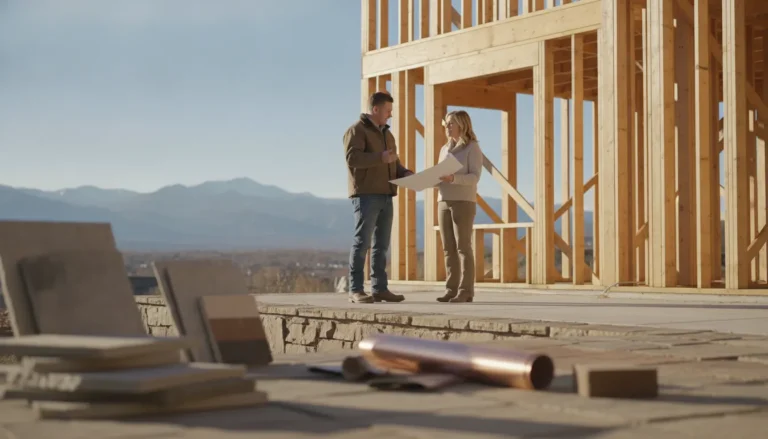

Choosing luxury home contractors is about more than selecting a polished portfolio. A successful high-end build depends on clear design coordination, thoughtful craftsmanship, steady communication, and a process for checking the work at every stage. For homeowners in the Denver Metro Area, the best plan begins with understanding how a contractor will guide decisions from the first site conversation through the final walkthrough.
Talk with Faros about your home-building plans
What should luxury home contractors help you plan first?
Luxury home contractors should help turn a broad vision into a sequence of clear decisions about the site, design, scope, schedule, and responsibilities. Before detailed selections begin, establish what a successful home must do for the people who will live in it.
Start with how you use your home now and what you want to change. List the rooms or features that matter most, who will use them, and how daily routines may shift over time. A homeowner planning an addition, for example, may need a better connection between the kitchen and yard, while a family building a new home may put storage, privacy, and flexible rooms first.
Separate essential requirements from preferences that can be refined later. This keeps early conversations grounded and helps the team identify conflicts before they become expensive rework or schedule changes. Useful planning questions include:
- Which spaces need to work together, and which should feel private?
- What natural light, views, or outdoor connections are important?
- Which materials and details are priorities, and where is a simpler solution acceptable?
- What routines should the home support today and in the future?
- Who will make final decisions, and how quickly can those decisions be made?
Bring photographs, sketches, and examples that explain what you like. Explain why an example appeals to you, such as its proportions, texture, daylight, or storage. A reference image is a starting point for discussion, not an instruction to copy another home without considering the site and the complete design.
It is also useful to identify what is not yet known. A property may have access, grading, drainage, or existing-structure questions that require investigation. A professional consultation and site assessment can help identify these topics before the team treats early assumptions as settled facts. Faros describes its process as beginning with a consultation and site assessment, followed by design and a proposal. Read more about home building and remodeling in the Denver Metro Area.
How do you evaluate luxury home contractors?
Evaluate luxury home contractors by looking beyond finished photographs to the way the company plans, communicates, coordinates trades, and responds when a decision or site condition changes. A strong fit is a contractor whose approach matches the complexity of your project and whose responsibilities are clear.
Ask who will lead the project day to day, who is your primary contact, and who has authority to resolve questions. Find out how the contractor works with designers, engineers, building officials, and specialized trades. Ask for a sample of the documents used to record decisions, changes, and completion checks, with private client details removed.
Use a consistent set of questions when comparing firms:
- Who is accountable for the work and for coordinating subcontractors?
- How are plans, selections, and site conditions reviewed before work begins?
- How are open questions and decisions tracked?
- How will you learn about schedule changes or issues that need your attention?
- What does the final walkthrough cover, and how are follow-up items handled?
- What written workmanship coverage and post-completion guidance are provided?
Ask to see relevant completed work, but also discuss how the contractor handled the process. A project that looks impressive in a photograph may not tell you whether changes were documented, the site was kept orderly, or the homeowner knew what decisions were needed. References, where available, can help you understand communication and follow-through. The About Faros page explains the company’s owner-led approach and its emphasis on honesty, integrity, and trust.
A written proposal should make the scope understandable. Look for descriptions of what is included, what remains undecided, the assumptions behind the plan, and how revisions will be reviewed and approved. Ask how allowances or selections are documented if they apply to the project. Clear paperwork gives both sides a shared reference, rather than relying on a chain of informal conversations.
For a broader homeowner perspective on planning a residential project, the National Association of Home Builders provides resources for people considering a home build or remodel. Use general guidance as a starting point, then confirm project-specific requirements and responsibilities with the professionals working on your home.
How should design coordination work on a high-end build?
Good design coordination connects the plans, finish selections, building systems, and construction sequence before those decisions reach the worksite. The contractor should help identify who owns each decision and when that decision is needed.
Design coordination is not simply choosing attractive finishes. It is checking that the parts of the home work together. A lighting plan may affect ceiling details; cabinetry dimensions may affect appliance placement; window locations can shape furniture options and privacy; and an outdoor connection may influence door placement, steps, or the transition from the interior floor.
Ask the project team to organize decisions by milestone. Early choices often shape the layout and technical planning. Later choices may include fixtures, hardware, colors, and finish details. The exact order depends on the project, but a shared selection schedule can show what is needed, who will approve it, and what work depends on it.
| Planning area | What to coordinate | Useful review question |
|---|---|---|
| Site and layout | Access, orientation, circulation, privacy, and connection to outdoor spaces | Does the plan respond to the property and the way the household lives? |
| Structure and systems | Framing, openings, mechanical needs, lighting, and built-in features | Have the relevant professionals reviewed how these elements fit together? |
| Materials and finishes | Flooring, counters, cabinetry, trim, fixtures, and transitions | Are selections recorded with enough detail to avoid ambiguity? |
| Construction sequence | Approvals, ordering, site access, trade coordination, and inspections | Which decision is due next, and what work depends on it? |
| Closeout | Walkthrough, documentation, warranty information, and remaining items | How will the team record and resolve each follow-up item? |
When a design change is proposed, ask the team to explain its effect on related drawings, materials, and work already scheduled. A seemingly small change can affect several trades or require a detail to be reconsidered. Record the agreed revision in writing and make sure the people who need it receive the updated information.
Homeowners should not have to manage every technical handoff themselves. Still, your timely input matters. Decide who in your household can approve selections, how questions should be presented, and how much time you need to consider alternatives. When the contractor, designer, and homeowner share a reliable decision process, fewer details are left to guesswork.
What shows that craftsmanship is being managed well?
Craftsmanship is easier to trust when expectations are specific and the work is reviewed in stages. Agree on important details before installation, then use regular checks to confirm that the completed work matches the plans and the team’s workmanship standards.
“High quality” can mean different things to different people. Name the visible details that matter to you: consistent trim lines, clean transitions between materials, aligned cabinetry, carefully finished edges, or a particular texture. Ask how those details will be represented in the plans or selection documents. If the design uses a custom feature, confirm how the contractor will review a sample, mock-up, or installation detail before the full area is completed.
Review the work at sensible milestones instead of waiting until the home is nearly finished. Depending on the project, checkpoints may include site preparation, framing, rough-in work, installation of key materials, and final finish work. The contractor should explain which checks are appropriate and which inspections or approvals apply. Do not assume a municipal inspection replaces the contractor’s own quality review or your agreed project walkthrough.
Photographs and written notes can make a useful project record. Ask how the team records work that will later be concealed, what information will be available to you, and how a concern is raised. If something appears inconsistent with the drawings or a selected material, ask promptly and refer to the relevant plan or written decision. A calm, specific question is more useful than waiting until several related pieces are complete.
Also discuss protection and housekeeping. Construction affects an occupied property, deliveries, pathways, and adjacent areas. Clarify what will be protected, how access is managed, and who should be contacted if an issue comes up. The level of detail depends on the site and scope, so address it before mobilization rather than relying on assumptions.
How can communication keep the build on track?
Reliable communication gives the homeowner a predictable way to see progress, answer questions, and understand what needs attention. Set expectations for updates, decisions, documentation, and escalation before construction gets busy.
At the start, agree on a regular check-in rhythm and identify the main contact. Ask what a typical update includes, such as work completed, upcoming activities, pending decisions, and issues that may affect the plan. A concise written recap after a meeting can confirm who is doing what and by when.
Use one agreed method to manage project questions and approvals. If some decisions happen by email and others by text or calls, important details can become difficult to find later. Keep a simple decision log with the date, topic, selected option, approval, and any drawing or document that changed. Ask the project team how they prefer to receive urgent site questions.
When an unexpected condition arises, the contractor should explain what is known, what still needs review, which options are available, and what decision is required from you. Avoid approving a change based only on a verbal summary. Request a written explanation of the work affected, the revised sequence if relevant, and any documents that need updating. This keeps the conversation factual and makes it easier to revisit the decision.
Faros Construction Services describes a structured process that includes consultation, design and proposal, permitting and preparation, construction, a final walkthrough, and warranty and maintenance guidance. That sequence is a useful example of the milestones a homeowner can ask a contractor to explain. You can also review Faros’ construction services and project examples when considering the company’s work and approach.
Discuss your project with the Faros team
What should you confirm before construction begins?
Before work begins, confirm that the project has a shared scope, current documents, a decision process, and clear responsibilities for site coordination. A short readiness review can bring open issues into view while there is still time to resolve them.
- Scope: Review the work included, excluded items, assumptions, and any selections still pending.
- Plans: Confirm that the team is using the current drawing set and that revisions are identified.
- Responsibilities: Know who coordinates the trades, responds to questions, and communicates with you.
- Approvals: Ask which permits or other approvals apply and who is handling each item.
- Schedule: Understand the expected sequence, decision dates, and how changes will be communicated.
- Site: Discuss access, protection, deliveries, work areas, and arrangements if the home remains occupied.
- Records: Agree where decisions, updates, and change approvals will be documented.
- Closeout: Ask what the final walkthrough, completion records, and post-completion guidance will include.
For projects that include patios, retaining features, or other exterior work, consider how the home and yard should function as one connected environment. Faros’ pages on outdoor living spaces, hardscaping, and decks, pergolas, and porches describe related parts of its residential work. The final design should suit the actual property and the way you expect to use it.
Homeowners planning a more focused remodel can also read Faros’ guides to planning a kitchen remodel and planning a bathroom remodel. These are useful examples of how defining priorities and sequencing decisions can make a complex project easier to discuss.
How do you know the project is ready for its final walkthrough?
A final walkthrough should compare the finished work with the agreed scope and document any item that still needs attention. It is a working review with a clear record, not just a last look around the home.
Before the walkthrough, ask what areas will be reviewed and whether the homeowner should bring the latest plans, finish selections, or other project records. Move through the home methodically. Check that the spaces and features in the scope are present, that visible work reflects the agreed selections, and that questions are noted for follow-up.
Keep a written list of incomplete work or concerns, with the room or location and a clear description. Ask who will respond to each item and how completion will be confirmed. If an item needs further review, document that rather than relying on a general assurance. This creates a shared understanding of what remains open.
Request the closeout information that applies to the project. That may include product documentation, care instructions, relevant approvals, warranty terms, and maintenance guidance. Store it with the final plans and project correspondence so it is available later. Faros states that its process includes a comprehensive final walkthrough and post-completion warranty and maintenance guidance; ask any contractor to explain its own closeout practices in writing.
Author: Ricardo Alfaro
Frequently asked questions
These answers summarize practical questions homeowners often raise when preparing to work with luxury home contractors. Confirm details for your particular project with the professionals responsible for the design and construction.
When should I involve a contractor in the design process?
Involve a contractor early enough to discuss site conditions, constructability, trade coordination, and the order of decisions. The right point depends on the project, but early conversations can expose questions before a design is treated as final.
How can I compare contractors if their proposals are organized differently?
Compare the scope, assumptions, exclusions, responsibilities, proposed sequence, documentation, and communication plan line by line. Ask each contractor to clarify gaps in writing so you are comparing the same project rather than relying on the appearance of a proposal.
What should I do when I want to change a selection during construction?
Ask the contractor to explain which drawings, materials, trades, or scheduled work the change may affect. Review the proposed revision in writing and approve it through the agreed process before the team proceeds.
Does a final walkthrough replace inspections during construction?
No. A final walkthrough takes place near completion, while project reviews and any required inspections occur at relevant stages. Ask the contractor which checks apply and how each is recorded.
What is a useful way to assess a contractor’s communication?
Ask how often updates are shared, what they cover, who answers questions, and how decisions are documented. A clear example of the company’s process is more useful than a general promise to keep you informed.
Start a conversation about your high-end build
A well-planned build gives the homeowner and contractor a shared understanding of the design, the work, and how quality will be reviewed. Take time to ask direct questions, record decisions, and choose a team whose process supports the home you want to create.