
Garage Conversion to Living Space in Denver
A garage conversion to living space in Denver can turn underused square footage into a home office, guest suite, family room, studio, or private area for multigenerational living. The best projects start with a clear plan for permits, comfort, insulation, heating, ventilation, moisture control, and code compliance before any framing begins.
Thinking about converting a garage into comfortable living space? Contact Faros Construction Services to talk through your goals, property, and next steps with a Denver remodeling contractor.
Garages are not built like bedrooms. They often start with thinner walls, unfinished slabs, limited electrical service, little or no insulation, vehicle exhaust separation concerns, and doors that were never meant to perform like exterior walls. In Colorado, those details matter because the space must handle cold nights, strong sun, snowmelt, shifting seasons, and Denver permitting requirements.
This guide walks through what Denver homeowners should know before converting a garage into livable space, including when the project may become an accessory dwelling unit, which permits to expect, how to think about design, and what makes the finished room feel like part of the home instead of a dressed-up storage area.
What Counts as a Garage Conversion in Denver?
A garage conversion changes an attached or detached garage from vehicle or storage use into a habitable part of the property. The finished space might function as a bedroom, office, den, workout room, studio, game room, guest area, or full accessory dwelling unit with a kitchen and bathroom.
The scope depends on how independent the space will be. A simple conditioned bonus room may need framing, insulation, drywall, flooring, electrical work, heating, cooling, windows, and better access to the main house. A full living unit needs more planning, because plumbing, sleeping space, cooking facilities, bathroom access, life safety, and zoning rules come into play.
Denver treats habitable space differently from storage or parking space. That means the city will review the work for zoning, building code, energy performance, drainage, electrical safety, mechanical systems, and any plumbing changes. If the space has its own kitchen, bathroom, and sleeping area, it may be reviewed as an ADU. Faros covers that path in more detail in our Denver ADU construction guide.
Start With the Right Question: Room, Suite, or ADU?
Before choosing finishes, decide what the converted garage needs to do. The intended use affects permits, layout, mechanical work, utility needs, and inspections.
Option 1: A Flexible Living Room or Home Office
This is often the most straightforward path. The space remains part of the main home and may be used as a family room, office, craft room, gym, or media room. It still needs to meet habitable space standards, but it usually avoids the extra kitchen and independent dwelling requirements tied to an ADU.
Option 2: A Guest Suite or Multigenerational Space
A guest suite may include sleeping space, better privacy, storage, and possibly a bathroom. This can be a practical choice for visiting family, adult children, or aging relatives who need more separation without creating a fully independent residence. If you add a bathroom, expect plumbing work, ventilation, waterproofing, and inspections to become a major part of the plan.
Option 3: A Full Accessory Dwelling Unit
A garage apartment or ADU is a self-contained living space with its own kitchen, bathroom, sleeping area, and entrance. According to Denver’s ADU permit guidance, new ADUs need zoning, building, and sewer use and drainage permits, and trade permits may also be needed for electrical, plumbing, mechanical, or roofing work. Denver also requires a Certificate of Occupancy before an ADU can be lived in.
The decision is not only about comfort. It affects what drawings you need, which rules apply, how utilities are designed, and how the project is inspected.
Denver Garage Conversion Permits: What to Expect
Permitting is one of the most important parts of a garage conversion to living space in Denver. Skipping permits can create safety problems, insurance issues, appraisal challenges, and complications when selling the home later.
For garage-related work, Denver states that garages need zoning, building, and sewer use and drainage permits. Trade permits may also be required if you add lighting, heat, air conditioning, water, plumbing fixtures, or other systems. For ADU projects, Denver’s guidance also lists zoning, building, and sewer use and drainage permits, plus trade permits as needed.
Common Permit Types
- Zoning review: Confirms the proposed use, structure, setbacks, parking impact, and property rules.
- Building permit: Reviews structural work, framing, wall assemblies, windows, doors, ceiling height, fire separation, and life safety.
- Sewer Use and Drainage Permit: Often called SUDP, this reviews drainage and sewer impacts. It becomes especially important when adding plumbing.
- Electrical permit: Needed when adding outlets, lighting, panels, circuits, or other electrical work.
- Mechanical permit: Needed for heating, cooling, ventilation, ductwork, or related equipment.
- Plumbing permit: Needed when adding a bathroom, laundry, kitchenette, sink, or new water and drain lines.
Denver applications often require scaled drawings, a site plan, dimensions, window and door locations, ceiling height, wall and roof details, foundation or slab details, and manufacturer information for materials such as windows and doors. A contractor who understands local review can help package the information clearly before submission.
Does a Garage Conversion Need to Meet Denver Energy Rules?
Yes, energy performance should be part of the plan from the beginning. Denver’s 2025 residential energy amendments specifically note that a garage conversion to a dwelling unit or a new ADU over an existing garage must meet R408 Additional Energy Credits like new construction. The city also notes that garage and sunroom conversions no longer need pre- and post-construction blower door tests for that amendment section.
For homeowners, the practical lesson is simple: a garage conversion cannot be treated like cosmetic remodeling. The walls, slab, garage door opening, ceiling, windows, air sealing, and mechanical system must be planned so the room feels comfortable in January and July.
Insulation and Air Sealing Matter More Than Finishes
Many garages have little insulation, exposed framing, air leaks, and a concrete slab that feels cold underfoot. If these issues are ignored, the finished room may look complete but still feel drafty, damp, noisy, or uncomfortable.
Wall Insulation
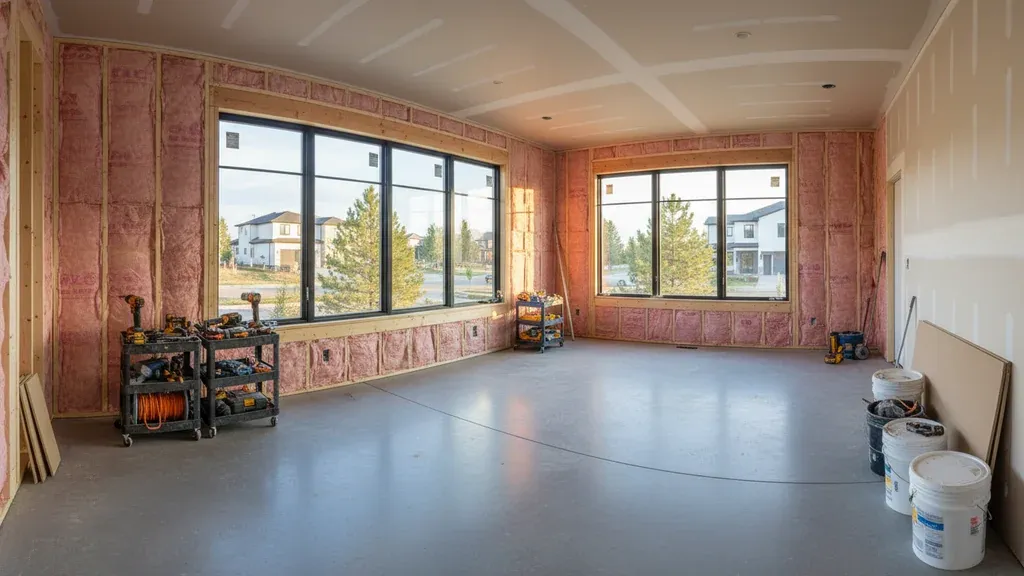
Exterior garage walls often need new insulation and air sealing before drywall. The right assembly depends on existing framing depth, moisture conditions, and the desired energy performance. A good plan closes gaps around framing, outlets, penetrations, windows, and the former garage door opening.
Ceiling and Roof Insulation
If the garage sits under attic space, the ceiling assembly may need upgraded insulation and ventilation review. If the garage has a flat or low-slope roof, the approach may be different. Denver’s sunny days and cold nights make roof and ceiling performance critical for comfort.
Concrete Slab Comfort
Most garage slabs were poured for vehicles, not living rooms. They may slope toward the door, feel cold, and transmit moisture. Depending on the project, the floor system may include leveling, moisture control, sleepers, rigid insulation, or finish flooring designed for slab conditions.
Garage Door Replacement
The old overhead door is usually the weakest part of the room. Many conversions remove it and frame a new insulated wall with windows, siding, and weather-resistant detailing. From the street, this is also where design matters most. A thoughtful exterior can make the conversion look intentional rather than patched in.
Design the Layout Around Light, Access, and Daily Use
A converted garage should not feel like a leftover room. Good design starts with how people will enter, where furniture will go, how daylight reaches the space, and how the room connects to the rest of the house or yard.
Natural Light and Egress
Garages are often dark. Adding windows or glass doors can make the space feel like a true room, but openings must be sized and placed with code, privacy, structure, and energy performance in mind. If the room will be used for sleeping, egress requirements become especially important.
Ceiling Height
Denver permit documents commonly ask for ceiling height, and for good reason. Habitable rooms need adequate clear height. Before planning built-up floors, insulation, or ceiling changes, confirm the finished height will still work.
Connection to the Home
An attached garage conversion may need a better interior connection to feel natural. Think about traffic flow, sound control, doors, steps, and privacy. A detached garage conversion needs even more planning around access, exterior lighting, weather exposure, and the path from the main house.
Storage Replacement
Homeowners often underestimate what they store in a garage. Before construction starts, decide where tools, bikes, seasonal gear, trash bins, and outdoor equipment will go. Built-ins, sheds, attic storage, or a redesigned mudroom can help replace lost function.
Need help deciding whether your garage should become an office, guest suite, or ADU? Faros can review the existing structure and help you choose a practical path. Learn more about our Denver home building and remodeling services.
Heating, Cooling, Ventilation, and Indoor Air Quality
Comfort depends on more than insulation. A livable garage conversion needs a heating and cooling plan that matches the room size, orientation, insulation level, and intended use.
Some projects can connect to the home’s existing HVAC system, but that should never be assumed. The system may not have enough capacity, ducts may be difficult to route, and code requirements may affect how the work is done. Other projects use a dedicated ductless mini-split or separate heating and cooling solution.
Ventilation is also important. Bathrooms, laundry areas, and kitchenettes need proper exhaust. Even a simple living space benefits from fresh air planning, especially once the walls and ceiling are air sealed. Good indoor air quality helps the room feel like part of the home, not a converted utility area.
Plumbing and Bathrooms: Plan Early
Adding a bathroom or kitchenette can make a garage conversion much more useful, but it also adds complexity. The design must account for water supply, drain lines, venting, slab work, fixture placement, waterproofing, mechanical ventilation, and inspection access.
Detached garages can be more challenging because new underground utility runs may be needed. Attached garages may still require slab cutting or rerouting. The earlier plumbing is considered, the easier it is to design a layout that works without forcing awkward compromises later.
Fire Separation, Safety, and Structure
Garages are built with fire and vehicle separation in mind. Once the use changes, the project must address how the new living space connects to the home, whether any garage area remains, how walls and ceilings are assembled, and whether structural changes are needed for new windows, doors, or framed openings.
A qualified contractor will look beyond surface finishes. Important details include header sizing, wall framing, slab condition, moisture signs, roof structure, existing electrical capacity, and whether the old garage door opening can be rebuilt cleanly. These checks help prevent hidden issues from showing up halfway through the project.
How Long Does a Garage Conversion Take?
The schedule depends on design complexity, permit review, inspections, structural work, utility changes, and material availability. A simple attached garage conversion can move faster than a detached ADU with plumbing and independent living features. Denver permitting and inspection timelines can also shape the schedule.
A practical timeline includes planning, drawings, permit submission, city review, revisions if needed, demolition, framing, rough electrical, rough plumbing if included, rough mechanical, inspections, insulation, drywall, finishes, final inspections, and punch list work. For a broader look at scheduling, read our guide to Colorado construction timelines.
How to Choose a Contractor for a Denver Garage Conversion
A garage conversion touches several trades at once. You need someone who can coordinate permits, framing, insulation, HVAC, electrical work, possible plumbing, exterior details, and final finishes. The right contractor should ask detailed questions before promising a schedule or scope.
Look for a team that can explain what they see in the existing garage, where the risks are, which permits are likely, and how they will protect comfort and durability. Ask about experience with Denver remodeling, ADUs, additions, inspections, and Colorado climate conditions. Our contractor hiring checklist can help you compare builders with more confidence.
Faros Construction Services is owner-led, with Ricardo Alfaro personally involved in project oversight. That matters on a conversion, because small decisions about framing, moisture, air sealing, layout, and sequencing can affect how the room performs for years.
Garage Conversion Planning Checklist
Use this checklist before moving into design or permitting:
- Decide whether the space will be a room, suite, or ADU.
- Confirm if sleeping, cooking, or bathroom functions are part of the plan.
- Review zoning and permit requirements before construction starts.
- Check slab condition, slope, moisture, and height transitions.
- Plan insulation, air sealing, and window upgrades for Denver weather.
- Decide how the garage door opening will be rebuilt.
- Confirm heating, cooling, and ventilation needs.
- Plan electrical outlets, lighting, internet, and panel capacity.
- Think through storage replacement for items currently kept in the garage.
- Choose finishes only after the technical plan is clear.
Frequently Asked Questions About Garage Conversions in Denver
Can I convert my Denver garage into a bedroom?
Possibly, but the space must meet applicable requirements for habitable rooms and sleeping areas. That may include proper ceiling height, insulation, heating, electrical service, natural light, emergency escape and rescue openings, and permits. A contractor should review the existing garage before you rely on it as a bedroom plan.
Does every garage conversion become an ADU?
No. A converted garage used as an office, den, or family room may remain part of the main home. It is more likely to be treated as an ADU when it becomes a self-contained living space with a kitchen, bathroom, sleeping area, and independent function.
Do I need permits to insulate and finish my garage?
In many cases, yes, especially when the work changes the use of the space or includes electrical, mechanical, plumbing, framing, windows, or exterior changes. Denver’s garage and ADU guidance both point homeowners toward zoning, building, drainage, and trade permit review depending on the scope.
Can a detached garage become living space?
It can, but detached conversions often require more planning for utilities, access, drainage, heating, plumbing, and zoning. If the detached garage becomes a self-contained unit, it may fall under Denver ADU rules.
What is the biggest mistake homeowners make?
The biggest mistake is treating the project like a cosmetic finish-out. A garage needs a real building plan for comfort, moisture control, safety, energy performance, and permits. Paint and flooring cannot fix poor insulation, bad air sealing, weak heating, or unpermitted work.
Build the Space the Right Way
A garage conversion can add flexible living space without changing the entire footprint of your home, but only if it is planned like real residential construction. Denver homeowners need to think through permits, insulation, energy rules, heating, cooling, plumbing, safety, and long-term use before construction starts.
If you are ready to explore a garage conversion to living space in Denver, contact Faros Construction Services. Our owner-led team can help you evaluate your garage, understand the likely scope, and plan a space built for Colorado living.