
A pool deck does more than frame your swimming pool. It sets the tone for your entire backyard, handles foot traffic in bare feet, and needs to survive Denver’s 300+ days of sunshine along with harsh winter freezes. Choosing the right materials and design can mean the difference between a pool area that lasts decades and one that cracks after two seasons.
Get a free quote on your pool deck project from Faros Construction.
Denver homeowners face a unique challenge: pool deck materials must handle summer surface temperatures above 140 degrees Fahrenheit while also withstanding freeze-thaw cycles from November through March. That narrows the field of options, but it also means the right choice will deliver serious long-term value for your property.
This guide walks through the best pool deck materials for Colorado’s climate, compares their strengths and weaknesses, and covers design ideas that make your outdoor space work harder for your family.
What Makes a Good Pool Deck Material in Denver?
Pool deck material needs to check several boxes before it earns a spot around your pool. Denver’s Front Range climate adds extra requirements that homeowners in milder regions don’t have to worry about.
Here are the key factors to evaluate:
- Slip resistance when wet: Pool decks get splashed constantly. A textured or brushed finish reduces the risk of falls, especially for kids and older adults.
- Heat absorption: Dark-colored materials can reach scalding temperatures under direct Colorado sun. Lighter colors and certain textures keep surfaces walkable in bare feet.
- Freeze-thaw durability: Denver averages 155 freeze-thaw cycles per year. Materials that absorb water can crack, spall, or heave when moisture inside them expands and contracts.
- Drainage: Proper slope away from the pool and the house prevents standing water, which accelerates surface damage and creates slip hazards.
- Low maintenance: Pool chemicals, sunscreen, and UV exposure all take a toll. The best materials resist staining and fading without constant resealing.
Any material that scores well across all five of these categories is a strong candidate for a Denver pool deck. The ones below represent the most practical and proven options for our climate.
Concrete Pool Decks: The Denver Standard
Poured concrete remains the most popular pool deck material in the Denver metro area, and for good reason. It’s versatile, durable, and works well with Colorado’s soil conditions and climate.
A standard brushed concrete pool deck provides a naturally slip-resistant surface at a lower entry point than stone or premium pavers. For homeowners who want more visual appeal, decorative and stamped concrete can mimic the look of natural stone, brick, or even wood plank patterns.
Stamped Concrete
Stamped concrete uses textured mats pressed into freshly poured concrete to create patterns. Popular choices for Denver pool decks include flagstone, slate, cobblestone, and ashlar patterns. Color is added through integral pigments and surface-applied hardeners, creating a look that runs through the full depth of the slab rather than sitting on top.
The main consideration with stamped concrete is sealing. A quality acrylic sealer needs reapplication every two to three years to maintain the color and protect against freeze-thaw damage. Without it, moisture penetrates micro-cracks and causes surface flaking (called spalling) during winter.
Brushed or Broom-Finished Concrete
This is the workhorse finish for pool decks. A broom is dragged across the wet surface to create fine grooves that provide excellent traction. It’s the least expensive concrete option and delivers reliable slip resistance.
Denver contractors often recommend broom-finished concrete for large pool deck areas because it handles freeze-thaw well, drains efficiently, and can be colored with integral pigments for a cleaner look than standard gray.
Exposed Aggregate
Exposed aggregate reveals the natural stones embedded in the concrete mix by washing away the top layer of cement paste. The result is a textured, visually interesting surface with built-in slip resistance.
This finish works well around Denver pools because the exposed stone provides natural drainage channels and handles temperature swings without the sealing demands of stamped concrete. Choose rounded river rock aggregate over sharp crushed stone for comfort on bare feet.
How Do Pavers Compare to Poured Concrete for Pool Decks?
Concrete pavers and natural stone pavers offer a different approach to pool deck construction. Instead of one continuous slab, individual units are laid on a compacted base with sand-filled joints.
The biggest advantage of pavers is repairability. If a section settles, cracks, or stains beyond cleaning, you can pull out individual pavers and replace them without tearing up the entire deck. With poured concrete, a crack in one area often means patching that never quite matches the original.
Ready to compare options for your pool deck? Contact Faros Construction for a free consultation.
Concrete Pavers
Manufactured concrete pavers come in a wide range of shapes, colors, and textures. They’re engineered to specific strength standards (typically 8,000+ PSI compressive strength) that exceed poured concrete.
For Denver pool decks, look for pavers rated for freeze-thaw resistance. The joints between pavers allow the deck to flex slightly with ground movement, reducing the large-scale cracking that can affect poured slabs. Proper installation on a well-compacted base is essential; poor base prep leads to settling and uneven surfaces.
Natural Stone Pavers
Travertine, flagstone, bluestone, and sandstone are all used for pool decks in Colorado. Each has distinct characteristics:
| Stone Type | Heat Resistance | Slip Resistance | Freeze-Thaw Durability | Best For |
|---|---|---|---|---|
| Travertine | Excellent (stays cool) | Good (tumbled finish) | Good (low porosity grades) | Upscale designs, bare-foot comfort |
| Flagstone | Good | Excellent (natural texture) | Excellent | Natural, rustic aesthetics |
| Bluestone | Moderate (darker color absorbs heat) | Good (thermal finish) | Excellent | Clean, modern lines |
| Sandstone | Good | Good | Moderate (seal required) | Warm, earthy tones |
Travertine is one of the top choices for pool decks because it naturally stays cooler than most alternatives. Its porous surface absorbs less heat than dense materials like bluestone. However, Denver homeowners should choose premium-grade (low-porosity) travertine and seal it to prevent moisture absorption during freeze-thaw cycles.
What About Composite and Wood Pool Decks?
Wood and composite decking are popular for raised pool decks, especially for above-ground pools or where the pool area sits above grade.
Composite Decking
Modern composite boards (like Trex, TimberTech, and Fiberon) combine wood fibers with plastic polymers to create a low-maintenance surface. They resist rot, insects, and fading, and most include slip-resistant texturing.
The main drawback for pool decks is heat. Dark composite boards can get uncomfortably hot under direct sun. If you go this route, choose lighter colors and look for brands that offer “cool deck” technology with reflective pigments. Composite decking pros and cons are worth reviewing before committing, especially for ground-level pool installations.
Natural Wood
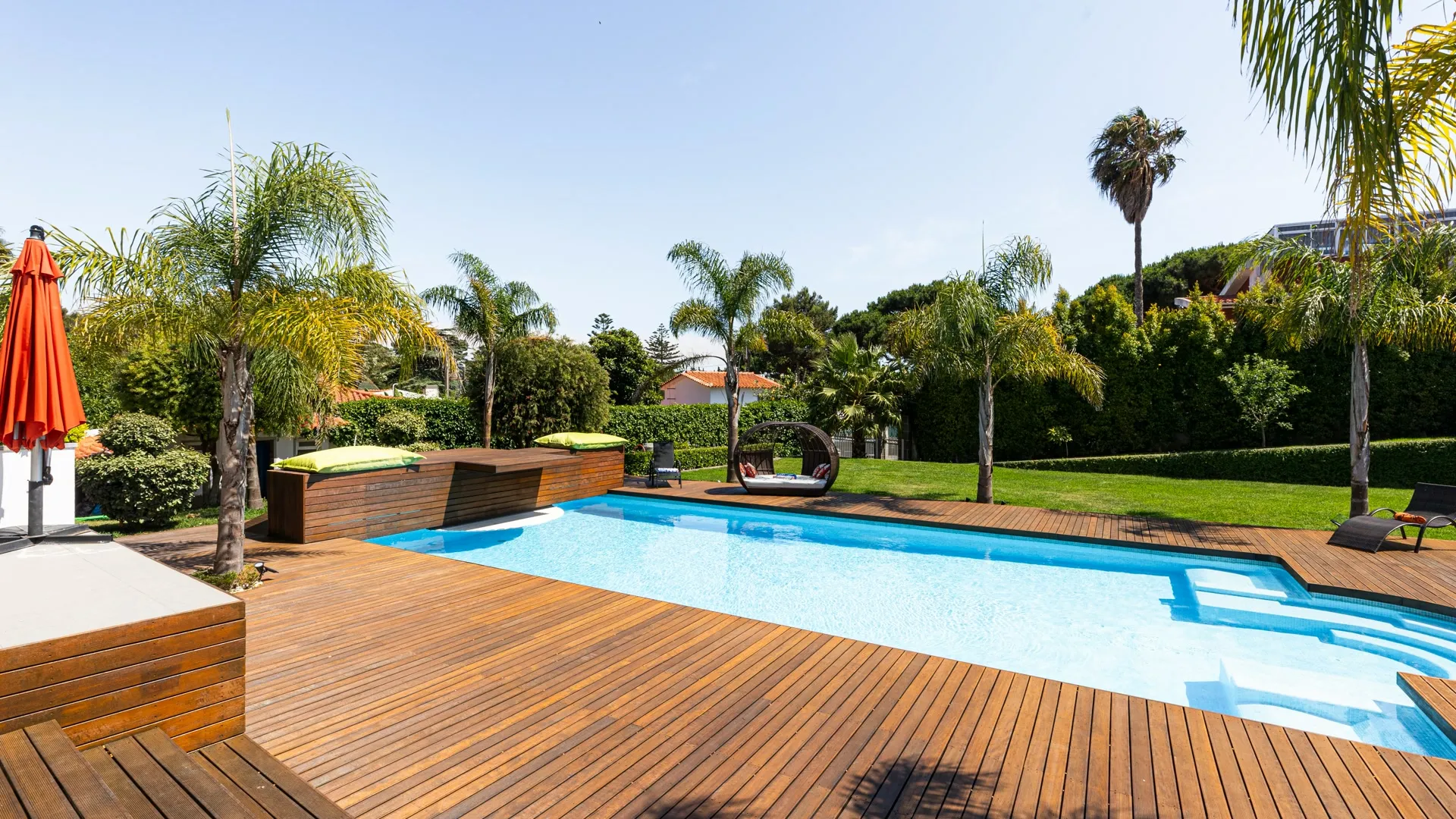
Cedar and redwood are traditional choices for deck construction around pools. They’re naturally resistant to rot and insects, and they stay cooler than composites under direct sun.
The tradeoff is maintenance. Wood pool decks need annual staining or sealing to handle pool chemical splashes and Denver’s intense UV exposure. Without it, boards gray, crack, and splinter within a few seasons. Pressure-treated pine is a budget option but requires even more upkeep and tends to warp around pools.
Tropical hardwoods like ipe offer superior durability but come with a premium and require specialized installation.
Pool Deck Design Ideas for Denver Backyards
Material choice is half the equation. How you lay out and design the pool deck determines how well the space functions for daily life, entertaining, and property value.
Multi-Level Decks
Denver lots often have grade changes that make a flat pool deck impractical. A multi-level design turns that slope into an advantage, creating distinct zones for lounging, dining, and swimming. Retaining walls built into the design can double as seating or planters. Retaining wall ideas that integrate with pool decks are a common request from Denver homeowners working with sloped yards.
Integrated Outdoor Living Areas
The pool deck doesn’t have to stop at the water’s edge. Connecting it to an outdoor living space with a fire pit, outdoor kitchen, or pergola creates a backyard that works year-round, not just during swim season.
In Denver, where evenings cool down quickly even in summer, a fire feature next to the pool area extends how many months you use the space. Combining concrete or stone pool decking with a stone fire pit is one of the most popular layouts for Colorado homes.
Coping and Edge Details
Pool coping is the cap that sits on top of the pool wall where the deck meets the water. It’s both a safety feature (providing a grip edge) and a design element. Common coping materials include:
- Bull-nose concrete: rounded edge, slip-resistant, matches poured concrete decks
- Natural stone caps: travertine or bluestone coping paired with matching deck pavers
- Cantilevered coping: extends over the pool edge for a clean, modern look
The coping material should complement the deck surface while providing enough texture for a safe grip when pulling yourself out of the pool.
Color and Pattern Considerations
Lighter deck colors reflect more sunlight and stay cooler underfoot. In Denver, where summer afternoon temperatures regularly hit the 90s, this matters. Earth tones like sandstone, buff, and warm gray are popular because they blend with Colorado’s natural landscape while keeping surface temperatures manageable.
For stamped or paver decks, mixing two complementary colors (a field color and an accent border) adds visual depth without making the design busy.
How Denver’s Climate Affects Pool Deck Construction
Building a pool deck in Denver isn’t the same as building one in Phoenix or Miami. Colorado’s altitude, UV intensity, and temperature swings create specific challenges that affect every phase of the project.
Freeze-thaw cycles: Water seeps into tiny cracks and pores, freezes, expands by about 9%, and pushes the material apart from the inside. This repeats 100+ times per year in the Denver metro. Materials must either resist water absorption or be sealed against it.
UV exposure: Denver sits at 5,280 feet of elevation, where UV radiation is roughly 25% stronger than at sea level. This accelerates fading in colored concrete, degrades wood finishes faster, and breaks down lower-quality sealers within a single season.
Soil movement: Colorado’s expansive clay soils (common across the Front Range) swell when wet and shrink when dry. Pool decks need a properly engineered base, often 4 to 6 inches of compacted gravel, to prevent heaving and settling.
Hail: Colorado ranks among the top states for hail damage. While most pool deck materials handle hail without issue, raised wood and composite decks can dent or chip from large stones.
Have questions about your pool deck project? Get a free quote from Faros Construction today.
Pool Deck Construction: What to Expect from the Process
Understanding what goes into building a pool deck helps you plan timelines, prepare your yard, and evaluate contractor proposals. Here’s what a typical residential pool deck project looks like in Denver:
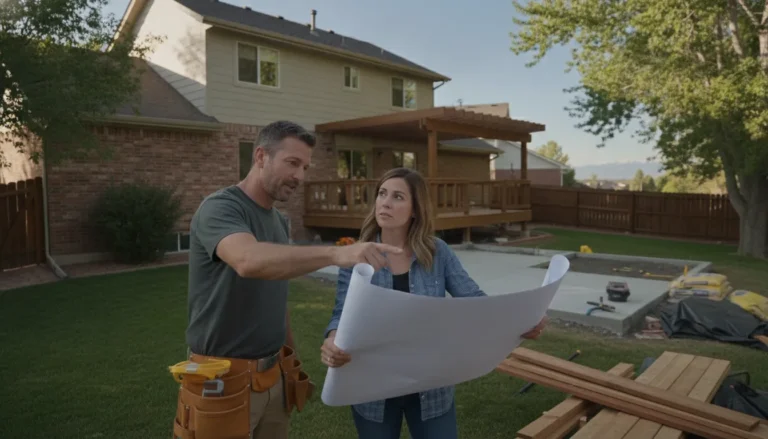
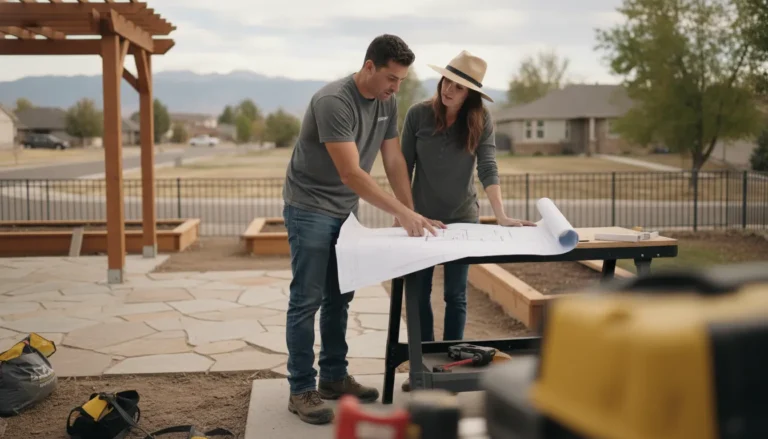
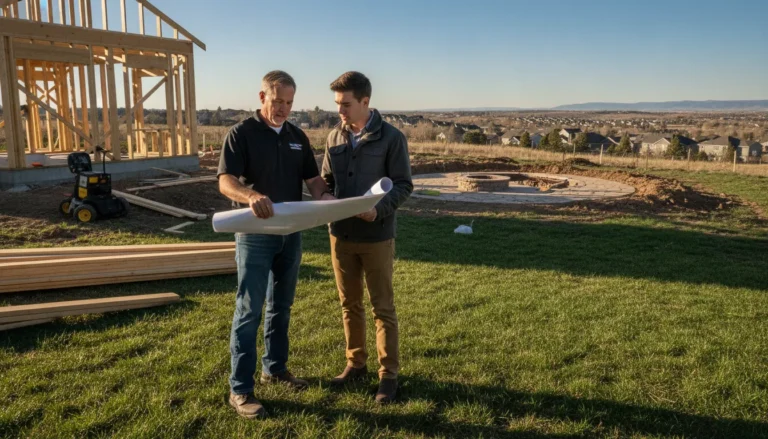
- Site assessment and design: A contractor evaluates your lot, soil conditions, existing pool setup, drainage patterns, and your goals for the space. This is where material recommendations get tailored to your specific situation.
- Permitting: Denver and surrounding municipalities require permits for concrete work, structural decks, and any electrical work (lighting, pumps). Your contractor handles the application and ensures the design meets local building codes.
- Base preparation: Old materials are removed if needed. The subgrade is excavated, compacted, and layered with gravel to create a stable foundation. This step is where shortcuts cause the most problems later.
- Forming and pouring (concrete) or base and setting (pavers): For concrete, forms are built to establish the shape and slope. Concrete is poured, finished, and cured over several days. For pavers, a sand bed is laid, units are placed, and joints are filled and compacted.
- Finishing and sealing: Stamped concrete gets sealed after curing. Pavers may get a sealer depending on the material. Coping is installed. Final grading ensures water drains away from the pool and the house.
- Final walkthrough: You inspect the completed work, confirm everything matches the plan, and receive maintenance guidance for your specific materials.
Most residential pool deck projects in Denver take one to three weeks from start to finish, depending on the size and complexity of the design. Concrete projects need additional curing time (typically 7 days) before the deck can handle furniture and foot traffic.
Maintaining Your Pool Deck in Colorado
Every pool deck material needs some level of ongoing care to perform well in Denver’s climate. Here’s what to expect:
- Concrete (all finishes): Sweep regularly to remove debris that holds moisture. Reseal stamped and decorative concrete every 2-3 years. Repair small cracks promptly before freeze-thaw widens them. Avoid de-icing salts; use sand for winter traction instead.
- Pavers: Refill joints with polymeric sand as needed (usually every 2-3 years). Replace any cracked or stained individual units. Check for settling after spring thaw and re-level as needed.
- Natural stone: Seal annually or biannually depending on the stone type. Clean pool chemical residue promptly to prevent etching (especially on travertine and limestone).
- Composite: Wash with mild soap and water twice per year. Check for any warping or fastener issues at the start of each season.
- Wood: Sand, stain, and seal annually. Check for loose boards, popped nails, and any soft spots that indicate rot.
A well-maintained pool deck will last 20 to 30 years or longer for concrete and stone options. Skipping maintenance, especially sealing, is the number one reason pool decks fail early in Colorado.
Frequently Asked Questions
What is the best material for a pool deck in Denver?
Poured concrete with a brushed or stamped finish is the most popular and practical choice for Denver pool decks. It handles freeze-thaw cycles well, provides good slip resistance, and offers a wide range of decorative options. Travertine pavers are an excellent upgrade for homeowners who want a premium look with natural heat resistance.
What is the coolest pool deck surface for hot Colorado summers?
Travertine pavers and light-colored brushed concrete stay the coolest underfoot. Both reflect more sunlight than darker alternatives. Acrylic-based cool deck coatings can also be applied to existing concrete to reduce surface temperature by 30-40%.
How long does a pool deck last in Colorado?
A properly installed and maintained concrete pool deck lasts 25-30 years in Denver’s climate. Natural stone pavers can last even longer with regular sealing. Wood decks typically need board replacement after 10-15 years, and composite decks last 20-25 years with minimal maintenance.
Do I need a permit to build a pool deck in Denver?
Yes, most pool deck construction in Denver and surrounding cities requires a building permit. Concrete flatwork, structural raised decks, and any associated electrical work (for lighting or pumps) all need permits. Your contractor should handle the permitting process as part of the project.
Can I resurface an existing pool deck instead of replacing it?
In many cases, yes. If your existing concrete deck is structurally sound but worn or outdated, concrete resurfacing can apply a new decorative layer over the old surface. This is a faster and less disruptive option than full removal and replacement. However, if the existing slab has major cracking, heaving, or drainage problems, a full rebuild is the better investment.
Build a Pool Deck That Lasts in Denver
The right pool deck material depends on your budget, your design goals, and how much maintenance you’re willing to do. For most Denver homes, concrete in some form (poured, stamped, or pavers) delivers the best combination of durability, design flexibility, and climate performance.
Whatever direction you choose, proper installation matters more than the material itself. A premium material on a poorly prepared base will fail faster than a basic finish on a solid foundation. Working with a Denver concrete contractor who understands Colorado’s soil, weather, and building requirements is the single most important decision you’ll make for this project.
Faros Construction Services builds pool decks, concrete patios, and hardscape features for homeowners across the Denver metro area. Ricardo Alfaro and the Faros team bring over 30 years of construction experience and a hands-on approach to every project.
Contact Faros Construction at (720) 594-5604 or request a free quote online.