
Deck Contractors in Centennial
Centennial’s neighborhoods went in through the 1970s and ’80s. The trees that came with them are now forty and fifty years old, and they are the best thing about living here. They are also the reason your deck is failing.
A deck under heavy canopy never fully dries out. It gets less sun, holds more moisture, and stays damp for days after a storm while a deck two miles away in the open is bone dry by noon. Leaves and needles pack into the board gaps every fall and sit there holding water against the wood. Mold and algae take hold. Rot starts from underneath, where nobody looks.
Same lumber, same builder, half the service life. It’s not the wood’s fault — it’s the shade, and almost nobody designs for it.


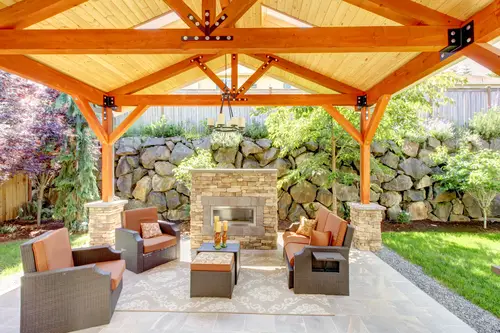
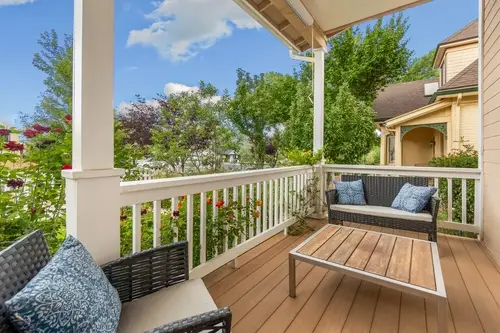
Custom Deck Building in Centennial
Most of the metro is trying to escape the sun. Centennial is often trying to find it.
A deck buried under canopy is cold in spring, cold in fall, damp most mornings, and used maybe four months a year. The design question here isn’t “where do I put the pergola” — it’s where does the light actually land, and how do I get the deck there?
Sometimes that means siting the deck off a corner instead of flush against the house, out from under the crown. Sometimes it means a tiered design that pushes a lounge platform into the one sunny patch of yard. Sometimes it means selective limbing — which is a conversation with an arborist, not with us, but we’ll tell you when it’s the real answer.
We’d rather move the deck than sell you a heater. Where a deck should meet a patio at grade, we plan it as one design through our hardscaping services.
Decking Materials for Shaded Lots
- Capped composite — The strongest choice under canopy. Doesn’t absorb water, won’t rot, and resists the mold and algae that plague wood in permanent shade. Choose a texture you can actually scrub. Requires tighter joist spacing than wood — a framing cost some bidders quietly omit.
- Cedar — Beautiful and naturally rot-resistant, and it suits Centennial’s established homes. But in deep shade it wants more maintenance, not less, and it will gray and green up if you neglect it. Be honest about the upkeep before you choose it.
- Pressure-treated — The value option, and what’s holding everything up regardless of surface.
We aren’t a dealer for any single brand, so the tradeoffs you get are the real ones.
Decks Designed for Shade and Moisture
If your deck sits in deep shade, the entire build should change. Most contractors don’t change a thing.
- Airflow underneath is the whole game. A deck that can breathe dries out. A deck skirted tight to the ground, with no ventilation and a decade of leaf litter packed under it, is a rot factory. We keep the underside open or properly vented, and we make sure you can actually get under there to clean it.
- Board gaps get sized for debris, not just expansion. Too tight and every fall the gaps pack solid, holding moisture against your boards all winter. It’s a small spec that decides a lot.
- Joist tape and drainage matter more here. Water sitting in fastener holes is where framing rot begins, and in shade it never gets a chance to dry.
- Material selection flips. Untreated or lightly-finished wood in permanent shade is a losing bet — it will grow algae and it will stay damp. A quality capped composite handles it far better. Even then, shade means mold can grow on the surface film, so texture and cleanability are worth thinking about.
- And the trees themselves are the client. A forty-year-old shade tree is worth real money and can’t be replaced in your lifetime. We plan footing locations around major root systems rather than augering straight through them. Cutting the wrong root to save an hour on a footing can kill a tree that’s worth more than the deck.
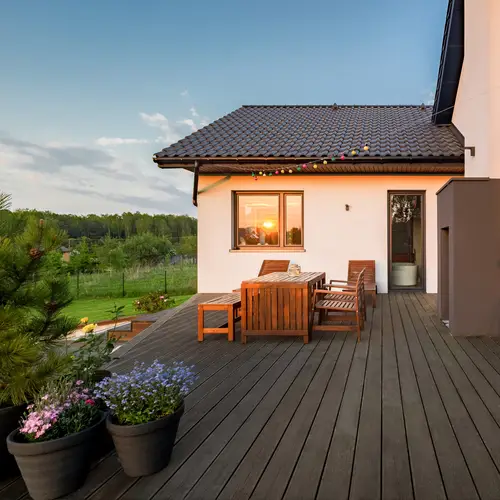
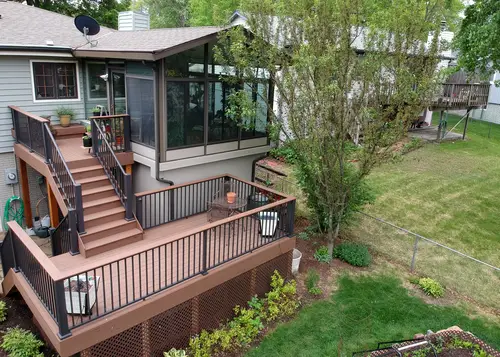
What Working With Us Looks Like
The industry’s usual failure isn’t bad carpentry. It’s a company that sells the job, then hands it to whichever subcontracted crew is free that week. The person who made promises is gone. The crew never heard them.
- Ricardo is on your build. Thirty-plus years of structural work, personally on the footings, the ledger, and the ventilation detailing.
- We look underneath. On a shaded deck, that’s where the truth is.
- In-house crews, demo to walkthrough.
- A proposal you can read. Line-item scope, named materials, real timeline.
- Licensed and insured, proof on request. Ask any deck contractor in Centennial for their certificate of insurance before you sign. Explore our recent outdoor projects.
Elsewhere in the metro: Littleton, Highlands Ranch, Aurora, and Denver.
Deck Contractor Services in Centennial
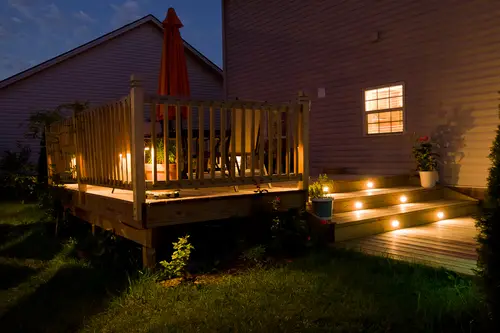
Custom Deck Building
Sited to find the sun, not fight it.
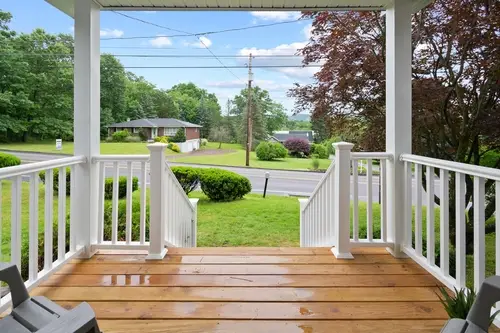
Composite Deck Installation
Footings to railing, sited around root systems, permitted through the City of Centennial.
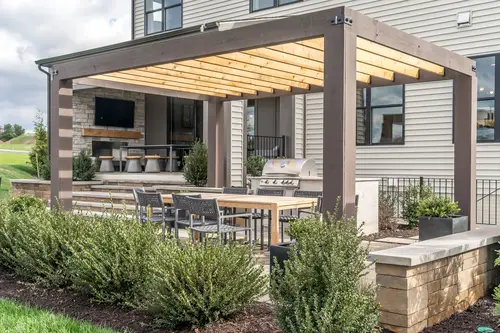
Deck Replacement
Rebuilds of decks rotted from below, where the damage doesn't show.
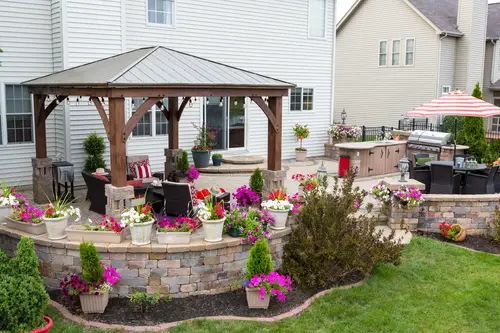
Shade & Moisture-Resistant
Ventilation, drainage, and materials built for life under canopy.
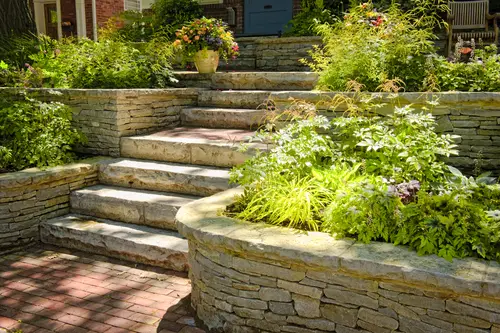
Multi-Level Decks
Tiered layouts that reach the sunny part of the yard.
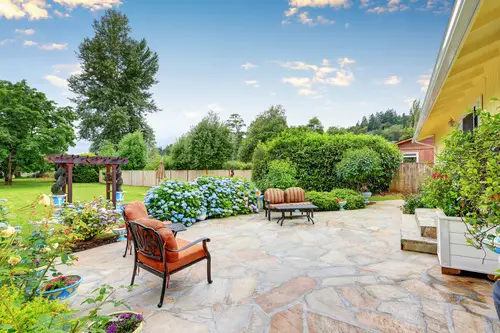
Railings & Stairs
Cable, metal, composite, wood; lighting, seating, privacy screening.
How a Centennial Deck Project Runs
On-Site Consultation
We track where the sun actually lands, look at canopy and root systems, and check the existing deck from underneath. Budget discussed honestly.
Design and Itemized Proposal
Layout, scope, materials, timeline, price — with ventilation and drainage specified, not assumed.
Permits & HOA Approval
Filed through the City of Centennial, with HOA review in parallel where it applies.
Construction
Crews arrive when we said. Site cleaned daily. One point of contact who replies.
Walkthrough and Care Guidance
We fix anything that isn't right, then give you a cleaning schedule that actually accounts for the leaf drop you'll get every October.
Deck Installation in Centennial
- Footings below the frost line, sized to conditions in the hole — and sited around root systems.
- Ledger through-bolted to code and flashed above and behind. That connection causes a disproportionate share of catastrophic deck failures, and in shade the consequences of a bad one are worse.
- Ventilation and drainage designed in, not left to chance.
- Hot-dip galvanized or stainless hardware, because modern treated lumber corrodes the wrong fasteners — faster in constant damp.
- Framing sized for wet spring snow, which is far heavier than midwinter snow.
Permits go through the City of Centennial. We file, schedule inspections, and build to pass the first time.
Centennial’s original decks are now thirty to forty-five years old, and shade has aged them faster than the calendar suggests. What we find:
- Rot from underneath — framing that looks fine from above and crumbles from below
- Fasteners corroded well past their years in permanently damp conditions
- Board gaps packed solid with decades of compacted debris
- Ledgers never flashed, rotting the wall behind them
- Guardrails that flex, with baluster gaps wider than current code allows
- Falling-limb damage — mature trees drop limbs, and wet spring snow brings them down hard
If the substructure is genuinely sound, resurfacing costs a fraction of a rebuild and we’ll tell you so. But under canopy we’re especially skeptical, because the damage is on the side you can’t see. We inspect the frame from below before we recommend anything. New boards over rotted framing is the worst outcome available — it looks solved and isn’t.
Building Across Centennial and the South Metro
We also build throughout the south metro — Littleton, Highlands Ranch, Parker, Greenwood Village, and Lone Tree — and across the wider Denver metro area.
Frequently Asked Questions
Because it never dries. Deep canopy means less sun, less airflow, and days of retained moisture after every storm, while packed leaf debris in the board gaps holds water directly against the wood. Rot typically starts underneath, on the side nobody inspects. It’s the most common failure we see in Centennial.
Capped composite, in most cases. It doesn’t absorb water and won’t rot. Mold can still grow on the surface in deep shade, so pick a texture you can actually scrub. Wood can work, but only with real airflow underneath and maintenance you’ll genuinely keep up.
Usually, yes — but it takes planning. Footing locations get sited around major root systems rather than augered wherever is convenient. Cutting the wrong root can kill a forty-year-old tree, which is a far bigger loss than any savings on the deck.
Consider moving it. A tiered design that reaches into the sunny part of the yard, or a deck sited off a corner rather than flush to the house, will get used far more than the same deck under the crown. It’s worth solving at design rather than living with.
Almost always, particularly for anything attached to the house or raised above grade. We confirm the current process for your address and handle the application and inspections.
Let's Look Underneath
On a shaded Centennial deck, what’s below the boards tells the real story. Ricardo will get under there, tell you what he finds, and give you a real number.