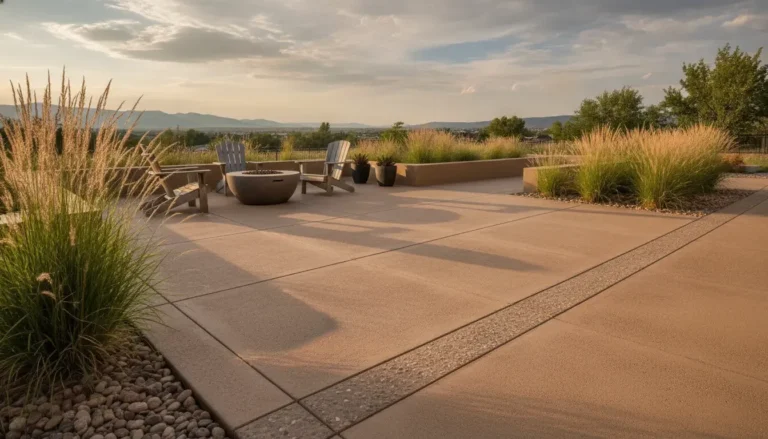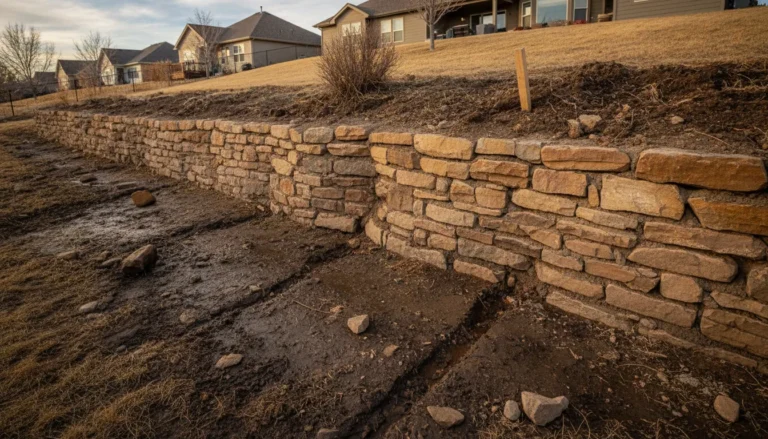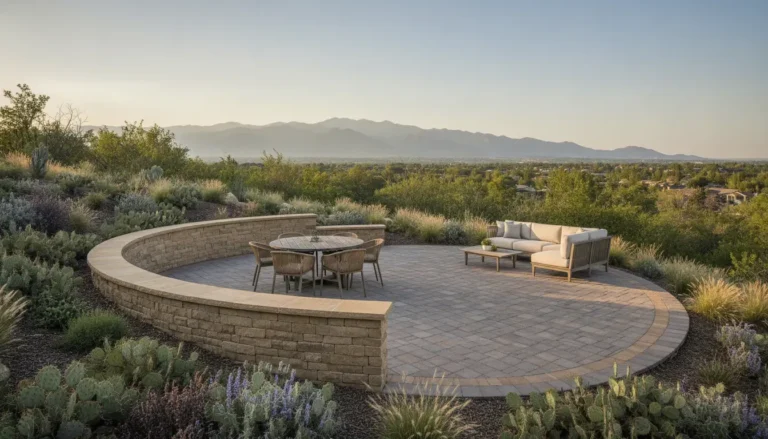

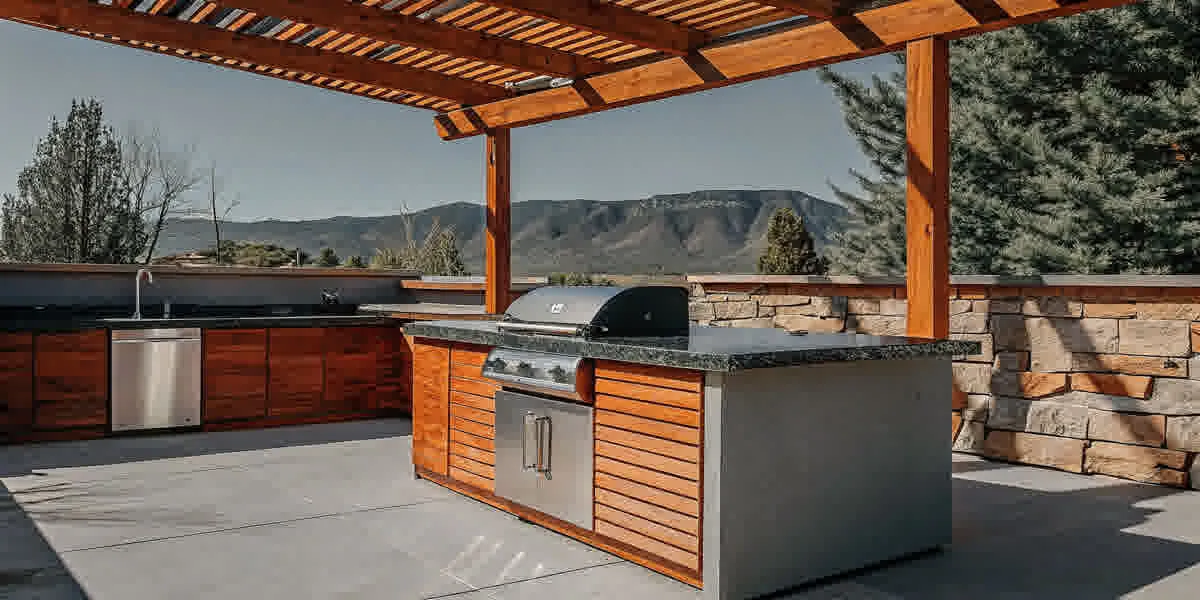
An outdoor kitchen should feel like a natural extension of your Denver backyard, not an appliance placed on an unfinished patio. The best results come from planning the foundation, utilities, drainage, cooking zones, and seating area together so the finished space works comfortably through changing Colorado weather.
Outdoor kitchen installation Denver homeowners can rely on begins with a stable, properly reinforced concrete foundation and a layout that connects cooking, preparation, and seating zones. Careful integration with the existing patio and hardscape also helps protect drainage, preserve comfortable movement, and create a cohesive outdoor living space.
Concrete provides a durable base when it is correctly installed, while thoughtful patio integration helps the kitchen complement the rest of the yard. Before selecting appliances or surfaces, review our outdoor living spaces we design and build and consider how the new kitchen will support the way your household gathers. The installation process is the right place to begin.
Outdoor Kitchen Installation Denver: Understanding the Outdoor Kitchen Installation Process in Denver
Outdoor kitchen installation in Denver starts with careful site planning, then moves through foundation work, utility connections, construction, and safety checks. A professional process helps the finished kitchen work with your patio, handle local weather, and support safe everyday use.
Evaluate the site and existing patio
The first step is an on-site review of the proposed cooking, prep, and seating areas. The installation team should assess access to gas, water, and electrical service, along with the condition of any existing concrete or patio surface. An older slab may need repair, reinforcement, or replacement before it can support cabinetry, appliances, and countertops. The layout should also preserve comfortable movement between the kitchen and the rest of the outdoor living space.
Prepare a reinforced, sealed foundation
A properly installed concrete foundation provides the stability an outdoor kitchen needs. Concrete that is correctly reinforced and sealed can offer long-term durability through Denver’s temperature extremes. Foundation preparation also includes grading and drainage planning. Water that collects around the slab can contribute to settling, surface hazards, and freeze-thaw damage. For this reason, the foundation should be planned as part of the surrounding hardscape, not treated as an isolated pad. Learn more about a concrete foundation for your outdoor kitchen.
Plan and route the utilities
Gas, water, and electrical lines should be mapped before construction begins. The route depends on the selected grill, refrigerator, sink, lighting, and other appliances, as well as the location of existing service lines. Planning these connections early helps prevent disruptive changes after the slab and cabinets are in place. Outdoor electrical outlets also require appropriate weather protection and GFCI safety measures.
Build the kitchen and complete the safety checks
Once the foundation and rough utilities are ready, the team can install the structure, counters, appliances, and finish materials. The timeline varies with site conditions, utility distance, layout complexity, and whether existing patio work needs attention. Professional installation is especially important for gas appliances. Expert work helps ensure gas connections meet safety requirements and that appliances receive proper ventilation. Before the kitchen is used, connections, clearances, drainage, and appliance operation should all be reviewed. This attention to detail supports a safe installation and lasting results in the Denver Metro Area.
Choosing Materials That Withstand Colorado’s Climate
The best outdoor kitchen materials for Denver Metro Area homes are selected for freeze-thaw cycles, strong high-altitude UV exposure, and rapid temperature changes. Stainless steel, sealed concrete, natural stone, and outdoor-rated finishes can provide lasting performance when they are matched to the site and installed correctly.
Choose the right stainless steel grade
Stainless steel is a practical choice for outdoor cabinetry, appliance panels, and hardware because it resists corrosion and is easy to maintain. Grade 304 is widely considered the standard for outdoor kitchens and is suitable for many Denver settings. Grade 316 offers additional protection in more demanding environments, such as locations exposed to salt or unusually high humidity. The National Kitchen and Bath Association identifies 304 as a common outdoor-kitchen grade while noting that 316 may be appropriate for harsher conditions.
Regardless of grade, look for outdoor-rated construction and corrosion-resistant finishes. A brushed or protective finish can help reduce visible wear, while quality hardware keeps doors and drawers operating smoothly through seasonal changes.
Plan for sun, snow, and temperature swings
Denver’s intense sunlight can fade colors and degrade finishes faster than homeowners expect. UV-resistant coatings and materials help preserve the appearance of cabinet surfaces, siding, sealers, and decorative details. This matters especially for kitchens without a roof or pergola, where surfaces receive direct sun for much of the year. Outdoor structures in the Denver area should account for high UV exposure, as well as snow and significant freeze-thaw cycles. Faros Construction Services’ climate guidance recommends treating these conditions as core material-selection considerations.
Rapid thermal fluctuations also deserve attention. Materials expand and contract as temperatures change, so durable assemblies need compatible components, flexible joints where appropriate, and installation methods designed for outdoor movement. Good planning helps limit cracking, separation, and premature wear.
Use durable stone and concrete thoughtfully
Natural stone can create a strong visual connection between the kitchen, patio, and surrounding landscape. Stone veneer is durable and heat resistant, while natural stone or outdoor-rated tile should be installed with compatible mortars that can accommodate thermal expansion and contraction. Review the application with an experienced installer before selecting a specific stone.
Reinforced, properly sealed concrete is another dependable option for foundations and structural elements. A stable base supports cabinets and appliances, while thoughtful drainage helps prevent water accumulation that can contribute to settling or freeze-thaw damage. Choosing materials as a complete system, rather than selecting each surface in isolation, gives an outdoor living space a more cohesive appearance and better long-term performance.
Planning Your Outdoor Kitchen Layout for Maximum Function
A functional outdoor kitchen keeps cooking, preparation, serving, and seating connected without making people cross through active work areas. A thoughtful layout also respects the existing patio, utility access, drainage, safety clearances, and the way your household actually uses the Denver backyard.
Start with the work triangle
The kitchen work triangle places the grill, sink, and primary prep area within practical reach of one another. Applying this concept outdoors can reduce unnecessary walking and make it easier to move from washing and preparing food to cooking and serving. The triangle does not need to be perfectly geometric. It should fit the shape of the patio and leave enough room for people to move comfortably around each station.
Separate prep, cooking, and service zones
Place a generous prep surface near the grill so ingredients, utensils, and finished food have a logical landing area. A sink nearby can support washing and cleanup, while a service counter or pass-through edge can face the dining area. Keep seating outside the main cooking path, especially where guests may gather near hot surfaces. This zoning approach creates a smoother workflow and helps the kitchen serve the larger outdoor living area rather than competing with it.
If the kitchen is being added to an established patio, plan around its existing edges, steps, retaining elements, and walking routes. Utility extensions, drainage, and the relationship between the kitchen and seating should be resolved together. Faros Construction Company approaches these projects as connected outdoor living spaces we design and build, not as an isolated cabinet line placed on top of a patio.
Protect the work area and preserve safe clearance
Follow the appliance manufacturer’s specified clearances around grills, burners, and other heat-producing equipment. Adequate space helps protect nearby cabinetry and countertops from heat and supports fire safety. It also gives the cook room to open lids, turn, and set down hot items without striking a wall or passing guest.
A covered design, such as a roof extension or pergola, can shade the cooking zone and help protect appliances and surfaces from direct sun, rain, and snow. An uncovered kitchen may feel more open, but it needs weather-ready materials and a layout that does not place the grill where runoff or drifting snow creates problems. Add focused task lighting over the grill and prep counter, then use softer ambient lighting along paths and seating. Good lighting improves visibility during food preparation while helping everyone navigate the space safely after sunset.
Gas vs. Charcoal: Choosing the Right Cooking Setup for Your Outdoor Kitchen
The right cooking appliance depends on how you plan to use the space, from quick weeknight meals to slow weekend grilling. Gas delivers speed and control, while charcoal brings a deeper smoky character, so the best choice should also account for fuel access, ventilation, and safe clearances.
| Consideration | Gas | Charcoal |
|---|---|---|
| Convenience and control | Heats quickly and allows precise temperature adjustments. Gas appliances are often preferred in Denver for efficient outdoor cooking during changing weather. | Requires more preparation, including lighting and waiting for the coals to reach cooking temperature. Heat control comes from airflow, coal placement, and quantity. |
| Flavor | Produces a clean, consistent cooking environment and works well for frequent grilling, vegetables, and foods that benefit from steady heat. | Creates the distinct smoke-forward flavor many homeowners want for burgers, ribs, and other foods cooked over live coals. |
| Fuel choice | Natural gas can be a convenient, reliable option when a municipal line is available. Propane offers flexibility where a permanent gas connection is not practical. | Uses charcoal or briquettes stored on site. Plan for dry storage and a safe method for handling hot ash after cooking. |
| Installation planning | Requires properly planned gas connections and ventilation. NFPA guidance emphasizes ventilation for gas appliances to help prevent combustible gas accumulation. | Still needs a carefully planned appliance location, heat-resistant surrounding materials, and safe ash management, even without a gas line. |
Plan clearances before selecting the appliance
Every grill must have the clearances specified by its manufacturer. Those distances protect cabinetry, countertops, walls, overhead structures, and nearby seating from excessive heat. Keep combustible materials away from the appliance, and do not assume an open-air layout eliminates the need for ventilation around a gas setup. A professional installation team can coordinate the appliance location with the gas route, enclosure, and surrounding hardscape.
For a permanent gas grill, natural gas may simplify regular use when the property already has suitable service. Propane can make sense when you want fuel flexibility or the kitchen is located beyond an accessible gas line. Discuss both options during outdoor living space design and construction so the cooking setup supports the entire Denver backyard plan.
Countertop and Surface Materials Built for Denver Weather
The best outdoor kitchen surfaces for Denver combine heat resistance, freeze-thaw durability, and installation methods suited to rapid temperature changes. Granite, professionally sealed concrete, natural stone, and outdoor-rated tile can all perform well when the material, substrate, joints, and sealers are selected as one system.
Granite for heat and everyday durability
Granite is a strong choice around grills and burners because it resists heat and stands up well to outdoor use. The Natural Stone Institute identifies granite as a durable countertop material that can handle the elements and freeze-thaw cycles when properly sealed. Sealing helps limit moisture absorption, which matters when water enters small pores, freezes, and expands.
Color and finish also deserve attention in a high-altitude environment. Direct sun and fast shifts between warm afternoons and cold nights can accelerate fading or surface wear in unsuitable products. A qualified installer can match the slab, edge detail, support structure, and sealer to the kitchen’s exposure rather than treating the countertop as an isolated finish. For the supporting base, a concrete foundation for your outdoor kitchen provides a stable starting point when correctly reinforced and installed.
Concrete countertops need a protective sealing plan
Concrete offers a clean, custom appearance and can be shaped around a grill, sink, or unusual wall line. It is not maintenance-free, however. Outdoor concrete countertops should receive professional, high-quality sealing to help resist stains from oils, wine, acidic juices, and other common cooking ingredients. Faros Construction Company recommends a sealing approach that accounts for exposure, drainage, and the way the surface will be used.
Good installation also includes controlled joints and a properly prepared base. These details help the surface respond more predictably as Colorado temperatures move through repeated heating and cooling cycles.
Natural stone and tile for a coordinated finish
Natural stone can connect the kitchen structure to nearby walls, patios, and landscape features. Outdoor-rated porcelain or ceramic tile provides another flexible option, with many colors and textures available. Both choices require climate-aware installation. Natural stone and tile should be set with compatible mortars and movement considerations so thermal expansion and contraction do not lead to loose pieces or cracking. This is especially important where the countertop meets masonry or other hardscape materials.
With the right materials, sealing, drainage, and craftsmanship, the surface becomes part of a durable outdoor kitchen system instead of a weak point in Denver’s changing weather.
Integrating Your Outdoor Kitchen with Existing Patios and Hardscapes
An outdoor kitchen should feel like a natural extension of your patio, not an isolated structure placed on top of it. Successful integration depends on coordinating drainage, shade, lighting, surface materials, and movement between cooking, dining, and seating areas.
Start by reviewing how water currently moves across the patio and surrounding hardscape. New counters, appliance bases, and walls should not block existing drainage paths or direct runoff toward the home. Proper drainage helps prevent pooled water, slippery walking surfaces, foundation problems, and freeze-related damage during Denver’s changing seasons. A qualified hardscape professional can coordinate grading and drainage before construction begins. See Faros Construction’s hardscape and landscape services for guidance on integrating the kitchen with an existing outdoor environment.
Build shade into the cooking area
Afternoon sun can make an outdoor kitchen uncomfortable, particularly when the grill and surrounding surfaces are already warm. An attached or freestanding pergola can provide useful shade over the cooking and serving zones while giving the kitchen a stronger visual connection to the patio. A pergola may also help protect appliances and countertops from direct weather exposure. Explore ideas for shaded outdoor kitchen seating areas when deciding whether the structure should cover the grill, dining table, or both.
Plan lighting for safety and atmosphere
Lighting should serve two purposes. Focused task lighting helps you see food, tools, and work surfaces after sunset, while softer ambient lighting supports safe movement between the kitchen, patio, and seating areas. Place fixtures so they illuminate steps, edges, and walkways without creating harsh glare across the cooking surface. Outdoor electrical components should be rated for the environment and installed with appropriate protection.
Match the existing hardscape
Material transitions are most successful when they repeat colors, textures, or shapes already present in the yard. Natural stone veneer can create a durable, heat-resistant finish that blends with surrounding hardscape. Outdoor-rated tile and stone also require installation methods that account for thermal expansion and contraction. If the patio needs work before the kitchen is added, review this guide to a suitable patio foundation for your outdoor kitchen. Thoughtful alignment of joints, borders, and walking routes helps the finished installation look intentional and keeps the entire outdoor living space easy to use.
Permits, Codes, and Hiring the Right Team in the Denver Metro Area
Outdoor kitchen installation Denver projects often involve more than cabinets and appliances. A qualified team should review the site, coordinate permits and utility work, and confirm that each part of the installation meets applicable safety and building requirements.
Code requirements can affect the foundation, electrical work, gas connections, ventilation, and how the kitchen relates to the home and surrounding structures. The International Energy Conservation Code provides baseline efficiency targets for residential building improvements and may apply when an outdoor project affects the building or its systems. Review the current guidance through the Colorado building code guides and confirm requirements with the local authority having jurisdiction.
Plan electrical and gas work before construction
Outdoor electrical outlets should be rated for outdoor use and protected by ground-fault circuit interrupter, or GFCI, devices. GFCI protection helps reduce electrical hazards in wet or damp conditions, which is especially important around sinks, prep areas, and weather-exposed appliances. The National Fire Protection Association identifies GFCI protection as an essential part of outdoor electrical safety.
A permanent natural gas connection may require a gas line permit, inspection, and work by an appropriately qualified professional. Requirements vary by jurisdiction and by the scope of the line extension, so the installation team should identify the permitting path before trenching or connecting appliances. Gas appliances also need proper ventilation and manufacturer-specified clearances to help prevent gas accumulation and heat damage.
Choose a team that manages the full scope
Professional installation matters because an outdoor kitchen is a coordinated construction project, not a standalone appliance setup. The team must connect the foundation, drainage, hardscape, utilities, cabinetry, countertops, and finish details in the correct order. Professional installation is particularly important for gas connections and ventilation requirements, as noted in this home building and installation resource.
Consult with a contractor who can manage the full scope from foundation to finish. That approach creates one clear point of coordination, helps surface site or utility issues early, and supports a safer, more durable result for your Denver Metro Area backyard.
Frequently Asked Questions
What should I consider before planning an outdoor kitchen in Denver?
Start with the site, not the appliances. Review sun, wind, drainage, utility access, seating flow, and the relationship between prep, cooking, and serving zones. Denver projects also need materials that handle freeze-thaw cycles, high UV exposure, and rapid temperature changes.
Which materials hold up best in Colorado’s climate?
Choose outdoor-rated cabinetry, corrosion-resistant stainless steel, and surfaces designed for thermal movement. Grade 304 stainless steel is commonly used for outdoor kitchens, while granite can provide a durable, heat-resistant countertop when properly sealed. Natural stone and tile should be installed with compatible mortars.
Is gas or charcoal better for an outdoor kitchen in Denver?
Gas offers quick starts and precise temperature control, which can be convenient when weather changes quickly. Charcoal may suit homeowners who prioritize smoke flavor and a traditional cooking experience. Any gas setup requires proper ventilation and safe connections, so have those components professionally installed.
Can an outdoor kitchen be added to an existing patio?
Yes. The design should account for the patio foundation, drainage, utility routes, walking paths, and existing hardscape materials. A well-planned installation makes the kitchen feel like part of the outdoor living area instead of an obstruction, while preserving comfortable space for cooking and seating.
What countertop is best for an outdoor kitchen?
Granite is a strong option for heat resistance and durability, provided it is sealed for outdoor exposure. Sealed concrete can also work well when professionally installed and maintained. Your choice should match the structure, appliance clearances, drainage plan, and other patio finishes.
Schedule Your Outdoor Kitchen Consultation
A thoughtful plan can help your outdoor kitchen fit your Denver backyard, existing hardscape, and everyday cooking style. Schedule a free consultation to discuss the layout, materials, utilities, and installation details that will support lasting results. Call (720) 594-5604 to start planning with the Faros Construction Company team.