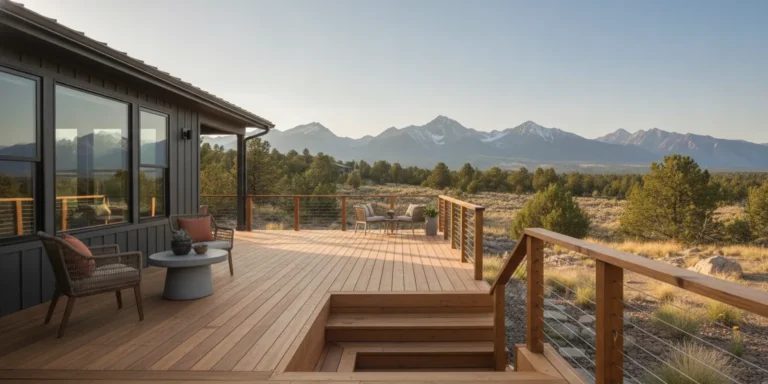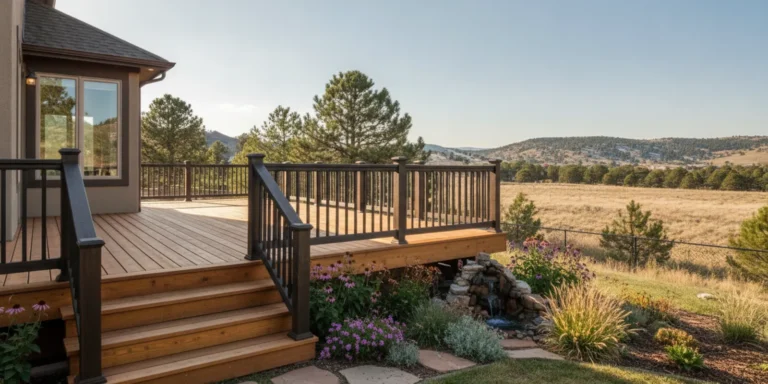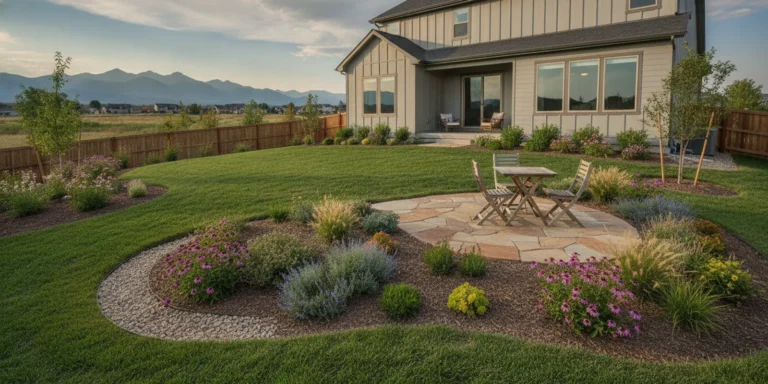

A stamped concrete patio can give a Denver Metro Area backyard the character of slate, brick, cobblestone, or wood while providing one continuous, durable surface. The right result depends on more than selecting an attractive pattern. Climate-ready mix design, drainage, base preparation, curing, and a realistic installation schedule all shape how the patio performs through Colorado winters.
A stamped concrete patio Denver homeowners can rely on should combine a suitable pattern with air-entrained concrete, a compacted sub-base, positive drainage, and protective sealing. Typical project ranges run from $8 to $25 per square foot. Many residential installations are completed within one to two weeks, depending on design complexity, site conditions, permitting, and weather.
Freeze-thaw protection deserves special attention because water in concrete pores expands as it freezes, creating pressure that can contribute to microcracking. With those performance requirements in mind. The design process starts by comparing the most popular pattern families and considering how each will suit your home, landscape, and daily use.
Popular Stamped Concrete Patterns for Denver Patios
The right stamped concrete pattern gives a Denver patio the character of natural stone, brick, or wood while retaining the strength and practical performance of concrete. Pattern scale, texture, color, and installation quality all influence how the patio looks today and how well it holds up over time.
Ashlar slate for a refined, natural look
Ashlar slate is one of the most requested choices for homeowners who want the appearance of large-cut stone without the irregular edges of hand-set pieces. Its broad shapes create a calm, structured surface that works well beside modern homes, covered patios, outdoor kitchens, and simple planting beds. Subtle color variation can add depth without making the patio feel visually busy.
Cobblestone for classic texture
Cobblestone patterns use smaller, rounded shapes to create a traditional European feel. They can complement historic details, garden paths, fire-pit areas, and patios designed around curved seating zones. Because the pattern contains many joints and texture lines, it can also help make ordinary surface marks less noticeable between maintenance visits.
Brick for warmth and definition
Brick stamping brings a familiar, welcoming character to patios, walkways, and borders. Running-bond, herringbone, and basket-weave layouts each create a different visual rhythm. A brick border around a slate or stone field can define the patio edge and connect it with nearby steps, walls, or other masonry features.
Wood plank for an outdoor living feel
Wood plank stamping is a strong choice when you want the warmth of timber without placing natural boards directly on the ground. Long plank lines can make a narrow patio appear more directional, while wider planks create a relaxed deck-inspired appearance. Color accents and grain details should be selected carefully so the surface looks intentional rather than overly uniform.
These are only four of more than 20 available pattern options. Faros can also combine custom patterns, borders, banding, and color treatments to create a design suited to your home and outdoor living plans. Integral color and surface-applied color hardeners offer different ways to establish the base tone, while a contrasting release agent can highlight texture and improve visual depth.
Pattern selection is more than a decorative decision. Intricate layouts require careful alignment and consistent texture depth, and some designs may be better suited to a particular patio size or shape. A thoughtful plan also considers drainage, surface traction, furniture placement, and the freeze-thaw conditions found across the Denver Metro Area. Review your options with Faros through our concrete contractor services in Denver before finalizing the pattern and color combination.
Understanding the Investment in a Stamped Concrete Patio
For Denver homeowners, the investment in a stamped concrete patio depends primarily on the surface area, design detail, site conditions, and installation requirements. A practical planning range is $8 to $25 per square foot, while a more detailed assessment accounts for labor, permitting, access, grading, drainage, and the selected pattern.
| Patio size | Planning range | Typical use |
|---|---|---|
| 100 square feet | $800-$2,500 | Small seating area or entry patio |
| 300 square feet | $2,400-$7,500 | Dining and conversation space |
| 500 square feet | $4,000-$12,500 | Expanded entertaining area |
| 1,000 square feet | $8,000-$25,000 | Large outdoor living layout |
These figures are planning ranges, not a proposal for a specific property. The lower or higher end may be appropriate depending on the work required below the slab and the amount of decorative detailing. Use this stamped concrete patio Denver options guide to compare the design and performance considerations of concrete and pavers before choosing a direction.
What changes the investment range?
Size is the first variable, but it is not the only one. A straightforward pattern over an accessible, prepared area generally requires less coordination than a complex layout with borders, multiple colors, tight access, demolition, or substantial grading. Pattern complexity can also increase the time needed for careful alignment and consistent texture.
Labor rates in the Denver area may fall around $50-$80 per hour. Site access matters because limited room for equipment, long material paths, or difficult excavation can add labor. Drainage planning and a properly compacted base are also important parts of a durable patio installation, particularly in a freeze-thaw climate.
Permit fees are another planning item and may start at $20 for Denver-area projects. Requirements vary with the project and property, so permitting should be reviewed before construction begins rather than treated as an afterthought.
Consider long-term value, not just the initial budget
A well-designed stamped concrete patio can provide a strong return on investment, with industry guidance commonly citing about 90% ROI for these projects. That result depends on quality installation, a design that fits the home, and maintenance that protects the surface through Denver winters. A clear scope, realistic range, and careful material selection help homeowners make an informed decision without sacrificing craftsmanship.
How Denver’s Freeze-Thaw Climate Affects Stamped Concrete
Denver’s rapid temperature swings make installation details especially important for a stamped concrete patio. Air-entrained concrete, a well-prepared base, correctly placed control joints, and a durable sealant work together to reduce cracking and surface damage through seasonal freezing and thawing.
Colorado temperatures can shift by as much as 50 degrees within hours. When moisture enters concrete and then freezes, it expands and creates internal pressure. Repeated cycles can expose weaknesses in the slab, especially when the mix, drainage, or base preparation is not suited to the Denver Metro Area.
Why air entrainment matters
Air-entrained concrete contains a network of microscopic air spaces that gives expanding moisture room to move during a freeze. This does not replace proper installation, but it is an important part of selecting concrete for an exposed patio. A contractor should also account for the patio’s slope, drainage, soil conditions, and expected use before placement.
The foundation beneath the pattern
Stamped concrete needs more than an attractive surface pattern. The base must be properly excavated, compacted, and graded so the slab has consistent support and water can move away from it. Weak or uneven support can create settlement, stress, and cracks that become more visible in a decorative finish.
Control joints also help manage where natural shrinkage-related movement occurs. Their placement should work with the patio’s shape, edges, changes in width, and other planned features. Thoughtful joint layout is less noticeable than random cracking and helps protect the overall appearance.
Sealing for seasonal protection
A high-quality concrete sealant helps limit water penetration, shields the stamped surface from weather exposure, and supports color retention. It is not a permanent barrier. Plan to inspect the finish regularly and generally reseal every two to three years, with timing adjusted for sun, moisture, traffic, and the sealant used.
Faros approaches stamped concrete with Colorado conditions in mind, from base preparation and joint planning to mix selection and finishing. For practical guidance on freeze-thaw protection for concrete, review the maintenance considerations that help outdoor slabs remain durable between service visits.
The Stamped Concrete Patio Installation Timeline
A well-planned stamped concrete patio follows six clear stages, from the first site assessment through the workmanship warranty. In the Denver Metro Area, scheduling also needs to account for weather, concrete curing, and the freeze-thaw conditions that can affect long-term performance.
Consultation and site assessment
The process begins with a conversation about how you want to use the patio, how it should connect to your home, and which features matter most. Faros then evaluates the site, including access, drainage, existing grades, soil conditions, and the relationship to nearby structures. This step establishes a practical foundation for the design and helps identify site conditions that could affect the schedule.
Design and custom proposal
Next, the team develops a custom plan for the patio’s layout, pattern, color, borders, and connected features. The proposal explains the planned scope, materials, and sequence of work so you can make an informed decision before construction begins. A patio can also be coordinated with broader outdoor living spaces, such as seating areas, walkways, or other outdoor improvements.
Permitting and site preparation
When permitting is required, Faros helps coordinate that part of the project. Denver-area permit fees start at $20, although the full requirements depend on the scope and location. Preparation may include layout, excavation, grading, forming, drainage planning, and building a properly compacted subgrade.
Construction and curing
Construction includes subgrade preparation, reinforcement as needed, concrete placement, stamping, coloring, and sealing. Most residential projects are completed within one to two weeks, but the working schedule can change with site conditions and weather. The concrete still needs adequate curing time after placement. In Colorado, temperature swings can reach 50 degrees within hours, so the team must protect the slab and follow appropriate practices for air-entrained concrete and seasonal conditions. The patio should not be rushed into heavy use before it has properly cured.
Final walkthrough
After the work is complete, Faros conducts a final walkthrough with you. This is an opportunity to review the finished pattern, edges, transitions, drainage, sealing, and site cleanup, while also discussing care and normal curing expectations.
One-year workmanship warranty
Faros provides a one-year workmanship warranty on its projects. The warranty gives you a clear point of reference after installation and reinforces the company’s commitment to durable craftsmanship and accountable service.
Keeping Your Stamped Concrete Patio in Top Condition
Regular maintenance helps a stamped concrete patio stay attractive, comfortable, and durable through Denver Metro Area weather. A consistent cleaning and resealing routine protects the decorative surface from UV exposure, moisture, and freeze-thaw stress while giving you an opportunity to address small problems early.
Reseal on a predictable schedule
Plan to reseal the patio every two to three years, or sooner if the finish looks dull. Water no longer beads on the surface, or the color appears noticeably faded. Resealing rates commonly fall near $1 to $3 per square foot, depending on the patio’s condition, access, and sealer selected. The coating helps protect the surface and preserve the depth of the stamped color during Denver’s intense sunlight and repeated seasonal temperature changes.
Clean gently and consistently
Remove leaves, dirt, and spilled materials with a soft broom, garden hose, or a mild cleaner approved for decorative concrete. Avoid harsh acids, abrasive tools, and aggressive pressure washing that can wear away the sealer or disturb the surface texture. Cleaning regularly is easier on the finish than allowing grime and moisture to remain trapped in the pattern.
Address cracks before they spread
Inspect the patio in spring and fall, paying close attention to cracks, chipped edges, flaking, or areas where the surface feels loose. Small cracks should be evaluated and repaired promptly. Water entering those openings can expand during freezing weather, increasing the risk of spalling and wider surface damage. Deicing chemicals can add further stress, so avoid applying them to new concrete during its first winter and use them sparingly afterward.
Good installation and ongoing care work together. Drainage, appropriate concrete, and sound sealing reduce exposure to moisture, while timely repairs help maintain the patio’s appearance and service life. For long-term stamped concrete patio care, have surface damage assessed before it becomes a larger repair.
Frequently Asked Questions
What investment range should Denver homeowners plan for a stamped concrete patio?
A typical stamped concrete patio in Denver falls within an $8 to $25 per square foot range, according to Angi. The final investment depends on patio size, pattern detail, color selections, site access, preparation, and permitting. A site review provides a more useful budget than a square-foot estimate alone. Angi’s stamped concrete guide provides additional range context.
Can stamped concrete withstand Colorado freeze-thaw cycles?
Yes, when the mix and installation are suited to the Denver Metro Area climate. Air-entrained concrete creates microscopic voids that help relieve pressure as water freezes, while proper drainage. A compacted sub-base, control joints, curing, and regular sealing reduce exposure to moisture and movement. Research from the University of Colorado explains how air voids improve freeze-thaw resistance.
Which stamped concrete patterns work well for Denver patios?
Ashlar slate, cobblestone, brick, flagstone, and wood-plank patterns are practical starting points. Borders, banding, integral color, and surface color hardeners can make the design more distinctive. The best choice should complement the home’s architecture and provide a texture that remains comfortable and appropriately slip-resistant for the patio’s use.
How long does stamped concrete patio installation usually take?
Most residential projects are completed within one to two weeks, although weather, permitting, site preparation, curing, and design complexity can change the schedule. The work typically moves through consultation, design, permitting, construction, final walkthrough, and warranty review. Concrete also needs proper curing before regular heavy use.
How often should a stamped concrete patio be resealed?
Faros generally recommends resealing every two to three years to help protect the stamped surface from moisture, winter exposure, and fading. Clean spills promptly, avoid deicing chemicals during the first winter, and address drainage or cracking concerns early so small maintenance needs do not become larger repairs.
Ready to Plan Your Stamped Concrete Patio in Denver?
A thoughtful consultation can help you compare pattern options, plan for Denver Metro Area freeze-thaw conditions, and shape a patio that fits your outdoor space. Contact us to get a free consultation for your stamped concrete patio project. Faros Construction Company can help you take the next step with clear guidance and careful planning.