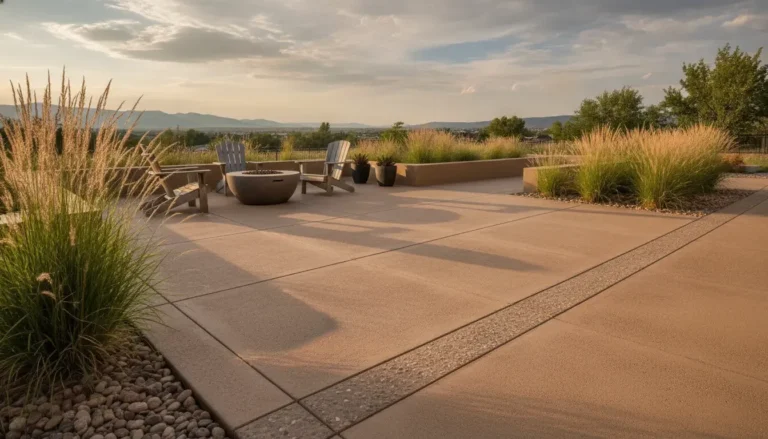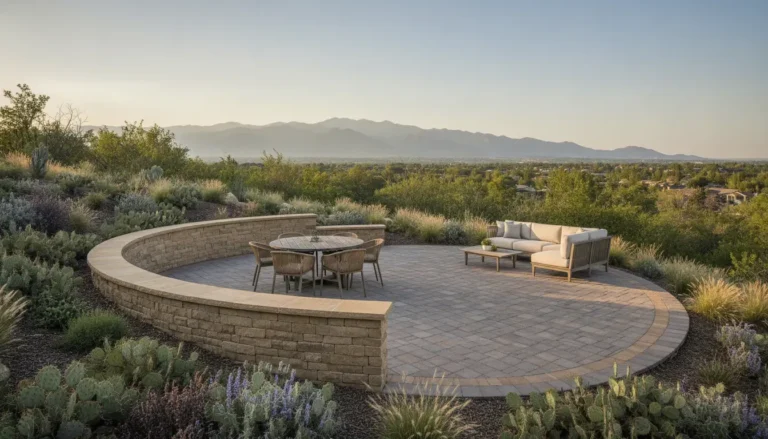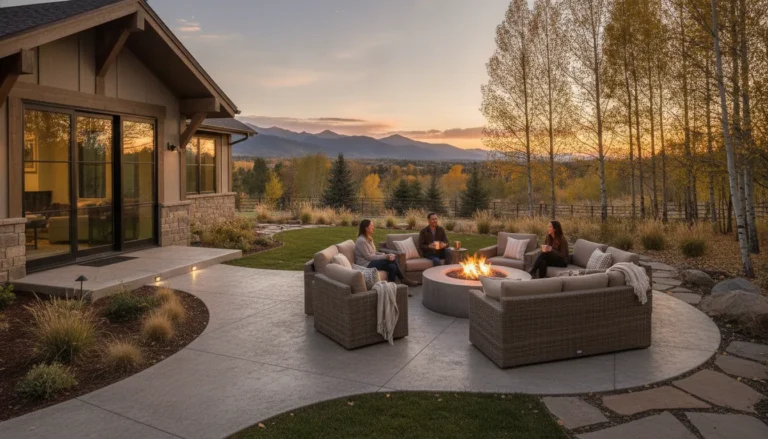

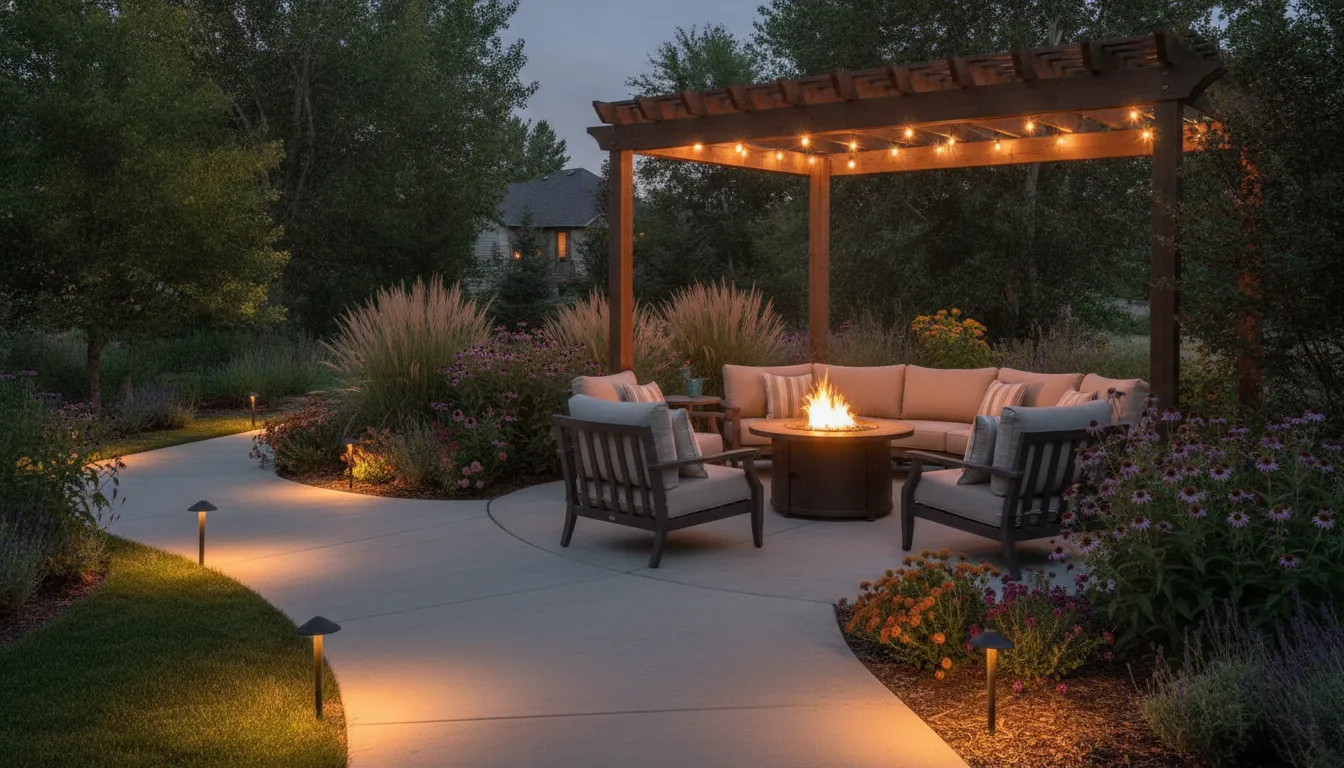
Good patio lighting does more than make an outdoor space look inviting after sunset. It should help people move from the house to the patio, see steps and grade changes, and gather comfortably without harsh glare. Denver Metro Area planning considers snow, drainage, and weather exposure. It also considers lighting coordination with the patio, walkway, plantings, and pergola.
Contact Faros to discuss a site-specific outdoor living project before you finalize your lighting plan.
The best landscape lighting for patios uses layers for movement, tasks, and atmosphere. Fixture placement, beam direction, and the way the space is used matter more than adding lights indiscriminately.
Start by viewing the patio from both seated and walking positions. This reveals which areas need practical visibility, which features deserve a softer accent, and how the setting can feel balanced instead of overlit.
What Makes Landscape Lighting for Patios Work Well?
Effective patio lighting supports clear visibility, comfortable gathering, and natural movement. The strongest designs use coordinated layers instead of one bright fixture.
Start with how the patio will be used after sunset. You may need light between the patio and house. You may also need to see a grade change. Plan for serving food and talking with guests without glare.
Build layers around movement and gathering
Path and step lighting provides visibility at transitions and edges. It should help people place their feet without turning the walkway into bright spots. Ambient light supports conversation. Accent light can draw attention to planting, walls, trees, or architecture.
This separation creates visual hierarchy. The eye can recognize the patio’s main destinations. Review each fixture from walking and seated viewpoints. A light that seems subtle while standing may shine into someone’s eyes at the table.
Coordinate light with the patio structure
Lighting works better when planned with the surfaces and structures that shape the outdoor room. Walls, steps, planting, pergolas, and deck edges can guide movement. Faros designs integrated outdoor living spaces with concrete, decks, pergolas, hardscaping, and landscape work.
For Denver Metro Area properties, review drainage, access, weather exposure, and applicable local or HOA requirements. These conditions can affect fixture, wiring, and control locations. Site-specific planning balances function and comfort.
Patio Lighting Ideas for Seating and Gathering Areas
The best patio lighting supports conversation, dining, and movement without making the space feel harsh. Plan ambient light for seating, focused light for tasks, and low-glare guidance for steps and edges.
Start with the primary gathering zone. Avoid placing a bright fixture directly across from chairs. Softer sources can create an even background glow. Light aimed toward a wall, pergola, or planting can add depth.
Dining areas need more definition than lounge seating. Light above the table or from the patio edge can help people see place settings and food. Integrated structure lighting can serve a similar role. The goal is useful visibility, not a spotlight. Consider seated viewpoints.
Steps and elevation changes deserve their own layer. Step lighting can reveal transitions between a patio, deck, walkway, or garden. Edges benefit from restrained lighting when boundaries are hard to see. Review locations from walking and seated positions to reduce glare.
Coordinate lighting with construction instead of treating it as a final decoration. Faros documents custom decks with integrated lighting, built-in seating, and weatherproof finishes. Pergola projects may also include integrated lighting. See the decks, pergolas, and porches page.
Coordination affects wiring routes, fixture placement, access, and appearance. A deck edge, seat wall, pergola post, or planting bed may offer a natural location for shielded lighting. The best choice depends on the layout.
Choose weather-appropriate finishes and plan maintenance access. Denver Metro Area patios experience changing weather, snow, and moisture. Review mounting locations for exposure and long-term usability.
How Do You Light Patios and Walkways Safely?
Safe patio and walkway lighting starts with visibility, not decoration. Plan each fixture around how people enter, move, gather, and leave the space.
Trace the route from the home to the patio, gates, steps, seating areas, and grade changes. A path should be easy to follow without dark gaps. Pay special attention to transitions. Lawn, concrete, and steps can be hard to see after sunset.
Steps, landings, and retaining edges belong in the walkway design. Placement depends on height, surface, walls, and planting. Review the route from standing and seated positions. A fixture that looks attractive from the patio may shine into someone’s eyes from the driveway.
Drainage is another safety consideration. Light placement should not interfere with swales, drains, grading, snow storage, or water routes. Denver Metro Area properties face snow and freeze-thaw exposure. Plan for moisture, maintenance access, and shoveling.
Faros documents walkway work around safety, appearance, longevity, and resilience. Lighting should be coordinated with concrete and site work. Explore concrete patios and walkways as part of the planning conversation.
Glare control matters as much as brightness. Shielded fixtures can illuminate a walking surface without directing light toward windows or guests. Avoid trip hazards and locations that landscape maintenance could damage. Keep access for cleaning in mind.
Electrical planning remains site-specific. Landscape-lighting installation can involve decisions that a qualified professional should review. Permitting questions vary by project and jurisdiction. An HOA may also review visible fixtures or controls. Confirm those questions before work begins.
Choosing Fixtures, Light Color, and Controls
The best fixture plan gives each light a clear job. It should guide movement, emphasize useful features, or make the patio comfortable after sunset.
| Role | Location | Priority |
|---|---|---|
| Path and step | Walkways and transitions | Movement without glare. |
| Accent | Planting and walls | Depth without overlighting. |
| Ambient | Seating and dining | Comfortable gathering. |
| Structure | Decks and pergolas | Coordinate materials. |
Assign roles before choosing a fixture style. Path lights guide movement. Step lights define elevation changes. Accent fixtures draw attention to trees, planting, walls, and texture. Wall fixtures help near doors. Ambient fixtures create a softer glow for conversation and dining.
Placement matters as much as the fixture. A light aimed at a seated guest can feel harsh. Review the plan from the walkway, patio table, house, and steps after dark. Shielding and aiming can keep light on the surface instead of in someone’s eyes.
Light color changes the character of a space. A warm appearance generally feels relaxed around seating, wood, masonry, and planting. A neutral appearance can feel crisp where visibility is the priority. The right choice depends on materials, existing exterior lights, and patio use.
Controls should match the household routine. A scheduled control can make the system easy to use. Separate zones may allow pathway, accent, and gathering-area lighting to serve different purposes. Review access for cleaning, seasonal adjustment, planting growth, snow, and future landscape work. For Denver Metro Area properties, drainage, freeze-thaw exposure, hardscape, and planting should be considered before final placement.
Talk with Faros about coordinating your patio and walkway plan.
Coordinating Lighting With Concrete, Landscaping, Decks, and Pergolas
Landscape lighting for patios works best when it is planned as part of the outdoor environment. Coordinating fixtures with concrete, planting, retaining walls, decks, and pergolas helps lighting support movement and gathering.
A patio is experienced as a connected route. People move from the door to the seating area, along a walkway, beside a planting bed, or up a step toward a deck. Lighting should follow those routes and reinforce the features people use after sunset.
Faros designs and builds outdoor living spaces that integrate concrete, decks, pergolas, hardscaping, and landscape design. This makes coordination part of the larger planning conversation.
Start with the hardscape layout
Concrete patios and walkways establish surfaces, edges, transitions, and gathering zones. A fixture near a walkway may improve visibility. A carefully aimed light can draw attention to a grade change or seating edge. Placement should be considered alongside the concrete design so fixtures do not interrupt circulation.
Retaining walls and other hardscape features also define a landscape. A lighting plan can respond to those lines with restrained accents. It should still leave the wall, planting, and surrounding surface readable instead of washing everything in uniform brightness. Slope, soil, drainage, access, and existing conditions vary, so the approach needs a property assessment.
Connect planting and structure lighting
Landscaping changes over time. Lights near planting beds should allow for mature growth, maintenance access, and the view from the patio. Light directed toward a tree or wall may add depth, but review glare from seated and walking positions.
Decks and pergolas introduce another layer of coordination. Faros documents custom decks with integrated lighting, built-in seating, and weatherproof finishes. Pergola projects may include integrated lighting for shade and style. These elements should work with path and patio lighting rather than create competing pools of brightness.
Planning early allows the team to discuss power needs, fixture locations, maintenance access, and any local review that may apply. Denver Metro Area conditions, including snow, freeze-thaw exposure, drainage, and changing access, should be part of that review.
A Denver Metro Area Planning Checklist for Patio Lighting
A successful patio lighting project starts with the site, the way your household uses it, and the conditions the installation must handle. Use this checklist before selecting fixtures or finalizing a layout.
- Define the goals. Note where people gather, dine, cook, read, enter, and walk after sunset. Separate pathway visibility from accent lighting and a comfortable glow around seating.
- Walk the property during the day. Identify patio edges, steps, grade changes, gates, walkways, planting beds, walls, trees, and nearby structures. Review soil, slope, access, utilities, measurements, and existing conditions.
- Review the concrete and landscape. Mark where fixtures, conduit, or wiring could interact with patios, joints, retaining features, planting areas, or irrigation. If the patio is being rebuilt, coordinate lighting before construction. Faros provides construction and outdoor living services.
- Plan for water, snow, and freeze-thaw exposure. Look for low areas, drainage paths, downspouts, snow storage, and places where meltwater may collect. Site conditions can affect fixture placement and routing.
- Check access and glare. Review light direction from patio seats, the dining area, windows, driveway, and walking routes. Keep bright sources out of direct sight where possible.
- Ask permit and HOA questions early. Confirm whether the scope affects a structure, shared boundary, exterior electrical work, or community association rule. Requirements vary by project.
- Choose controls and maintenance steps. Decide whether schedules, zones, or manual controls fit the household routine. Document access points, fixture locations, cleaning needs, and seasonal adjustments.
- Use a defined process. Faros follows consultation and site assessment, design and proposal, permitting and preparation when applicable, construction, final walkthrough, and maintenance guidance. Ricardo Alfaro provides direct project oversight.
- Complete a nighttime walkthrough. Walk every route and sit in the main gathering areas. Check visibility, transitions, glare, controls, fixture alignment, drainage interactions, and the balance between patio, walkway, landscape, and structure.
Frequently Asked Questions
What type of lighting works best for a patio?
The best approach usually combines comfortable ambient light for gathering, focused light where tasks happen, and softer accent or pathway lighting. The right balance depends on the patio layout, seating, steps, and how people move through the space.
How can patio lighting reduce glare?
Place fixtures so light is directed toward walking surfaces, planting, or architectural features rather than seated guests. Review fixture locations from standing and seated viewpoints before installation.
Should walkway lighting be planned separately from patio lighting?
They serve different purposes, but they should be planned as one connected system. Walkway lighting clarifies transitions and edges while patio lighting supports gathering, so the overall layout feels consistent.
What should Denver Metro Area homeowners consider?
Review drainage, snow and freeze-thaw exposure, access, existing hardscape, utilities, and any applicable permit or HOA questions. Site conditions can change fixture locations and routing.
Can lighting be integrated with a deck or pergola?
Lighting can be coordinated with steps, walls, planting, decks, and pergolas while the broader environment is designed. Faros plans outdoor living spaces as connected improvements.
Contact Faros to connect patio and walkway lighting with your layout, hardscape, deck, pergola, and broader outdoor-living goals.