
Water that keeps pooling after a storm, or soil that stays saturated near a patio, calls for a closer look at the whole drainage path. In Colorado, compacted or clay-rich soil can slow water movement and become waterlogged, according to Colorado State University Extension.
Contact Faros Construction Services to discuss drainage-conscious hardscape and landscape planning.
A French Drain Install may help when water repeatedly collects below the surface and a suitable route carries it to a responsible outlet. Soil, grading, and discharge all affect whether this approach fits, so it is not the answer for every wet yard.
First, distinguish surface runoff from subsurface saturation. That difference helps identify what the drainage plan needs to solve.
When Does a French Drain Install Make Sense for a Denver Metro Property?
A French drain may suit a recurring subsurface water problem when the site also has a responsible route for the collected water. It is not the automatic answer to every wet yard. First determine whether the problem comes from surface runoff, slow soil drainage, or both.
Surface-water problems are often visible during or shortly after rain or snowmelt. Look for runoff crossing a patio or walkway, water gathering in a low spot, or a flow path that repeatedly erodes soil. These patterns may point toward grading or another surface-water approach rather than a buried trench. If runoff gathers at the surface, ask how the ground directs it and where it can go without affecting neighboring property.
Subsurface drainage concerns can look different. A patch may remain saturated after nearby areas have dried. Planting beds may stay soggy, or water may move through one part of the yard and stall at another. Colorado State University Extension explains that compacted and clay-rich soils can slow water movement and become waterlogged. A less permeable layer below topsoil can also interrupt infiltration. Those conditions can help explain persistent wetness, but do not prove a French drain is the right fix. Soil, slope, landscaping, elevations, and rainfall all influence drainage.
A French drain is generally a gravel- or rock-filled trench, typically with a pipe, that collects water and directs it away. CSU Extension describes it as useful in some situations, not as a universal remedy. It may fit when there is a recurring subsurface water path and a practical outlet. If water mainly runs across the surface, correcting the flow path may be more relevant. If the ground is broadly saturated, soil conditions or the wider drainage plan may need attention.
Track where water appears, how long the area stays wet, and whether the pattern changes after snowmelt or landscape work. These observations help distinguish a localized drainage issue from a grading problem or a larger site condition. For more context, see this guide to broader Denver yard drainage planning. A site-specific assessment considers the full route of water, not only the spot where it becomes visible.
What Should a French Drain Install Solve?
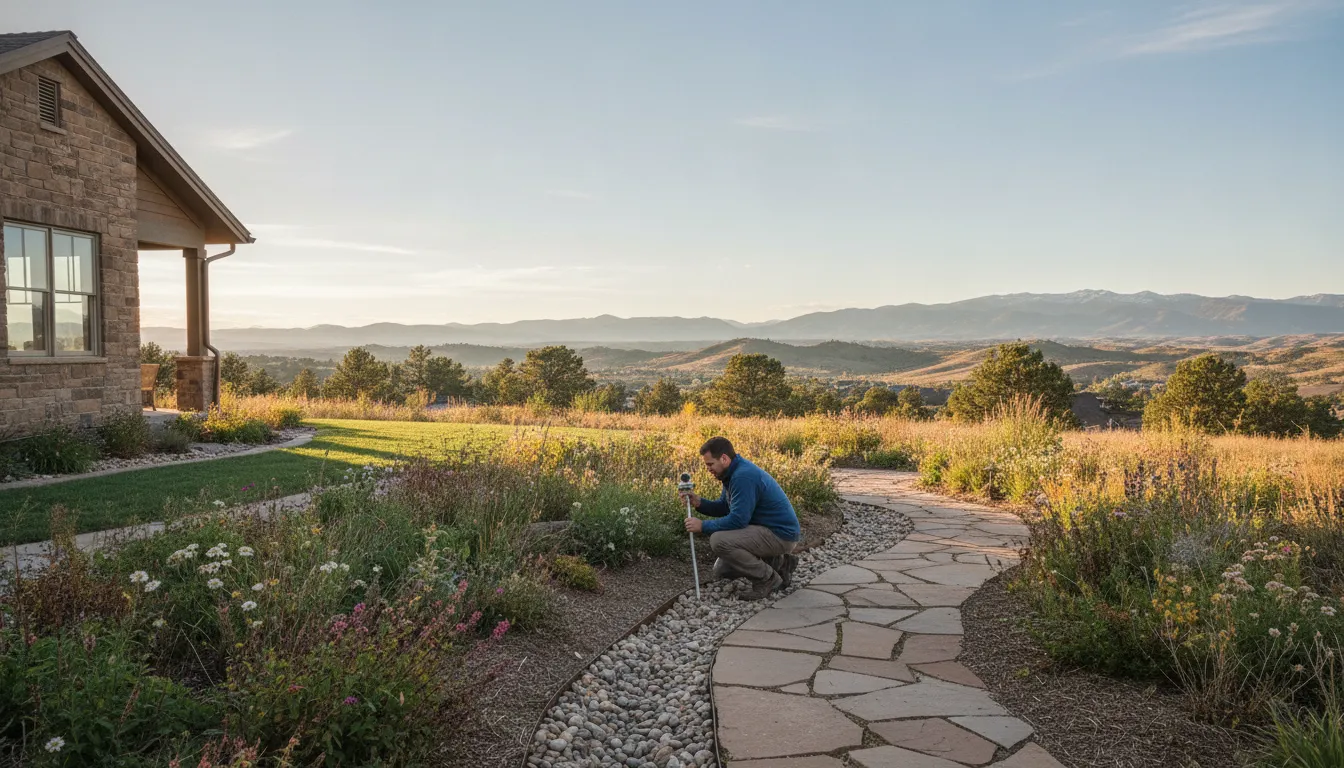
A French drain collects water moving through saturated soil and guides it away from a specific area. This can help where persistent moisture affects a yard or hardscape. The system is typically a rock- or gravel-filled trench with a pipe near the bottom. Water enters along the trench and moves toward a suitable outlet. Colorado State University Extension describes this basic system and cautions that it helps in some situations, not every drainage problem.
This approach can make sense when water remains in the soil or gathers along a broad stretch rather than at one obvious low point. Compacted and clay-rich soils can slow water movement and contribute to saturation. On Denver Metro properties, that may show up as a soggy strip beside a patio or persistent wet ground near a retaining wall. Water may also keep collecting in a planted area after runoff has passed. Those signs point to a condition worth investigating, but do not establish that a French drain is the right fix. CSU Extension’s guide to soil drainage explains how soil conditions affect water movement.
| Approach | Best suited to | Key planning question |
|---|---|---|
| French drain | Water moving through or collecting in saturated soil along a route | Can the trench collect it and reach a responsible outlet? |
| Grading adjustment | Surface runoff following an undesirable slope | Can the grade redirect water without affecting a neighboring property? |
| Swale | Visible surface runoff where an open channel can fit | Is there enough room and a suitable route across the landscape? |
Subsurface collection is different from surface-water correction. If runoff flows toward a structure because the ground slopes the wrong way, adjusting the grade may address the cause more directly. A shallow swale can guide visible runoff across the surface where the site has room and a safe destination. A French drain works below ground and collects water along its route. It should not compensate for a surface slope that can be corrected. Nor should it move a wet spot somewhere else without a responsible discharge plan.
The right choice depends on where water originates and how it travels. Soil, slope, and the path from collection area to outlet also matter. A drain may be considered where surface grading is constrained. It may also suit a site where soil remains saturated despite appropriate surface corrections. If runoff is concentrated in one small location, a surface inlet or another site-specific approach may work better. These systems are not interchangeable, and some properties may need a combination.
Trace water during and after rain or snowmelt. Note where it pools and which direction it moves. For a broader look at how slopes, surfaces, and drainage features fit together, see planning backyard grading and drainage. A careful assessment helps identify the problem before anyone chooses a trench route or outlet.
How Do Grading and Discharge Shape a French Drain Install?
Grades determine where water gathers and whether it can move toward a suitable receiving point. A French drain plan must account for the full route, not just the trench. Start by identifying the water source, existing surface and subsurface flow, and a practical place for collected water to go. Without a workable route from intake to discharge, a drain may simply move the problem elsewhere.
Read the site as a connected drainage path
On a Denver Metro property, slope is only part of the picture. Soil, landscaping, elevations of the house and neighboring ground, street levels, and rainfall all affect runoff, as Denver’s homeowner runoff guide explains. Those relationships help distinguish water that runs across the surface from water that collects below it. They also show where a drain could intercept water without disrupting an existing route.
Trace water from its source to its destination. Runoff may come from a higher part of the lot, a roof discharge, snowmelt, or a low area where water settles. A French drain addresses only the flow it can collect and convey. It does not correct every upstream source. The receiving point matters just as much. Check whether water can reach that point by gravity and whether the outlet will remain accessible. Consider if discharge could erode soil, pool beside a structure, or create a new wet area.
Protect neighboring properties and existing drainage
For properties within Denver, city guidance says onsite drainage should remain consistent with historic drainage patterns. Approved changes should not negatively affect adjacent properties. The residential grading and drainage requirements also call attention to grade breaks and built features that shape water travel. These are Denver-specific guidelines, not a universal design specification for every Denver Metro municipality.
Consider the route alongside patios, retaining walls, fences, walks, and grades at property edges. A route that seems clear on a flat sketch may cross a low point or send water toward a neighbor when surrounding elevations are considered. Denver’s homeowner guide cautions against grading that sends water onto, or blocks it on, a neighbor’s lot. See broader Denver yard drainage planning for context on how site conditions connect.
There is no single grade, trench depth, or outlet location that suits every property. Complex slopes, constrained outlets, or changes near structures call for a site-specific review rather than a borrowed measurement. A sound plan follows water from its source to a responsible discharge point while respecting existing drainage patterns and neighboring land.
What Installation Details Help a French Drain Last?
A durable French drain starts with a clear route for water, a suitable outlet, and materials selected for the soil and site conditions. The trench itself is only one part of the design. The system also needs to remain accessible and fit with nearby grades, planting, and hardscape.
Plan the route and outlet before digging
Trace where water collects and where it can be released safely before choosing a trench path. Soil, slope, landscaping, and nearby elevations all affect how water moves. A route that seems convenient may not solve the actual problem. The outlet matters just as much as the inlet. Discharging water where it ponds, erodes soil, or affects a neighboring property can trade one drainage concern for another. Denver guidance warns against grading a lot to push water onto, or block water on, a neighbor’s property. Existing walks, patios, walls, and planting beds also influence the route. Projects involving those features benefit from Denver hardscape and drainage planning that accounts for how grades and water movement interact.
Match pipe, stone, and filter materials to the site
Perforated pipe, aggregate, and any filter fabric work as a system. Pipe openings admit water, while the surrounding stone provides a path toward the outlet. Filter details should suit local soil and help reduce soil movement into the drainage material. Fine or compacted soils behave differently from coarse soils, and a design that works in one yard is not automatically right for another. Avoid choosing a pipe layout or material solely from a generic diagram. A suitable design accounts for soil, expected water flow, trench location, and how the pipe connects to its outlet. Keep dimensions and material specifications site-specific rather than relying on a universal trench depth or aggregate recipe.
Protect utilities and preserve access
Before excavation, request utility locates. Colorado law requires excavators to request locates before digging. Colorado 811 does not locate private lines such as sprinkler systems or invisible fences. Confirm the public locate process at Colorado 811’s resources, then identify private lines separately before work begins.
After installation, keep cleanouts and the discharge point reachable rather than burying them beneath permanent features. Access makes it easier to inspect for sediment, debris, damage, or blocked flow. It can also help avoid reopening finished hardscape. Plan for maintenance access from the start, then check that surface grading still carries water as intended once the surrounding work is complete.
How Should a French Drain Be Maintained Through Denver Seasons?
Maintain a French drain by watching where water enters and leaves, then checking nearby ground for new signs of trouble. Snowmelt and freeze-thaw conditions can alter water movement in the Denver Metro Area. Focus on what the site is doing rather than following a fixed calendar or assuming the system will never clog.
Before and during snowmelt
As snow begins to melt, make sure the outlet is visible and not covered by leaves, soil, mulch, or stored materials. Clear loose debris by hand so water has an open path to discharge. Do not push material into the pipe or use forceful equipment that could damage the outlet. Watch the ground near the outlet as meltwater flows. If it cuts a channel, carries soil, or pools where it did not before, the discharge area may need attention.
Freeze-thaw cycles can shift soil and disturb nearby landscaping. Look for settling, small washouts, or a changed grade along the drain route. A new depression can collect water, while displaced soil or mulch can obstruct an inlet. Avoid covering the outlet with snow piles or compacted debris. Check that the intended route remains open as conditions change.
After storms and through the growing season
After heavy runoff, inspect visible grates, inlets, and the outlet for leaves, sediment, and other debris. Remove material from the surface without digging into the trench. If water stands near an inlet, the outlet flow seems reduced, or sediment quickly returns, note where and when you see it. This can help distinguish a surface-grading issue from a problem within the drainage system.
Watch for erosion and changes caused by yard work, planting, or hardscape projects. New edging, soil additions, or compacted paths can redirect runoff or block its former route. Do not change grades in a way that sends water onto a neighboring property or traps it there. Denver’s homeowner runoff guidance emphasizes that drainage directions need maintenance and cautions against pushing water onto or blocking it on a neighbor’s lot.
When a quick check is not enough
Surface clearing cannot diagnose a buried pipe, a collapsed section, or a route that no longer suits the site. If pooling, erosion, or water movement near a structure continues after visible debris is removed, avoid repeated digging or redirecting the flow without understanding its destination. Review broader Denver yard drainage planning, including soil, slope, and discharge. For persistent concerns, a qualified drainage professional can assess the system and surrounding grades before changes are made.
When Is a Professional Drainage Assessment the Better Next Step?
Seek a professional assessment when water problems keep returning, affect more than one part of the yard, or connect to several slopes, hardscape features, or possible water sources. A French drain is only one option. Choosing a route without understanding the whole site can move water rather than solve the underlying problem.
Repeated wet areas near the house, erosion that returns after rain or snowmelt, or standing water that persists despite simple surface adjustments are useful signs to document. Note where water first appears, how it travels, and where it collects. Photos taken during and after a wet period can help explain the pattern. They do not replace a site evaluation, especially when drainage could affect a neighboring lot or public area.
Denver’s homeowner runoff guidance says drainage depends on soil, landscaping, slopes, home and adjacent elevations, and rainfall. It cautions against grading a property to push water onto a neighbor’s lot or block water there. The guide recommends seeking a professional engineer when simple fixes do not resolve the problem. Read Denver’s homeowner runoff guidance for its practical overview.
Professional input is useful where proposed work intersects with a patio, retaining wall, walkway, or several changes in grade. Those features can influence where water goes. The right solution may involve coordinated hardscape or landscape planning rather than adding a drain in isolation. Faros Construction Services works on hardscape and landscape projects, considering site conditions such as soil, slope, and access. French drain installation is not a specifically listed service. Learn about Faros’s hardscape and landscape services to see the broader project scope.
Contact Faros Construction Services to discuss drainage-conscious hardscape and landscape planning.
Frequently Asked Questions
How deep should a French drain be?
There is no single depth that fits every yard. The trench needs to intercept the water problem at the right location and connect to a workable outlet, while accounting for soil, slope, nearby foundations, utilities, and hardscape. A site assessment is more reliable than copying a depth from another property.
Can a French drain work in clay soil?
Sometimes, but clay does not make a drain an automatic fix. Colorado State University Extension explains that compacted or clay-rich soils can slow water movement and become saturated, and that French drains help in some situations rather than all of them. The source of the water and its path through the soil need to be understood first: CSU Extension’s soil drainage guidance.
Where should a French drain discharge?
It should discharge to a location that can receive the water without creating a new drainage problem. Denver’s homeowner guidance cautions against grading or directing runoff onto a neighbor’s property, and notes that drainage depends on soil, slopes, landscaping, and surrounding elevations. Check the intended route and applicable local requirements before installation: Denver’s runoff guide.
What is the difference between a French drain and a swale?
A French drain collects and routes water through a gravel- or rock-filled trench, typically with a pipe, often addressing water below the surface. A swale is a shaped, open channel that guides surface runoff across the landscape. Which approach fits depends on where water is moving, available slope, and where it can safely go.
What should I check if a drain stops working well?
Look for a blocked outlet, sediment buildup, erosion, or a changed path for surface runoff, and confirm that the discharge area remains clear. Denver guidance emphasizes that drainage routes need ongoing maintenance. If the cause is not obvious or simple corrections do not help, get a qualified assessment rather than extending the drain without a clear outlet plan.
Ready to Discuss Drainage-Aware Hardscape Planning?
Drainage decisions work best when they account for the property’s slope, soil, and nearby outdoor features. Ricardo Alfaro and the Faros Construction Services team can discuss how drainage-aware hardscape and landscape planning may fit your Denver Metro Area project. Contact Faros Construction Services.