
Water Drainage Solutions for Denver Yards and Landscapes
Water drainage solutions Denver yards need are different from generic landscaping fixes. Along the Front Range, a yard has to handle spring snowmelt, fast summer storms, clay-heavy soil, freeze-thaw cycles, and hardscape surfaces that can send runoff toward the wrong place. If water is pooling near your patio, washing mulch out of beds, freezing on walkways, or moving toward your foundation, the solution should start with how the whole property sheds water.
Need help designing a yard that moves water the right way? Get a free quote from Faros Construction Services for drainage-conscious hardscape and landscape work in the Denver metro area.
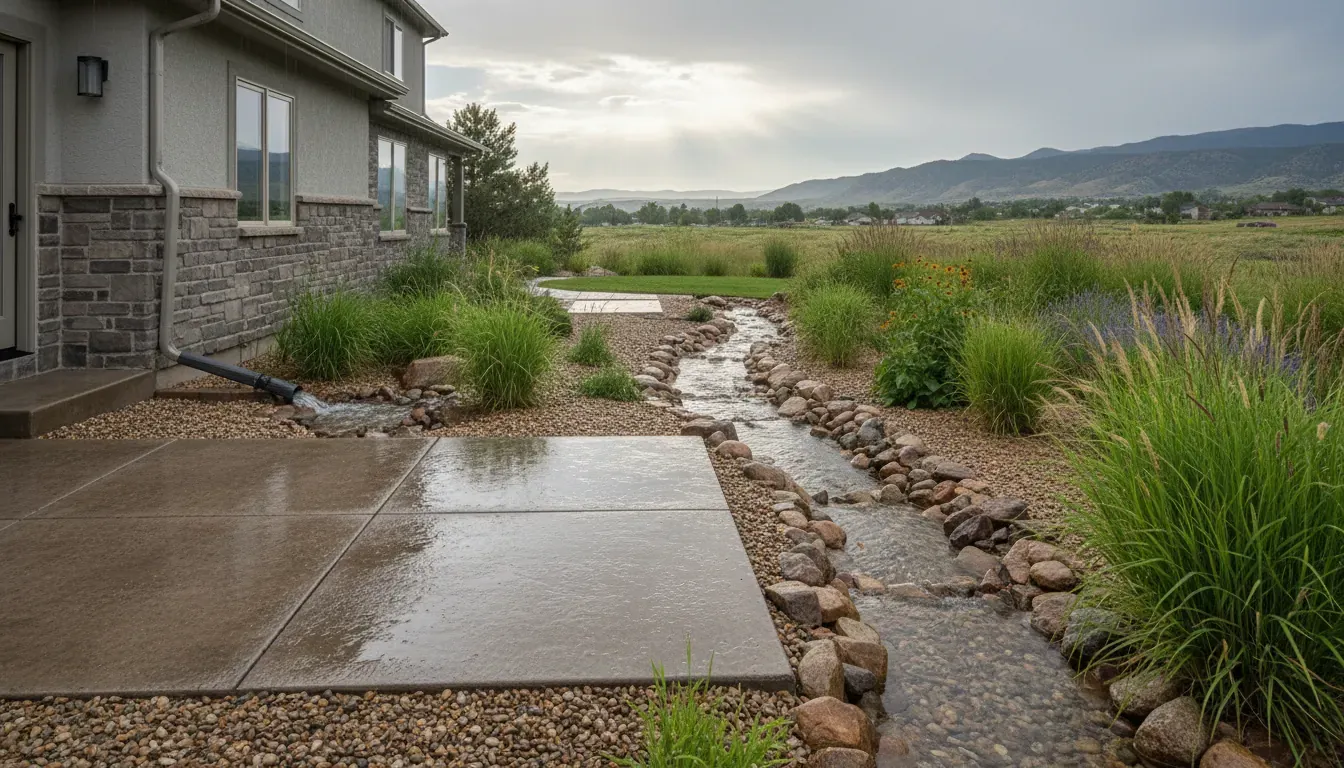
Good drainage is not one product. It is a system. Sometimes that system is as simple as correcting the slope near a walkway. Other times it may involve French drains, dry creek beds, channel drains, retaining walls, downspout extensions, permeable surfaces, or a complete redesign of the outdoor living area. The right answer depends on where the water starts, where it travels, what it is damaging, and where it can safely go.
Why Do Denver Yards Struggle With Drainage?
Denver yards struggle with drainage because snowmelt, intense summer rain, clay-heavy soil, and freeze-thaw movement can all push water across the same outdoor surfaces. A yard may look dry most of the year, then fail quickly during a spring melt or a short storm that overwhelms compacted soil.
The challenge becomes more noticeable as homeowners add outdoor features. A patio, walkway, deck landing, outdoor kitchen, driveway extension, or retaining wall can change how water moves across the property. These upgrades are valuable, but they need drainage planning built into the design. Faros Construction Services approaches hardscape and landscape projects with long-term durability in mind, including proper slope, base preparation, and runoff control.
Drainage problems usually show up in patterns. You may notice puddles that linger more than a day after a storm, soil washing out from under edging, water collecting at the base of stairs, or ice forming in the same walkway area every winter. These are not just cosmetic issues. Repeated water movement can undermine pavers, crack weak concrete, stain surfaces, erode planting beds, and add pressure around foundation walls.
- Standing water that remains more than 24 hours after rain or snowmelt
- Mulch, gravel, or soil washing out of the same beds again and again
- Ice forming in repeated locations on sidewalks, patios, or driveway edges
- Water stains, sediment lines, or soft soil near the foundation
- Patio or walkway areas that slope back toward the house
Start With Grading Before Choosing a Drain
Grading is the shape and slope of the land. It is the first thing to review because even the best drain will struggle if the yard is pushing water toward the house. A well-graded yard moves water away from structures and toward safe discharge areas without creating erosion along the way.
For many Denver properties, grading problems begin near the foundation. Soil can settle after construction or after years of freeze-thaw movement. Planting beds may be built too high against the siding. Patios may slope back toward the house. Walkways may create small dams that trap runoff. Fixing those issues can reduce standing water before any underground system is added.
A proper grading plan looks at the whole path of water. Where does roof runoff exit? Where does the driveway pitch? Does a neighbor’s slope send water onto the property? Does the yard have a low spot with no outlet? Where can water move without affecting a neighboring lot or public sidewalk? These questions help determine whether surface grading, underground drainage, or a combination will work best.
French Drains for Subsurface Water Movement
A French drain is a buried drainage trench designed to collect and redirect water. It typically includes a perforated pipe surrounded by washed stone and wrapped in filter fabric. Water enters the trench, moves into the pipe, and travels to a safe outlet or collection point.
French drains can be helpful in Denver yards with persistent soggy areas, low zones between slopes, or runoff that gathers along the edge of a patio or retaining wall. They are especially useful when water is moving below the surface or when a simple swale would interfere with the yard layout.
The details matter. The trench must have the right slope. The pipe must be placed correctly. The stone and fabric need to limit clogging from soil. The outlet must be planned so water is not simply moved from one problem area to another. A French drain that has no practical discharge point can become a buried puddle instead of a real solution.
French drains also need to be designed around Denver’s freeze-thaw conditions. Shallow, poorly sloped systems may hold water and freeze. Systems placed near hardscape elements need careful base preparation so the surrounding patio, walkway, or wall remains stable over time.
Surface Swales and Dry Creek Beds
A swale is a shallow, graded channel that guides water across the surface. It can be simple and grassy, or it can be designed as a dry creek bed with river rock, boulders, and drought-tolerant plantings. For homeowners who want drainage that also improves the look of the landscape, a dry creek bed can be a smart option.
Swales work best when water can move openly across the yard without creating a safety concern or cutting through high-use areas. They are often used to guide runoff around planting beds, along the side yard, or toward a more absorbent landscape zone. The slope should be gentle enough to prevent erosion but consistent enough to keep water moving.
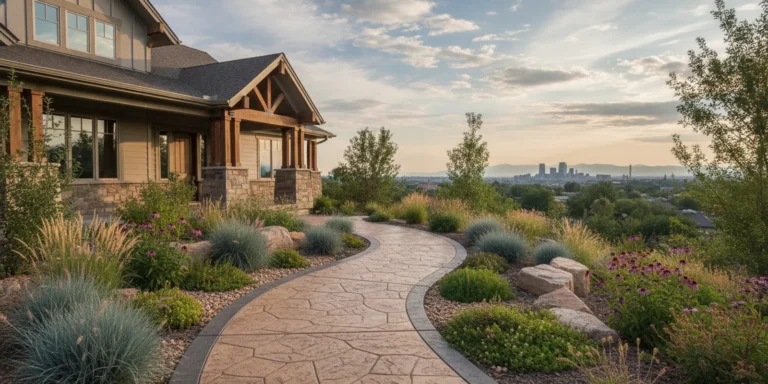
Dry creek beds pair well with Denver landscapes because they fit the local preference for water-smart design. They can also connect visually with xeriscaping, native grasses, and rock mulch. If you are updating a thirsty lawn or redesigning beds, Faros Construction Services has additional guidance on xeriscape landscaping ideas for Denver.
The biggest mistake with swales is treating them like decoration only. A drainage swale still needs a functional route, enough width, stable edges, and proper placement. If it is too flat, water will sit. If it is too steep, soil and rock can wash out during a heavy storm.
Hardscape Drainage for Patios, Walkways, and Outdoor Living Areas
Hardscape surfaces change drainage because they shed water instead of absorbing it. Concrete patios, paver walkways, outdoor kitchens, and covered outdoor areas all need a plan for runoff. Without that plan, water can collect at door thresholds, flow across seating areas, or undermine the base below the surface.
For patios and walkways, drainage often begins with slope. A patio should generally move water away from the house and toward a safe edge. Walkways should avoid low pockets where ice can form. Paver systems need a properly compacted base and edge restraints so water does not shift the surface over time. For related structural planning, Faros Construction Services also builds decks, pergolas, and porches that need safe transitions where stairs, landings, and walkways meet the yard.
Channel drains are another option for hardscape areas. These linear drains sit at the surface and collect water along a patio edge, driveway threshold, or low point. They can be useful when water needs to be intercepted before it reaches a door, garage, stair landing, or outdoor kitchen zone.
Drainage is also a key part of custom outdoor living spaces. Covered patios, pergolas, fire features, seating walls, and kitchens should be designed as one system. The finished space should look clean, but the hidden base, slope, drain locations, and material transitions are what help it last through Colorado weather.
Planning a patio, walkway, or outdoor living upgrade? Talk with Faros Construction Services about building drainage into the project from the start.
Retaining Walls and Drainage Behind the Wall
Retaining walls are often built to manage slopes, create usable yard space, or frame outdoor living areas. They also have to manage water. Soil behind a wall can hold moisture, and that moisture adds pressure. Without drainage, even a good-looking wall can shift, bow, or fail sooner than expected.
A durable retaining wall should include a drainage zone behind the wall, a stable base, and a way for water to exit. Depending on the design, that may include clean stone, filter fabric, perforated pipe, weep holes, or daylighted outlets. The wall material matters, but the drainage behind it is just as important.
This is where construction experience makes a difference. Denver properties often combine slopes, expansive soils, winter freezing, and heavy runoff from roofs or patios. A wall should not be treated as a standalone feature. It should be planned as part of the full landscape drainage system and the larger residential construction services needed for the property.
Downspout Extensions and Roof Runoff Control
Roof runoff can create major yard drainage problems because it concentrates water in a few locations. If downspouts discharge next to the foundation, onto a patio, or into a low planting bed, that water can overload the area quickly.
Downspout extensions are one of the simplest ways to improve drainage. Above-ground extensions can move water farther from the home. Buried solid pipe can carry roof runoff to a pop-up emitter, dry creek bed, rain garden, or approved discharge point. The key is using solid pipe for roof water, not perforated pipe that releases the water too close to the house.
Downspout planning should also consider winter. Water discharged across a walkway or driveway can freeze and create a slip hazard. Water discharged into a shaded side yard may sit longer than expected. The outlet should be placed where water can disperse safely without damaging landscaping or neighboring properties.
Permeable Surfaces and Water-Smart Landscape Zones
Not every drainage solution is about moving water away as fast as possible. In some areas, it makes sense to slow water down and let it soak into the landscape. Permeable pavers, gravel paths, amended planting beds, and water-smart landscape zones can reduce runoff when they are designed correctly.
Permeable surfaces need the right base layers. Simply placing gravel over compacted soil may not solve drainage if water cannot move through the soil below. A true permeable system includes layers that store and release water while supporting the surface above.
Planting design also matters. Native and drought-tolerant plants can help stabilize soil and reduce erosion, but they should be grouped by water needs and placed where drainage patterns make sense. Rock mulch, boulders, and edging can guide water, but they should not trap it against the home.
For concrete areas, drainage should be part of the installation plan from the beginning. Faros Construction Services provides concrete contractor services for patios, sidewalks, driveways, and related features where slope, finish, and durability all affect performance.
How Do You Choose the Right Drainage Solution?
The best drainage solution depends on the cause of the problem, the soil, the slope, the hardscape layout, and the safe outlet for water. A low spot in the lawn may need regrading or a drain. Water along a foundation may need soil correction and downspout changes. Runoff across a patio may need a channel drain or a corrected slope. Erosion on a hill may need a swale, retaining wall, plantings, or all three.
Use this simple decision path before choosing a fix:
- Find where the water starts, such as roof runoff, a neighbor’s slope, a patio edge, or compacted lawn.
- Follow where the water travels during or shortly after a storm, if it is safe to observe.
- Identify what the water is damaging, including soil, planting beds, concrete, pavers, walls, or foundation areas.
- Choose a safe place for the water to go without affecting a sidewalk, street, or neighboring property.
- Match the solution to the cause, rather than installing a drain in the wettest spot only.
It also helps to think about the future use of the yard. If you plan to add a patio, deck, outdoor kitchen, walkway, or retaining wall, drainage should be designed before those features are installed. Retrofitting drainage after a finished outdoor space is possible, but it often requires more disruption than planning it upfront.
When Should You Call a Contractor for Yard Drainage?
You should call a contractor for yard drainage when water is moving toward the foundation, pooling against hardscape, eroding slopes, affecting neighboring properties, or returning after repeated DIY fixes. Small repairs may solve a loose downspout extension, but larger drainage patterns usually need the grading, hardscape, and discharge route reviewed together.
A contractor can evaluate slope, soil conditions, hardscape layout, wall structure, discharge options, and construction details together. That is important because drainage work often touches multiple systems. A landscaper may understand planting beds, a concrete crew may understand patio slope, and a general contractor can help coordinate the full outdoor structure when the project includes hardscape, drainage, retaining walls, and access routes.
Faros Construction Services is a family-owned Denver contractor led by owner Ricardo Alfaro. The company is built around honesty, integrity, trust, and hands-on project oversight, which matters when drainage work has to protect both the visible landscape and the structure beneath it. You can learn more about the company’s local approach on the Faros Construction Services about page.
If your drainage issue is tied to a patio, wall, walkway, concrete surface, or outdoor living project, contact Faros Construction Services to schedule a consultation in the Denver metro area.
FAQ: Water Drainage Solutions for Denver Yards
What is the best drainage solution for a Denver yard?
The best drainage solution for a Denver yard depends on the source of the water and where it can safely go. Many properties need a combination of grading, downspout control, swales, French drains, or hardscape drainage instead of one isolated product.
Do French drains work in Colorado clay soil?
French drains can work in Colorado clay soil when they are designed with the right slope, washed stone, filter fabric, and a real outlet. If the pipe is too shallow, poorly pitched, or has no place to discharge, it may hold water instead of solving the problem.
How can I keep water away from my foundation?
Start by moving roof runoff away from the house and confirming that soil slopes away from the foundation. If water still returns, a contractor may need to evaluate grading, hardscape edges, buried solid pipe, or other site-specific drainage improvements.
Are dry creek beds good for Denver landscapes?
Dry creek beds can be a good fit for Denver landscapes because they guide surface water while matching water-smart yard designs. They still need proper slope, stable edges, and a real drainage route to work as more than decoration.
Can drainage be added during a patio or walkway project?
Yes. Drainage is often easier to include while a patio, walkway, retaining wall, or outdoor living area is being built. Planning the slope, base, drains, and outlet early helps protect the finished surface and reduces disruption later.
A Practical Drainage Plan Protects the Whole Yard
Water drainage solutions Denver yards can rely on should be practical, local, and built around the way the property actually moves water. French drains, swales, dry creek beds, channel drains, downspout extensions, retaining wall drainage, permeable surfaces, and grading all have a place. The right mix depends on your soil, slope, hardscape, roof runoff, and long-term plans for the outdoor space.
For Denver homeowners, the goal is not just a dry yard after one storm. The goal is a landscape that handles snowmelt, summer rain, winter freeze, and daily use without undermining the features you invested in. With proper planning, drainage can protect your foundation, preserve patios and walkways, reduce erosion, and make your outdoor space easier to enjoy year-round.
Faros Construction Services is a family-owned Denver contractor with hands-on experience across hardscapes, concrete, outdoor living spaces, retaining walls, and residential construction. If your yard drainage problem is part of a bigger outdoor upgrade, Faros Construction Services can help design and build a solution that fits your property and Colorado’s climate.