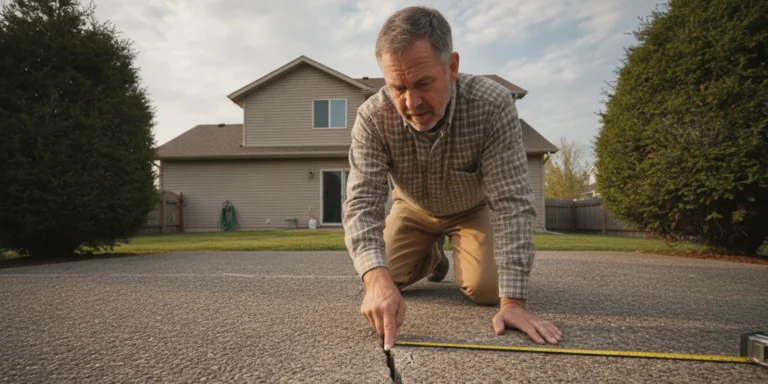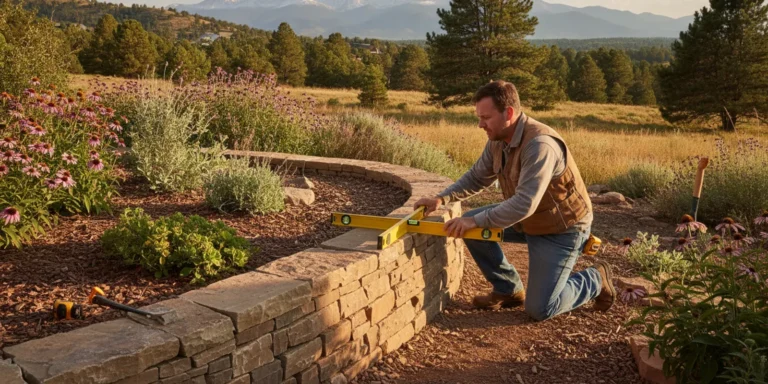

A chipped corner, a joint that has gone empty, or a paver that rocks at the border is a paver repair question, not a full rebuild. In the Denver Metro Area, freeze and thaw, wind, and irrigation splash wear those three parts at different rates. The useful first step is to name which part failed.
Need a site visit for a chipped unit, empty joints, or a loose edge? Request a hardscape review or call (720) 594-5604.
Paver repair means matching the fix to the damage. Replace a broken unit, refill joint sand that has dropped, or reset a restraint that no longer holds the field. A sunken patch is a different job. That guide is the sinking pavers guide, and this article does not repeat it.
What paver repair covers on an existing surface
Paver repair covers damage you can point to on a surface that is still mostly level. The unit, the joint, or the edge has failed. The layers under the field have not.
Interlocking concrete pavement works as a system. The units, the sand in the joints, and the restraint around the border lock together. The Concrete Masonry and Hardscapes Association describes that system in its operation and maintenance guide for interlocking concrete pavement. When one part slips, the others start to move.
Use this split before you buy sand or pull a unit:
| What you see. | Likely part. | First paver repair. | Stop and look deeper if this is true. |
|---|---|---|---|
| One unit is cracked, chipped, or stained, and neighbors sit tight. | The paver unit. | Lift that unit and set a match. | The bedding under it is wet, muddy, or missing. |
| Joints look empty, weeds appear, or units click sideways. | Joint sand. | Refill with dry masonry sand to the chamfer. | The whole area has dropped, not just the sand. |
| Border units have walked outward or the spike line is loose. | Edge restraint. | Reset the border and fasten the restraint. | The base beyond the edge is washed out. |
| A patch sits lower than the rest and holds water. | Base or drainage. | Not a surface paver repair. | Always. Use the sinking-pavers guide. |
A new patio plan is a different conversation. Layout, pattern, and base choices belong in the paver patio planning guide. Keep this page for a surface that is already in the ground.
How to tell a unit, a joint, and an edge apart
Name the failed part before you lift anything. A unit problem stays on one paver. A joint problem shows up as missing sand between many units. An edge problem shows up as outward creep at the border.
Walk the surface after it is dry. Mark only the spots that fail one of these tests:
- Unit: a crack through the body, a broken corner, or a rock that is limited to that one piece. Tap it. A dull, loose sound with firm neighbors still points at the unit, not the base.
- Joint: sand sits more than about 1/2 inch below the top, weeds root in the gap, or two units shift when you press them toward each other. The field can still be flat.
- Edge: border units have a growing gap, a plastic or metal restraint is lifted, or spikes no longer bite. The creep is sideways, not downward.
Colorado soils make the joint and edge tests matter. Many local soils drain slowly, and water that sits against a border will wash sand out. Colorado State University Extension explains how pore space controls that movement in its soil drainage note. Slow drainage is a clue. It is not, by itself, proof that the base has failed.
If the low spot is the whole story, stop. Sunken-area diagnosis, bedding versus base, and water returning to the same patch are already covered in the sinking pavers guide. Do not treat a dropped panel as a sand top-up.
Paver repair for a cracked or chipped unit
Replace the damaged unit when the neighbors are tight, level, and fully sanded. You are swapping one piece, not rebuilding the patio.
Work in this order:
- Photograph the pattern and the orientation of the broken unit so the replacement goes back the same way.
- Lift the unit with two flat bars or paver extractors, working from the joints. Do not pry against a neighbor hard enough to chip it.
- Scrape bedding sand that is stuck to the unit back into the opening. Add only enough sand to match the height of the surrounding bedding.
- Set a unit of the same thickness, size, and color family. Tap it down until it sits flush with its neighbors.
- Sweep dry joint sand into the new joints and compact lightly so the piece locks again.
Color will not be perfect. Concrete pavers fade, and a new unit often looks darker until it weathers. A close thickness match matters more than a perfect color match, because a thin unit rocks and a thick unit sits proud.
Stop the swap if the opening is wet, the bedding is mud, or several neighbors drop when you lift the one unit. That is no longer a single-unit paver repair. It is the start of a settlement problem, and the sinking pavers guide is the right next read.
Faros builds and repairs hardscape for Denver Metro homeowners, including paver patios, walkways, and borders. If you want the unit matched and reset as part of a larger yard plan, start with the hardscaping service page.
When joint sand is the paver repair
Refill the joints when sand has dropped and the field is still flat. Empty joints let units click, spin, and chip their edges.
CMHA’s maintenance guide says to top up joints that have dropped more than 1/2 inch, measured from the top, and to use dry masonry sand for that top-up. It also says not to use polymeric sand just to refill an existing joint. Polymeric sand is a construction choice for a full joint, not a sprinkle-on patch. Sealers and stabilized sands are covered in the association’s cleaning and sealing note, not as a cure for a settled base.
A practical refill looks like this. Sweep the surface clean while it is dry, without blasting the remaining sand out. Spread dry masonry sand and broom it across the joints until the sand reaches the bottom of the chamfer. Sweep the extra sand off. A light pass with a plate compactor and a protective pad can seat the sand. Stay off the surface if units are already loose enough to crack under the plate.
Do not power-wash sand out and call that cleaning. A washer aimed down the joint is how a flat patio loses its lock. Leaves, winter sand, and deicer residue can be broomed off. The sand in the joint should stay.
Weeds in a joint usually mean the sand is low or contaminated, not that the paver is failing. Pull the growth, let the joint dry, and refill. If the weeds come with a low spot that holds water, you are back to drainage and base, which this page does not try to solve.
When the edge restraint is the failed part
Reset the edge when border units have crept outward and the field behind them is still at the right height. The restraint is what stops traffic, mowers, and freeze movement from pushing the patio apart.
CMHA’s edge restraint note treats the border as a structural piece, not a decoration. Spiked plastic or metal edging, a concrete curb, or a well-set soldier course only works if it stays fixed. Once the spikes pull or the curb cracks away, the first row walks, joints open, and interior units follow.
A homeowner check is simple. Sight down the border. Look for a bow, a gap between the restraint and the paver, or spikes that spin in soft soil. Open the last one or two rows only as far as you must. Re-set those units tight to the field, pull the restraint back against them, and fasten it into undisturbed base, not into loose fill. Then refill the joints you opened.
Concrete landscape edging is a different product and a different install. If the border you are judging is a cast concrete edge rather than a paver restraint, use the landscape edging installation guide instead of treating it as a paver repair.
Leave the edge alone when the soil outside it has washed out, the border has dropped, or water runs under the restraint. Fastening a loose edge over a missing base hides the failure for one season. Drainage planning for that case belongs with hardscape drainage planning, and a sunken border belongs with the sinking pavers guide.
What Denver weather does to each kind of paver repair
Freeze-thaw, wind, and irrigation splash do not damage the unit, the joint, and the edge in the same way. Match the season to the part that failed.
Dense concrete pavers handle freeze-thaw and deicers better than a soft joint does. The joint is the weak line. Wind across the high plains and concentrated runoff from a roof valley or a sprinkler head pull sand out. CMHA recommends a spring sweep to remove leftover deicer and winter sand, and a fall sweep for dirt and leaves, without removing the joint sand. That is maintenance, and it prevents a lot of later paver repair.
Plan the work for a dry day. Joint sand will not fill a wet gap, and polymeric products that were used at installation need the cure window the manufacturer printed on the bag. Do not invent a cure time. Read the bag that matches the sand already in the patio, or stay with dry masonry sand for a top-up.
Denver’s rules are not the rules for every city in the metro. A patio repair in a backyard rarely needs a building permit. Work that changes a driveway apron, a curb cut, or the public right of way can. Confirm the jurisdiction before you rebuild an edge that touches a sidewalk or street. Material choice for a future replacement, if the repair no longer makes sense, is covered in the concrete versus pavers comparison.
If the border has walked or the same joints empty after every storm, ask Faros to look at the hardscape.
When a small paver repair is the wrong scope
Stop at a local fix only while the field stays level and the opened area stays small. Spread, settlement, or a wet base means the surface repair will not hold.
Call for a contractor review when any of these show up:
- More than a few units are loose, or the loose area grows after each rain.
- The opening under a lifted unit is mud, standing water, or empty space instead of bedding sand.
- The edge keeps moving after a reset, or the base outside the restraint is gone.
- Water from a downspout, a low lawn, or an irrigation head lands on the same spot.
- You would have to break the pattern across a large area to find matching units.
Those signs point to base, drainage, or a surface that should be rebuilt in sections. They are outside this article on purpose. Read the sinking pavers guide for settlement. Read the paver solutions guide if you are choosing a new field, pattern, or edge for a rebuild. Permeable pavers are a separate system with their own maintenance, and this page does not cover them.
A concrete patio with cracks or surface scaling is not a paver repair either. Those slabs fail in a different way. Faros hardscaping work covers both materials, but the diagnosis should stay with the surface you actually have.
Frequently asked questions
Can I replace one broken paver without redoing the patio?
Yes, when the surrounding units are tight, level, and still sanded. Lift the broken piece, reset the bedding so the new unit sits flush, and sweep joint sand back into the gaps. If neighbors drop or the opening is wet, the patio needs more than a one-unit swap.
What sand should I use to refill paver joints?
Use dry masonry sand to top up joints that have lost more than about 1/2 inch of sand. CMHA does not recommend polymeric sand for that top-up. Save stabilized or polymeric sand for a full joint installed the way the product requires, usually when the field is being set or reset.
How do I know the edge restraint failed?
Border units bow outward, a gap opens between the restraint and the pavers, or the spikes no longer hold. The surface behind that border can still be at the right height. A border that has dropped, or soil that has washed out beyond it, is a base problem rather than a simple edge reset.
Does an empty joint mean the pavers are sinking?
No. An empty joint on a flat surface is a sand problem. Sinking means an area sits lower than the rest and often holds water. Use the sinking pavers guide for that low spot, and use this page for sand, a broken unit, or a loose edge.
When should a contractor take over the paver repair?
Bring in a contractor when the loose area keeps spreading, the base under a lifted unit is mud or empty, the edge will not stay put, or water returns to the same place. A short site review is cheaper than repeating a surface fix that the base cannot support.
Talk with Faros about the repair in front of you
Ricardo Alfaro and the Faros team review Denver Metro patios, walkways, and borders for the repair that matches the damage. Bring photos of the unit, the joint, and the edge. If the surface has settled, say so, and the conversation can start from the sinking pavers guide instead.
Call (720) 594-5604 or request a visit through the contact page.
Written by Ricardo Alfaro, Faros Construction Services.