
When it comes time to build or replace a deck in the Denver Metro Area, one of the first decisions you will face is the material: composite decking or natural wood. Both have loyal supporters, and both deliver real value in the right situation. The best choice depends on your priorities, your lifestyle, how you plan to use the space, and what matters most to you over the next 10, 20, or 30 years. This guide puts composite and wood decking side by side so you can make an informed decision for your Denver home.
Thinking about a new deck? Contact Faros Construction at (720) 234-5946 for a free consultation and material recommendations tailored to your project.
What Is Composite Decking?
Composite decking is an engineered material made from a blend of wood fibers, recycled plastics, and binding agents. Leading brands like Trex, TimberTech, and Fiberon have refined this technology to produce boards that closely mimic the appearance of natural wood while eliminating many of its maintenance demands. Modern composite boards come in a wide range of colors, textures, and grain patterns.
For a deeper look at composite materials specifically, see our guide on composite decking pros and cons.
What Is Wood Decking?
Wood decking uses natural lumber, most commonly pressure-treated pine, cedar, or redwood. Pressure-treated wood is the most affordable and widely used option for deck framing and decking in the Denver Metro Area. Cedar and redwood offer natural beauty and resistance to rot and insects but come at a higher investment.
How Do Composite and Wood Decking Compare?
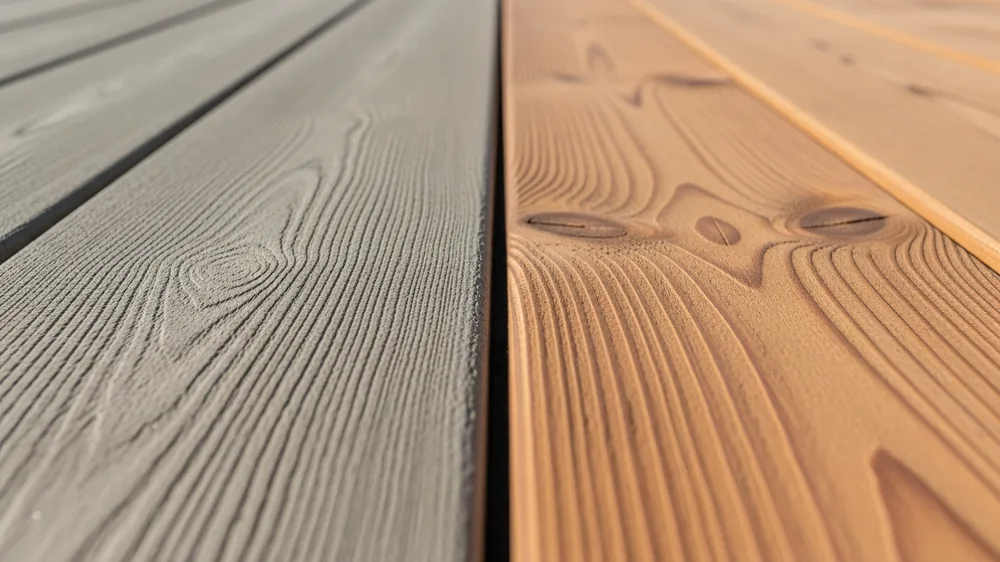
Here is a detailed head-to-head comparison across the categories that matter most to Denver homeowners.
Upfront Investment
| Material | Typical Range (per sq ft, installed) |
|---|---|
| Pressure-treated wood | $15–$25 |
| Cedar | $25–$35 |
| Redwood | $30–$45 |
| Mid-range composite | $30–$45 |
| Premium composite | $40–$60 |
Wood decking, particularly pressure-treated lumber, has a clear advantage in upfront investment. A 400-square-foot pressure-treated deck might run $6,000–$10,000, while the same deck in mid-range composite would run $12,000–$18,000. However, the upfront number only tells half the story.
Long-Term Maintenance
This is where composite decking pulls ahead dramatically.
Wood decking maintenance (annual):
- Power washing: 1–2 times per year
- Staining or sealing: every 1–3 years
- Board replacement for warped, cracked, or rotted sections
- Annual inspection for structural integrity
- Estimated annual maintenance investment: $200–$600 for a typical deck
Composite decking maintenance:
- Occasional soap-and-water cleaning
- No staining, sealing, or painting ever
- No board warping, cracking, or splinting under normal use
- Estimated annual maintenance investment: $50–$100
Over 20 years, wood deck maintenance can add $4,000–$12,000 to the total ownership investment. When you factor in maintenance, the lifetime numbers between wood and composite are often closer than the upfront gap suggests.
Durability in Denver’s Climate
Denver’s climate is tough on outdoor materials. Intense UV exposure at altitude, extreme temperature swings (from -10°F to 95°F in a single year), low humidity, and heavy snowfall all take a toll.
Wood in Denver: Natural wood expands and contracts with temperature and moisture changes. Denver’s dry air accelerates checking (surface cracking) and can cause boards to cup or warp. UV exposure grays and degrades unprotected wood quickly. Without diligent maintenance, a wood deck in Denver will show significant wear within 3–5 years.
Composite in Denver: High-quality composite decking is engineered to resist UV fading, moisture damage, and temperature swings. Capped composite boards (which have a protective polymer shell) perform particularly well in Denver’s climate. Most premium composites come with 25–50 year warranties against fading, staining, and structural defects.
Safety and Comfort
Safety is a practical consideration that often gets overlooked in the composite vs wood debate.
Splinters and surface comfort: Wood decking develops splinters over time, especially pressure-treated lumber as it ages and dries out. This is a significant concern for families with young children who play barefoot on the deck. Composite decking does not splinter, making it a safer surface for bare feet.
Slip resistance: Both materials can become slippery when wet. However, most modern composite boards feature textured surfaces engineered for traction. Wood decking requires periodic cleaning to remove algae and mildew growth, which are the primary causes of slippery conditions on wood surfaces.
Fire resistance: Neither material is fireproof, but composite decking made with high-density polymers can offer better fire resistance ratings than natural wood. In Colorado, where wildfire awareness is part of every homeowner’s reality, this is worth discussing with your contractor, especially for homes in wildland-urban interface zones.
Appearance and Aesthetics
This category is more subjective, and both materials have evolved significantly.
Wood: Natural wood has an organic warmth and character that many homeowners love. Cedar and redwood in particular offer rich, distinctive grain patterns. However, wood changes appearance over time, graying without regular staining, and no two boards are identical, which some homeowners see as charm and others see as inconsistency.
Composite: Modern composite decking has closed much of the appearance gap. Premium lines feature realistic wood grain textures, multi-toned color variations, and matte finishes that are difficult to distinguish from natural wood at a glance. Composite also maintains its appearance year after year without intervention.
Lifespan
| Material | Expected Lifespan | Warranty Coverage |
|---|---|---|
| Pressure-treated wood | 10–15 years | Limited (structural only) |
| Cedar | 15–20 years | None (natural product) |
| Redwood | 20–25 years | None (natural product) |
| Composite (capped) | 25–50 years | 25–50 year manufacturer warranty |
Composite decking’s longer lifespan means you may never need to replace it during your time in the home, while a wood deck may need one or two major overhauls during the same period.
Environmental Considerations
Composite: Most composite decking contains 50–95% recycled content (recycled plastics and reclaimed wood fibers). Brands like Trex reclaim approximately 500 million pounds of recycled material annually. However, composite is not biodegradable and is difficult to recycle at end of life.
Wood: Sustainably sourced wood is a renewable resource and biodegradable. Pressure-treated wood, however, contains chemical preservatives that raise environmental and disposal concerns. Cedar and redwood are naturally sustainable but are harvested from slower-growing forests.
Structural Strength and Load Capacity
Both composite and wood decking are typically installed over a pressure-treated wood or steel subframe. The structural integrity of your deck depends primarily on the framing and foundation, not the decking surface material. However, it is worth noting that composite boards can be slightly more flexible than wood and may require closer joist spacing (12 inches instead of 16 inches for some products).
Which Material Is Better for Denver Denver outdoor living spaces?
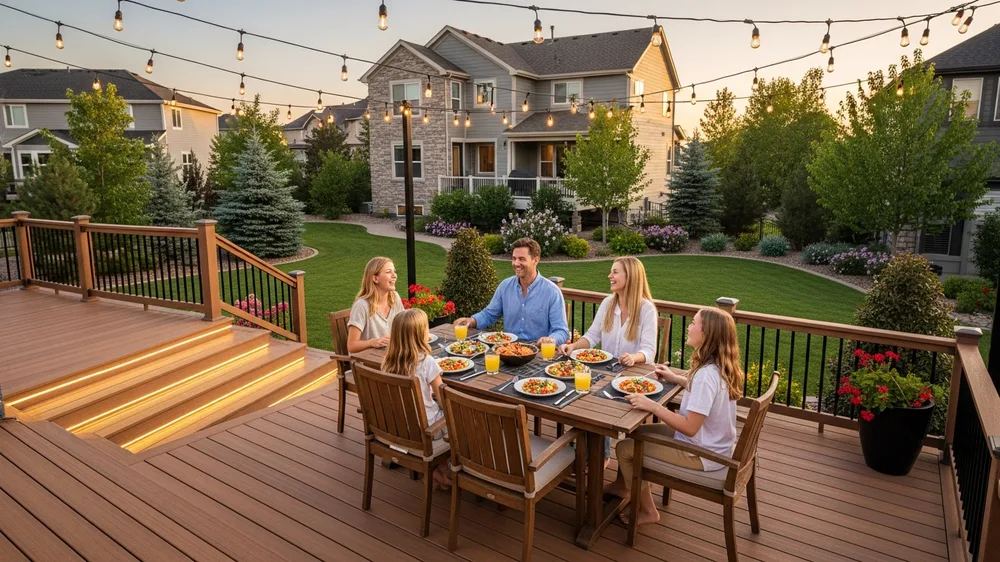
There is no universally “better” material. The right choice depends on your priorities:
Choose composite if:
- You want minimal maintenance and maximum free time
- You plan to stay in your home for 10+ years (the longer you stay, the more composite pays off)
- You value consistent appearance year after year
- Denver’s UV and temperature swings concern you
- You are willing to invest more upfront for lower lifetime ownership
Choose wood if:
- Upfront budget is your primary constraint
- You enjoy the natural look and character of real wood
- You do not mind annual maintenance tasks like staining and sealing
- You are building a smaller deck where the upfront savings are meaningful
- You want a traditional aesthetic for a historic or character home
Many Denver homeowners choose a hybrid approach: composite decking boards on a pressure-treated wood frame. This gives you the low-maintenance surface with a proven structural foundation. At Faros Construction, we build custom decks, pergolas, and porches using both materials, and we can help you find the right combination for your project and budget.
Not sure which material fits your project? Schedule a free consultation with Faros Construction and we will walk you through samples, options, and real-world performance data from Denver projects.
How to Choose the Right Deck Material: A Decision Framework
If you are still weighing your options, answer these five questions:
1. What is your total budget for the project? If your budget is tight, pressure-treated wood may be the right starting point. If you can invest more upfront, composite delivers better value over time.
2. How long do you plan to live in this home? If you are staying 5+ years, composite’s maintenance savings start compounding. If this is a short-term home, wood may make more financial sense.
3. How much time are you willing to spend on maintenance? Be honest. Staining a deck every 1–3 years is a commitment. If you know you will not keep up with it, composite is the safer bet.
4. What aesthetic are you after? Visit a showroom or request samples. See both materials in person before deciding. Denver’s sunlight affects how both materials look throughout the day.
5. What does your contractor recommend for your specific site? Ground contact, sun exposure, elevation, and proximity to trees all influence which material will perform best on your property.
For more information about the deck construction process, explore our comprehensive guide.
Frequently Asked Questions About Composite vs Wood Decking
Is composite decking worth the higher upfront investment?
For most Denver homeowners who plan to stay in their home for more than five years, yes. The elimination of annual staining, sealing, and board replacement means composite typically reaches breakeven within 7–10 years compared to pressure-treated wood. After that, every year is pure savings on maintenance time and materials.
Does composite decking get hot in the sun?
Composite decking can get warmer than wood under direct sunlight, particularly darker colors. In Denver, where sun intensity is high at elevation, this is worth considering. Lighter-colored composite boards and capped products with heat-reflective technology reduce this effect. If barefoot comfort is important, choose lighter shades or consider shading options like a pergola.
Can composite decking be painted or stained?
Most composite decking is not designed to be painted or stained. The surface is engineered for color consistency and durability. If you want to change the color of your deck in the future, wood is the more flexible option. Some newer composite products do accept specialized coatings, but this varies by manufacturer.
How long does a wood deck last in Denver?
A well-maintained pressure-treated wood deck in Denver typically lasts 10–15 years before needing significant structural repairs or replacement. Cedar can last 15–20 years and redwood 20–25 years. Without regular maintenance, Denver’s climate can significantly shorten these lifespans due to UV damage, moisture cycling, and temperature extremes.
Which decking material has better resale value?
Both well-maintained wood and composite decks add value at resale. Composite decking may have a slight edge because buyers recognize the low-maintenance benefit and the remaining warranty coverage. A deck in poor condition, regardless of material, detracts from value. The quality of construction and current condition matter more than the material itself.
Can I mix composite and wood on the same deck?
Yes, and this is actually one of the most popular approaches in the Denver Metro Area. Many homeowners use pressure-treated wood for the structural frame (posts, beams, and joists) and composite boards for the decking surface, railings, and stairs. This hybrid approach gives you the proven structural strength of wood framing with the low-maintenance beauty of composite on the surfaces you see and touch every day.
Build Your Dream Deck in Denver
Whether you choose composite, wood, or a combination of both, the most important factor is working with an experienced contractor who understands Denver’s unique climate and building requirements. The right material choice, combined with proper installation and quality craftsmanship, delivers a deck that enhances your outdoor living for years to come.
At Faros Construction, we specialize in deck construction and outdoor living projects throughout the Denver Metro Area, from Arvada to Aurora and beyond. Ricardo Alfaro personally oversees every build, ensuring your deck is structurally sound, beautifully finished, and built to last in Colorado’s demanding environment.
Choosing between materials is not limited to decks. If you are also considering stone for accent walls, retaining walls, or fireplaces, our guide to natural stone vs manufactured stone veneer for Denver homes can help you compare options for those projects too.
Contact Faros Construction today at (720) 234-5946 to schedule your free consultation and start building the deck you have always wanted.
{“@context”: “https://schema.org”, “@type”: “FAQPage”, “mainEntity”: [{“@type”: “Question”, “name”: “Is composite decking worth the higher upfront investment?”, “acceptedAnswer”: {“@type”: “Answer”, “text”: “For most Denver homeowners staying 5+ years, yes. Composite reaches breakeven within 7-10 years vs pressure-treated wood due to eliminated maintenance.”}}, {“@type”: “Question”, “name”: “Does composite decking get hot in the sun?”, “acceptedAnswer”: {“@type”: “Answer”, “text”: “Composite can get warmer than wood under direct sun, especially darker colors. Lighter-colored boards and heat-reflective technology reduce this effect.”}}, {“@type”: “Question”, “name”: “Can composite decking be painted or stained?”, “acceptedAnswer”: {“@type”: “Answer”, “text”: “Most composite is not designed to be painted or stained. The surface is engineered for permanent color consistency. Wood is more flexible for color changes.”}}, {“@type”: “Question”, “name”: “How long does a wood deck last in Denver?”, “acceptedAnswer”: {“@type”: “Answer”, “text”: “Pressure-treated wood lasts 10-15 years, cedar 15-20 years, and redwood 20-25 years with proper maintenance. Denver’s climate can shorten these without upkeep.”}}, {“@type”: “Question”, “name”: “Which decking material has better resale value?”, “acceptedAnswer”: {“@type”: “Answer”, “text”: “Both add value. Composite may have a slight edge due to low-maintenance appeal and remaining warranty. Condition matters more than material at resale.”}}, {“@type”: “Question”, “name”: “Can I mix composite and wood on the same deck?”, “acceptedAnswer”: {“@type”: “Answer”, “text”: “Yes, using pressure-treated wood framing with composite surface boards is one of the most popular approaches. You get structural strength with low-maintenance surfaces.”}}]}