
Surface flaking and hairline cracks do not always mean a Denver Metro Area driveway needs removal. But settled panels or water flowing toward the garage point to a deeper repair decision.
Schedule a driveway site assessment with Faros Construction Services.
Concrete driveway resurfacing Denver metro area homeowners consider may suit a stable slab with surface wear or finish concerns. Replacement should be evaluated when panels settle, cracks shift, or drainage problems suggest deeper conditions. An assessment checks stability, water flow, preparation needs, and finish goals before a repair path is selected.
Homeowners often need one clear answer: is the visible damage a surface problem, or evidence the slab should be replaced? Concrete driveway resurfacing Denver Metro Area: a quick decision guide starts with visible signs, then questions that test what is underneath. Here’s how.
Concrete driveway resurfacing Denver Metro Area: a quick decision guide
For homeowners considering concrete driveway resurfacing in the Denver Metro Area, the first step is not choosing a finish. It is finding out whether the slab below can support a new surface. Resurfacing may fit surface wear or limited cosmetic cracking on a slab that remains sound.
Replacement should be assessed when sections move, failures spread, or water and base conditions may be involved. A site visit for professional driveway repair and resurfacing services can sort surface issues from deeper concerns before work is planned.
Start with what you can see
Begin by noting where wear appears and whether cracks are isolated or repeated across the driveway. Check for flaking, worn color, shallow surface defects, low spots, tilted panels, and edges that no longer line up. These observations help frame the right questions for an inspection.
No single surface mark decides the project. The slab condition, repair material, and repair method should work together. The National Institute of Standards and Technology discussion of concrete repair performance addresses repair design and application. It also addresses specifications and repair systems.
Resurfacing or replacement assessment
Use this comparison as a screening guide, not a final diagnosis. Resurfacing addresses the existing surface, so the condition underneath still matters. Replacement assessment becomes more important when the pattern suggests motion, support, or drainage needs attention.
| Condition observed. | Resurfacing may fit. | Assess replacement. |
|---|---|---|
| Surface wear or flaking. | Damage appears shallow and the slab is stable. | Damage is deep, loose, or widespread. |
| Cosmetic cracks. | Cracks are limited with no visible movement. | Cracks widen, shift, or cross settled panels. |
| Uneven panels. | No height change or rocking is present. | Panels tilt, sink, lift, or create trip points. |
| Water after rain or snow. | Water drains away without low spots. | Ponding or runoff points to grading concerns. |
Questions for the site assessment
Ask whether the slab is stable, how cracks will be treated, and how the surface will be prepared. Ask the contractor to check water flow and the base where movement is visible. Preparation is not a cosmetic detail. A study indexed by PubMed reports that roughening an old concrete bonding surface improves bond strength before repair is applied.
The goal is a clear scope based on conditions at your home. If wear is at the surface and the slab is sound, resurfacing may remain an option. If movement or drainage problems are found, assess the cause before selecting a new surface.
Which cracks point to concrete driveway resurfacing Denver metro area work?
A driveway can look tired before it has lost its basic stability. A faded color, worn broom finish, light pitting, or small areas of scaling are surface observations worth noting. They don’t prove that an overlay is right, but they can start the resurfacing conversation.
If you are weighing concrete driveway resurfacing in the Denver Metro Area, schedule a site assessment before choosing a repair path. A contractor can inspect the slab, discuss what you see, and explain whether repair or replacement deserves closer review. You can also review how to choose a driveway contractor before comparing recommendations.
Surface wear to note
Look across the driveway in daylight, after the surface is dry. Weathering can show as a dull, uneven surface or texture that has worn smooth along tire paths. Superficial scaling may appear as thin flakes or shallow rough patches at the top. These signs concern the exposed face of the slab, not a diagnosis of its base.
Fine cracks that stay narrow and do not show a height change may be part of an assessment for professional driveway repair and resurfacing services. Note their location and whether they spread across one panel or several panels.
Cracks that need a closer look
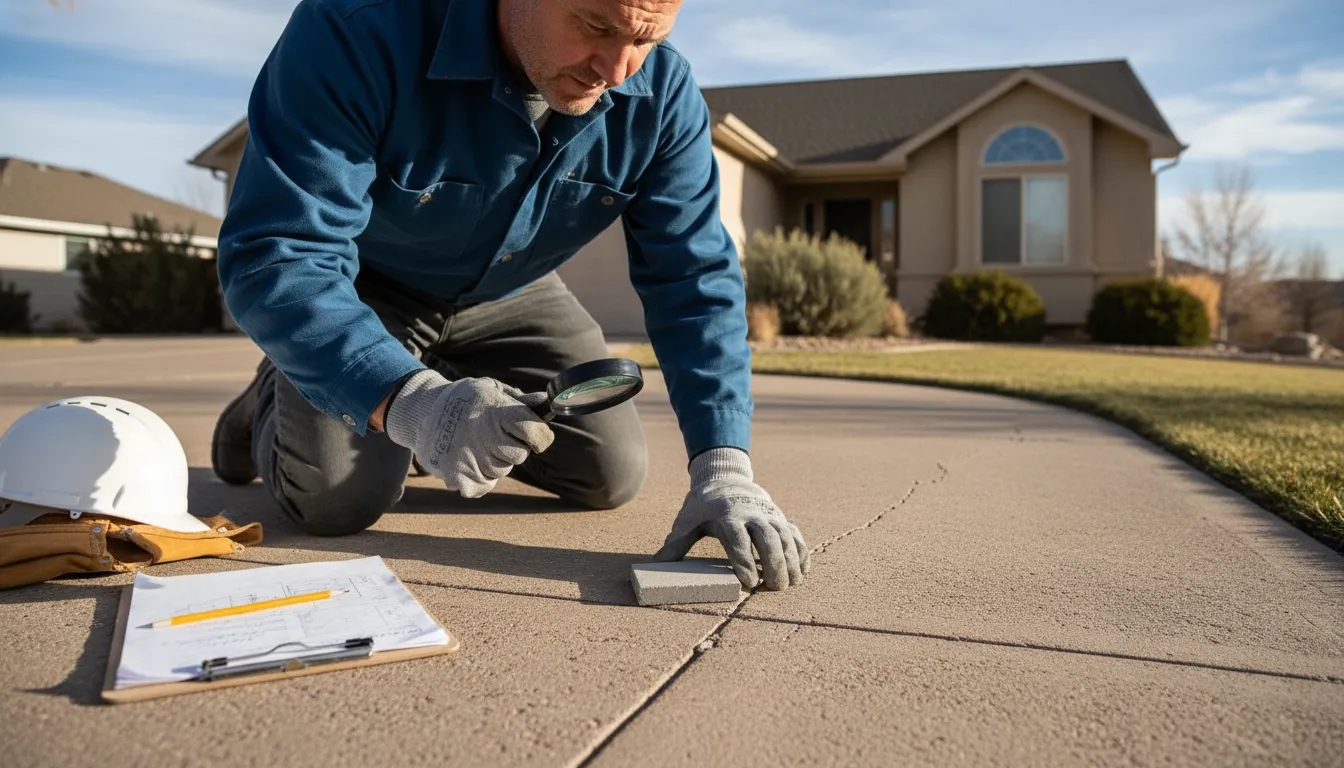
Some crack patterns call for more caution. An open crack, a raised or sunken slab edge, or pieces that move under load can signal problems below the visible surface. Repeated breaks across several sections also need professional review before any overlay is considered.
Before a site visit, take photos of open cracks, scaled areas, and changes in slab height. Note whether a crack seems to widen or whether water collects near worn spots. These details help guide an inspection, but they don’t determine the repair by themselves.
Resurfacing adds a new wearing surface; it does not let a homeowner judge movement, drainage, or support by sight alone. An on-site assessment helps separate limited surface wear from damage that may require a different repair plan.
Preparation and bonding
If resurfacing is suitable, preparation is not a cosmetic step. The existing concrete must give the repair layer a clean, sound surface it can grip. Research listed by the National Library of Medicine says the bonding surface should be roughened to improve bond strength between repair material and old concrete.
That is bonding in plain terms: the new surface needs a firm, prepared base instead of loose or weak material. The same research on bonded concrete repair describes re-cracking and peeling from the original concrete as known repair failures. A professional assessment links visible surface conditions to the repair method and preparation needed below.
When do settling and drainage concerns change the decision?
Settling and poor drainage shift the conversation from surface renewal to cause and stability. If a slab edge changes height, moves, or holds water near the garage, resurfacing alone may not address the condition that is damaging the driveway.
Uneven slabs and trip edges
A driveway may look worn, but the more important issue can be a change in slab height. Look across each joint for a raised edge, sunken panel, or spot where tires and feet meet an abrupt step. For concrete driveway resurfacing in the Denver Metro Area, these signs call for evaluation before any surface treatment is chosen.
Resurfacing covers the top face of a slab; it does not show what is happening below it. If two panels no longer meet at the same level, ask whether they are stable or still moving. A contractor can review the pattern, grade, joint condition, and intended use before discussing repair or replacement.
Pooling and runoff paths
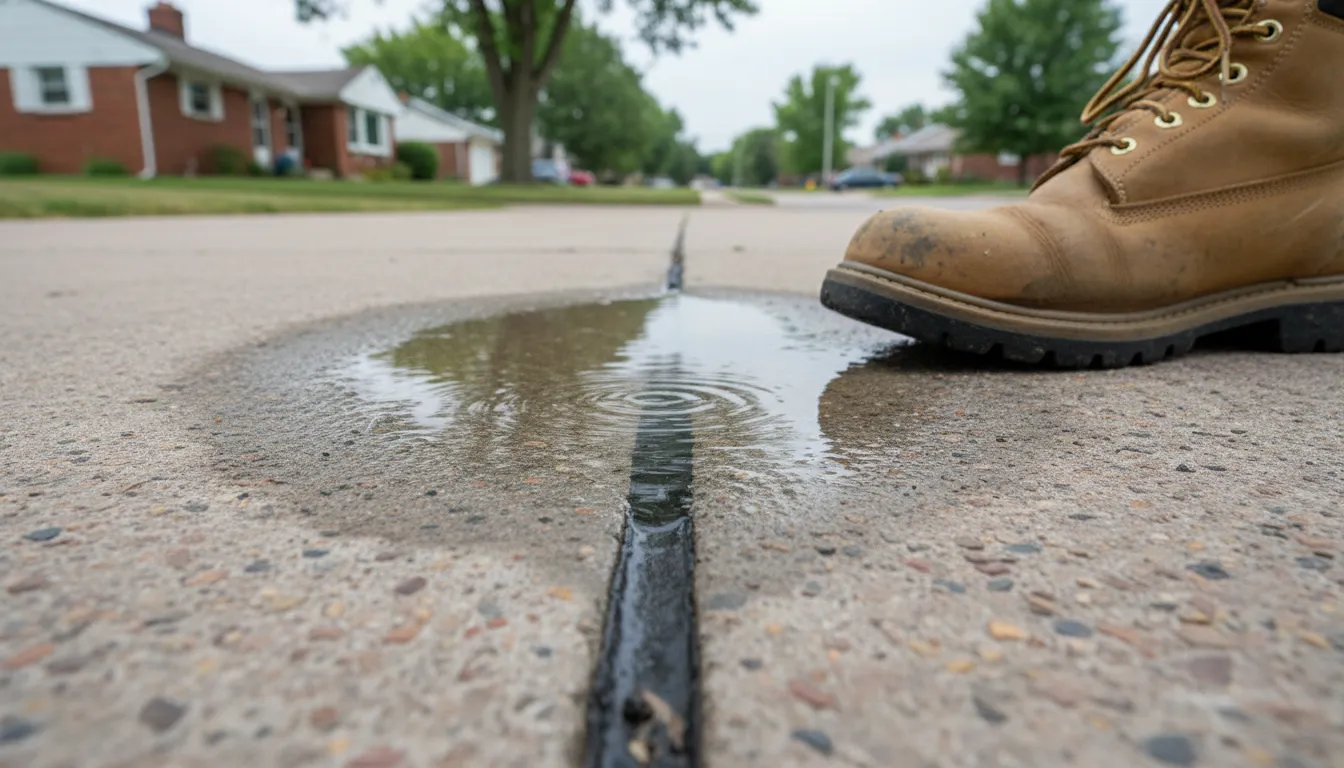
Water also changes the decision. After rain or snowmelt, note where water ponds, flows across joints, or leaves the drive toward the yard and street. A low spot that collects water is not only a color or texture issue. It is part of the site’s drainage pattern.
Bring simple observations to the site visit. Note whether a puddle appears beside a settled edge, near the garage, or along a walking path. Photos after wet weather can help show the pattern when the driveway is dry. Marking the puddle edge with chalk can make repeat visits easier to compare.
An overlay can create a fresh surface, but choosing a repair still requires a review of the service environment. NIST’s concrete repair workshop summary explains that planning includes repair design, specification, application, and repair systems. When water seems to be steering the problem, review water drainage solutions for Denver yards alongside driveway options.
Signs of recurring movement
A single uneven panel needs review, and an edge that keeps changing needs added attention. Before requesting an overlay, check whether a seam has opened again or a patch has split. Also note whether water returns to the same low area.
Surface repairs depend on sound planning and preparation. Research indexed by PubMed reports that brittle cement-based repairs can fail through re-cracking or delamination from the existing concrete matrix. That point does not diagnose your driveway. It supports a careful site evaluation when movement or drainage raises questions about a new surface.
A Faros site assessment can focus on what is visible: slab alignment, water path, joint condition, and repair history. From there, repair or replacement options can be discussed only when the existing condition supports that approach.
Request a Faros site assessment before selecting an overlay or replacement plan.
How do your finish goals affect resurfacing versus replacement?
Your finish goal matters, but it comes second to the slab condition. For concrete driveway resurfacing in the Denver Metro Area, a sound slab may support a refreshed finish. A driveway with deeper movement concerns may call for replacement before color or texture choices begin.
A refreshed existing surface
If the driveway is stable and the concern is a tired surface, resurfacing can improve its look without changing the footprint. Homeowners may choose a clean finish or a texture that relates to nearby walks and patios. For broader seasonal planning, see these spring home improvement project ideas in Denver.
Blending takes care. A new overlay can coordinate with existing concrete, but it may not make older and newer areas look the same. Sun, wear, and past finishes affect each slab in its own way.
For that reason, define what a refreshed appearance means before choosing a finish. It may mean a more even surface and a related texture, rather than an exact color match across every adjoining slab.
A larger layout change
Replacement fits a different goal. It lets a project address dimensions, joints, slab layout, and the relationship between the driveway and connected concrete areas. This matters when a new walkway or patio plan changes how the front or side yard should function.
A broader outdoor update may also connect the driveway decision with outdoor living spaces. Treating each slab as part of one plan can help the textures and transitions feel intentional.
Changes to slope or the driveway outline also move beyond a finish-only discussion. The starting question is not simply which surface looks right. It is whether the existing slab can serve the intended plan.
Condition before finish choice
An attractive finish cannot solve an unsuitable base. Repair materials and methods must fit the service setting and project design. NIST guidance on concrete repair performance identifies design, specification, and application as repair considerations.
During a site review, discuss whether the goal is to renew the present surface or rebuild parts of the layout. Faros’s professional driveway repair and resurfacing services start with the existing concrete. The finish can then align with the work the slab needs.
What should a driveway site consultation examine?
A site consultation should document what is on the ground before any concrete driveway resurfacing Denver metro area project is discussed. It should compare surface wear with signs that the slab has moved. It should then connect those findings to water flow, access, and the requested finish.
Surface condition and movement
An assessor can note scaling, pitting, worn coating, stains, and prior patches. Crack location matters too. Narrow surface lines present a different question than wide cracks, offset sections, rocking slabs, or settled corners.
The visit should also record joints, edges, curb transitions, and contact points at the garage or walk. Repair choices depend on the slab and service setting. Research from NIST lists repair design, specification, application, and repair systems as factors in performance.
Drainage, finish, and work area
A consultation should trace where runoff travels after rain or snowmelt. Look for low spots, ponding marks, downspout discharge, slope toward the street or garage, and erosion along slab edges.
Homeowners can discuss finish, color, traction, joint appearance, vehicle use, curing access, and equipment routes. Faros’s professional driveway repair and resurfacing services page gives context for questions about concrete work and scope.
How to prepare for the visit
Before the appointment, clear enough space for the full driveway to be seen. Use this short list to gather useful details and questions, not to diagnose the slab yourself.
- Move vehicles, bins, planters, and mats away from the driveway surface.
- Take photos of puddles or snowmelt paths before the water dries.
- Mark cracks, raised edges, or low spots that seem to have changed.
- List the finish, color, and traction needs for household use.
- Note gate widths, parked cars, daily access, and dates that may affect planning.
- Prepare questions about surface preparation, drainage, timing, and whether permits need discussion.
A clear visit separates appearance concerns from movement and drainage questions. That gives the homeowner a practical basis for discussing scope, finish, preparation, and next steps.
Questions to ask before choosing resurfacing or replacement
Choosing between resurfacing and replacement starts with the slab, not the finish sample. A focused site review helps separate surface wear from movement or damage below the surface. For homeowners exploring concrete driveway resurfacing in the Denver Metro Area, the right questions make the next recommendation easier to understand.
Is the existing slab sound?
Ask what the inspection found beneath worn color, small chips, or visible cracks. Are sections stable, or do cracks show shifting, sinking, or separation? A contractor should explain whether a new surface can bond well to what remains.
Surface preparation is part of that answer. Research indexed by PubMed notes that roughening existing concrete can improve bond strength before repair materials are used. Ask how the slab will be cleaned and prepared, and what observed issues could point toward replacement instead.
What site conditions affect the decision?
Ask whether water flows away from the driveway, gathers at edges, or follows low spots. Drainage and movement should be reviewed before selecting a finish. Also ask whether adjoining walkways, garage entry points, or transitions change the repair plan.
Keep this decision separate from choosing concrete or asphalt for a new driveway. Resurfacing versus replacement asks whether the existing concrete is a sound base. A material comparison answers a different question: what surface to build when a new installation is being considered.
- What cracking or movement did you observe, and what does it mean for the slab?
- What preparation is needed before a resurfaced finish can be applied?
- How will drainage and transitions be checked before work begins?
What will ownership and work look like?
Discuss the finish you expect and how it may age with use and weather. Ask which texture and color choices fit a driveway, and how repaired areas may look beside nearby concrete. Clear finish expectations help you assess each option fairly.
You should also know the working sequence: preparation, access limits, placement, cure time, and cleanup. Ask when vehicles and foot traffic can return, then request maintenance guidance for cleaning and seasonal care. Review related professional driveway repair and resurfacing services before your consultation.
If the slab’s condition is still unclear, schedule a site assessment with Faros Construction Services. Bring photos of cracks or ponding after rain and your finish questions. The next step should begin with observed conditions, not assumptions.
Frequently Asked Questions
Is it worth resurfacing a concrete driveway?
Resurfacing can be appropriate when a Denver Metro Area driveway is worn, discolored, lightly spalled, or has minor surface cracking, while the slab remains stable. It adds a new finish over existing concrete, but it does not correct major movement below the surface. A site assessment should check crack depth, settlement, soil support, and drainage before recommending an overlay.
Can you pour a thin layer of concrete over existing concrete?
A compatible concrete overlay can be installed over an existing driveway when the underlying slab is sound and properly prepared. Cleaning, removing weak surface material, and addressing repairable cracks help the new layer bond. Research on concrete repair materials emphasizes that design, material selection, and application practices affect performance, according to NIST.
What are the disadvantages of concrete overlay?
An overlay follows the condition of the slab below it. If the driveway has ongoing settlement, wide moving cracks, poor drainage, or unstable support, those issues can affect the finished surface. Resurfacing also cannot recreate every detail of a newly placed slab. Before selecting a finish, homeowners should ask how existing cracks, water flow, and slab movement will be handled.
When should you replace your driveway instead of resurfacing?
Replacement is generally the stronger option when a driveway shows major settlement, lifted sections, deep structural cracks, or repeated crack movement. Drainage problems tied to slab elevations can also point toward replacement. These signs suggest that a surface layer alone will not address the underlying condition. A Denver Metro Area consultation should document movement, water direction, base stability, and whether repairs can provide a sound surface.
What are the common signs that a driveway needs resurfacing?
Signs that may support resurfacing include surface flaking, weathered texture, staining, fading, minor shallow cracking, or a worn finish on a stable slab. Denver Metro Area freeze and thaw exposure can make surface wear more noticeable over time. If sections rock, sink, heave, or hold water, the driveway needs a broader evaluation before any resurfacing decision is made.
Ready to choose the right path for your driveway?
Waiting to address visible cracks, settling, or poor drainage can narrow your options and make the next decision more difficult. Starting now gives you time to compare resurfacing and replacement before damage or finish concerns shape a rushed choice. A site review can clarify the condition of your slab, your goals for appearance, and the questions worth asking.
Ready to plan your next step? Contact Faros to schedule a concrete driveway consultation and discuss the right scope for your home. Schedule your concrete driveway consultation to review your driveway concerns, preferred finish, drainage questions, and practical next steps. Request a clear conversation before choosing a surface update or a full replacement project.