
You need more space in your Denver home, but you are not sure whether a full room addition or a smaller bump-out is the right move. Both options expand your living area, yet they differ in scope, timeline, permits, and how much they change your home’s footprint. Choosing the wrong one could mean overspending on a project that does not match your actual needs, or coming up short on space when you really needed a bigger solution.
Get a Free Quote on your home expansion project from Faros Construction.
This guide breaks down the differences between room additions and bump-outs so you can make a confident decision for your Denver home. We will cover what each option involves, when one makes more sense than the other, structural considerations specific to Colorado’s climate, and what the permit process looks like in the Denver metro area.
What Is a Room Addition?
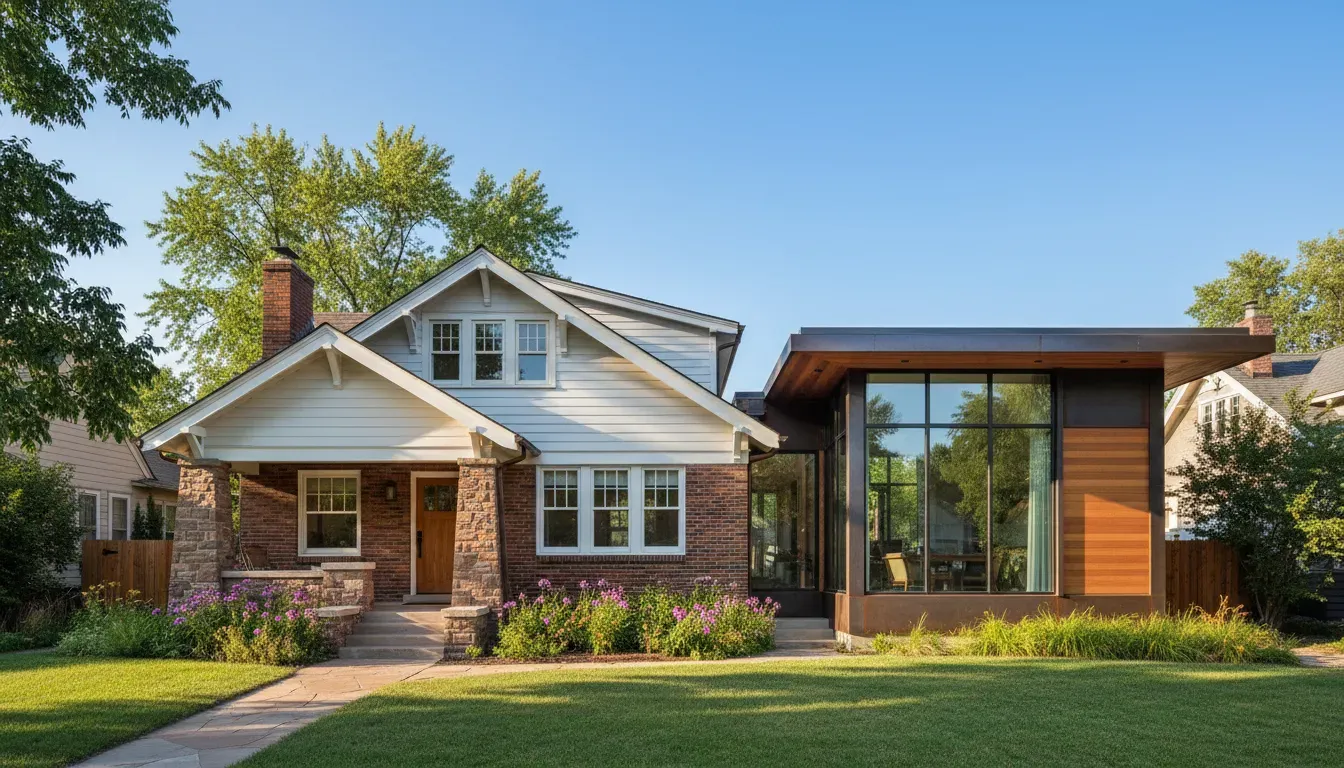
A room addition is a full-scale expansion that adds one or more entirely new rooms to your home. The new space sits on its own foundation, has its own walls and roof structure, and connects to your existing home through a shared wall or hallway. Room additions are common for growing families who need a new bedroom, a dedicated home office, or an expanded living area.
Most room additions in Denver range from 200 to 600 square feet, though larger projects are possible depending on your lot size and local zoning. The construction process typically involves excavation, pouring a new foundation (usually a concrete slab or crawl space), framing walls, running new electrical and plumbing lines, and tying the new roof into the existing structure. Because of this complexity, room additions generally take 3 to 6 months from the start of construction to completion.
Room additions require a building permit from the City and County of Denver (or your local jurisdiction if you live in the surrounding metro area). You will also need to verify that the addition meets setback requirements, which dictate how close you can build to your property line. In most Denver residential zones, side setbacks are 5 feet and rear setbacks are 10 to 15 feet.
What Is a Bump-Out?
A bump-out is a smaller extension that pushes an existing room outward, typically by 2 to 10 feet. Rather than creating an entirely new room, a bump-out expands the footprint of a room you already have. Kitchen bump-outs are the most popular choice, giving homeowners enough extra space for an eat-in nook, a larger island, or additional counter workspace.
Structurally, bump-outs work differently from full additions. Smaller bump-outs (under 3 feet) can sometimes be cantilevered from the existing floor joists, meaning they do not need their own foundation at all. Larger bump-outs typically require a small foundation or piers to support the added weight. Either way, the construction footprint is much smaller than a full room addition.
Because of their limited scope, bump-outs often take 2 to 6 weeks to complete. Permit requirements vary by jurisdiction. In Denver, bump-outs that add square footage to a structure generally require a permit, even if the extension is small. Always check with your local building department before starting work.
Room Addition vs Bump-Out: Side-by-Side Comparison
| Feature | Room Addition | Bump-Out |
|---|---|---|
| Square footage added | 200 to 600+ sq ft | 20 to 150 sq ft |
| Foundation required | Yes (slab, crawl space, or basement) | Sometimes (depends on size) |
| Typical timeline | 3 to 6 months | 2 to 6 weeks |
| Permit required in Denver | Yes, always | Usually yes |
| Impact on yard space | Significant | Minimal |
| Structural complexity | High (new foundation, roof tie-in) | Low to moderate |
| Best for | New rooms, major layout changes | Expanding an existing room |
| Investment level | Higher | Lower |
Bottom line: If you need a completely new room or want to add significant square footage, a full addition is the way to go. If you just need a bit more breathing room in an existing space, a bump-out delivers results faster and with less disruption.
When Does a Bump-Out Make Sense?
A bump-out is usually the better choice when you are happy with your home’s overall layout but one specific room feels too tight. Here are common scenarios where Denver homeowners choose bump-outs:
- Kitchen expansion: Adding 3 to 6 feet to your kitchen can create space for a larger island, a breakfast nook, or better traffic flow without gutting the entire floor plan.
- Bathroom upgrades: A bump-out can give you enough room to switch from a shower stall to a full tub/shower combo, or to add a double vanity.
- Mudroom or entryway: Extending a back entry by a few feet can turn a cramped doorway into a functional mudroom with hooks, benches, and storage.
- Window seat or reading nook: A 2 to 3 foot cantilevered bump-out with large windows adds both space and natural light.
Bump-outs also work well on lots where setback requirements leave limited room for a full addition. If your home sits close to the property line on one side, a small bump-out on another wall may be the only viable expansion option.
When Should You Choose a Full Room Addition?
A room addition is the right call when you need genuinely new space, not just a few extra feet in an existing room. Consider a full addition when:
- Your family is growing: A new bedroom, nursery, or playroom requires its own walls, door, and dedicated space that a bump-out cannot provide.
- You need a dedicated home office: Remote work is not going away. A quiet, separated workspace with a door that closes makes a real difference in productivity.
- You want a primary suite: Adding a spacious master bedroom with an attached bathroom and walk-in closet is one of the most popular room addition projects in Denver.
- You are considering aging-in-place modifications: A ground-floor bedroom and bathroom addition can make your home accessible for years to come.
- You plan to stay long-term: If you see yourself in this home for 10+ years, a full addition gives you the space to grow without having to move.
Room additions also tend to deliver a stronger return when it comes time to sell. Adding a bedroom or bathroom to a home that lacks one can significantly increase its market value in the Denver metro area.
Denver-Specific Considerations for Home Expansions
Building in the Denver metro area comes with factors that do not apply in every market. Understanding these before you start will save time and prevent surprises during construction.
Soil and Foundation Conditions
Much of the Denver area sits on expansive clay soils that swell when wet and shrink when dry. This movement can stress foundations, which is why engineers in Colorado often specify deeper footings or post-tension slab designs for additions. Your contractor should perform a soil test before finalizing the foundation design for any room addition. Bump-outs, especially cantilevered ones, are less affected by soil conditions since they rely on the existing structure for support.
Freeze-Thaw Cycles
Denver’s climate swings from freezing winter nights to mild afternoon sun, sometimes within the same day. Foundations must be dug below the frost line (at least 36 inches deep in most Denver jurisdictions) to prevent heaving. Concrete poured during cold months needs protective blankets and additives to cure properly. These factors affect scheduling; many Denver homeowners plan additions for spring or summer to avoid weather-related delays.
Permits and Zoning in the Denver Metro
The permitting process varies depending on where you live. Within the City and County of Denver, residential permits are handled by Community Planning and Development (CPD). Surrounding cities like Aurora, Lakewood, Littleton, and Arvada each have their own building departments and specific setback requirements. A qualified general contractor familiar with your local jurisdiction can pull permits on your behalf and manage the inspection schedule.
Typical permits needed for a room addition include:
- Building permit (structural)
- Electrical permit
- Plumbing permit (if applicable)
- Mechanical permit (HVAC extension)
Bump-outs that do not add plumbing or electrical may only require a building permit, though this depends on the scope and your jurisdiction.
HOA Restrictions
Many Denver-area neighborhoods have homeowners’ associations with architectural review boards. If your home is in an HOA community, submit your plans for approval before applying for a building permit. Some HOAs restrict the size, style, or materials of additions to maintain neighborhood consistency.
Structural Factors That Affect Your Decision
Beyond personal preference, the physical characteristics of your home play a role in determining whether a bump-out or addition is feasible.
Load-Bearing Walls
If the wall you want to expand through is load-bearing, additional engineering is needed to redistribute the structural weight. This is true for both bump-outs and additions, but it is more of a concern with bump-outs since you are removing part of an existing wall and extending it outward. A structural engineer can evaluate whether a beam or header can replace the removed wall section.
Roof Integration
A full room addition needs its own roof, which must tie into your existing roofline. Poor roof integration is one of the most visible signs of a low-quality addition. It can cause leaks, drainage problems, and an awkward appearance that lowers curb appeal. Bump-outs are simpler in this regard, often requiring only a small shed roof or extending the existing eave.
Utility Connections
Both options require extending HVAC, electrical, and sometimes plumbing into the new space. Additions need full utility runs to service entirely new rooms, while bump-outs typically extend existing circuits and ductwork. If your current HVAC system is already at capacity, an addition may require a furnace or AC upgrade. For a bump-out, extending ductwork from the existing room is usually sufficient.
How to Decide: A Quick Framework
Use these five questions to guide your decision:
- How much space do you need? If the answer is less than 150 square feet, a bump-out will probably work. If you need 200+ square feet or an entirely new room, go with an addition.
- What is your timeline? Need the space in a month or two? A bump-out fits that window. Have the flexibility to wait 3 to 6 months? An addition is on the table.
- What are your lot constraints? Check your setback lines. If your property line is close on the side where you want to expand, a bump-out (or a second-story addition) may be your only option.
- How long will you stay in this home? Long-term residents benefit more from the bigger investment of an addition. If you might sell within 5 years, a bump-out improves livability without overinvesting.
- Does the room need to be separate? A bedroom, home office, or ADU needs its own walls and door. An expanded kitchen or bathroom does not. That distinction often answers the question.
Talk to our team about your project. Get a Free Quote from Faros Construction today.
Frequently Asked Questions
Do I need a permit for a bump-out in Denver?
In most cases, yes. Any structural change that adds square footage to your home requires a building permit in Denver and surrounding metro communities. Even a small cantilevered bump-out may trigger a permit requirement. Contact your local building department or work with your contractor to confirm before starting.
Which option adds more value to my home?
A full room addition typically adds more market value because it increases the total square footage and room count. Adding a bedroom or bathroom to a home that lacks one is especially impactful. However, a well-executed bump-out that improves kitchen functionality or bathroom layout can also boost value relative to its lower investment.
Can I do a bump-out if I have a basement?
Yes, but it requires careful engineering. The bump-out extension must account for the basement wall below. Cantilevered bump-outs avoid this issue since they do not require foundation work, but larger bump-outs may need piers or a small footing that ties into the existing basement wall.
How do Denver’s expansive soils affect my project?
Expansive clay soils are common across the Denver metro area. For a full room addition, your contractor should perform a soils report and design the foundation accordingly, often using deeper footings or a post-tension slab. Bump-outs are less affected, especially cantilevered designs, since they transfer loads through the existing structure rather than adding new ground contact.
Can I convert a bump-out into a full addition later?
Technically yes, but it is not always practical. A bump-out’s foundation (if it has one) may not be sized to support a larger structure, and the roof and wall framing would likely need to be rebuilt. If you think you might want a full addition eventually, it is usually more efficient to plan for the full project from the start.
Start Your Home Expansion the Right Way
Whether you choose a bump-out for a quick kitchen upgrade or a full room addition for a new bedroom suite, the most important step is getting expert guidance early. A qualified Denver contractor can evaluate your home’s structure, check your lot’s setback requirements, and help you understand which option delivers the results you need without unnecessary complexity.
At Faros Construction, we bring over 30 years of combined construction experience to every project in the Denver metro area. Owner Ricardo Alfaro personally manages each build from consultation through completion, so you get hands-on accountability from day one.
Request your Free Quote today and let us help you plan the right expansion for your Denver home.