

Foundation cracks are common, but their direction, width, movement, and surrounding symptoms determine whether they deserve simple monitoring or prompt professional attention. Denver Metro Area homeowners can protect their homes by learning which changes matter, documenting them clearly, and responding before water or movement creates broader damage.
Request a professional foundation evaluation from Faros Construction Services.
This guide explains the most important foundation crack warning signs, how local moisture cycles affect concrete, and what information to gather before calling a contractor. It also separates stable surface marks from patterns that may indicate movement, so you can make a calm, informed decision instead of guessing.
Which foundation crack warning signs are serious?
The most serious foundation crack warning signs include horizontal or stair-step patterns, widening gaps, displaced edges, bowing walls, active water entry, and cracks paired with sticking doors or sloping floors. A single feature does not confirm the cause, but several related changes justify a prompt professional evaluation.
Concrete naturally changes as it cures, and many foundations develop thin surface lines that remain stable for years. Concern rises when a crack changes over time or appears with movement elsewhere in the home. The safest approach is to inspect the entire area rather than judging one line in isolation.
Surface marks compared with structural movement
A thin vertical line with even edges may result from normal shrinkage. Photograph it, measure it, and see whether it remains dry and unchanged. A jagged diagonal line, a horizontal gap, or a stair-step crack through mortar deserves closer attention, especially if it becomes longer or wider.
Displacement is another important clue. Look across the crack and compare both sides. If one side projects forward or sits higher than the other, movement may be occurring. A decorative patch can hide that evidence, so document the crack before covering anything.
| Observation | Often suitable to monitor | Professional review advised |
|---|---|---|
| Direction | Thin vertical line | Horizontal, diagonal, or stair-step pattern |
| Change | Stable across repeated checks | Widening, lengthening, or new displacement |
| Moisture | Dry surrounding surface | Active seepage, stains, or white deposits |
| Nearby symptoms | No related changes | Sticking openings, uneven floors, or bowed wall |
| Edges | Even and aligned | Jagged, offset, or crumbling |
Measuring width, length, and movement
Measurements create a useful baseline. Use a ruler to record the widest point and take one close photo plus one wider photo that shows the crack location. Mark the endpoints lightly with pencil and add the date. Repeat the same process from the same angle during later checks.
Do not rely on width alone. A narrow crack that grows quickly or leaks may be more urgent than a wider line that has stayed unchanged for years. Rapid change over days or weeks, multiple new cracks, or a matching shift at a door or window should move the issue from monitoring to professional review.
Conditions that call for immediate caution
- A wall bows, leans, or appears unstable.
- A horizontal crack crosses a basement or foundation wall.
- Crack edges become offset, loose, or visibly displaced.
- Water enters actively during rain or snowmelt.
- Several doors, windows, floors, or walls change together.
- A crack grows noticeably between short-interval checks.
Never enter an area that appears unstable. From a safe location, take photos and contact an experienced professional. Faros Construction Services provides foundation contractor guidance for Denver Metro Area homeowners and can review the broader pattern rather than treating a crack as an isolated mark.
What does the crack pattern reveal?
Faros Construction Services evaluates crack patterns as clues, not final diagnoses. Vertical, diagonal, horizontal, and stair-step cracks can each point toward different forms of stress, but a reliable assessment also considers foundation type, drainage, soil moisture, displacement, and related changes throughout the home.
The path of a crack shows how force may be traveling through concrete, block, brick, or mortar. Follow the line from beginning to end. Note whether it stops at one material, crosses into another, or reappears on an interior surface. That context helps a professional determine what deserves further investigation.
Vertical and diagonal cracks
Vertical cracks often form as concrete cures and contracts. A thin, dry line with aligned edges may remain stable. Monitor it consistently, but request a review if it widens, leaks, crumbles, or appears with other changes. Diagonal cracks can suggest uneven movement when one section shifts differently from another.
Pay close attention to diagonal lines that begin near door or window corners. Openings naturally concentrate stress, so a new crack there may correspond with a frame that is no longer square. Test nearby doors and windows without forcing them, then note any dragging, gaps, or latch problems.
Horizontal and stair-step cracks
A horizontal crack can indicate pressure against a foundation wall, particularly when the wall also bows inward. Stair-step cracks follow mortar joints in block or brick. These patterns need prompt attention when they grow, show displacement, or coincide with moisture and movement inside the home.
A contractor should examine the wall as a complete system. The team may review exterior grading, water flow, wall alignment, and visible concrete condition before explaining practical next steps. Learn more about the broader capabilities of an experienced concrete contractor serving the Denver Metro Area.
Why displacement matters
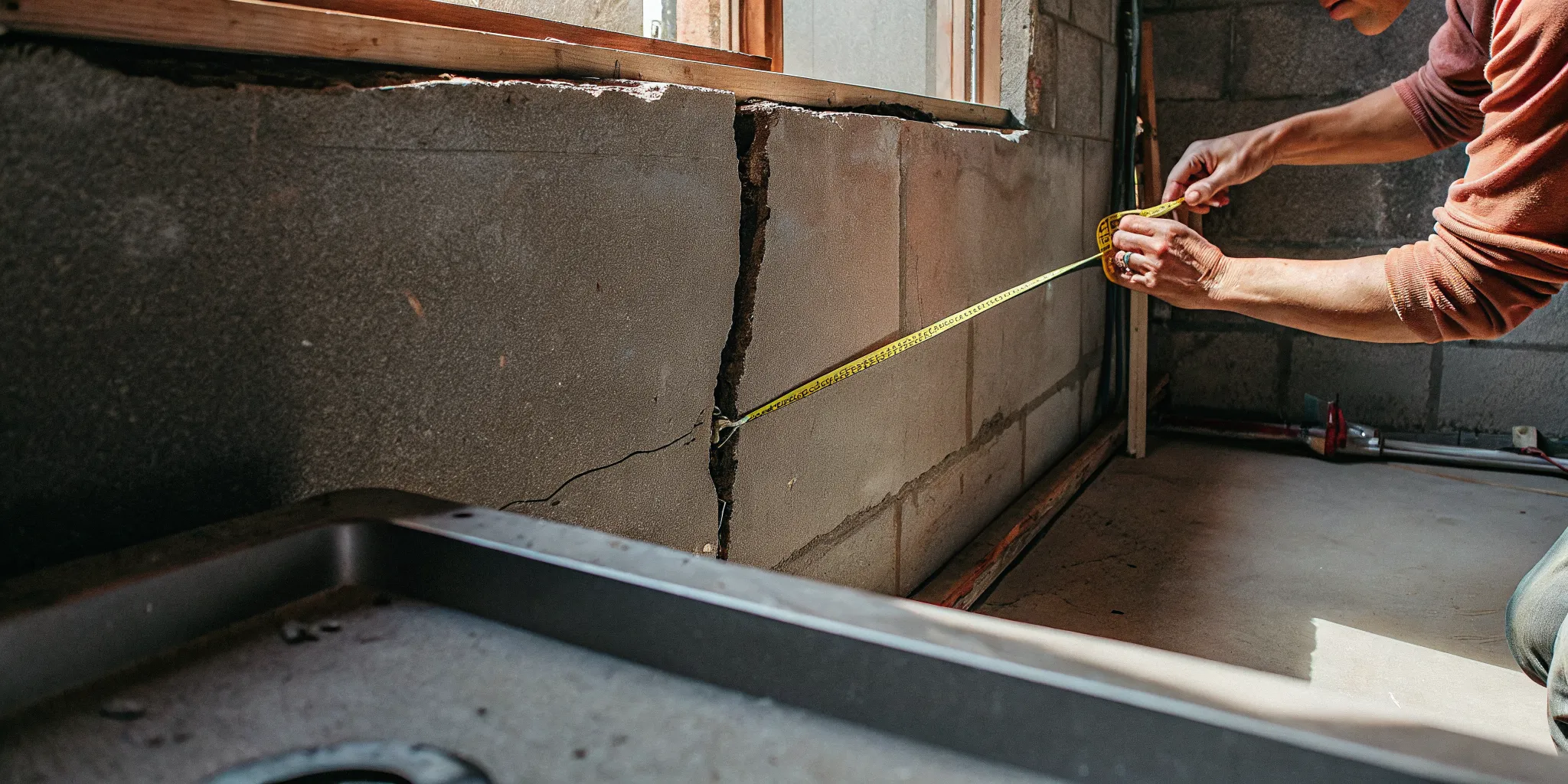
Displacement means the surfaces on opposite sides of a crack no longer align. One side may sit forward, higher, or lower. This difference suggests movement rather than a simple surface opening. Photograph the crack from an angle that clearly shows the offset and include a ruler for scale.
Also inspect the material around the crack. Loose fragments, crumbling edges, exposed reinforcement, or repeated patch failure add useful evidence. Do not chip or pry at damaged concrete. Preserve the area so a professional can see its original condition.
What warning signs appear beyond the crack?
Foundation movement often creates related changes away from the original crack. Sticking doors, hard-to-open windows, sloping floors, drywall cracks, separated trim, bowed walls, and moisture can form a connected pattern. Recording these symptoms helps distinguish an isolated surface line from a broader structural or drainage concern.
Walk through the home methodically, starting near the crack and moving outward. Look for new changes rather than normal wear that has stayed the same for years. Several symptoms that appeared during the same period are more meaningful than one minor issue by itself.
Doors, windows, and interior finishes
A shifting frame can change the shape of door and window openings. A door may drag, fail to latch, or develop an uneven gap along its edge. A window may resist opening or no longer lock smoothly. Note which openings changed and whether the issue varies by season.
Interior drywall can also reveal movement. Check for diagonal cracks from opening corners, separated wall and ceiling joints, nail pops, or trim pulling away. Small finish cracks may have ordinary causes, but repeated or expanding patterns deserve review alongside the foundation.
Floors, walls, and exterior surfaces
Uneven or sloping floors may indicate movement below, especially when the change is new or concentrated in one part of the home. Do not use a rolling object as the only test because flooring variations can affect it. Instead, document the area and ask a professional to measure it accurately.
Outside, inspect visible foundation sections, brick, block, walkways, and adjoining concrete. Separation between materials or repeated cracking near one corner can provide context. Similar observation principles apply when evaluating concrete flatwork, as explained in this guide to choosing a qualified driveway replacement company.
Moisture, stains, and white deposits
Water stains, damp concrete, musty areas, or white mineral deposits can show that moisture is moving through or around the wall. Water entry does not prove structural movement, but it can worsen conditions and should be addressed. Record when dampness appears, such as after rain or snowmelt.
Look outside for a likely source. Overflowing gutters, short downspouts, leaking irrigation, low spots, or soil that directs runoff toward the home can concentrate moisture. A practical guide to retaining wall drainage explains why controlled water flow matters around concrete structures.
Contact Faros Construction Services to discuss a changing crack or related warning signs.
Why do Denver Metro Area conditions matter?
Faros Construction Services considers seasonal moisture change a key part of any local foundation review. Dry periods, heavy rain, snow, and snowmelt can change soil moisture around a home. Uneven water exposure may place different pressure on separate foundation sections, making drainage and consistent observation especially important.
Local conditions do not mean every crack is serious. They do mean homeowners should pay attention to what happens before a crack changes. A photo log tied to weather and drainage observations gives a contractor more useful evidence than a single image without context.
Changing soil moisture
Soil can expand or contract as its moisture level changes. If one side of a home receives more runoff or irrigation than another, the foundation may experience uneven conditions. Inspect gutters, downspouts, grading, and low areas after storms and during snowmelt.
The objective is consistent, controlled drainage away from the structure. Avoid sudden changes without professional guidance. If you identify pooling or erosion, document its location and discuss it during the evaluation so the crack and its surroundings can be considered together.
Freeze and thaw exposure
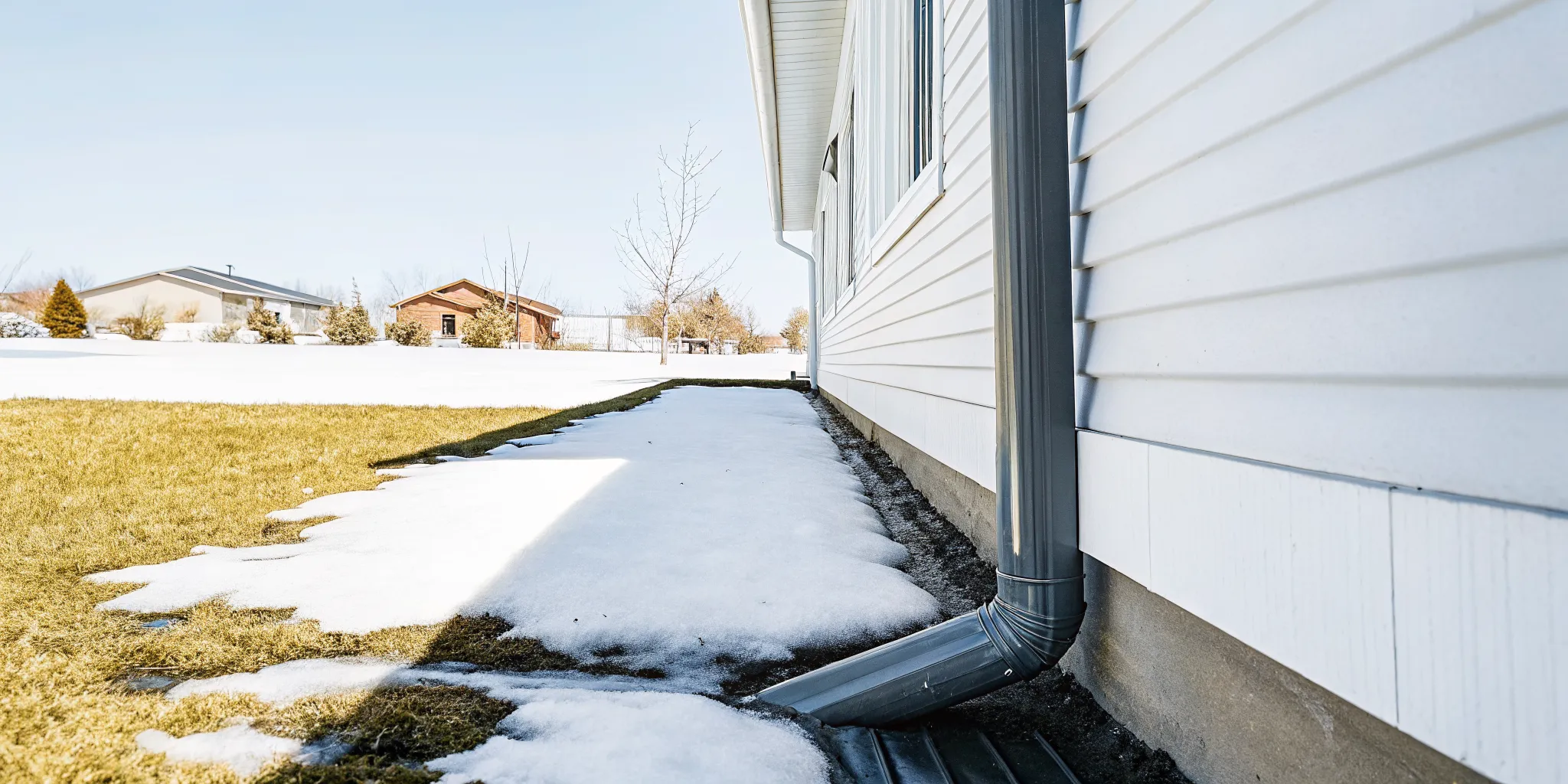
Water that enters small openings can freeze during cold weather and add stress to exposed concrete. Watch for flaking, damp areas, or a crack that changes after winter. These signs are valuable to record even when they do not appear urgent.
Keep snow piles away from the foundation when practical, and watch where meltwater travels. If it returns toward the home, note the route. Good drainage observation supports a more complete evaluation and may identify avoidable moisture stress.
Seasonal inspection routine
Inspect known cracks at consistent times during the year and after notable weather. Take photos from the same positions, use the same ruler, and write brief notes. Consistency makes change easier to recognize and gives a professional a reliable timeline.
A quality-minded contractor should explain observations clearly and recommend work that responds to the actual condition. Faros Construction Services describes its commitment to craftsmanship and honest service on the company background page.
How should you monitor a foundation crack safely?
Safe monitoring means documenting a stable crack without entering an unsafe area or hiding useful evidence. Photograph the location, measure the widest point, record nearby symptoms, review drainage, and compare observations on a schedule. Stop monitoring and request help whenever the crack changes quickly, leaks, displaces, or accompanies wall movement.
- Take wide and close photos. Show both the crack location and its details.
- Add a clear scale. Place a ruler beside the widest point without disturbing the surface.
- Record the date and location. Note the room, wall, direction, and nearby openings.
- Mark endpoints lightly. Pencil marks can make new growth easier to identify.
- Check related features. Note changes in doors, windows, floors, drywall, and trim.
- Review water flow. Look for pooling, overflowing gutters, irrigation leaks, and snowmelt.
- Repeat consistently. Compare the same views rather than relying on memory.
When monitoring is not appropriate
Do not wait when a wall bows, leans, or appears unstable. The same applies to rapid crack growth, active water entry, displaced edges, loose material, or several connected symptoms. Keep people away from the area and request professional guidance from a safe location.
Avoid concealing the evidence
Paint, trim, and quick patches can hide changes without addressing their source. Before any repair, document the crack and understand why it formed. This allows the chosen response to address the underlying condition rather than only its appearance.
When comparing contractors, review qualifications, scope clarity, and the reasoning behind recommendations. Confirming licensing and insurance information is a practical part of selecting a team to work on your property.
When should you request a professional evaluation?
Faros Construction Services recommends professional evaluation when a crack grows, leaks, shows displacement, follows a horizontal or stair-step path, or appears with sticking openings, uneven floors, or bowed walls. A complete review connects visible symptoms with drainage, foundation type, concrete condition, and recent changes around the home.
You do not need to determine the cause before asking for help. Your role is to preserve clear evidence and describe what changed. The contractor’s role is to inspect the broader system, explain observations, and outline suitable next steps.
Information to gather before the visit
- Dated wide and close photographs of each crack
- Measurements from repeated checks
- Notes about water entry and weather timing
- Locations of sticking doors or windows
- Areas with uneven floors or interior finish cracks
- Recent drainage, irrigation, or landscaping changes
Share the timeline, even if some dates are approximate. Mention whether the crack existed when you moved in, when you first noticed change, and what related symptoms appeared. Clear notes help the evaluator focus on the most relevant areas.
What a useful evaluation includes
A useful evaluation considers more than the visible gap. The professional should inspect related areas, ask about changes, and explain what the pattern may indicate. Recommendations should connect directly to observed conditions and provide a clear rationale.
Choosing solely from the lowest proposal can overlook scope, materials, qualifications, and long-term workmanship. Read why quality and complete scope matter in construction before comparing recommendations.
How can you reduce avoidable foundation stress?
Faros Construction Services encourages homeowners to focus on drainage, routine observation, and timely professional guidance. These habits cannot prevent every foundation issue, but they can reduce avoidable moisture stress and reveal change earlier. Keep runoff moving away, monitor irrigation, manage snow placement, and maintain a consistent photo record.
Guide runoff away from the home
Keep gutters clear and verify that downspouts discharge away from the foundation. Walk around the home during or soon after rain to find overflow, erosion, and low spots. Do not ignore an area where water repeatedly gathers near a crack.
Watch irrigation and snow placement
Check sprinklers and hoses for leaks or spray that reaches the foundation. Avoid piling shoveled snow against the home where meltwater may collect. Review these areas whenever seasons change, and document any recurring moisture pattern.
Make observation part of home care
Add a foundation check to regular spring and fall maintenance. Compare known cracks, inspect visible concrete, and test doors and windows that previously changed. A consistent record helps you identify meaningful movement instead of relying on memory.
If you need help interpreting what you see, call (720) 594-5604. The team can explain whether the pattern is suitable for monitoring or deserves a closer evaluation.
Frequently asked questions about foundation cracks
These answers summarize how to respond to common foundation crack warning signs. Homeowners should consider crack direction, change, displacement, moisture, and related symptoms together. When a wall moves, a gap changes quickly, or several signs appear at once, a professional evaluation is safer than continued observation.
How can I tell if a foundation crack is serious?
Look beyond width. Horizontal or stair-step patterns, growth, displacement, water entry, bowed walls, sticking doors, and uneven floors support getting a professional evaluation. Several related changes are more meaningful than one stable surface line.
Can I monitor a small vertical foundation crack?
A thin vertical crack with even edges that stays dry and unchanged may be suitable to document and monitor. Photograph it with a ruler, note the date, and request guidance if it grows, leaks, displaces, or appears with other warning signs.
Why is water coming through a foundation crack?
Water may reach a crack when runoff, snowmelt, grading, or drainage allows moisture to gather near the foundation. Document when seepage appears, inspect visible drainage conditions, and have the area reviewed so the full source can be understood.
Should I patch a foundation crack myself?
Avoid hiding a changing crack before its cause is understood. A cosmetic patch may conceal useful evidence while movement or moisture continues. Document the area first and request a professional review when warning signs are present.
What should I show a foundation contractor?
Share dated photos, measurements, a timeline of changes, water observations, and notes about nearby doors, windows, floors, and walls. Mention any recent drainage, irrigation, landscaping, or weather-related changes that may provide context.
Get clear guidance on foundation crack warning signs
Faros Construction Services helps Denver Metro Area homeowners understand foundation crack warning signs through careful observation and practical guidance. If a crack is changing, leaking, displaced, or connected with other movement, arrange a professional review to understand the pattern and identify an appropriate path forward.
Do not wait for several symptoms to become severe. Gather your photos and notes, then request an evaluation from Faros Construction Services or call (720) 594-5604. You can also review the team’s concrete foundation services for Denver Metro Area homes.