
A commercial building can look sound from the parking lot while coating failures form around joints, trim, doors, and lower walls. A practical commercial exterior painting maintenance schedule helps property teams catch those issues early, protect the surface below, and plan work around daily operations.
Schedule a commercial exterior painting consultation with Faros Construction Services.
For properties in the Denver Metro Area, the schedule should account for strong sun, snow, wind, moisture, and repeated freeze-thaw cycles. The best plan combines routine observation, seasonal inspections, careful surface preparation, prompt repairs, and a clear standard for professional repainting.
Your commercial exterior painting maintenance schedule
A commercial exterior painting maintenance schedule combines monthly ground-level checks, detailed spring and fall inspections, and an annual professional review. Property teams should document every elevation, prioritize exposed or damaged surfaces, and adjust the plan as weather and building use reveal new wear.
A useful schedule is not a fixed repaint date written years in advance. It is a repeatable process that tracks how each part of the building is performing. Property teams should divide the exterior into elevations and high-use zones, then document the condition of each area over time.
Monthly observation
During a normal property walk, look for visible changes that can be seen safely from the ground. Note fresh stains, impact damage, loose sealant, peeling edges, rust marks, or areas that stay damp. Pay close attention to service doors, loading zones, trash areas, and lower walls near irrigation or snow storage.
Monthly observation does not need to interrupt operations. A short, consistent walk can reveal changes before they become broad failures. Record the location and take a clear photo whenever a new issue appears.
Spring and fall inspections
Schedule a detailed inspection in spring after winter exposure and again in fall before cold weather returns. Spring is a good time to look for damage linked to snow, ice, and moisture. Fall is a good time to address open joints, exposed substrate, and weak areas before another winter.
| Timing | Main focus | Action |
|---|---|---|
| Monthly | Visible changes and impact zones | Photograph and log new issues |
| Spring | Winter wear, moisture, peeling, and sealant | Prioritize repairs and preparation |
| Fall | Open joints, exposed areas, and drainage | Complete needed protection before winter |
| Yearly | Full exterior condition and trends | Update the phased maintenance plan |
Annual professional review
An annual review gives the property team a broader view of coating condition and recurring trouble spots. A professional can help separate surface-level wear from failures caused by moisture, movement, corrosion, or weak material below the coating. The findings should guide the next year of maintenance.
Keep inspection notes, dated photos, repair records, and product information in one place. A consistent record makes it easier to see whether a repair is holding and whether damage is spreading across an elevation.
How Denver Metro Area weather changes the schedule
Denver Metro Area weather makes exposure-based maintenance essential. Sun-facing walls may fade and chalk first, while lower walls and joints face snow, splashback, and freeze-thaw movement. Inspecting each elevation by its actual exposure produces a more useful plan than treating the entire building alike.
Exterior coatings in the Denver Metro Area face several forms of exposure. Strong sunlight can fade color and weaken the surface of a coating. Snow and ice can keep lower walls and joints wet. Wind can drive dirt and moisture against the building, while rapid temperature changes can stress joints and painted materials.
Sun-facing elevations
Walls with long periods of direct sun may fade or chalk sooner than shaded elevations. Chalking appears as a powdery film on the surface. It can signal that the coating is breaking down, even when peeling is not yet visible.
Compare sun-facing walls with protected sides of the building during each seasonal inspection. Uneven fading, a dry powdery surface, or small cracks can help the team decide where preparation and repainting should start.
Snow, moisture, and lower walls
Lower walls often face snow buildup, splashback, irrigation, and repeated wetting. Look closely where the wall meets paving, landscaping, stairs, and loading areas. Stains, blistering, peeling, or soft material may point to a moisture source that must be corrected before painting.
Paint should not be used to hide an active moisture issue. Find the source first, allow the surface to dry, and repair damaged material. This approach helps the next coating bond to a sound surface.
Freeze-thaw movement
Water that enters a small opening can expand when it freezes. Repeated cycles can widen cracks, stress sealant, and loosen weak coating edges. Inspect joints, penetrations, trim transitions, and horizontal ledges where water can collect.
Different elevations may need different maintenance timing because exposure is not equal. Treat the schedule as a map of risk rather than one date for the entire building.
How should you inspect a commercial exterior?
Inspect a commercial exterior with the same mapped route every time. Start with a wide view, review high-risk details, photograph each concern, and rank findings by urgency. Consistent locations and photo angles make it easier to identify spreading damage and decide when professional help is needed.
A systematic inspection prevents easy-to-see areas from receiving all the attention. Use the same route and the same building map each time. Review conditions from a safe location, and leave elevated or hard-to-reach areas to trained professionals.
- Divide the building into zones. Label each elevation, entry, loading area, and special feature so every finding has a clear location.
- Start with a wide view. Look for uneven color, broad stains, and patterns that show where water or sun exposure is strongest.
- Review high-risk details. Check doors, trim, joints, penetrations, ledges, lower walls, and places where different materials meet.
- Test only where appropriate. A professional can assess adhesion, chalking, moisture, and the condition of the material below the paint.
- Photograph and rank findings. Use consistent angles and label each photo by zone, date, and concern.
- Update the action list. Separate monitoring items from prompt repairs and areas that need a professional review.
What to record
For each concern, record the type of damage, its size, its exact location, and the nearby conditions. Note whether the area is near drainage, irrigation, equipment, foot traffic, or vehicle activity. These details can reveal why the same issue keeps returning.
Use close photos to show the defect and wider photos to show its location. Repeat the same views during later inspections. Side-by-side images make gradual change easier to spot.
What not to overlook
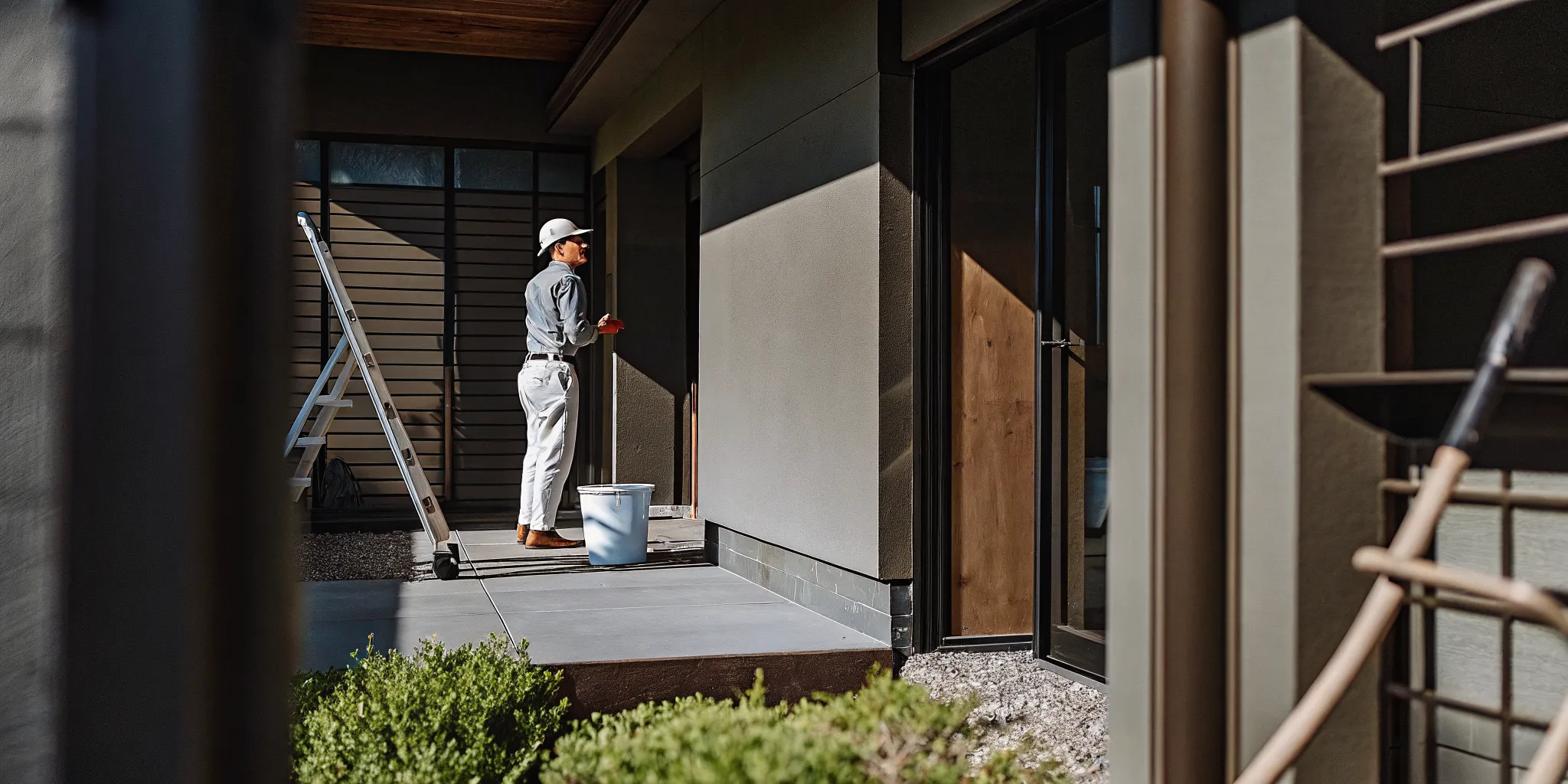
Small details often show failure first. Check sealant around windows and doors, fasteners, metal edges, wall penetrations, and transitions between materials. Also review hidden or less visible sides of columns, signs, and service areas.
A clean front elevation does not confirm that the entire building is protected. Loading areas and shaded walls may face different wear and should remain part of the full schedule.
Signs your property needs professional repainting
Professional repainting is usually needed when damage is widespread, keeps returning, or exposes the surface beneath the coating. Broad fading, chalking, cracking, peeling, blistering, rust, and failed sealant show that focused touch-ups may no longer provide reliable protection.
Not every mark requires a full repaint. The key is to understand whether the issue is isolated or part of a broader coating failure. For planning guidance by property type, review Faros Construction Services resources for apartment complex painting, school painting, and warehouse painting.
Fading and chalking
Fading affects appearance, but it can also reveal uneven exposure across the building. Chalking is the powder that forms as a coating breaks down at the surface. When chalking is widespread, new paint may not bond well unless the surface is cleaned and prepared correctly.
Cracking, peeling, and blistering
Cracking and peeling show that the coating is losing its hold. Blisters may indicate heat, moisture, or adhesion problems. Do not simply cover these areas. Remove loose material and find the cause before applying a new coating.
If failure appears in many places or continues after past repairs, a broader repaint may be more reliable than repeated small patches. The surface beneath the coating must remain sound and dry.
Rust, stains, and failed sealant
Rust marks on metal surfaces can point to corrosion that needs treatment. Water stains may show a leak, drainage problem, or repeated wetting. Open or cracked sealant can allow moisture into joints and behind nearby materials.
These signs call for more than a color match. The maintenance plan should address the cause, repair damaged areas, and use preparation suited to the surface.
Surface preparation makes maintenance last
Durable exterior painting begins with correcting the cause of failure and preparing a clean, dry, sound surface. Loose coating, chalk, dirt, corrosion, open joints, and damaged substrate must be addressed before primer or finish coating is applied. Preparation should match the material and exposure.
Good preparation is the foundation of durable painting work. Applying a fresh coating over dirt, chalk, loose paint, moisture, or corrosion can hide the issue for a short time, but it does not create a sound bond. Each area should be prepared based on its condition and material.
Find the cause first
Before preparation begins, determine why the coating failed. Check for drainage issues, leaks, failed sealant, impact, corrosion, and movement. Correcting the cause reduces the chance that the same pattern will return through the new finish.
Clean and repair the surface
Remove dirt and other material that can weaken adhesion. Loose or failing coating should be removed to a firm edge. Damaged substrate should be repaired, corrosion should be treated, and open joints should be addressed with the correct material.
Bare areas may need a primer suited to the substrate and the selected finish. Product choice should match the surface, exposure, and existing coating. A professional can help confirm compatibility before work starts.
Use suitable working conditions
Temperature, surface moisture, weather, and drying time all affect coating performance. Plan work for suitable conditions and follow product requirements. Do not rush preparation or drying to meet an arbitrary date.
Preparation also includes protecting nearby property, planning safe access, and coordinating with tenants or staff. Clear communication helps work move through each zone with less disruption.
Ask Faros Construction Services to review recurring coating failures before the next painting phase.
Build a phased plan around property operations
A phased painting plan ranks building zones by condition, exposure, and operational impact. Address exposed substrate, active failure, moisture concerns, and spreading damage first. Then coordinate entries, loading areas, tenant spaces, and walkways so the highest-priority work moves forward with less disruption.
A phased plan lets the property team address the highest-risk areas first while coordinating access and daily activity. Start with exposed substrate, active failure, moisture-related concerns, and areas where damage could spread. Lower-risk cosmetic wear can remain on the monitoring list.
Rank by condition and exposure
Create a simple condition rating for each elevation and zone. Consider coating failure, substrate condition, moisture exposure, sun, impact, and the rate of change since the last inspection. Use the same rating method each year so priorities stay clear.
Coordinate with building use
Entries, loading areas, tenant spaces, and busy walkways may need special timing. Plan access, notices, and work zones before the project begins. A clear sequence helps protect people and keeps property operations moving.
Faros Construction Services supports property owners throughout the Denver Metro Area with an owner-led focus on quality craftsmanship and lasting results. Learn more about the team and its work on the Faros Construction Services website.
Keep one maintenance record
Store inspection results, photos, repair details, and coating information together. When a new phase begins, the team can review what was done in nearby areas and make consistent decisions. Good records also help explain why one elevation needs attention before another.
When is a touch-up no longer enough?
A touch-up is no longer enough when coating failure spreads across a wall, returns after repairs, or exposes large areas of substrate. At that point, repeated patches can leave inconsistent protection. A professional review can define the cause, preparation needs, and appropriate repainting scope.
When a focused repair makes sense
A focused touch-up can work when wear is small, the nearby coating still holds well, and the surface beneath it is sound. Examples include a scuff near a service door, a small chipped edge, or a limited area damaged during routine building work.
Before touching up the spot, find and correct the cause. Clean the area, remove loose paint, repair the surface, and use the right primer where bare material is exposed. Record the work so the next inspection can confirm that the repair is holding.
Patterns that point to broader failure
A repaint should move higher on the list when peeling, chalking, fading, or cracking appears across a full wall or several elevations. Recurring damage in the same place may point to failed sealant, trapped moisture, corrosion, or another issue that paint alone will not solve.
Compare recent photos with past inspections. If damaged areas are spreading, bare substrate is visible, or many small repairs are merging into one worn zone, a patch-by-patch approach is no longer sound.
Protect the surface before damage spreads
Do not wait for coating failure to expose large areas of wood, metal, masonry, or other material. Once the protective film breaks down, water and weather can reach the surface below. Timely action helps keep the work focused on sound preparation and lasting protection.
Frequently asked questions
Commercial exterior maintenance works best when property teams inspect consistently, document changes, and respond according to condition. These common questions clarify inspection timing, high-risk areas, phased work, and the point when professional review should become the next step.
How often should a commercial exterior be inspected?
Inspect the exterior in spring and fall, then check it after severe weather or building work. Regular visual checks help property teams catch small coating or sealant failures before they spread.
What areas tend to show paint wear first?
Watch sun-facing walls, lower walls near snow and splashback, trim, joints, doors, loading areas, and spots where water drains. These areas often face more weather, impact, or moisture.
Can exterior paint work be phased?
Yes. A phased plan can rank elevations by condition and risk, then fit the work around access and property operations. Keep records so each phase uses consistent preparation and coating decisions.
When should a professional painter review the property?
Request a professional review when damage is widespread, repairs keep failing, bare substrate is visible, or moisture and corrosion may be involved. The review can help define the cause and the right scope.
Schedule your commercial exterior painting consultation
A clear maintenance plan helps a Denver Metro Area property team protect painted surfaces and respond before damage spreads. Faros Construction Services brings honest service, quality craftsmanship, and an expert owner-led approach to every project.
Call (720) 594-5604 or contact Faros Construction Services to schedule a commercial exterior painting consultation.