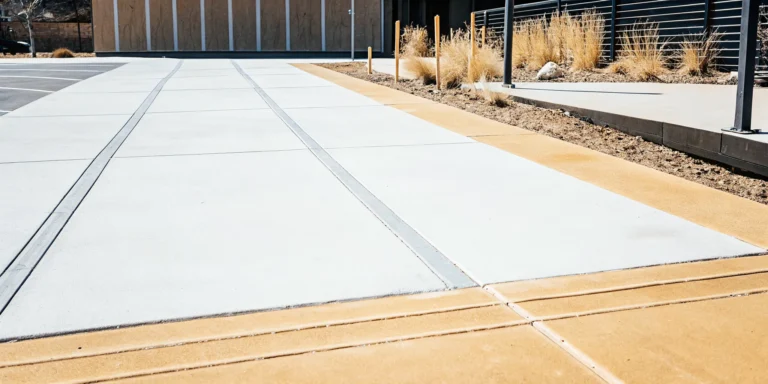

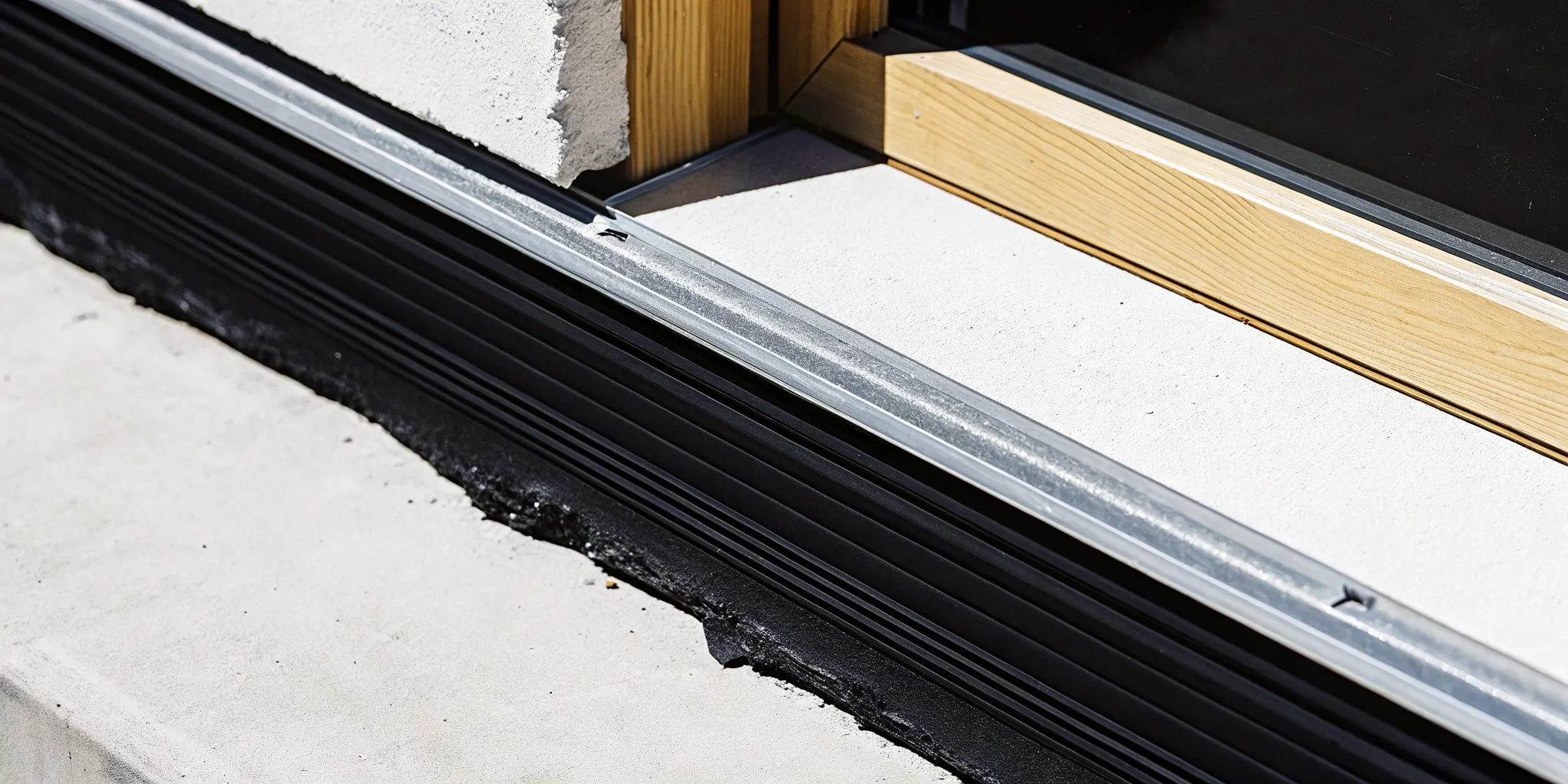
A deck can look solid from the yard while water quietly damages the connection hidden behind its ledger board. That narrow joint carries a major share of an attached deck’s load, yet it also sits directly in the path of rain, melting snow, and runoff. Correct deck ledger flashing directs that moisture away before it reaches the house framing, helping preserve both the deck connection and the wall behind it.
Schedule a professional deck evaluation with Faros Construction Services if you see staining, soft wood, corrosion, or an unexplained interior leak near an attached deck.
In brief: Deck ledger flashing is a layered water-management system installed where an attached deck meets a home. It should work with the wall’s weather barrier and siding so water flows over each layer and back outside. Sealant alone is not a durable substitute for this drainage path.
What deck ledger flashing does for your home
Deck ledger flashing keeps water from collecting between the ledger board and the house. It creates a planned path that moves water over and away from vulnerable wood instead of allowing moisture to enter the wall assembly.
The ledger is the horizontal board that connects an attached deck frame to a house. Joists extend outward from it, and approved fasteners transfer loads into suitable framing. Because the ledger crosses the exterior wall, its installation interrupts siding and must be carefully integrated with the wall’s water-control layers.
A drainage system, not a single strip
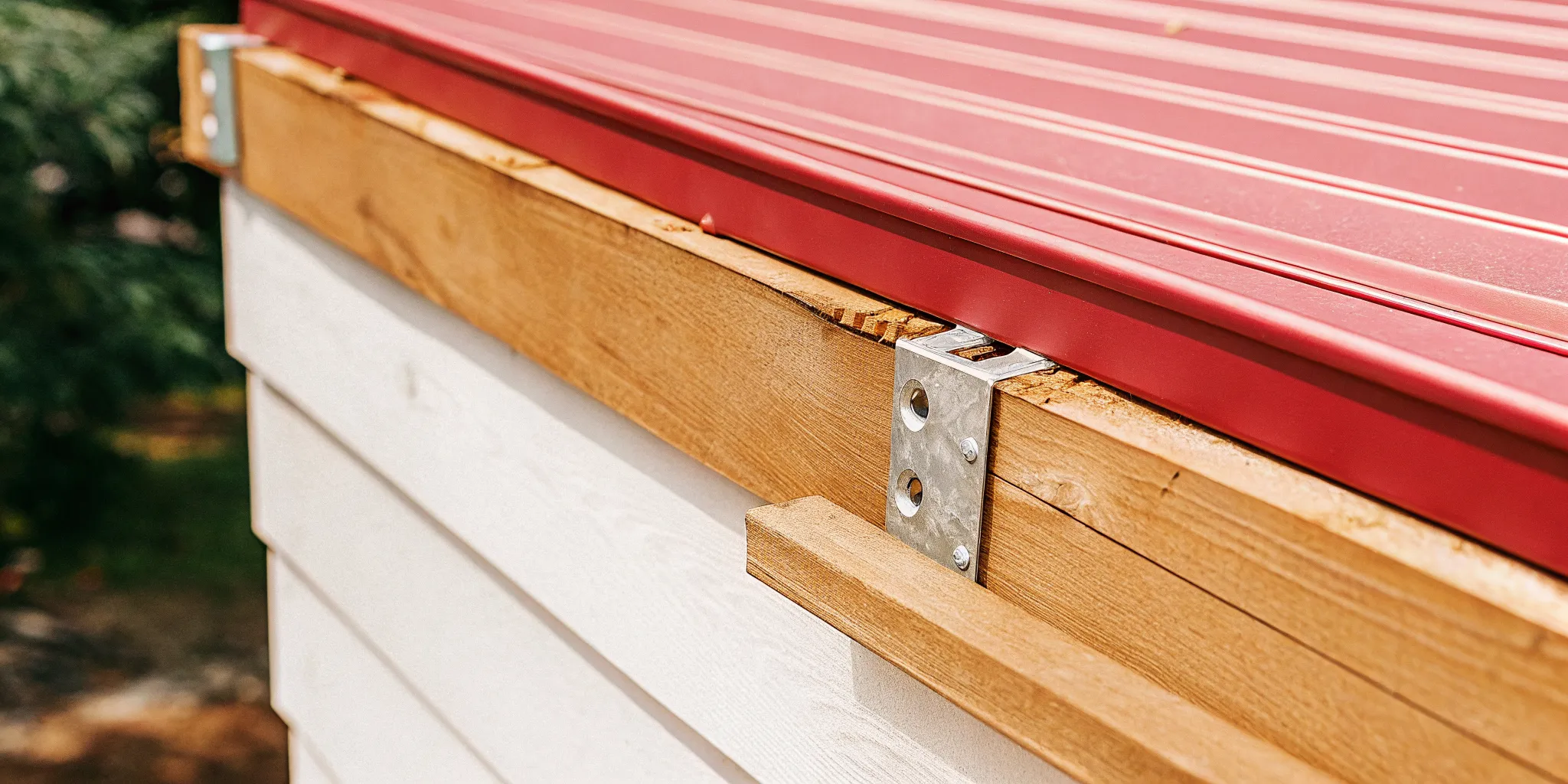
Effective flashing is more than a visible metal cap. A complete approach commonly includes protection behind the ledger, a top flashing or drip cap, correct integration with the weather-resistive barrier, and details that prevent water from becoming trapped below the connection. The exact assembly depends on the home, siding, deck materials, and applicable requirements.
Each layer should overlap the layer beneath it, much like shingles. Water moving down the wall then remains on the exterior face of the system. Reversed laps, gaps at the ends, or punctures in the wrong locations can give moisture a route behind the ledger.
Why the connection deserves special attention
Damage at the ledger may remain concealed by siding, trim, or the board itself. Surface boards and railings can still appear normal even when hidden sheathing or framing has softened. That is why a professional assessment considers the entire connection rather than judging the deck only by its visible finish.
For homeowners planning a new deck or a larger backyard project, Faros Construction Services approaches the connection as part of an integrated outdoor living space, not as an isolated piece of trim. Explore the team’s custom deck construction services to see how structural details, materials, and outdoor design come together.
How does water get behind an attached deck?
Water reaches a ledger through runoff, wind-driven precipitation, melting snow, and small gaps around siding or fasteners. Once behind the board, limited airflow can slow drying and allow repeated wetting to affect wood and metal components.
Water follows overlooked paths
Rain running down siding can collect at the upper edge of a ledger if the top flashing is missing, too short, damaged, or incorrectly lapped. Water may also move along the underside of a surface before dropping. End joints and penetrations need attention because even a small opening can admit moisture repeatedly.
Denver Metro Area weather adds seasonal stress. Snow can sit against the house, then melt into vulnerable joints. Water that enters a small gap may freeze and expand. Strong sunlight and temperature swings can also age exposed sealants, making a drainage-first design more reliable than a surface bead alone.
Why sealant alone is not enough
Sealant can be useful within a correctly designed assembly, but it should not be the only defense. It ages, separates from moving materials, and may hide a joint without providing a way for incidental water to escape. Adding more sealant over a damp or poorly detailed connection can trap moisture rather than solve the underlying issue.
A professional deck builder evaluates how siding, the weather barrier, flashing, ledger, and fasteners work together. This whole-system perspective also matters for related structures such as porches and covered outdoor areas. Homeowners considering a broader property improvement can also review Faros Construction Services’ construction services.
Warning signs of failed deck ledger flashing
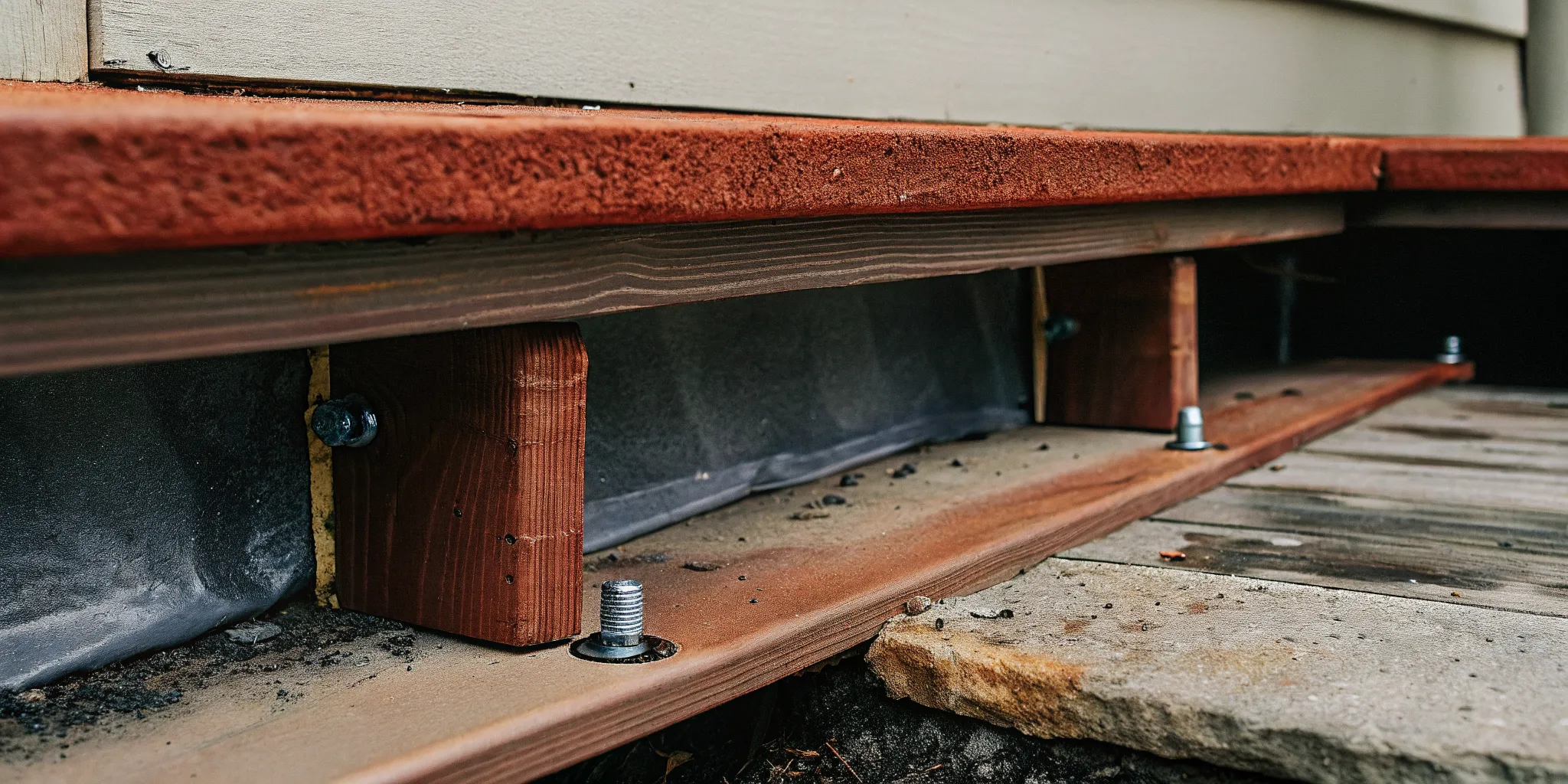
Common warning signs include staining below the ledger, swelling or soft wood, rust at connectors, loose siding, musty indoor odors, and recurring leaks near the deck wall. Any one sign deserves closer attention because the visible symptom may be smaller than the concealed damage.
Exterior clues homeowners can notice
- Dark streaks, discoloration, or peeling finish beneath the ledger.
- Soft, cracked, swollen, or crumbling wood near the connection.
- Corrosion on visible fasteners, hangers, or connectors.
- Loose siding or trim near the top and ends of the ledger.
- Persistent dampness after surrounding surfaces have dried.
- Movement, sagging, or a gap where the deck meets the house.
Movement or significant deterioration is a safety concern. Keep people away from the affected area and contact a qualified professional rather than testing the connection by adding weight or pulling on components.
Interior clues can point to a hidden leak
The first symptom may appear inside. Look for staining, bubbling paint, damp drywall, or musty odors on the wall or ceiling near the deck connection. These clues do not prove the ledger is the source, but they can show that water has entered the wall assembly and should be traced.
How can homeowners inspect a deck ledger safely?
A homeowner can perform a visual check from stable ground, but concealed conditions and structural concerns require a professional evaluation. Do not remove structural fasteners, pry apart the wall, climb on an unstable deck, or cover damage before its source is understood.
A practical visual review
- Start at the deck surface. From a safe position, look along the house wall for gaps, failed sealant, displaced flashing, or water collecting near the siding.
- View the connection from below. If it is safely accessible, look for staining, corrosion, soft wood, or missing connectors. Do not enter a restricted or unstable area.
- Check nearby interior finishes. Note stains, odors, or paint changes on the other side of the wall.
- Document what you see. Take clear photos and record when symptoms appear, especially after rain or snowmelt.
- Arrange an assessment. A professional can determine whether the issue involves flashing, siding, drainage, fasteners, framing, or several components together.
What a professional examines
A professional review looks beyond visible metal. It considers whether the ledger is connected to appropriate framing, whether fasteners and connectors show deterioration, whether flashing laps in the correct direction, and whether the siding and weather barrier send water outside. The reviewer may also consider guardrails, stairs, posts, beams, and drainage because one symptom can reveal a broader issue.
Homeowners comparing project approaches can read the Faros guide to choosing an outdoor construction company in the Denver Metro Area.
What belongs in a complete flashing system?
A complete system manages water above, behind, around, and below the ledger while remaining compatible with the wall and deck materials. The goal is not to make one joint depend on a perfect surface seal. It is to provide multiple layers that drain and dry.
Key components and their roles
| Component | Primary role | What a reviewer checks |
|---|---|---|
| Weather-resistive barrier. | Directs water down the wall toward the exterior. | Correct overlap with upper flashing. |
| Back flashing or membrane. | Separates vulnerable wall materials from the ledger area. | Continuity, compatibility, and penetrations. |
| Top flashing or drip cap. | Sheds water over the ledger’s upper edge. | Slope, end details, and outward projection. |
| Lower drainage detail. | Helps water leave rather than collect below the board. | Open drainage path and protected wall surface. |
| Compatible fasteners and connectors. | Transfers structural loads while resisting deterioration. | Material compatibility, condition, and placement. |
Material compatibility matters
Different metals and treated lumber chemicals can interact in ways that accelerate corrosion. Flashing, fasteners, hangers, and membranes should be selected as a compatible system suited to the environment and manufacturer guidance. A professional also avoids details that unintentionally trap water between non-drying layers.
If a deck is being coordinated with shade or landscaping features, the design should also consider roof runoff, irrigation, and drainage. Faros offers planning guidance for custom pergola projects that can help homeowners think about the full outdoor area.
Why professional deck construction matters
Professional deck construction connects structural design with water management. A reliable ledger detail must support loads, protect the wall, use compatible materials, and fit the home’s existing assembly. Treating any one of those concerns in isolation can leave a hidden weakness.
New construction is the best time to plan the detail
During a new build, the contractor can coordinate ledger placement, wall protection, siding transitions, and drainage before components conceal the connection. Thoughtful sequencing helps ensure that upper layers overlap lower ones and that penetrations are handled intentionally.
Faros Construction Services brings an owner-led, craftsmanship-focused approach to projects across the Denver Metro Area. The team can evaluate how a deck fits the home and the surrounding space, then build details intended for lasting results. Learn more about Faros and its approach on the company overview page.
Repairs should address the source
When warning signs appear, a durable response begins with finding the water path and evaluating the condition of concealed materials. Simply covering a stain or applying another surface bead may hide evidence while moisture continues to enter. The appropriate response depends on what the evaluation finds and may involve flashing, siding, framing, connectors, or drainage.
Good planning protects the whole wall assembly
A deck connection affects more than the ledger board. Removing siding or opening the wall may reveal sheathing, insulation, finishes, and other materials that must stay protected throughout the work. A careful contractor plans temporary weather protection and sequences each layer so the completed assembly continues to drain outward.
Planning also means looking above and around the deck. Roof edges, downspouts, doors, windows, and nearby hardscape can change how much water reaches the connection. Redirecting a concentrated source of runoff may be just as important as repairing the flashing itself. The right solution is based on the actual water path, not a guess made from one stain.
Communication makes the work easier to verify
Before work begins, homeowners should understand which areas will be opened, what conditions the contractor expects to inspect, and how unexpected damage will be documented. During construction, photographs of concealed layers can provide a useful record before siding and trim cover the work.
After completion, ask how the flashing system manages water and which visible areas should remain open for drainage. Clear explanations help homeowners recognize future changes without attempting unsafe structural work. They also make it easier to coordinate later projects near the deck without accidentally blocking a drainage path or puncturing a protected area.
Contact Faros Construction Services to discuss an attached deck, visible moisture symptoms, or plans for a new outdoor living project in the Denver Metro Area.
Frequently asked questions about deck ledger flashing
Does an attached deck ledger need flashing?
Attached deck ledgers generally need a properly integrated flashing system to prevent water from entering the wall connection. The exact detail depends on the structure, wall assembly, materials, manufacturer guidance, and applicable local requirements.
Can sealant replace deck ledger flashing?
No. Sealant may support a complete detail, but it does not replace overlapping layers that drain water away. Sealant can age or separate as materials move, and it may trap moisture if applied over an unresolved drainage issue.
What are the clearest signs of a ledger leak?
Staining beneath the ledger, soft or swollen wood, connector corrosion, loose siding, persistent dampness, and indoor stains near the deck wall are common clues. Movement or major deterioration calls for prompt professional attention.
How often should homeowners look at the ledger area?
Include the ledger area in regular deck observations and look again after severe weather or when new symptoms appear. A professional can recommend an assessment schedule based on the deck’s age, exposure, materials, and observed condition.
Protect the connection behind your deck
Ledger problems are easy to overlook because the most important surfaces are often hidden. Paying attention to drainage, flashing layers, material compatibility, and early warning signs helps homeowners act before moisture spreads through the wall. For new construction, planning these details from the start supports a stronger, more durable outdoor space.
Ready to discuss deck ledger flashing or a new outdoor project? Call Faros Construction Services at (720) 594-5604 or request a professional consultation in the Denver Metro Area.