
A pergola can turn a bright backyard into an outdoor room that feels connected to the home. The right shade choice depends on sun, use, seasonal weather, and water movement. This guide compares pergola shade options Denver metro area homeowners can discuss when planning a backyard retreat.
Schedule a pergola planning consultation with Faros Construction Services to discuss your backyard, preferred shade, and outdoor living goals.
A pergola is not one single type of cover. Some designs keep overhead views open. Others add adjustable shade or more shelter. Define your goals before choosing a design. This helps the finished space support meals, conversation, or relaxing outdoors.
Pergola shade options Denver metro area homeowners can compare
Begin with the experience you want beneath the structure. Do you want sun broken into shifting patterns? Do you want to adjust shade as the day changes? Do you want a more sheltered gathering spot? Clear priorities narrow the design conversation.
Compare shade options by everyday use
| Shade approach | Best fit for | Planning conversation |
|---|---|---|
| Open-slat pergola | Airy spaces with filtered sun | Consider sun direction, seats, and desired openness. |
| Adjustable shade design | Flexible light through the day | Ask about operation, cleaning, care, and water movement. |
| Fabric shade element | A soft seasonal comfort layer | Discuss fabric care, storage, and exposure. |
| More covered pergola design | Added overhead shelter | Plan drainage paths and transitions. |
Start with the space around the pergola
A shade structure is one part of a backyard layout. Observe the proposed area when you most often sit outside. Strong afternoon sun may make shade control important for dining or lounging. Tree-filtered light may suit a lighter overhead design that still defines the space.
Look beyond the overhead feature. A pergola beside a grill, fire feature, garden edge, or dining patio needs easy movement. It should improve outdoor use, not interrupt paths or push water toward a gathering area.
Faros plans outdoor living spaces in the Denver metro area as coordinated layouts. The discussion can include shade, surfaces, seating, and local weather considerations.
When does an open-slat pergola make sense?
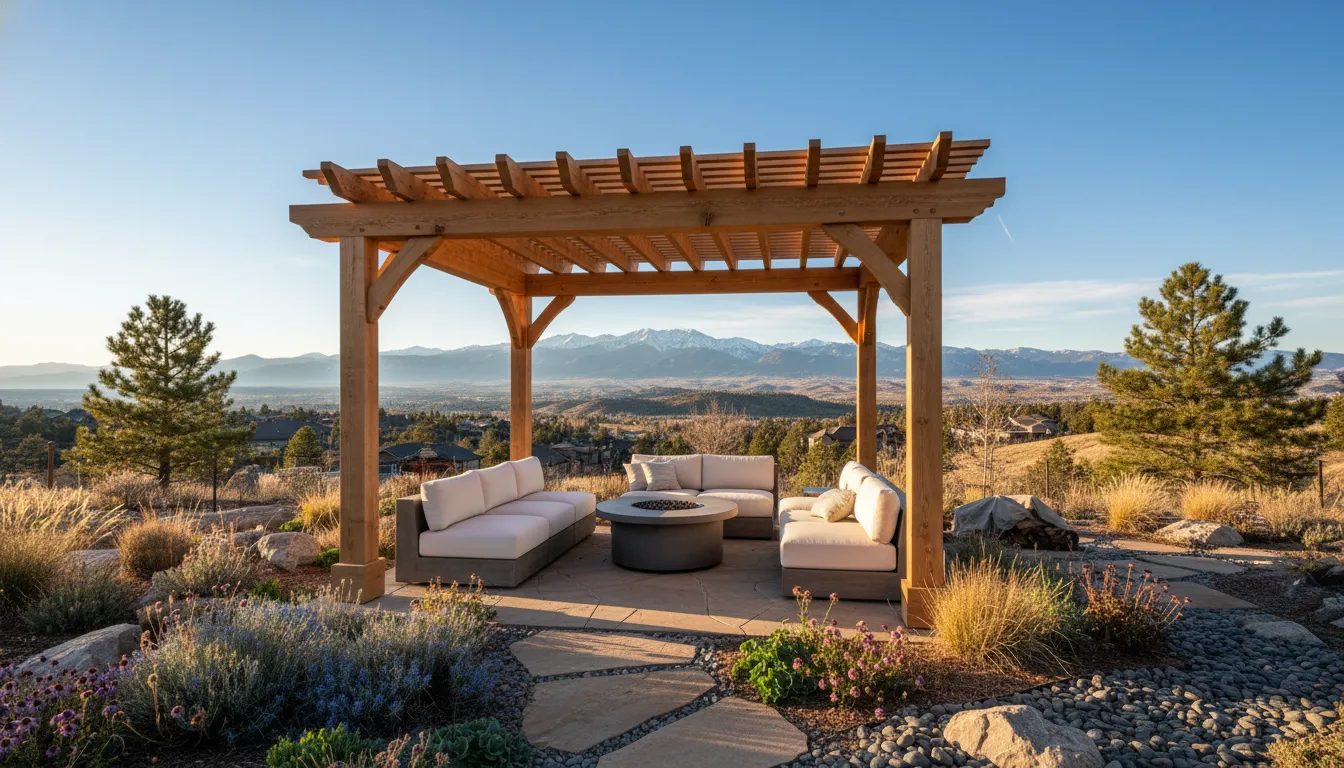
An open-slat pergola creates an outdoor room while keeping the view open. Its overhead lines produce partial shade that changes with the sun. It can suit homeowners who want a welcoming structure above a seating or dining space. The area still feels open to the yard and sky.
Choose openness when atmosphere leads
Open slats can shape light over a patio and its furnishings. Moving patterns of sun and shadow add interest through the day. This approach may suit morning coffee or evening conversation. It can also frame a gathering spot without making a yard feel enclosed.
Orientation matters. A builder can review sunlight during the hours you plan to use the space. The review can also consider doors, paths, walls, and an existing patio. The aim is a shade pattern that supports your comfort goals.
Understand the tradeoff
An airy pergola does not serve the same purpose as stronger overhead shelter. Some homeowners want a more protected dining surface. Others want to use a seating zone during more varied conditions. Those goals should be explained before selecting a slatted concept.
Care remains part of planning. Ask how the structure should be kept clean. Discuss nearby leaves and debris. Ask how the patio should be checked as seasons change. These questions connect a beautiful design with practical ownership.
Talk with Faros about a pergola layout that balances sunlight, openness, seating, and backyard flow.
Adjustable shade designs for changing backyard use
Some homeowners want a pergola that adapts to different moments. They may prefer brighter overhead light in the morning and more shade later. They may also want an open feel for evening gatherings. An adjustable design can be considered when flexibility matters most.
Control can serve changing routines
Map real activities first. If the outdoor room supports lunch, weekday seating, and gatherings, preferred shade may change. Adjustable elements can fit a family that values choice. The builder conversation should consider the structure, nearby walls, trees, and furnishings.
Balance flexibility with simplicity. Adaptable components lead to added care questions compared with a fixed pattern. Ask how the chosen design is operated and cleaned. Ask what seasonal attention is suggested. Also ask what access is needed for regular care.
Include water and seasonal exposure
Shade preference is only one part of an overhead design. Faros identifies sun, snow, temperature swings, freeze-thaw conditions, and drainage as planning considerations. For an adjustable design, ask how water is expected to leave the area during wet weather. Identify where runoff should move before building begins.
A photograph cannot explain the conditions at your home. Begin with the way you live, the exposure in your yard, and the surrounding surface. A site conversation can show whether adjustability improves the plan. It may also show that a simpler option suits the yard better.
Is a fabric shade pergola right for seasonal comfort?
Fabric shade can soften a pergola and add comfort over a sitting or dining space. It can appeal to homeowners seeking a relaxed appearance. It may also fit outdoor use during selected seasons. Evaluate this choice through use and care needs, not appearance alone.
Fabric supports a softer outdoor room
A fabric element can complement seats for conversation, outdoor meals, or quiet reading. It often brings a lighter visual touch than a more solid overhead design. Decide whether shade is needed over a dining table, lounge seats, or a flexible activity area.
Discuss how the fabric connects to the pergola. Also consider walking paths, doors, views from indoors, and furniture locations. Those details shape the comfort of the space as the sun moves throughout the day.
Ask questions about seasonal care
Fabric adds its own maintenance questions. Ask whether the selected element remains in place through changing seasons. Ask whether removal or storage is part of care. Discuss cleaning and how leaves or debris are managed.
Also describe exposure in your yard, including wind and snowy periods. You do not need every technical answer before a meeting. You do need a clear description of intended use and care expectations. A builder can then discuss whether fabric shade aligns with those needs.
How does a more covered pergola change the plan?
A more covered pergola may appeal when added overhead shelter is a priority. It can retain a pergola role within an outdoor layout while creating a more protected feeling. More coverage is not automatically better. The right answer depends on activities, location, and desired openness.
Keep the pergola goal clear
If your priority is an outdoor room centered on a pergola, begin there. A more covered overhead approach is one possible direction. If the conversation becomes focused on broad shelter, clarify whether another structure fits better. This distinction keeps the project focused on its intended use.
A frequent dining space raises different questions than a garden-side retreat. Think about furniture, lighting, routes, and transitions from the home. Added overhead presence may change backyard light and how one gathering zone connects to another.
Make water movement part of planning
When more surface is overhead, water movement becomes a central question. Ask where runoff should move and how it relates to the patio below. Note any locations where water already collects. The pergola and the surrounding ground should work together.
Faros describes grading and drainage as important for lasting Denver metro outdoor spaces. Homeowners with runoff concerns can review backyard drainage planning for Denver yards while building a list of questions. A site assessment can then address their specific yard.
How to choose shade for your Denver metro backyard
Selection becomes easier when inspiration becomes a practical list. Use these steps before meeting with a builder. They will help you explain the comfort, appearance, and upkeep you want from a backyard pergola.
A homeowner selection framework
- Observe sunlight during use hours. Visit the proposed area in the morning, afternoon, and evening. Note when sun affects comfort.
- Name your main activity. Decide whether the pergola supports dining, conversation, relaxing, entertaining, or mixed use.
- Choose your shade priority. Consider open filtered light, adjustable control, seasonal fabric, or added overhead shelter.
- Review water movement. Notice slopes, hard surfaces, and any areas where water gathers.
- Set care expectations. Decide how much cleaning or seasonal attention fits your routine.
- Bring questions to a builder. Ask how the selection fits your yard, surfaces, weather, and expected use.
Questions worth asking first
- How will this shade approach feel during the time we use the yard most?
- What upkeep is suggested for the overhead elements and structure?
- Where should rain or melting snow move away from the pergola area?
- How will the structure relate to the patio, doors, paths, and other features?
- Would another shade approach better suit the openness or shelter we want?
A coordinated outdoor plan is stronger than choosing an overhead feature alone. Explore Faros services for planned backyard living spaces. A pergola can work alongside seating, patios, and other outdoor features.
Plan details that help a pergola work with your yard
A successful pergola plan is not only about the overhead look. It is also about the space beneath and around it. Before your consultation, make a short list of furniture that belongs under the structure. Include a dining table, lounge seats, or an outdoor grill only if those are part of the intended use. This provides a practical starting point for discussing circulation and shade coverage.
Connect the structure to paths and gathering zones
Walk from your back door to the proposed pergola spot. Notice where guests would enter and where they would pull out chairs or move between outdoor features. A pergola can help define a gathering area, but the layout should still feel natural. A clear walking path is especially helpful when a yard supports meals and larger gatherings.
Consider what you will see from inside your home as well. An outdoor structure is part of the view throughout the year, even when it is not in active use. Share preferences about open views, planted areas, seating, and visual connection to the rest of the yard.
Prepare useful observations for a consultation
After rain or melting snow, look at the proposed area and note where water moves or remains. Observe whether nearby hard surfaces direct water toward the seating area. Write down the time of day when sun makes the spot less comfortable. These simple observations give the builder useful context for discussing shade and drainage.
You can also list maintenance preferences. Some homeowners want an uncomplicated fixed structure. Others are comfortable discussing adjustable elements or seasonal fabric care. None of these choices is right for every home. Clear priorities help the design remain practical for your routines and enjoyable through the outdoor living season.
Frequently asked questions about pergola shade choices
Which pergola option is best for strong afternoon sun?
The best choice depends on yard orientation and use. Homeowners seeking more shade control may discuss adjustable or more covered approaches. Those prioritizing openness may prefer slats. A site conversation aligns overhead design with your use hours.
Can a pergola provide shade while still feeling open?
Yes. An open-slat pergola can define an outdoor room and create filtered light. It can also preserve an airy feel. Discuss the shade pattern in relation to orientation and the seating arrangement below.
How should snow and drainage affect pergola planning?
They belong in early planning, especially for a structure with added overhead coverage. Faros notes that outdoor spaces should consider snow, freeze-thaw conditions, grading, and drainage. Ask where water will move and what seasonal care is suggested.
What should I ask a builder before choosing shade?
Ask how the design responds to intended use, exposure, surface layout, drainage observations, and care expectations. Ask how it fits with patios or other features. Your backyard should function as a connected space.
Plan a pergola space that fits your backyard
The right shade design starts with your priorities. You may value filtered light, adaptable comfort, seasonal softness, or added shelter. Faros Construction Services helps Denver metro area homeowners consider pergolas within an outdoor layout shaped by use and site conditions.
Schedule a consultation with Faros Construction Services to start planning a pergola and backyard space aligned with how you spend time outdoors.