
Choosing a general contractor in Castle Rock CO is about more than finding someone who can perform one trade. This guide helps you evaluate a general contractor castle rock co property owners can rely on. The right partner should understand your property, define the work clearly. Coordinate the people and approvals involved, and remain accountable from the first site conversation through the final walkthrough. This guide gives Castle Rock property owners a practical way to compare contractors for home building, remodeling, concrete, and outdoor-living work across the Denver Metro Area.
Talk with Faros Construction Services about your Castle Rock project.
Choosing a General Contractor Castle Rock CO Property Owners Can Trust
A strong first conversation connects your desired result to the property’s real conditions. A general contractor in Castle Rock CO should explain the likely scope, what needs to be inspected. Which decisions affect the sequence, and how the team will communicate before construction begins.
Start by describing the finished result rather than naming only a product. You may want a new home, a remodel, a concrete driveway or patio. A deck, a pergola, a porch, a retaining wall, or a more complete outdoor living area. Explain how you want the space to function, which problems you are trying to solve, and what must remain usable while work is underway.
Then ask the contractor to translate that goal into a preliminary work plan. The conversation should cover existing structures, access, utilities, drainage, grade changes, structural connections, site protection, and the relationship between new and existing materials. On an occupied property, it should also address how the crew will protect daily routines and keep the work area organized.
- Review site conditions before finalizing the scope.
- Identify design, engineering, and trade coordination needs.
- Confirm owner decisions before ordering or scheduling materials.
- Assign the primary contact for planning and construction.
- Define the final walkthrough and closeout process.
Faros Construction Services uses an owner-led approach centered on consultation, site assessment, planning, construction coordination, and quality checks. Its home building and remodeling services can support larger residential scopes, while a focused project can be planned around the specific trade and site conditions involved.
How can you compare a general contractor in Castle Rock CO?
Compare contractors by the quality of their questions, written scope, communication plan, and project controls, not by a broad promise or a portfolio alone. The best fit is the company that can show how it will manage your particular property, decisions, trades, approvals, and final result.
Ask each contractor to describe similar work they have managed and what made those projects complex. Relevant experience may include coordinating a home improvement with structural work, connecting concrete to an existing home. Building an outdoor structure on a sloped site, or sequencing several trades in an occupied home. The goal is not to find an identical project. It is to learn whether the contractor recognizes the decisions that could affect yours.
Request a written scope that makes the planned work understandable. It should describe preparation, demolition when applicable, structural elements, installation, finish details, cleanup, inspections, and owner selections. It should also identify assumptions and open decisions so you know what still needs to be resolved. A clear scope gives everyone a shared reference point and makes later conversations more productive.
| Comparison area | Question to ask | What a useful answer shows |
|---|---|---|
| Relevant experience. | Which completed projects had a similar scope or site condition? | The contractor can connect past work to your actual project. |
| Written scope. | What preparation, materials, finishes, cleanup, and closeout are included? | The planned result is defined in enough detail to review. |
| Project management. | Who coordinates trades, decisions, inspections, and schedule updates? | Accountability is assigned instead of left to the homeowner. |
| Communication. | How will questions, changes, and unexpected conditions be documented? | You know how information will move during the work. |
| Quality control. | What checks occur before a phase is considered complete? | The process includes verification, not just final appearance. |
Also look at how the contractor talks about work that is not a fit. A responsible company should explain its service boundaries and recommend the right next step when a project requires a specialty outside its documented scope. Clear expectations protect the property owner and the construction team.
Which site conditions should be reviewed before work starts?
Site conditions can change the design, sequence, access plan, and construction details. Before work starts, the contractor should review the property itself, including grades, drainage, soil or surface conditions. Utilities, existing structures, snow and water movement, and how workers and materials will reach the work area.
For concrete and outdoor-living work, grade and drainage deserve early attention. A patio, walkway, retaining wall, deck, or porch must relate to the house, nearby surfaces, and the way water moves across the property. Ask how the proposed work will manage transitions, protect adjacent areas, and perform through seasonal freeze-thaw conditions common across the Denver Metro Area.
For remodeling or home building, the assessment may include existing framing, foundations, utilities, mechanical systems, access points, and the sequence needed to keep the project safe. A contractor should distinguish visible conditions from items that require additional investigation. That distinction helps you make decisions based on what is known instead of assuming every property is the same.
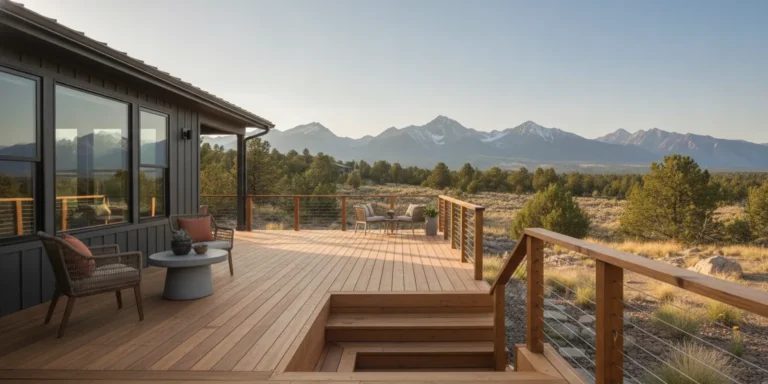
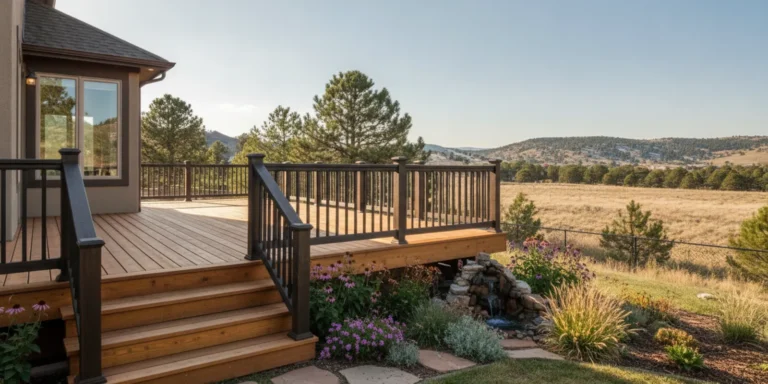
Faros provides concrete contracting for driveways, patios, sidewalks, and other concrete work, along with decks, pergolas, and porches. Those services are strongest when the early plan accounts for connections, elevations, materials, drainage, and the existing home rather than treating the visible surface as an isolated item.
What should you ask about permits and inspections in Castle Rock?
Ask who will identify permit needs, prepare or coordinate required information, schedule inspections, and communicate any changes. The Town of Castle Rock states that contractors must be licensed with the Town to obtain a building permit. And property owners can use the Town’s official resources to review contractor registration and project information.
Start with the Town’s hiring a contractor guidance and use the linked eTRAKiT Development Portal to verify registration and review available permit or inspection information. The Town’s Building Division also explains that the permitting and inspection process is intended to confirm that construction meets adopted building and fire-code requirements.
Permit responsibility should be part of the project conversation, even when the owner will complete a portion of the process. Ask which approvals apply, what documents are needed, who will be present for inspections, and how inspection results affect the next phase. The Town’s building inspections information is a useful official reference, but the contractor should still explain how the requirements relate to your specific scope.
Do not treat a permit as a substitute for project management. A contractor may still need to coordinate design decisions, material readiness, site access, trade sequencing, and quality checks around the inspection schedule.
How should scheduling and materials be handled?
A reliable schedule connects decisions, approvals, labor, materials, inspections, and site access. Your contractor should explain the major phases, the decisions that must be made first. The events that could change the sequence, and how updates will be shared when conditions change.
Ask for the project milestones rather than only a single completion date. A typical plan may move through consultation, site assessment, design or scope confirmation, preparation, permits when required, construction, inspections, and closeout. The actual order depends on the project, but the contractor should be able to explain what must happen before the next phase can begin.
Materials also affect the sequence. Ask when selections are needed, who confirms product availability, how substitutions are handled, and what happens if a selected material is no longer available. For exterior projects, discuss how weather, curing, ground conditions, and seasonal access may influence the plan. For remodeling and home building, ask how stored materials and protected work areas will be managed.
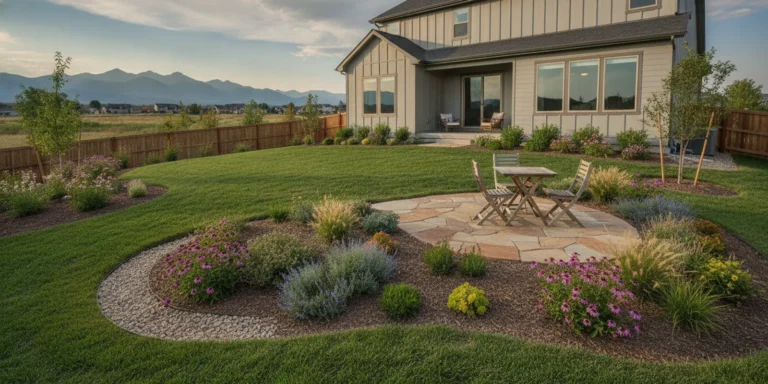
Faros’s outdoor living spaces service brings multiple elements together, which makes sequencing especially important. Decks, concrete, hardscape, planting areas, lighting, and other features should be planned as a connected environment when the project includes more than one scope.
What communication and quality checks should you expect?
Good communication is specific, timely, and tied to decisions. Before hiring, confirm who will lead the project, how often updates will be provided. Where questions will be recorded, and how the contractor will explain changes to scope, site conditions, materials, or sequence.
Ask how the team will protect the property and maintain a safe, orderly site. Important details may include access paths, staging, dust or debris control, protection of existing surfaces, work-hour expectations, and cleanup. The right plan depends on the property and scope, so the contractor should be willing to discuss the practical details instead of giving only a general assurance.
Quality control should occur throughout the work. Ask what is checked before concrete placement, framing is covered, finishes are installed, or a phase is considered complete. A final walkthrough is important, but it should be the last step in a process of ongoing checks, not the first time anyone reviews the result closely.
Faros Construction Services emphasizes honest service, direct communication, and lasting workmanship through an owner-led process. You can review the company’s approach and background, then look at the projects and reviews page for examples of how completed work is presented.
What belongs in the final walkthrough and closeout?
Closeout should confirm that the completed work matches the agreed scope and that the property is ready for normal use. A thorough walkthrough reviews finishes, connections, cleanup, access, remaining questions, required documentation, and any maintenance guidance that applies to the completed work.
Before the walkthrough, ask how incomplete or corrective items will be documented and assigned. The list should identify the location, the action needed, and the expected follow-up. For an outdoor project, review transitions, drainage behavior, gates, steps, lighting connections, and the condition of adjacent surfaces. For a remodel or home build, review finishes, fixtures, doors, trim, surfaces, and the operation of installed components.
Closeout is also the time to ask about care and long-term use. Materials may have different cleaning, sealing, seasonal, or maintenance requirements. A contractor who explains those responsibilities helps you protect the result after the crew leaves.
Choose a contractor who treats closeout as part of the project plan, not as an afterthought. The final conversation should leave you with a clear understanding of what was completed, what to monitor, and who to contact if a question comes up later.
Written by Ricardo Alfaro, Faros Construction Services.
Frequently Asked Questions About Choosing a General Contractor in Castle Rock CO
These common questions summarize the most important checks for Castle Rock property owners comparing contractors. Use them as a short checklist before scheduling a consultation or reviewing a written scope.
How do I verify a contractor for a Castle Rock project?
Use the Town of Castle Rock’s official contractor guidance and eTRAKiT Development Portal to review registration information. Then ask the contractor how licensing, permits, and inspections will be handled for your specific scope.
What should I bring to a contractor consultation?
Bring your goals, photos or drawings, a list of existing problems, access or occupancy constraints, preferred materials, and questions about timing. The contractor can then focus the site assessment and identify decisions that need to be made.
Can one contractor coordinate concrete and outdoor-living work?
Yes, when the contractor has the documented services, planning process, and trade coordination needed for the full scope. Ask how concrete, structures, hardscape, drainage, and connections to the home will be designed and sequenced together.
When should materials be selected?
Selections should be made early enough to support design confirmation, ordering, installation, and inspection requirements. Your contractor should identify which choices affect the sequence and explain how approved substitutions will be handled.
What should happen if site conditions differ from expectations?
The contractor should document the condition, explain why it matters, describe the available next steps, and confirm any change before proceeding. Clear documentation keeps the owner and contractor aligned.
Who should attend the final walkthrough?
The property owner and the person accountable for the project should review the completed work together. Walk the scope in an organized order, record questions, confirm cleanup, and discuss care or follow-up guidance.