
Choosing outdoor stair materials is about more than matching a deck or patio. The stairs must stay stable, shed water, offer reliable grip, and fit the way people move through the yard. In the Denver Metro Area, strong sun, snow, ice, and quick weather shifts make those choices especially important.
Ready to plan safer outdoor stairs? Talk with Faros Construction Services about your project or call (720) 594-5604.
Concrete, masonry, and wood can all create attractive, useful stairs when each material is matched to the site. The right choice depends on the stair route, supporting base, drainage, upkeep needs, and nearby outdoor features. This guide explains how to compare the main options and plan details that help each step feel secure in every season.
Start with the whole path, not just the tread surface. A well-planned stairway connects spaces naturally, gives users clear footing, and moves water away before it can cause damage.
How Denver conditions shape outdoor stair materials
Denver weather is tough on any outdoor build. The high altitude means more sun and very cold nights. These things change how we choose outdoor stair materials for local yards. Picking the right parts for your steps makes sure they last a long time. It also helps keep your path safe for your family and guests.
Intense sun and UV rays
The mile-high sun is very strong all year long. High UV rays can cause real wood to dry out, crack, or fade. Wood steps often need a lot of care to stay in good shape. Because of this, many people now choose durable outdoor stair materials like composite boards. These materials resist sun damage better than real wood. They do not warp or splinter as easily under the hot Colorado sun. This helps your stairs look new for many years with very little work.
UV rays can also break down the glues in some wood products. Over time, this makes the stairs weak. Choosing a material with a high UV rating is a smart move. It stops the steps from becoming weak or brittle. A strong stair set will hold its shape even after years of direct sun. This is key for homes in the Denver Metro Area.
Snow and freeze-thaw cycles
Winter in Denver brings heavy snow and ice. When ice melts and then freezes again, it can break apart stone. It can also cause wood to rot or crack. This freeze-thaw cycle is a big threat to all outdoor steps. You need materials and assemblies that can handle these quick temperature shifts. Composite treads can reduce moisture absorption compared with many wood options, while concrete and masonry depend on sound installation, drainage, and timely repairs to limit freeze-thaw damage.
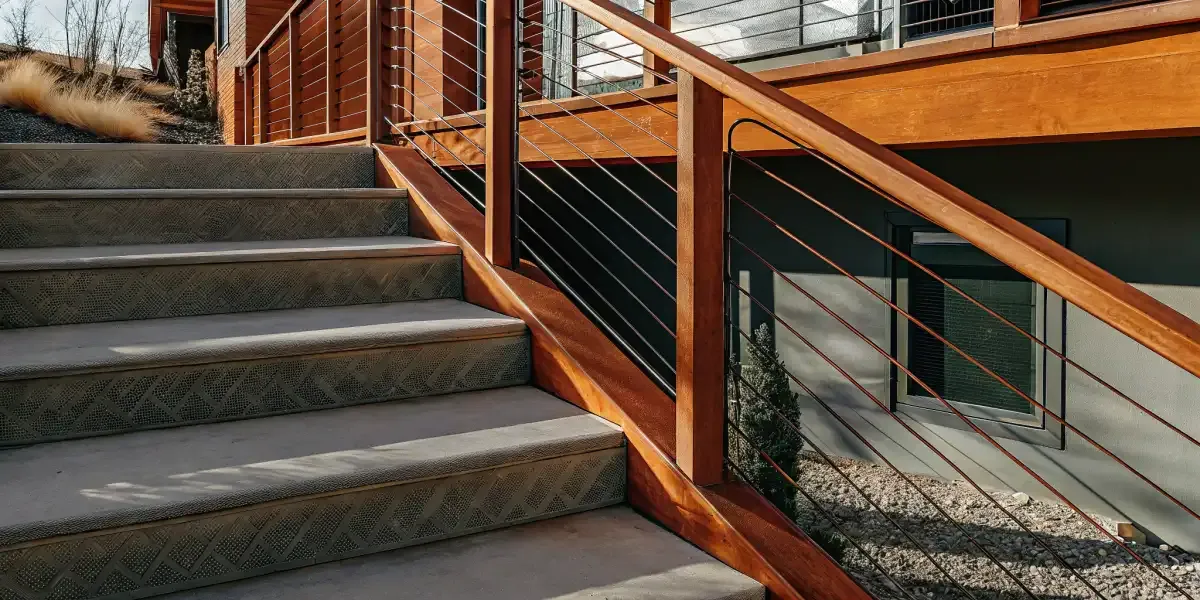
Safety is the most key part of any stair design. It is needed to have a slip-resistant surface on every step to stop falls. Adding a textured finish helps you stay safe when the steps are wet or icy. You can also use special coatings to add more grip. This makes sure that every person can use the stairs without fear of a slip.
Safe slopes and water flow
Many yards in our area have steep hills or big shifts in height. When you build stairs on a slope, you must plan for how water moves. Poor drainage can wash away the soil under your stairs. This makes the steps tilt or sink over time. It can also lead to puddles that turn into ice patches in the winter. By selecting safe stair materials, you help the structure stay firm.
Strong bases and gravel can help water move away from the steps. This keeps the path dry and safe. You should also think about how the steps match your current yard. Good design makes the stairs look like they belong there. It also makes sure they stay safe for many years. Proper planning at the start will save you time and stress later.
- Use composite boards to avoid splinters from sun damage.
- Pick textured treads to help with grip during snow or rain.
- Build a strong base to stop the stairs from sinking in wet soil.
- Add good lighting so every step is clear at night.
Comparing concrete, masonry, and wood stairs
Concrete offers a solid, low-upkeep stair system; masonry coordinates naturally with patios and retaining walls; wood creates a warm connection to raised decks; and composite reduces routine upkeep. The safest option is the one paired with a stable base, consistent step geometry, reliable traction, and drainage suited to the site.
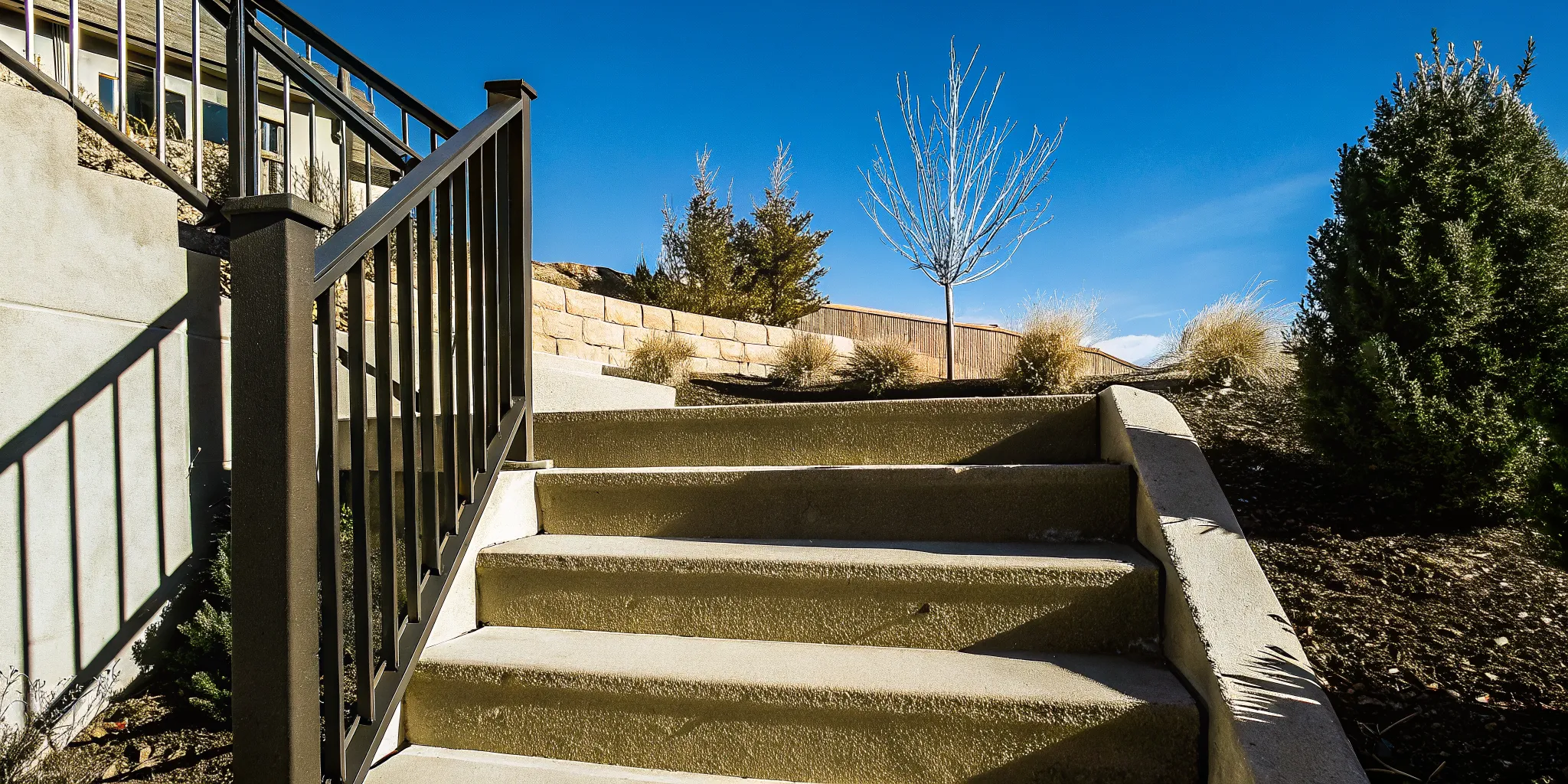
Choosing the right outdoor stair materials is a key part of your deck or patio plan. Each material has its own look, safety level, and care needs. In the Denver Metro Area, homeowners need materials that can handle heavy snow and quick temperature shifts. Selecting safe stair materials early in your design helps keep your project on track and ensures it lasts for a long time.
Concrete and masonry stairs
Concrete is a top pick for strength. It resists rot and holds up well against the freeze-thaw cycles seen in Colorado. For a more classic look, masonry using stone or brick gives a high-end feel that fits well with existing hardscapes. These heavy materials stay in place and feel solid underfoot. This is a key part of stair safety and material choices for many families.
To keep these stairs safe, use a textured finish. Treads with a rough surface give better grip when wet or icy. Based on safety guides from the Centers for Disease Control and Prevention, all stair treads should be slip-resistant to prevent falls. Adding a non-slip finish to the front edge of each step is a smart way to boost safety on stone or concrete stairs.
Wood and composite stairs
Wood is a common choice that offers a natural look and warmth. It is easy to work with and fits most home styles. But wood needs a lot of care to stay safe in our dry air. You must treat it with sealers to stop rot and cracks. Without this work, wood can warp or become slick over time. This can create a risk for anyone using the stairs.
Many people now choose durable outdoor stair materials like composite instead of wood. Composite stairs look like wood but do not need paint or stain. They are made to resist UV rays and harsh weather. This makes them a low-care choice that stays safe and looks good. They are often the best pick for busy families who want a deck that is ready to use without yearly work.
Material comparison guide
Use this table to see how common materials compare for your project. Think about how much time you want to spend on care and the look you want for your yard.
| Material | Durability | Care Needs | Main Benefit |
|---|---|---|---|
| Concrete | Very High | Low | Best for strength and life |
| Masonry | High | Low | Premium look and feel |
| Wood | Medium | High | Natural style and warmth |
| Composite | High | Very Low | Easy care and long life |
Confirm local requirements
No matter which material you pick, you must follow local codes. In Colorado, most towns use the International Residential Code for stair rules. For instance, home stairs must be at least 36 inches wide. Following these standards for residential stairs ensures your home is safe and meets all rules. If you need help, outdoor stair construction services can help you pick and build with the best materials.
Which stair details improve everyday safety?
Safe outdoor stairs combine consistent tread dimensions, a slip-resistant walking surface, sturdy handrails, visible tread edges, and lighting that clearly marks the route. These details should work together so each step feels predictable in daylight, after dark, and during changing Denver Metro Area weather.
Safe outdoor stairs rely on smart design and the right parts. Even small choices can help prevent trips and falls on your deck or porch. Using durable outdoor stair materials is a great start, but how you set them up matters just as much. You should focus on how each step feels and looks to keep people safe.
Consistent step size
Each step on your stair should be the same height and depth. If one step is even a bit taller, it can cause a person to trip. Most local rules say the vertical part of the step should be about 7.75 inches tall or less. Keeping these heights even helps you know where to put your foot. You also need a width of at least 36 inches so people have room to move.
Traction and grip
Wet or icy steps are a big risk in the Denver area. You should pick stair safety and material choices that offer good grip. Adding a non-slip finish to the front edge of each step is a smart move. The CDC notes that slip-resistant treads are vital for safe stairs. Textured wood or composite boards can help you keep your footing during rain or snow.
Visible edges and lighting
It can be hard to see where one step ends and the next begins at night. Good safe outdoor stairs use lights to show the path. You can add small LED lights into the steps or along the side rails. Using a different color for the edge of the step also makes it stand out. These small details help you judge the distance between steps and stay on your feet.
Drainage starts below and around the stairs
Outdoor stairs need drainage at the tread surface, landing, and supporting base. Directing runoff away from the structure helps limit puddles and ice on the walking path while protecting soil and supports from erosion or movement. Drainage should be planned before the stair material and final route are selected.
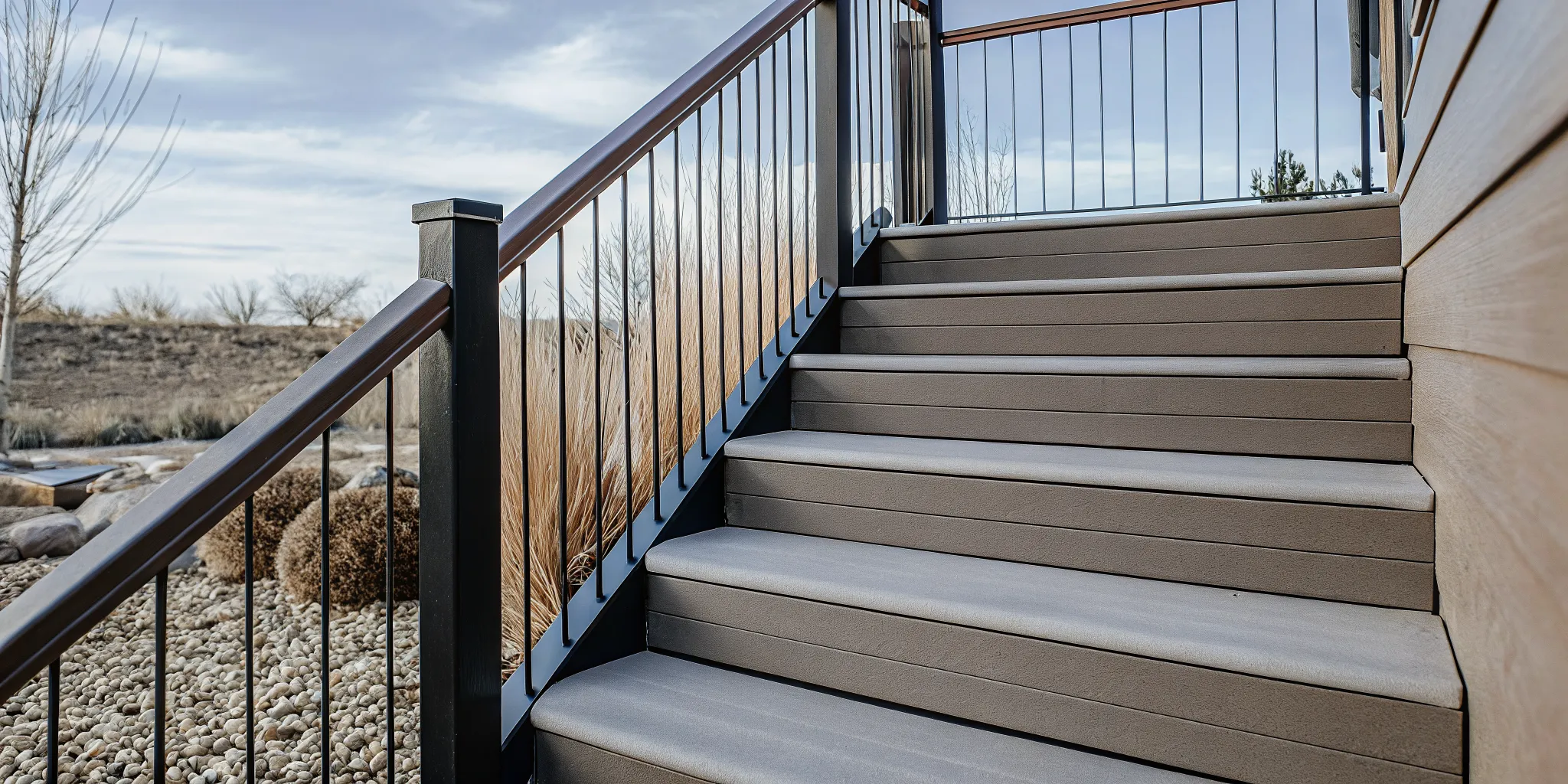
Proper water flow is a key part of a safe stair build. When water pools near the base or under the treads, it can rot wood or sink the frame. You must make sure the ground slopes away from the steps. This keeps the soil firm and stops the stairs from shifting. In the Denver Metro Area, heavy snow and ice make good drainage a top need for long-term use.
Protecting the stair base
The base of your stairs needs a solid, dry spot to rest. Most pros start with a concrete pad or a thick bed of crushed stone. This layer helps spread the weight and lets water move through the soil. If the bottom step sits in mud, the whole frame will lean or crack later. A clear path for water helps your durable outdoor stair materials last much longer in our local weather.
You should also check the ground slope around the sides of the stairs. The soil should drop six inches over the first ten feet away from the deck. This simple tilt keeps rain from soaking the support posts. When the ground stays dry, you avoid the freeze-thaw cycles that can push bases out of place. It is a small step that saves you from big fixes later.
Managing water runoff
Water does not just come from the ground. It also falls from the roof and the treads. You must plan where this water goes so it does not sit on the wood. Slanted treads allow rain to roll off the front edge fast. This is a vital part of finding materials that can handle wet days. Without a slight tilt, water will pool and cause the surface to get slick or grow mold.
Gutters should never dump water right onto a stair landing. If your roof line hangs over the steps, you might need a splash block to move the stream away. Keeping the walking path dry is not just about wood health. It is also about safety. The Centers for Disease Control and Prevention notes that stair treads must stay slip-resistant to keep people safe. Proper drainage is the first line of defense against falls on icy steps.
Choosing the right materials for wet conditions
Some materials handle wet spots better than others. Treated wood is common, but it can still warp if it stays wet. Composite choices are often better because they do not soak up water. These materials also come with textures that help your feet grip the surface. When you pick your stair safety and material choices, think about how the surface feels in the rain.
Natural stone is another strong pick for the Denver area. It is heavy and stays in place well, but it still needs a good base. You want a system that moves water away as fast as it can. This protects the stairs from the rail down to the post. A dry stair is a safe stair that will serve your home for many years.
How should you plan an outdoor stair project?
Plan an outdoor stair project by walking the route in different conditions, measuring the rise and available run, matching materials to the site, directing runoff, and including rails, traction, and lighting from the start. A local contractor can then help confirm requirements before construction begins.
A safe stairway begins with a clear plan for the whole route. Look at where people start, where they need to go, and how the path connects to doors, decks, patios, and the yard. The most direct route is not always the safest if it crosses a steep grade or collects runoff.
- Walk the route in different conditions. Check the area during daylight and after dark. Look for shade, low spots, roof runoff, sprinkler spray, and places where snow tends to remain.
- Measure the full rise and available run. Accurate field measurements help the builder lay out even steps and useful landings. Changes made late in the build can lead to awkward step spacing.
- Match the material to the setting. Concrete may suit a durable garden route, masonry can tie into an existing hardscape, and wood often creates a natural link to a raised deck. Compare the full stair system, including the base, framing, treads, and rails.
- Plan drainage before construction. Decide where runoff should go and how the base will remain firm. Water should not pool on a tread, wash soil from beneath the stairs, or flow toward the home.
- Add safety features to the design. Include sturdy rails, good grip, clear tread edges, and lighting from the start. These details work better when they are part of the plan rather than later additions.
- Confirm local requirements. Stair and railing rules can depend on the site and project scope. A qualified local contractor can help confirm which permits and inspections apply before work begins.
Connect stairs to the wider outdoor plan
Stairs often affect more than one part of a yard. Their position can change a planting bed, patio edge, drainage route, or seating area. Reviewing an outdoor entertainment area planning guide can help homeowners think through those connections before choosing a final layout.
Review the plan as a daily user
Imagine carrying groceries, moving a garden tool, or guiding a guest down the stairs at night. That simple review often reveals where a wider landing, stronger light, or better handhold would help. A thoughtful plan makes the stairway feel like a natural part of the home instead of an obstacle between spaces.
Keeping outdoor stairs safe through the seasons
Every outdoor stair system needs routine checks. A quick look at the start of each season can reveal small issues before they affect footing or the support below. Clear leaves, grit, and packed snow so tread surfaces and drainage paths can do their jobs.
Check the walking surface
Look for loose boards, raised fasteners, cracks, rocking masonry units, worn grip strips, and slick buildup. Pay close attention to tread edges because damage there can catch a shoe. Clean the surface with methods suited to the material, and avoid tools or chemicals that could make it smoother or weaken its finish.
Wood stairs should be checked for soft spots, splits, and movement at connections. Concrete needs review for cracks, scaling, or settled areas. Masonry stairs should be checked for loose units and joints that let water reach the base.
Test rails, lights, and drainage
Grip each railing and gently test it for movement. Replace failed lights and clean lenses so every tread edge stays easy to see. Then check the ground beside and below the stairs for erosion, standing water, or channels formed by runoff.
After a storm or snowmelt, watch how water moves through the area. This is the best time to find a drainage issue. Prompt repairs help protect the stairs and nearby landscape while keeping the route ready for daily use.
Know when a repair needs expert review
A loose surface piece may look minor, but movement can point to a weak base or support. Seek expert help when steps tilt, rails move, framing feels soft, or cracks keep growing. Faros Construction Services can review how the stairway connects with nearby outdoor lighting, hardscape, and deck features.
Frequently Asked Questions
What is the best material for outdoor stairs?
The best choice depends on the stair location, supporting base, drainage, nearby features, and desired upkeep. Concrete works well for firm, durable routes. Masonry can blend with patios and garden walls. Wood often fits raised decks and porches. Each option needs safe tread texture, sturdy rails, and a sound installation.
How do you make outdoor steps less slippery?
Start with a textured tread surface that keeps grip when wet. Keep leaves, dirt, snow, and ice from building up. Good drainage helps prevent puddles from forming and freezing. Lighting also helps users see each tread edge. Worn or damaged surfaces should be repaired before they create an uneven step.
Do outdoor stairs need drainage?
Yes. Water should move away from the walking surface and supporting base. Poor drainage can form puddles, ice, erosion, and soil movement around the stairs. The drainage plan should account for the slope, roof runoff, nearby hardscape, and where water can safely flow without affecting the home.
When should an outdoor stairway be replaced?
Ask a qualified contractor to inspect stairs when treads tilt, rails move, wood feels soft, masonry units rock, or concrete cracks keep growing. Replacement may be the safer choice when damage affects several parts of the stairway or the supporting structure no longer feels firm.
Ready to build safer outdoor stairs for your home?
Leaving old or broken stairs as they are creates a real risk of trips or falls for your family as the wood rots. Waiting for the winter snow and ice in the Denver Metro Area only makes the danger worse and the repairs harder. Starting right now ensures your home is ready for the weather and gives you peace of mind with a sturdy and safe build.
Are you ready to get started on your next home improvement project? Call (720) 594-5604 to request your outdoor stair project consultation with our local experts. Our team helps you pick durable outdoor stair materials to keep your yard safe for everyone who visits your home.