

Composite decking is designed to make outdoor living easier, but it is not maintenance-free. Composite deck maintenance in Colorado weather should account for intense sun, windblown grit, sudden temperature changes, snow, and moisture that can collect beneath furniture or near the house. A simple seasonal routine helps a deck stay clean, comfortable, and ready for the next gathering in the Denver Metro Area.
Why does Colorado weather affect composite deck care?
Colorado weather affects composite deck care because several different stressors can arrive in the same season. Strong sunlight can change surface color, dry wind carries abrasive dust, winter snow creates repeated freeze and thaw cycles, and shaded areas may hold moisture. Good care responds to each condition without using harsh tools or unapproved chemicals.
Composite boards generally resist rot, insects, and everyday moisture better than many traditional wood surfaces. That does not make every deck surface identical. Capped and uncapped boards, darker and lighter colors, the condition of the supporting frame, installation details, and the manufacturer’s warranty instructions all affect the right cleaning routine.
The Denver Metro Area also has highly variable conditions from one property to another. A south-facing deck receives a different amount of sun than a shaded deck beneath mature trees. A deck below a roof edge may receive concentrated runoff, while one near a lawn sprinkler may stay damp along its perimeter. Start with the board manufacturer’s care guide, then adapt the schedule to the exposure at your home.
For neutral weather context, the National Weather Service Boulder office resources help homeowners follow local conditions across seasons. The practical takeaway is simple: inspect the deck after the weather event that affects it, not only on a fixed calendar date.
What should you do each week and each season?
A dependable composite deck maintenance schedule has three layers: quick debris removal, periodic surface cleaning, and seasonal inspections. Sweeping before leaves, grit, and pollen become embedded makes deeper cleaning easier. A quarterly check is a useful starting point, but decks near trees, sprinklers, or heavy foot traffic may need attention more often.
- Weekly or after windy weather: Sweep away leaves, pine needles, soil, and other debris with a soft-bristle broom.
- After storms: Look for branches, standing water, blocked gaps, and debris packed against the house or railing.
- Every few months: Wash the surface with the cleaner approved for your board type, using a soft brush and thorough rinsing.
- Before winter: Clear furniture, planters, and organic debris so snow and moisture do not remain trapped beneath them.
- After snow season: Check for stained areas, lifted trim, blocked drainage paths, loose hardware, and changes around the ledger.
- At least annually: Inspect the deck surface, stairs, railings, framing, and connection to the home, or arrange a professional review when the structure is difficult to access.
Keep a short record of what you notice. A photo taken from the same corner each spring and fall can reveal gradual changes that are easy to miss during a quick walk across the deck.
How should you clean composite decking?
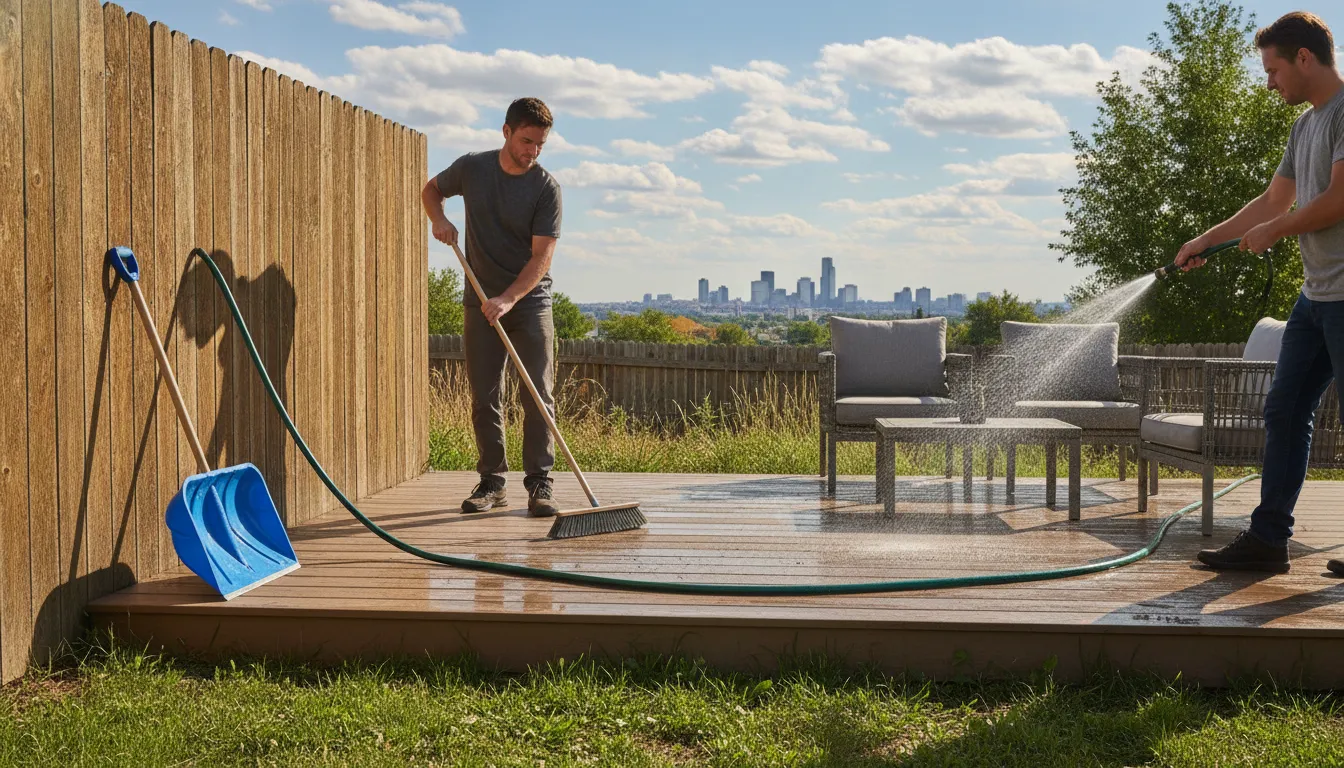
Clean composite decking with a soft-bristle broom, a mild manufacturer-approved cleaner, and enough water to rinse away loosened soil. Work in manageable sections, follow the board grain when brushing, and test any new product in an inconspicuous spot. Avoid assuming that a product safe for one composite line is safe for every surface.
Begin by removing furniture and loose debris. Sweep between boards instead of pushing dirt into the gaps. If a spill occurs, address it promptly rather than allowing food residue, grease, or organic matter to sit in the sun. Use the cleaning method listed for the specific board, because capped surfaces and exposed composite cores can respond differently to chemicals and abrasion.
Pressure washing deserves special caution. Some manufacturers allow it at a specified pressure and distance, while others recommend a garden hose and soft brush instead. A concentrated spray can mark the surface, drive debris into the gaps, or damage a finish when used too close to the board. If the care guide does not clearly approve pressure washing, choose the gentler method.
Do not use a metal shovel, wire brush, or abrasive scouring pad on the deck surface. Avoid mixing cleaning products, and do not use a strong solvent simply because it removed a stain elsewhere. If a stain remains after the approved cleaning process, document it and ask the manufacturer or an experienced deck professional before escalating to a more aggressive treatment.
How do you protect a composite deck from snow and ice?
Protect a composite deck from snow and ice by clearing it gently, keeping drainage gaps open, and using only products approved for the specific decking. A plastic shovel or soft broom is usually safer than a metal edge. Never chip at bonded ice with a tool that can gouge the surface, and follow the board manufacturer’s guidance before applying any de-icer.
When removing snow, push in the direction of the boards when practical and lift the shovel at transitions, stairs, and trim. Do not pile heavy snow against a railing or block a stair landing. Clear the area around downspouts and door thresholds so meltwater has a path away from the deck and the house.
Ice treatments vary by product and decking warranty. Rock salt, sand, and chemical de-icers can scratch, leave residue, affect nearby landscaping, or create a slippery film. If a winter product is permitted, use it sparingly and rinse the surface when conditions allow. If you are uncertain, physical traction and careful shoveling may be safer than experimenting with a chemical.
After a warm afternoon followed by a freeze, look for water that has collected in low areas or beneath stored items. Repeated wetting and freezing can expose drainage problems even when the boards themselves look sound. Persistent pooling is a reason to investigate the deck slope, gaps, adjacent grade, and downspout discharge rather than simply cleaning the surface more often.
How can you reduce sun, heat, and moisture damage?
Reducing sun, heat, and moisture damage starts with controlling what stays on the deck and where water travels. Composite boards can handle outdoor exposure, but furniture, rugs, planters, leaves, and leaking irrigation can create localized conditions that differ from the rest of the surface. Move items periodically, keep the area clean, and make drainage part of every inspection.
Strong sun can make color variation more noticeable, especially when one part of a deck remains covered by a rug or furniture for a long time. Rotate movable furnishings when possible and choose outdoor rugs that allow airflow and can be cleaned underneath. Follow the decking manufacturer’s instructions before applying a sealant or protectant. A product intended for wood is not automatically appropriate for composite boards.
Moisture management is equally important. Empty planters before they overflow, correct sprinkler overspray, keep downspouts from discharging directly onto the deck, and clear leaves from board gaps. If a rug remains damp after rain, lift it so the surface can dry. Watch shaded corners, stair stringers, and the area where the deck meets the house.
For attached decks, the ledger connection deserves special attention because it is part of the home’s water-shedding system. Faros’ deck ledger flashing guide explains why layered flashing and a clear drainage path matter. This article focuses on routine care, but surface cleaning cannot correct a concealed connection or flashing problem.
What should you inspect beyond the deck boards?
A complete composite deck inspection goes beyond the visible boards. Check stairs, railings, fasteners, trim, posts, beams, joists, ledger areas, and the ground around the structure. Surface appearance can remain attractive while movement, corrosion, blocked drainage, or moisture damage develops in a less visible part of the deck.
Walk the deck slowly and note any new movement, soft trim, unusual gaps, raised fasteners, cracked components, or railings that feel loose. Look below the deck when access is safe. Pay attention to damp soil near posts, downspout discharge, standing water, rust-colored staining, and organic debris pressed against framing.
Do not treat a structural concern as a cleaning project. If a board moves unexpectedly, a stair feels unstable, a railing shifts, or the deck pulls away from the house, limit use of the area and arrange an evaluation. Avoid removing structural fasteners or cutting into flashing without a clear plan, because an attempted repair can create a larger water or safety problem.
Homeowners who are planning a new deck or a significant replacement can review Faros Construction Services’ deck contractor service path to understand how a project conversation can begin. A professional can look at the whole assembly, including the supporting structure and how the deck meets the home, rather than judging the boards alone.
How does composite decking compare with other outdoor-living decisions?
Composite decking is one part of a larger outdoor-living plan. Its maintenance needs are influenced by the surrounding layout, drainage, stairs, lighting, furniture, and connection to the home. Thinking about those elements together helps a homeowner avoid choosing a surface without considering how the complete space will be used and cared for.
Faros’ guide to what composite decking material is made of covers the difference between common composite constructions and why formulation, exposure, installation, and drainage all matter. Use that resource when you are still deciding whether composite decking fits your goals. Use this guide when the main question is how to care for a deck already installed or being planned for Denver Metro Area conditions.
For a broader project, the outdoor living spaces service page shows how a deck can relate to the rest of a backyard. The right maintenance plan should leave enough access for cleaning, preserve drainage routes, and make seasonal furniture changes manageable. A beautiful deck is easier to maintain when the design leaves room to inspect it.
Frequently Asked Questions
Composite deck maintenance in Colorado weather is straightforward when it follows the board manufacturer’s instructions and accounts for Denver Metro Area exposure. The questions below cover the most common decisions about cleaning, winter care, products, and professional evaluation.
Do composite decks require maintenance?
Yes. Composite decks usually need less routine upkeep than many wood decks, but they still need sweeping, approved cleaning, drainage checks, snow care, and periodic inspection of the structure and connections.
Can you pressure wash a composite deck?
Only when the decking manufacturer expressly allows it and the instructions specify safe pressure, distance, and technique. If the guidance is unclear, use a garden hose, approved cleaner, and soft brush instead.
What is the safest way to remove snow from composite decking?
Use a plastic shovel or soft broom, move gently with the board direction, and avoid metal edges or aggressive ice chipping. Check the product care guide before using any de-icer.
Can a composite deck fade in strong Colorado sun?
Composite boards can show color change over time, even when they include fade-resistant features. Follow the manufacturer’s care instructions, rotate furnishings and rugs, and avoid applying an unapproved coating.
How often should a composite deck be inspected?
Inspect it after major storms and at least once each year. Add checks before winter and after snow season, especially when the deck is near trees, sprinklers, roof runoff, or a shaded area.
When should a deck professional evaluate the structure?
Arrange an evaluation when stairs or railings move, boards feel unstable, water persists near the house, hardware is corroded, or the deck shows movement at the ledger or supporting frame.