
A Denver deck has to handle intense sun, dry air, snow, and everyday use without demanding constant attention. That makes the material beneath the boards just as important as the layout, railing, and finish.
Talk with Faros about a custom deck designed for your Denver Metro Area home.
Composite decking material is a manufactured blend of wood fibers, recycled plastics, and performance additives. It is shaped to resemble wood, while its engineered makeup can improve resistance to rot, insects, moisture, and routine wear compared with traditional wood decking. Wood-plastic composites still face outdoor exposure from ultraviolet light and moisture, so the formula, protective cap, installation, and maintenance routine all influence performance. USDA Forest Service research documents how these factors affect composite materials over time.
Understanding what is inside the boards makes it easier to compare brands, evaluate capped and uncapped products, and choose a deck system suited to Colorado conditions. Start with the layers and ingredients that give composite boards their appearance and performance.
What Is Composite Decking Material Made Of?
Composite decking material is a manufactured decking product made by combining wood fibers with recycled plastic or other thermoplastics. The result is a board designed to capture the appearance of natural wood while offering more consistent resistance to everyday outdoor exposure.
Wood-plastic composites contain wood fiber, thermoplastics, and performance additives. The U.S. Forest Service notes that these materials are exposed to ultraviolet light, moisture, and biological deterioration in outdoor installations, which is why the formulation and protective layers matter. Research from the U.S. Forest Service examines how these factors affect long-term performance.
The wood component contributes texture and a familiar grain-like appearance. The plastic component helps bind the fibers into a stable board and limits the absorption associated with unfinished lumber. Manufacturers may also add colorants, UV stabilizers, and preservatives. These ingredients are not merely cosmetic. In testing, UV stabilizers and colorants slowed color change, while zinc borate provided some decay protection.
Capped and uncapped composite boards
Composite decking is generally sold in capped or uncapped varieties. An uncapped board has a composite core exposed at the surface. It can still provide a durable decking surface, but the board’s performance depends more directly on its core formulation, installation, and ongoing care.
A capped board adds a protective polymer layer around some or all of the composite core. That outer shell is designed to improve resistance to moisture, staining, fading, and surface wear. Some products are capped on three sides, while others use four-sided protection. The exact construction varies by manufacturer, so a deck designer should review the product specifications rather than treating every composite board as identical.
How recycled content varies by brand
Recycled content also varies across product lines. TimberTech reports that some composite decking is made in the United States with up to 85% recycled material. Trex reports 95% recycled content in its decking products. Those figures are useful for understanding the material’s composition, but they do not make every board interchangeable. The core blend, cap design, color, fastening system, warranty terms, and intended application all affect the right selection for a Denver Metro Area deck.
For homeowners, the practical takeaway is that composite decking is an engineered system, not simply plastic made to resemble wood. Choosing the right board means matching its protective features and installation requirements to the deck’s exposure, drainage, use, and desired appearance.
Composite vs. Wood Decking: How the Materials Compare
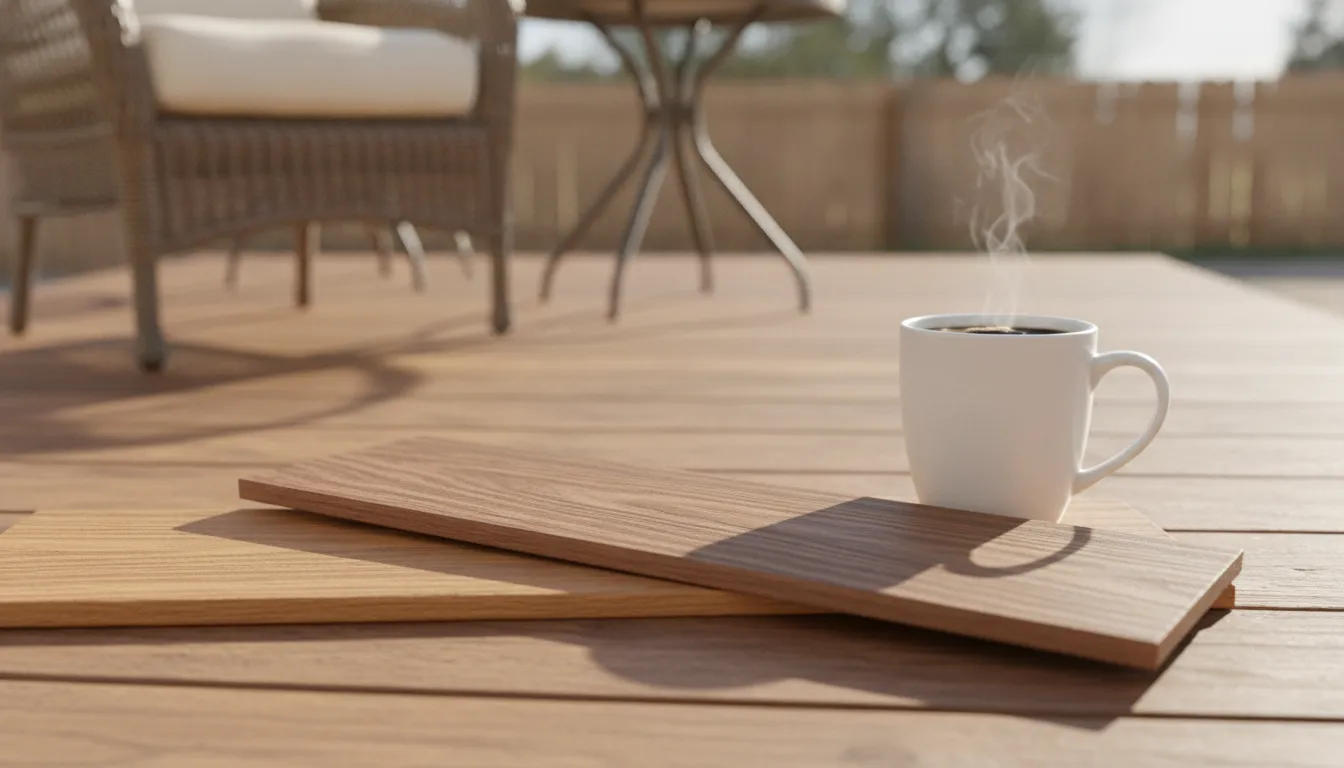
Composite decking material offers a lower-maintenance alternative to traditional wood, especially when a deck must stand up to moisture, insects, and strong outdoor exposure. Wood provides a naturally varied appearance, while composite focuses on consistent performance and simpler upkeep.
| Feature | Composite | Wood |
|---|---|---|
| Maintenance | Usually requires routine sweeping and periodic cleaning. It does not typically need regular staining or sealing. | Needs ongoing cleaning and finish maintenance. Depending on exposure and the type of wood, restaining may be needed about every two years. |
| Durability | Designed for consistent outdoor use, with boards and protective finishes that help manage everyday wear, moisture, and sunlight. | Can perform well when properly selected, installed, and maintained. Unprotected wood is more vulnerable to weathering and surface wear. |
| Rot and insect resistance | Generally resists rot and insects better than traditional wood, which reduces the maintenance required over time. | Natural wood can be affected by moisture, fungal decay, and insects, particularly where water remains against the boards or framing. |
| Appearance | Offers predictable color and grain patterns, with options designed to resemble painted or stained wood. Capped boards add another protective surface layer. | Provides authentic grain, knots, and color variation. It can be stained to refresh the appearance or change the tone as the deck matures. |
| Lifespan | Service life depends on the product, installation, exposure, and care. Manufacturer warranty terms can provide one useful comparison point between product lines. | Service life varies substantially with species, ventilation, drainage, installation quality, and the consistency of maintenance. |
The practical difference is how much responsibility the material places on the homeowner. Composite can simplify care and provide stronger resistance to common sources of deterioration. While wood rewards owners who want natural character and are prepared to maintain its protective finish.
Neither material removes the need for thoughtful construction. Proper joist spacing, fastener selection, ventilation, and water management affect how any deck performs. Composite boards can still experience moisture-related challenges in certain conditions, so the entire assembly matters, not only the surface boards. The U.S. Forest Service notes that wood-plastic composites are exposed to ultraviolet light, moisture, and biological deterioration in outdoor installations, making product selection and installation details important. Review the U.S. Forest Service research on wood-plastic composite durability.
The Best Composite Decking Brands Homeowners Trust
Several established manufacturers make composite decking material with different shell designs, recycled content, appearance options, and warranty coverage. The best fit depends on how your Denver Metro Area deck will be used, how much sun it receives, and which performance features matter most to your household.
Here is a neutral overview of several widely recognized brands to help you create a practical shortlist before planning a custom deck build.
Trex
Trex is one of the most recognized names in composite decking. Its boards use approximately 95% recycled materials, and many product lines include a protective outer shell designed to help resist scratches, stains, and ultraviolet exposure. Depending on the collection, Trex offers fade and stain warranty coverage of up to 50 years. Homeowners comparing samples should still review the specific line, board profile, color, and warranty exclusions rather than applying one warranty statement to every product.
TimberTech and AZEK
TimberTech composite decking is made with up to 85% recycled material and uses capped protection on all four sides of certain boards. That four-sided coverage can be an important detail when comparing products, because the board’s edges receive exposure during installation and over time. TimberTech lists 30-year product warranties and 25-year fade and stain warranties for applicable collections. The company also owns the AZEK line, which focuses on PVC decking rather than wood-plastic composite. PVC may be worth comparing when a project calls for a different material profile.
Fiberon
Fiberon offers several composite decking collections with a broad range of colors, surface patterns, and board profiles. It can be a balanced option for homeowners who want the familiar appearance of painted or stained wood without taking on the same recurring upkeep. Compare the product’s cap coverage, traction, heat characteristics, color availability, and installation requirements for the specific collection under consideration.
MoistureShield
MoistureShield is another established composite decking manufacturer, with product lines designed for moisture exposure and outdoor durability. Its materials are backed by structural warranty coverage of up to 50 years on applicable products. The precise warranty terms vary by collection, so read the manufacturer documentation and confirm that the selected board suits the deck’s framing, drainage, and expected use.
Brand recognition is only one part of a successful deck. Board spacing, framing, fasteners, stair construction, and site drainage all influence how the finished surface performs in Colorado weather. A qualified builder can compare samples with your home’s architecture and recommend a system that fits the design, maintenance goals, and conditions on your property.
Composite Decking Maintenance in the Colorado Sun
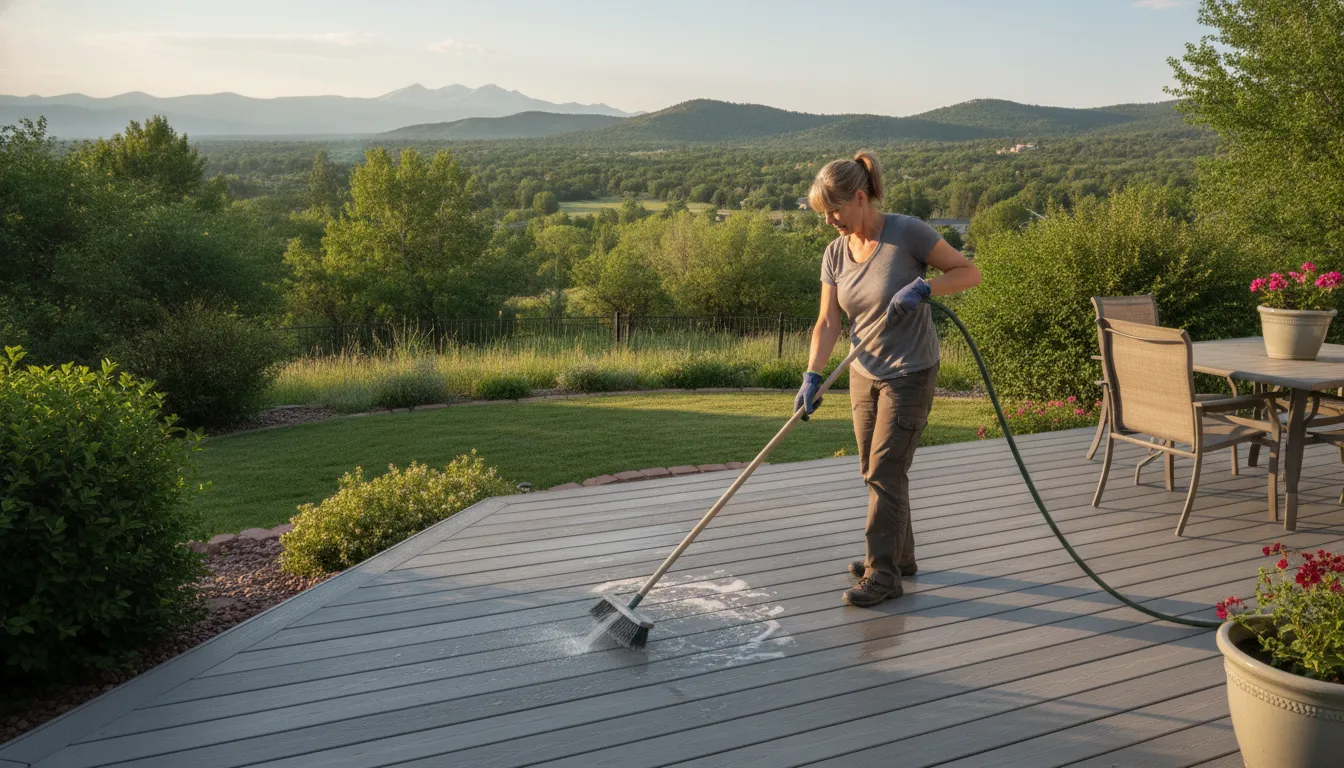
Composite decking material generally needs less upkeep than wood, but it is not maintenance-free, especially in the bright, dry conditions common across the Denver Metro Area. Regular cleaning, good drainage, and realistic expectations about color change help protect the surface and the structure beneath it.
Colorado’s high-elevation sunlight exposes an outdoor deck to strong ultraviolet radiation throughout the year. Wood-plastic composites are also exposed to moisture and biological deterioration. So product formulation and installation details matter as much as the appearance on the day the deck is completed. The USDA Forest Service identifies UV light, moisture, and biological activity as important factors in the outdoor performance of these materials: its research on wood-plastic composites provides useful context for evaluating long-term durability.
What helps composite boards retain their color?
Manufacturers can add UV stabilizers and colorants to slow color change. USDA research found that a UV stabilizer package, including colorant, slowed color change compared with an untreated wood-plastic composite control. That does not mean a board will never weather. It means a well-formulated product can moderate the visible effect of sun exposure over time.
Capped composite boards add another layer of protection. Their protective outer shell can help resist staining, fading, and everyday scratches, but the shell still benefits from prompt cleanup. Sweep leaves and loose debris regularly, then wash the surface with water and a manufacturer-approved cleaner. Avoid improvised solvents, abrasive tools, or harsh methods that can damage the finish or leave uneven marks.
Why drainage and moisture control still matter
Composite decking is commonly selected for its resistance to rot and insects, yet the wood component does not make moisture irrelevant. In a separate USDA Forest Service study, moisture-induced expansion of wood particles was associated with microcracks in the plastic matrix. Those openings may eventually allow decay fungi to reach the wood component of the composite. The finding is a useful reminder that water management remains part of responsible deck maintenance.
Keep the space below the deck clear enough for air movement, prevent soil or mulch from staying against structural members, and address areas where water collects. A properly planned set of deck drainage systems can help manage runoff and keep the area beneath an elevated deck drier. During seasonal inspections, look for loose fasteners, damaged flashing, blocked drainage paths, or boards that hold water longer than surrounding areas.
For Denver Metro homeowners, the best maintenance plan is straightforward: sweep often, clean spills before they set, rinse away residue, and inspect the deck after heavy weather. Choose a board system suited to the site, follow its care instructions, and have the framing and drainage reviewed as part of the complete deck design. That approach protects both the finished surface and the long-term performance of the outdoor living space.
How Long Does Composite Decking Last?
Composite decking material commonly serves for roughly 25 years or longer, while some manufacturers offer fade, stain, or structural warranties reaching 30 to 50 years. Its actual service life depends on the board formulation, installation, drainage, cleaning, sun exposure, and the condition of the supporting frame.
A warranty is useful evidence of a manufacturer’s confidence, but it is not the same as a guaranteed lifespan in every Denver Metro Area setting. Consumer Reports notes that after a typical lifespan of about 25 years. Composite boards may still end up in a landfill, so responsible material selection should consider both durability and eventual disposal.
What determines the service life?
Composite boards combine wood fibers, recycled plastics, and additives. Outdoor research identifies ultraviolet light, moisture, and biological deterioration as ongoing stresses for wood-plastic composites. UV stabilizers and colorants can slow color change, while decay-protection additives may help protect the wood component. Moisture remains important because expansion can create microcracks that allow decay fungi to reach embedded wood fibers. See the USDA Forest Service research on wood-plastic composite durability and moisture-related deterioration.
Product construction also matters. A capped board has a protective outer layer designed to help resist staining, fading, and surface wear. Uncapped boards may still perform well, but they require especially careful attention to water management and cleaning. The frame, fasteners, stair details, and ledger connection deserve equal attention because a durable board cannot compensate for a failing structure.
Three steps to extend your deck’s life
- Keep water moving. Maintain clear gaps between boards, keep leaves and debris from collecting, and make sure water can drain away from the house. Inspect low areas, stairs, and framing after heavy snow or rain.
- Clean with the approved method. Remove pollen, dirt, and organic debris before they remain on the surface for extended periods. Follow the board manufacturer’s cleaner, brush, and pressure-washing guidance, since overly aggressive cleaning can damage the finish.
- Inspect the whole system annually. Look for loose fasteners, movement, damaged flashing, soft framing, and changes around posts or stairs. Prompt repairs help protect the boards and keep a small maintenance issue from becoming a structural problem.
For a deck expected to serve your household for decades, choose the board system and installation details together. Faros can help Denver Metro Area homeowners plan a durable custom deck build suited to the site, drainage, and outdoor living goals.
What Are the Downsides of Composite Decking?
Composite decking material offers durability and lower routine maintenance, but it is not flawless. It can retain heat, react to prolonged moisture, and create an end-of-life waste concern, so material selection and installation details matter.
It Can Feel Hot in Direct Sun
Composite boards can become uncomfortably warm during sunny summer afternoons, especially in darker colors and open areas with little shade. That does not make the surface unsuitable for a Denver Metro Area deck, but it should influence the design. A shade structure, pergola, strategically placed furniture, or a lighter board color can make the deck more comfortable for bare feet and outdoor gatherings.
Moisture Still Deserves Attention
Composite decking is generally more resistant to rot and insects than traditional wood, yet the wood fibers inside some products remain sensitive to long-term moisture exposure. USDA Forest Service research explains that moisture-related expansion can create tiny cracks in the plastic matrix. Over time, those microcracks may allow decay fungi to reach the wood component of the board: USDA Forest Service research on wood-plastic composites.
This finding is not a reason to reject composite decking. It is a reason to avoid trapped water and poor ventilation. Proper joist spacing, adequate gaps, drainage, clean-cut board ends, and a framing layout that keeps the deck clear of standing water all help protect the assembly. A professional custom deck build should account for those details before the first board is installed.
Disposal Is a Long-Term Consideration
Composite boards can remain in service for many years, but durability does not automatically mean easy recycling. Consumer Reports notes that after a typical lifespan of about 25 years, decking boards are still likely to end up in a landfill: Consumer Reports composite decking testing. Homeowners planning a new deck should consider the full life cycle, including how boards may be handled when the structure is eventually rebuilt.
The material works best when its limitations are addressed in the design stage. Choosing an appropriate color, planning shade, protecting drainage paths, and using experienced installers can reduce heat discomfort and moisture-related risks while helping the deck perform as intended.
Frequently Asked Questions
What is composite decking made of?
Composite decking combines wood fibers with recycled plastics or other thermoplastics, plus additives that help the boards perform outdoors. The mixture is formed to resemble wood while reducing common problems such as rot and insect damage. Some boards also include a protective cap for added resistance to fading and stains.
How does composite decking compare with traditional wood?
Composite decking typically requires less routine maintenance and offers stronger resistance to rot and insects than traditional wood. Wood can be attractive and repairable, but it generally needs more frequent cleaning, staining, and sealing. The right choice depends on your preferred appearance, maintenance habits, and how the deck will be exposed to Denver Metro Area weather.
Will composite decking hold up in Colorado sun?
Quality boards are designed with colorants and UV stabilizers that slow color change, but no outdoor material remains completely unchanged under intense sunlight. Wood-plastic composites are exposed to UV light and moisture throughout their service life, so proper ventilation, drainage, and manufacturer-approved cleaning are important. The USDA Forest Products Laboratory discusses these outdoor durability factors in its wood-plastic composite research.
What are the main disadvantages of composite decking?
Composite decking can retain more heat in direct sun, may show color variation between production batches, and is not immune to weathering or moisture-related damage. Research has found that moisture-driven movement can create microcracks in some wood-plastic composites, potentially allowing decay fungi to reach the wood component, as described by the USDA Forest Products Laboratory. Careful product selection and installation details matter.
How long does composite decking last?
Service life varies with the board formulation, installation quality, drainage, sunlight, cleaning, and overall exposure. Review the specific manufacturer warranty, maintain clear airflow beneath the deck, and address standing water promptly. A professional deck builder can help match the material and installation approach to your property and long-term outdoor living plans.
Ready to Plan Your Custom Composite Deck?
A thoughtful design can help your composite decking material work with your home’s layout, outdoor routines, and long-term plans. Faros Construction can help you choose a practical approach for your Denver Metro Area property and build an outdoor space with lasting craftsmanship.
Contact Faros Construction to design and build your custom composite deck in the Denver Metro Area.