

Fresh concrete may look solid within hours, but the chemical reaction that gives it strength continues long after the finishing crew leaves. For homeowners managing projects in the Denver Metro Area, concrete curing Colorado weather adds a special challenge. Bright sun, dry air, wind, sharp temperature drops, and occasional freezes can all arrive within the same week.
The practical answer is not to guess or constantly change the curing setup. Follow the concrete contractor’s written instructions, keep protection in place, limit traffic, and report unexpected conditions promptly. A planned curing process helps the slab retain the moisture and temperature it needs while it gains strength.
This guide explains what Denver Metro Area homeowners should expect after a driveway, patio, walkway, porch, or other concrete surface is poured. It also identifies simple precautions and warning signs that deserve a contractor’s attention.
Why concrete curing in Colorado weather needs a plan
Curing is not the same as waiting for concrete to dry. Portland cement reacts with water through hydration, a continuing chemical process that forms the bonds responsible for concrete’s strength and durability. If moisture leaves the surface too quickly or the concrete becomes too cold, that process can slow down or become uneven.
Fast surface moisture loss
Low humidity, direct sun, and wind can pull moisture from a fresh surface quickly. That matters even when the air does not feel especially hot. A slab exposed to a sunny, breezy afternoon can lose surface moisture much faster than one protected in calm, shaded conditions.
Rapid moisture loss can contribute to plastic shrinkage cracking and a weaker, dustier surface. Contractors plan around this risk with appropriate placement timing, finishing practices, curing compounds, coverings, or other methods suited to the installation.
Large temperature swings
Warm afternoons can be followed by cold nights across the Denver Metro Area. Concrete also creates heat while cement hydrates, so the slab’s internal temperature does not instantly match the air temperature. Sudden cooling can create damaging temperature differences between the surface and interior.
This is why removing insulated blankets early, simply because the afternoon is sunny, can be a mistake. The protection may be needed for the coming night. Let the contractor decide when covers should be adjusted or removed.
Early freeze exposure
Water expands when it freezes. If young concrete freezes before it has developed enough strength, ice formation can disrupt the developing cement paste. Cold conditions also slow strength gain, which can extend the period during which protection is needed.
A professional plan accounts for the forecast, ground conditions, concrete mixture, slab dimensions, and intended use. Homeowners contribute by leaving the setup intact and telling the installer when conditions differ from the forecast.
How long does concrete take to cure in Colorado?
There is no single calendar that fits every pour. Concrete mixture, weather, slab thickness, protection method, and planned loads all affect the timeline. Many mixes are evaluated around a 28-day strength benchmark, but that does not mean the surface receives no use until day 28. It also does not mean every installation is ready for heavy loads on the same day.
Use the following timeline as a conversation guide, not permission to override your contractor’s instructions.
| Approximate stage | What is happening | Homeowner priority |
|---|---|---|
| First several hours | The concrete is setting and is highly vulnerable to disturbance, fast moisture loss, rain, and temperature changes. | Keep everyone, pets, sprinklers, and objects away. Do not touch coverings or barriers. |
| Days 1 to 3 | Early strength is developing, but the concrete remains vulnerable to loading, drying, and cold exposure. | Keep traffic off unless the installer says otherwise. Check that protection remains secure without walking on the slab. |
| Days 4 to 7 | Hydration and strength gain continue. The curing method may still need to remain in place. | Follow the installer’s instructions for protection and any limited foot traffic. |
| After the first week | The surface may appear complete, although strength development continues below it. | Wait for explicit approval before vehicles, heavy planters, equipment, or other concentrated loads. |
| Through about day 28 | Concrete continues gaining strength toward the common design benchmark. | Protect the surface and follow project-specific guidance for normal use. |
Why appearance can be misleading
A slab can look dry and feel hard while still being young. Surface color may change as moisture moves and the concrete cures. Those visual changes do not reliably show whether it can support a vehicle or whether cold-weather protection can be removed.
Ask the installer for clear milestones before the crew leaves. Useful questions include when foot traffic is allowed, when vehicles or heavy objects are allowed, how long barriers and blankets must stay, and whom to call if the forecast changes.
What should homeowners do while new concrete cures?
The homeowner’s most important role is protecting the curing plan from accidental disruption. Avoid improvising, even when advice online sounds simple. Different finishing methods and curing products require different care.
- Get written instructions. Confirm the curing method, restricted area, traffic timeline, and contact process with the installer. Keep instructions available for everyone in the household.
- Protect the perimeter. Maintain cones, tape, temporary fencing, and signs. Tell delivery drivers, landscapers, visitors, and neighbors about the restricted area.
- Leave curing materials alone. Do not peel back plastic, remove blankets, or disturb a curing compound to check the surface. If wind moves a cover, call the installer.
- Keep water sources controlled. Redirect sprinklers and downspouts unless the contractor specifically included water curing in the plan. Random wetting can create uneven conditions.
- Avoid loads and vibration. Keep vehicles, bicycles, grills, dumpsters, heavy planters, ladders, and equipment away until approved.
- Watch the weather. Compare overnight lows, wind, precipitation, and heat with conditions discussed at placement. Contact the contractor if the forecast changes substantially.
- Document concerns safely. Take photos from outside the protected zone at the same time each day. Photos help the contractor evaluate a change.
What not to put on new concrete
Do not apply de-icing chemicals, cleaners, sealers, fertilizers, or other products unless the installer has approved them for that surface and timing. Do not place salt near the slab where meltwater could carry it across the concrete. Young concrete deserves conservative care during its early life.
How heat, sun, wind, and low humidity change curing
Colorado’s dry conditions can be deceptive. Homeowners may focus on freezing weather, yet moisture loss during a warm, windy day can also threaten a fresh surface. The important conditions are those at the concrete itself, including air temperature, concrete temperature, relative humidity, wind, and solar exposure.
Why simply spraying water is not always the answer
Continuous moist curing can be effective when it is part of a properly managed plan. Occasional spraying is different. It can create cycles of wetting and drying, disturb the surface, or conflict with a curing compound or decorative finish. A homeowner should never assume that a dry-looking surface needs a hose.
If you notice an exposed area, a loose cover, or unexpectedly hot and windy conditions, call the installer. Describe what you see and ask whether action is needed. The contractor may recommend securing a cover from outside the slab, adding protection, or leaving the existing system alone.
Watch exposed edges
Slab edges and corners can cool or lose moisture faster because they have more exposed surface area. They are also vulnerable to impacts from tools, trash bins, and landscaping equipment. Keep the entire perimeter protected, not just the middle of the slab.
Directing roof runoff away is also important. A sudden stream from a downspout can erode nearby soil, undermine an edge, stain the surface, or disturb the curing setup. Manage drainage before a storm arrives without stepping on the concrete.
What happens if fresh concrete faces a freeze?
A freeze during the early curing period deserves immediate attention. Cold slows hydration, while freezing water inside insufficiently developed concrete can damage its internal structure. The risk depends on how young the concrete is, how cold it becomes, how long exposure lasts, and what protective measures are in place.
Thermal protection is part of the system
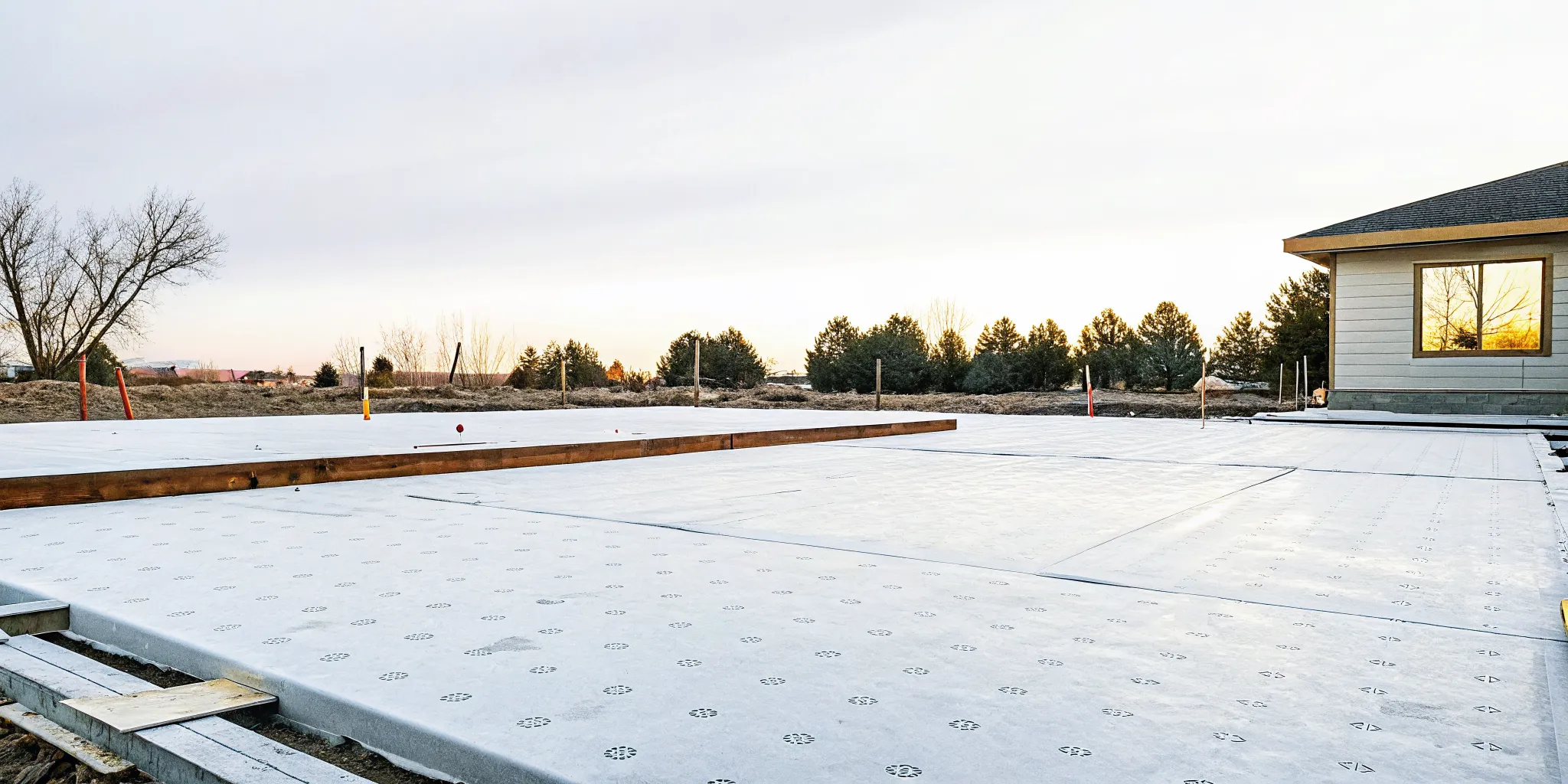
Insulated blankets help retain heat generated by hydration and reduce rapid temperature changes. They must be secured and used according to the contractor’s plan. Blankets should not be removed simply because the surface seems firm or the afternoon warms up.
Protection may also need to be removed gradually. A sudden transition from warm conditions under a blanket to very cold air can create a steep temperature difference. The installer should decide timing based on the concrete and weather.
What to do when the forecast changes
Contact the contractor before the temperature drops. Share the predicted low, expected duration, wind, and whether any blanket has moved. Do not place an unapproved heater near coverings or enclose combustion equipment around the concrete. Improvised heat can introduce fire hazards, uneven temperatures, and harmful exhaust.
After an unexpected freeze, do not assume the slab is ruined and do not assume it is fine. A contractor can review protection, exposure, surface condition, and project records. They can then recommend monitoring, testing, or another appropriate response.
Which curing warning signs require a contractor?
Some visual variation is normal as concrete cures. Color can appear mottled, moisture can collect beneath plastic, and fine marks may become more noticeable as lighting changes. Still, early communication is the safest response when something looks unusual.
Call promptly if you see these conditions
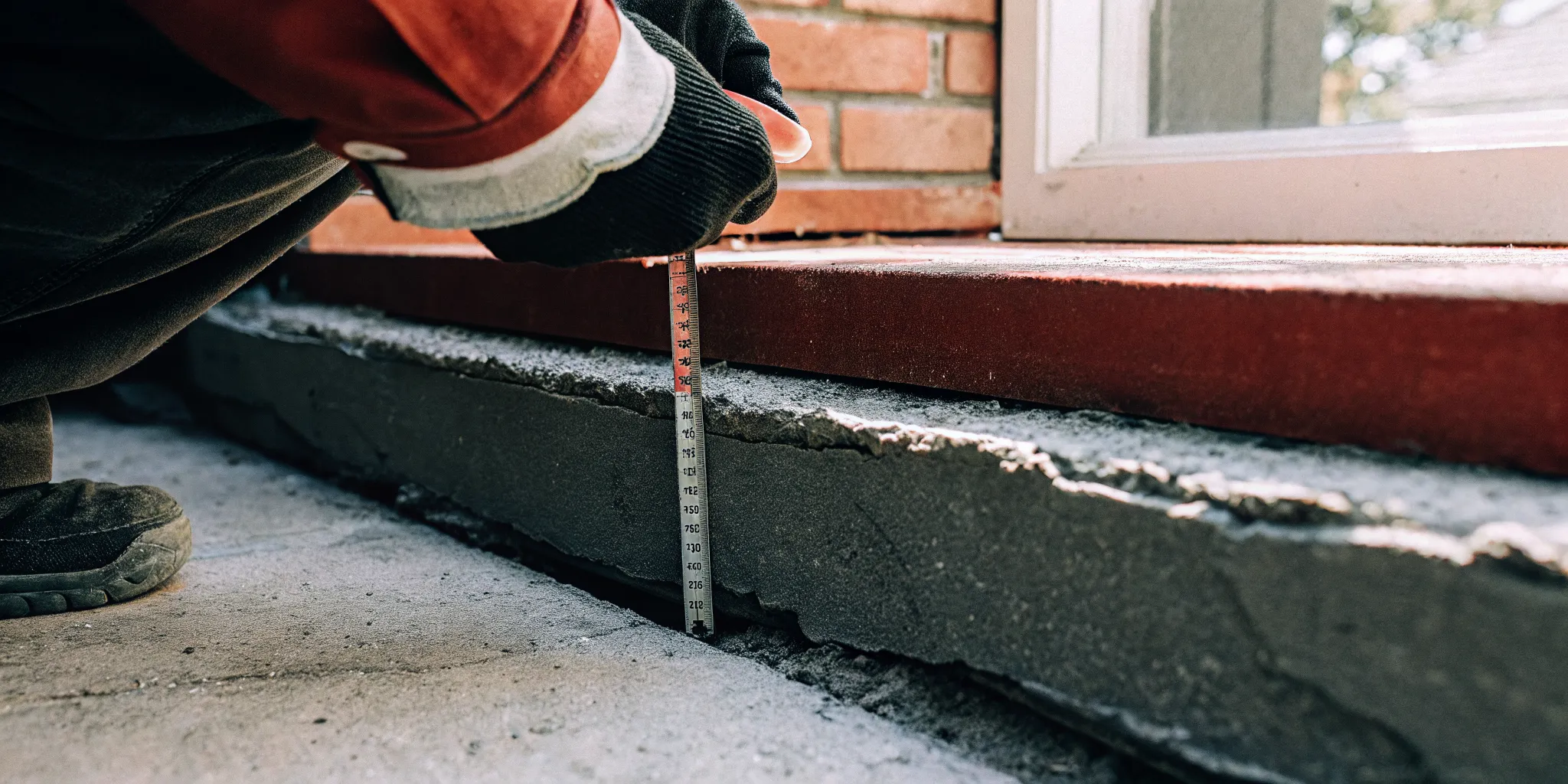
- A crack that is visibly widening, deep, displaced, or spreading rapidly.
- Widespread flaking, scaling, peeling, or a soft and powdery surface.
- Standing water, concentrated runoff, or erosion near a new slab edge.
- Blankets or plastic that have blown away, torn, or shifted substantially.
- Footprints, tire marks, animal tracks, or an object dropped on the surface.
- An unexpected freeze, hailstorm, heavy rain, or strong wind event.
- Edges that appear broken, undermined, or unsupported.
Take several photos from safe viewpoints and note when you first saw the issue. Include a wide photo for context and a closer photo if it can be taken without entering the protected area. Avoid trying to patch, grind, wash, or conceal the condition before the contractor sees it.
Why early reporting matters
Early reporting gives the contractor a chance to protect the concrete while curing continues. It also creates a clear record of weather and site conditions. Waiting until the slab is placed into full service can make it harder to understand what happened or choose an appropriate response.
How to protect concrete after the curing period
Concrete care does not end when normal use begins. Good drainage, thoughtful winter maintenance, and timely inspections help reduce avoidable stress over the years.
Manage water before freeze-thaw cycles
Keep gutters, downspouts, soil, and landscaping from directing water onto or beneath the slab. Remove snow without gouging the surface, and avoid leaving piles where repeated melting sends water across the same area. Water that enters cracks or saturated areas can expand when it freezes.
Use winter maintenance products only after confirming they are appropriate for the concrete and its age. Faros Construction Services’ guide to preventing concrete damage from de-icing salts explains practical ways to protect concrete during winter conditions.
Inspect before small changes grow
Walk the area seasonally and look for drainage changes, settlement, widening cracks, joint deterioration, and surface scaling. Clean debris from joints without damaging them. If a concern develops, ask a qualified contractor to assess whether maintenance or repair is appropriate.
Planning a driveway, patio, walkway, or outdoor living surface begins with site preparation and a curing strategy that matches local conditions. Explore the full range of Faros Construction Services construction services for Denver Metro Area properties.
Frequently asked questions about concrete curing Colorado weather
Can I walk on new concrete after 24 hours?
Do not rely on a universal 24-hour rule. Weather, mixture, protection, finish, and intended use all affect early strength. Wait for the installer to approve foot traffic, and keep pets and deliveries away until then.
Should I water new concrete in Colorado’s dry air?
Only if your contractor’s curing plan specifically directs you to do so. Managed moist curing can be useful, but occasional spraying may conflict with the selected curing method or create uneven wetting and drying.
When can I drive on a new concrete driveway?
Ask the installer for a project-specific date. A driveway may look hard well before it is ready for a vehicle, especially a heavy truck or concentrated load. Weather and the concrete mixture affect the timeline.
What if curing blankets blow off overnight?
Contact the contractor promptly and describe how much protection moved and what weather occurred. Do not walk onto the slab or improvise a heating setup. Follow the installer’s instructions for restoring protection safely.
Does concrete stop curing when weather turns cold?
Cold temperatures slow hydration and strength development. Freezing can create a more serious risk for young concrete. Proper cold-weather planning protects temperature and moisture while concrete develops.
Plan your Denver Metro Area concrete project with confidence
A strong result starts before concrete arrives and continues through the curing period. Faros Construction Services brings owner-led attention, quality craftsmanship, and practical local experience to concrete projects across the Denver Metro Area.
For guidance on a new installation or a concern about recently placed concrete, call (720) 594-5604 or contact Faros Construction Services about your concrete project.