

Outdoor kitchen weather protection in the Denver Metro Area starts before the first snow. A durable kitchen needs a plan for freeze-thaw movement, wet weather, strong sun, wind, and the everyday moisture that collects around sinks, counters, appliances, and patio surfaces. Thoughtful design and simple seasonal maintenance can help protect the space and keep it ready for more comfortable outdoor cooking.
Talk with Faros about a weather-ready outdoor kitchen plan.
Why does Denver weather need a dedicated outdoor kitchen plan?
Denver weather can shift quickly between sun, wind, snow, and freezing temperatures, so outdoor kitchen protection cannot depend on one cover alone. The complete plan should manage water, direct exposure, drainage, material movement, appliance care, and safe access through every season.
Freeze-thaw conditions deserve special attention. Water can enter small cracks, joints, porous masonry, and unprotected plumbing. When that water freezes and expands, it can place stress on the surrounding material. A warm afternoon can then thaw the surface and allow moisture to move farther into the assembly before the next cold night.
Summer creates a different set of demands. Ultraviolet exposure can fade finishes, heat can dry some materials, and intense storms can send water toward the kitchen foundation or cabinet openings. Wind can also move loose covers, furniture, and debris against finished surfaces. Weather protection works best when the structure, site drainage, materials, and maintenance routine support one another.
How can you build protection into the design?
The most effective outdoor kitchen weather protection is designed into the layout rather than added after the installation. Start with the kitchen’s position, roof or shade strategy, drainage path, utility plan, and relationship to the home and surrounding hardscape.
Choose the right location
Review how the kitchen will receive sun, prevailing wind, runoff, and snow shed from nearby roofs or trees. A location that looks attractive in a summer sketch may collect meltwater or receive heavy wind during another season. Keep service access open so doors, appliance panels, shutoff valves, and cleanout points remain reachable after a storm.
Plan overhead protection carefully
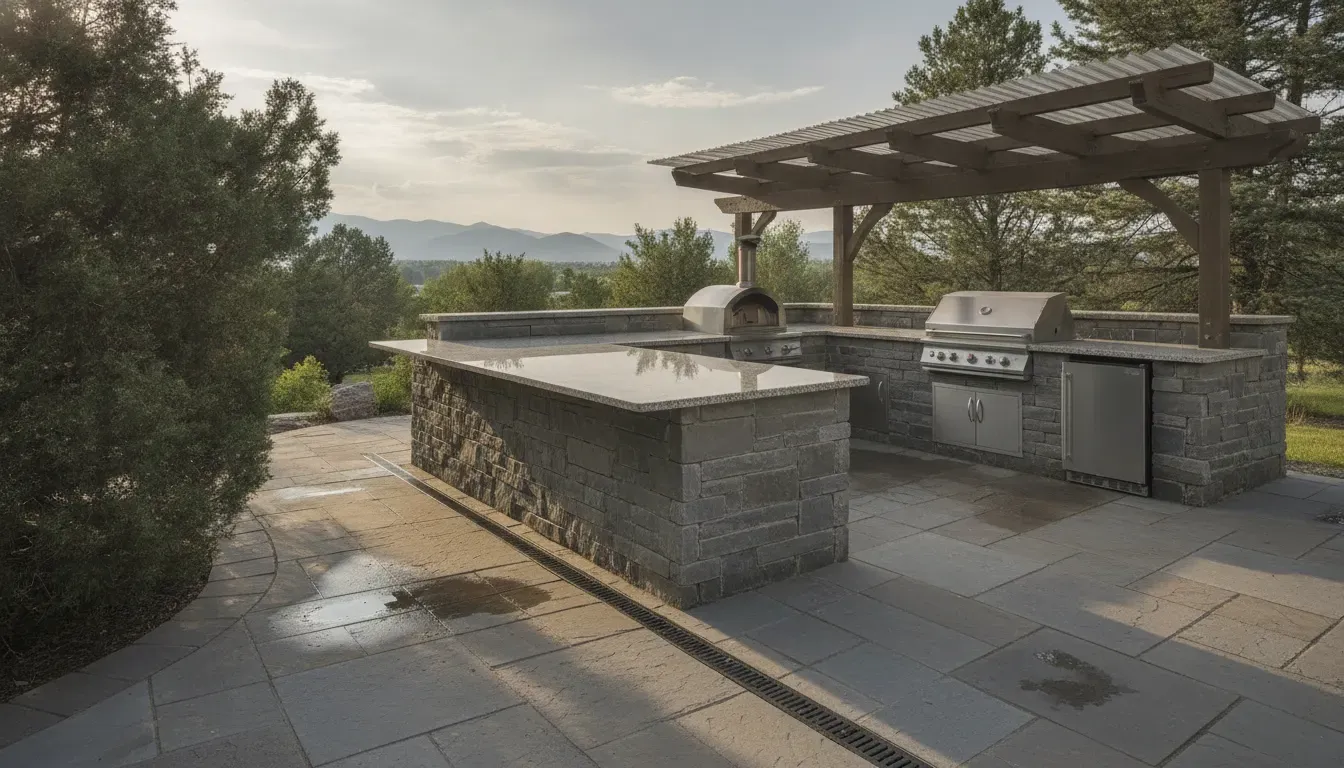
A pergola, covered patio, roof extension, or other shade structure can limit direct sun and precipitation, but it must be coordinated with ventilation and appliance clearances. The covering should guide water away from work areas instead of concentrating runoff beside the cabinets. A professional plan also considers snow accumulation, attachment points, drainage, and the safe placement of heat-producing equipment.
Give water a clear path away
Use positive drainage around the kitchen so water does not sit against the base, doors, utility penetrations, or adjacent foundation. The patio, hardscape, and planting areas should work together to move water toward an appropriate drainage point. Faros can connect outdoor kitchen planning with Denver hardscaping and drainage work when the site needs a broader solution.
Which materials help outdoor kitchens handle changing seasons?
Material selection should balance moisture resistance, movement, heat exposure, cleanability, and compatibility with the rest of the outdoor living space. No material eliminates maintenance, but the right assembly makes seasonal care more predictable.
- Countertops: Select a surface appropriate for outdoor exposure and follow the manufacturer’s guidance for sealing, cleaning, and winter storage. Pay close attention to seams and edges where water can collect.
- Cabinet bodies and doors: Use outdoor-rated construction with protected hardware, sound hinges, and details that limit water entry. Doors should close fully and allow air circulation where the design requires it.
- Base and surrounding hardscape: A stable, well-drained base helps limit movement and standing water. The kitchen should not rely on a thin finish layer to correct an unstable or poorly drained foundation.
- Metal components: Stainless or coated hardware still needs cleaning and inspection. Salt, grease, trapped moisture, and abrasive debris can shorten the life of finishes.
- Wood accents: Wood can add warmth to an outdoor kitchen, but it needs a finish and maintenance schedule suited to sun, moisture, and temperature changes.
Materials should also make sense together. For example, a weather-resistant cabinet door cannot solve a drainage problem below the island, and a durable countertop cannot protect a plumbing line that remains full of water during a hard freeze. Look at the whole system instead of choosing each finish in isolation.
How do you protect plumbing, appliances, and utility connections?
Plumbing and utility protection is one of the most important parts of an outdoor kitchen winterization plan. Before freezing weather, identify the water shutoff, drain points, exposed lines, appliance manuals, and any gas or electrical components that require professional service.
Colorado State University Extension explains that water left in irrigation pipes and components can freeze, expand, and damage the system. Its winterization guidance also stresses that simply opening a drain may not remove all trapped water. Outdoor kitchen plumbing is different from an irrigation system, so follow the specific instructions for the installed equipment and use a qualified professional when the shutdown procedure is not clear.
- Find and label shutoffs: Know which valve controls the outdoor kitchen and whether it is separate from indoor plumbing. Labeling the valve makes seasonal preparation faster and reduces the chance of shutting down the wrong line.
- Follow appliance instructions: Refrigerators, ice makers, sinks, dishwashers, burners, and specialty equipment may have different shutdown, drain, or storage requirements. Keep the manuals accessible and do not guess at a procedure that could damage the appliance.
- Remove standing water safely: Drain exposed lines according to the system design. If compressed air or a specialized service is needed, have the work performed with the correct equipment and pressure for that installation.
- Protect exposed fixtures: Use appropriate insulation or removable covers for faucets and vulnerable connections. Covers should fit securely and should not trap moisture against a fixture.
- Inspect gas and electrical components: Look for damaged connections, loose covers, corrosion, or water entry. Utility changes and repairs should be handled by the appropriately qualified trade.
Schedule a consultation for a site-specific outdoor kitchen protection plan.
What should you do before snow and hard freezes?
A short fall inspection can catch small openings, loose covers, blocked drains, and appliance issues before winter weather makes them harder to address. Use the following checklist as a starting point, then adapt it to the equipment and construction at your home.
- Clean grease, food residue, leaves, and soil from cooking surfaces, trays, vents, drains, and cabinet bases.
- Dry counters, sinks, shelves, and removable accessories before covering or storing them.
- Check caulked joints, seams, backsplashes, penetrations, and door gaskets for gaps or deterioration.
- Clear drainage channels and confirm that water flows away from the island after a hose or light rain.
- Secure or store furniture, cushions, utensils, and small appliances so wind and snow cannot move them into finished surfaces.
- Close and latch cabinet doors, but avoid sealing an area that needs ventilation according to the appliance or cabinet instructions.
- Confirm that covers are clean, breathable where required, and secured against wind without rubbing sharply against the finish.
- Arrange professional service for plumbing, gas, electrical, structural, or masonry concerns that are beyond routine cleaning.
Do not wait for the first major storm to discover that a cover no longer fits or a drain is blocked. A calm inspection gives you time to correct the issue while access is easy.
How can you protect the kitchen during sun, storms, and wind?
Winter is not the only season that affects an outdoor kitchen. Denver’s strong sun, sudden summer storms, and wind can wear on finishes and move water into areas that appear protected from above.
Use shade where it supports the design, but do not block required ventilation around grills, burners, ovens, or other heat-producing appliances. Clean leaves and debris from roof edges, gutters, drains, and nearby planting so a storm does not turn the kitchen into the low point of the yard. After a heavy storm, open cabinets when conditions are dry and check for dampness, pooling, or shifted covers.
The National Fire Protection Association’s grilling guidance recommends keeping grills away from combustible features and overhangs, checking propane connections for leaks, cleaning grease buildup, and never leaving a grill unattended while it is in use. These safety practices belong in a weather plan because a protective roof or cover must never create an unsafe cooking enclosure.
Wind protection also needs a practical balance. Screens, walls, and plantings can reduce exposure, but they should not prevent ventilation or make the grill difficult to monitor. A professional layout can coordinate shade, privacy, airflow, and service access instead of solving one exposure problem by creating another.
How should you use covers without trapping moisture?
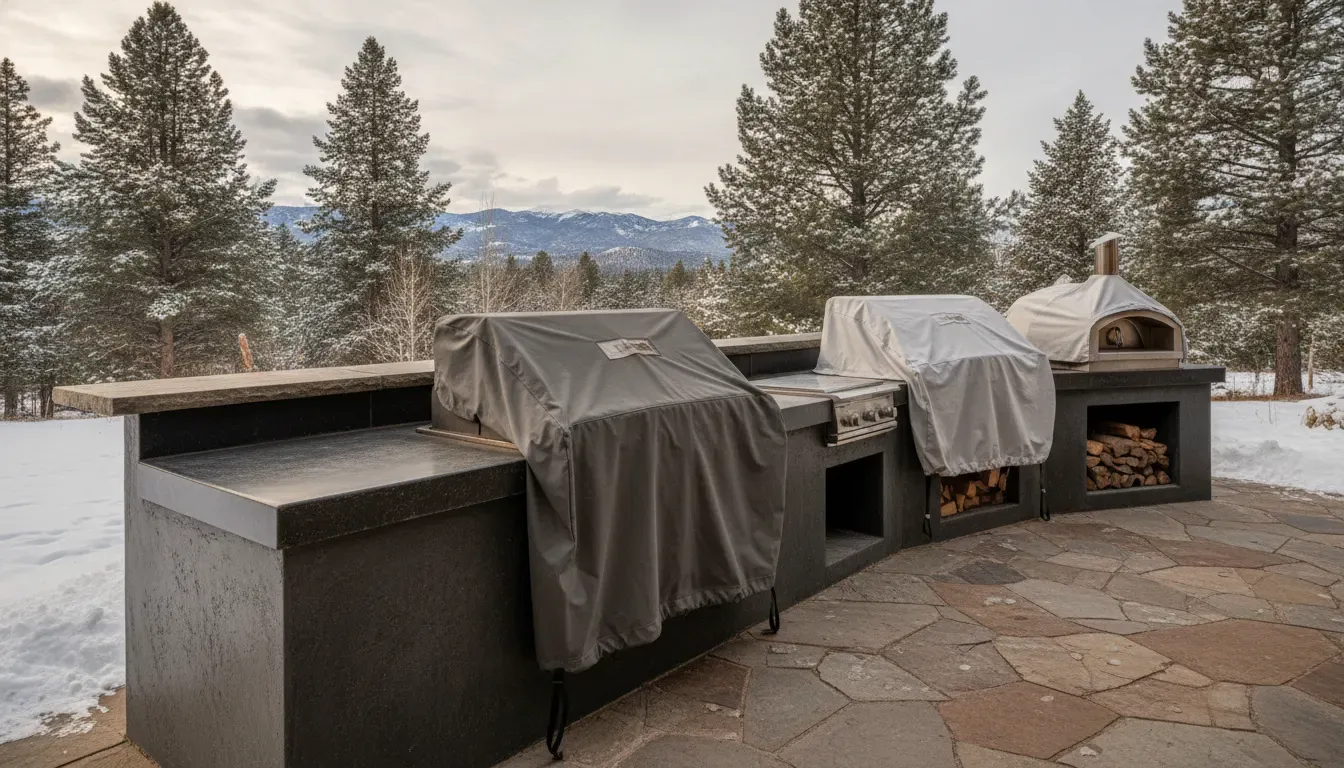
Covers protect appliances and furniture from direct precipitation, dust, and sun, but a cover that traps damp air can encourage mildew or corrosion. The correct cover is sized for the equipment, secured for local wind, and used according to the manufacturer’s instructions.
Choose covers that allow appropriate ventilation and include openings or breathable panels when the equipment calls for them. Do not cover a warm appliance immediately after use. Let surfaces cool, remove food residue, and allow moisture to dry before covering. During a long wet period, inspect beneath the cover instead of assuming the area is dry.
Keep a simple seasonal record of what you inspected and what you noticed. Note a door that no longer closes, a surface that needs resealing, a drain that moves slowly, or a cover that has started to rub. Small observations make it easier to plan maintenance before a minor issue affects the rest of the kitchen.
When is a contractor worth involving?
A contractor is worth involving when weather protection depends on structure, grading, utilities, masonry, or a new covered outdoor living area. Professional planning is especially useful when the kitchen connects to an existing patio, sits near the home, includes gas or water, or shows movement, cracking, drainage trouble, or repeated moisture entry.
Start with a site assessment rather than a finish-only conversation. Ask how the team will review slope, runoff, access, utility locations, safe clearances, foundation conditions, and the way the kitchen will be used. The right process should make responsibilities clear from design and permitting through construction, final walkthrough, and maintenance guidance.
Faros Construction Services combines outdoor living, hardscape, concrete, and structure planning for Denver Metro Area projects. You can review the outdoor living spaces service for the broader project path or explore decks, pergolas, and porches when overhead shade or a connected structure is part of the plan.
Get a site-specific outdoor kitchen consultation from Faros Construction Services.
Frequently Asked Questions
These common questions cover the decisions Denver Metro Area homeowners should review when planning outdoor kitchen weather protection.
How do I protect an outdoor kitchen from snow?
Use a planned combination of overhead protection, secure covers, drainage, clean surfaces, and seasonal utility preparation. Remove snow buildup when it is safe and appropriate for the structure, and keep snowmelt from collecting at the island base, cabinet openings, or utility penetrations.
Should an outdoor kitchen be covered or uncovered?
The right answer depends on the appliances, ventilation, site exposure, and how the space will be used. A roof or pergola can reduce direct exposure, while fitted covers protect equipment between uses. Neither option replaces drainage, safe clearances, or maintenance.
How do I winterize an outdoor kitchen sink?
Shut off the appropriate water supply, drain the lines according to the system design, protect exposed fixtures, and follow the sink and plumbing manufacturer’s guidance. If the line cannot be fully drained or the system is connected to indoor plumbing, have a qualified professional review it.
Can I leave an outdoor refrigerator outside during winter?
Only follow the appliance manufacturer’s instructions for the installed model and the expected weather. Some appliances are designed for outdoor use but still require a specific operating range, cleaning routine, cover, or seasonal shutdown. Do not assume an indoor appliance is suitable for an exposed kitchen.
What is the first step in planning a weather-ready outdoor kitchen?
Begin with a site assessment that reviews exposure, drainage, utility connections, structure, materials, access, and cooking habits. That information helps determine whether the project needs a shade structure, hardscape improvements, utility coordination, or a focused maintenance plan.
Protect your outdoor kitchen through every Denver season. Contact Faros to plan the next step.