
The best outdoor kitchens do not stop working when the sun goes down. Good lighting helps you prepare food safely, see serving areas clearly, move across the patio comfortably, and keep conversation going without harsh glare. In the Denver Metro Area, the system also needs to stand up to changing weather, seasonal exposure, and the way your household actually uses the space.
Talk with Faros about your outdoor kitchen lighting plan in the Denver Metro Area.
The most useful outdoor kitchen lighting ideas combine task lighting for counters and cooking surfaces, softer ambient light for dining and conversation, and subtle accent light for steps, structures, and landscape edges. Fixture selection should follow a site review, not come first in the process.
That combination starts with observation rather than fixture shopping. Before choosing a light, look at where people walk, where food is prepared. Consider how the kitchen connects to the home, and which evenings you want the space to support. A careful review of the site gives the rest of the lighting plan a practical foundation.
Start With the Site, Your Routine, and the Right Location
The strongest outdoor kitchen lighting ideas begin with the space itself, not a fixture catalog. A site assessment helps connect lighting to your cooking routine, the home’s layout, nearby outdoor living areas, access, drainage, utilities, and Denver Metro Area weather.
Start by observing how you expect to use the kitchen after sunset. Will one person prepare meals while others sit nearby, or will the kitchen also serve as a gathering point? Note the work surfaces that need clear visibility, the paths guests will use, and the areas where softer illumination would support conversation without creating glare.
Lighting should help people move comfortably between the kitchen, patio, deck, yard, and house. It does not need to make every surface equally bright. A location near an existing back door may simplify daily access. A more distant island may need thoughtful pathway and step lighting.
Consider sightlines from interior rooms, too. A bright fixture aimed toward a window can be distracting. Drainage and surface conditions also deserve attention before lighting routes or structures are finalized. Faros coordinates outdoor kitchens with patios, decks, landscaping, drainage, utilities, and the home’s existing connections as part of a broader outdoor living spaces plan.
Denver Metro Area projects also need to account for Colorado’s seasonal conditions. Freeze-thaw cycles, snow loads, high-altitude UV exposure, and drainage can affect surrounding materials and structures over time. Local permitting, inspection requirements, or HOA rules may influence placement. Addressing these details during consultation is easier than correcting them after surfaces are installed.
Build a Layered Lighting Plan for Cooking and Conversation
The most effective outdoor kitchen lighting ideas combine task, ambient, and accent layers. Each layer serves a different purpose. The cooking surface stays visible, the dining area feels comfortable, and the space connects to nearby paths, patios, and planting.
Start by separating the outdoor kitchen into zones. Cooking, prep, serving, dining, and circulation each need a different level and direction of light. This also makes it easier to use only the fixtures you need at a given moment, rather than flooding the Denver Metro Area backyard with glare.
Outdoor kitchen lighting layers and useful placements
- Layer: Task
Purpose: Provides focused visibility where food is prepared, cooked, and served.
Useful placements: Under-cabinet or counter lights, focused fixtures above a grill, and prep-surface lighting.
Planning note: Aim light at the work surface so the cook does not cast a shadow across it. - Layer: Ambient
Purpose: Creates a comfortable overall glow for conversation and dining.
Useful placements: Pendants over a dining counter, pergola lights, ceiling fixtures, or wall sconces.
Planning note: Use softer, even light instead of one bright overhead fixture. - Layer: Accent
Purpose: Defines edges and highlights the outdoor room after dark.
Useful placements: Island-base accents, sconces, plant uplights, and architectural features.
Planning note: Keep accent fixtures from shining directly into seated guests’ eyes. - Layer: Circulation
Purpose: Helps people move between the kitchen, home, seating, and yard.
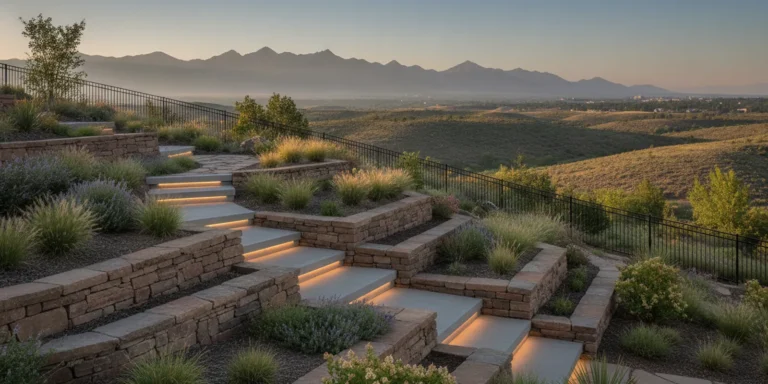
Useful placements: Pathway and step lighting near elevation changes and walking routes.
Planning note: Light transitions between surfaces consistently.
Task lighting keeps cooking areas practical
Under-cabinet strips or low-profile counter fixtures can illuminate prep space without adding visual clutter. Place task lighting beneath upper cabinets, along the back of a counter, or where a cook naturally stands. A fixture above a grill should be selected for its actual environment and aimed downward rather than toward the cook’s eyes.
Task lighting generally needs to be brighter than dining or circulation light. If a pergola covers the kitchen, carefully placed pendants or recessed fixtures can supplement counter lighting. They should not replace focused illumination at the work surface.
Ambient and accent layers shape the evening atmosphere
Pendants over bar seating or a dining counter can create a visual center for conversation. Pergola lights and wall sconces can provide a broader glow. An island-base strip can make the kitchen appear lighter without adding brightness at eye level. Path and step lighting extends that sense of continuity beyond the kitchen.
Glare control is essential. Shield bulbs from direct view and avoid bright fixtures opposite seating. Use separate controls when possible. Warm light often feels inviting in dining areas, while the cooking zone may benefit from a more neutral option that supports visibility. The final selection should account for surfaces, structure, weather exposure, and use.
How Outdoor Kitchen Lighting Ideas Work With Utilities and Structures
Strong outdoor kitchen lighting ideas account for more than fixture style. The layout should coordinate cooking and prep zones with wiring routes, controls, appliances, pergolas, drainage, and surrounding hardscape before construction begins.
Connect with Faros to plan lighting around your outdoor kitchen, structures, and utilities.
Start by marking each activity area. Counter and grill surfaces need focused light. Dining and circulation areas usually benefit from softer, controlled illumination. Place fixtures so they light the work surface without shining into the cook’s eyes or creating reflections on polished counters.
Coordinate wiring with appliances and structures
Lighting routes should be reviewed alongside appliance locations, plumbing, gas service, receptacles, and the kitchen’s support structure. The goal is not simply to find the shortest route. A sound plan accounts for access, weather exposure, finished surfaces, drainage, and future maintenance.
Pergolas deserve attention early. Their posts, beams, roof details, and shade pattern affect fixture placement, wiring access, glare, and the way light reaches the counter. Integrated lighting can be part of a pergola or deck design. Review options for decks, pergolas, and porches as part of the broader outdoor room.
Review the whole site with the right trades
In the Denver Metro Area, lighting plans need to respect snow, freeze-thaw conditions, drainage, and seasonal exposure. A route that looks practical on a drawing may interfere with a patio edge, planting bed, access route, or water-management detail. Coordinating with hardscape and landscape services helps keep lighting, surfaces, planting, and circulation working together.
Electrical connections, controls, appliance power, and required protection should be reviewed by a qualified electrical professional. Faros coordinates specialized plumbing and electrical trades through trusted subcontractors with owner oversight. This helps identify permit, inspection, access, and maintenance questions before finishes are installed.
Choose Fixtures for Glare Control, Weather, and Maintenance
The best fixture choices make cooking surfaces easy to see without shining harsh light into nearby seating. They also account for moisture, snow, freeze-thaw cycles, drainage, cleaning, and seasonal protection across the Denver Metro Area.
Start by deciding where light should land, not simply where a fixture can be mounted. Under-cabinet or counter lighting can illuminate prep areas while keeping the source out of direct sight. Shielded sconces or carefully aimed overhead fixtures can support circulation without sending glare across the dining table.
Balance warm light with useful task light
Warm light usually creates a relaxed setting around dining and conversation areas. Cooking, chopping, and serving zones need clearer visibility, so the task layer may need to be more focused or brighter. Separate controls give you flexibility for a quiet meal or food preparation.
Color and placement should work with the patio, cabinetry, pergola, and home exterior. Faros treats lighting as part of a coordinated outdoor environment. Review outdoor lighting planning alongside the kitchen layout.
Plan for snow, moisture, and freeze-thaw conditions
Outdoor fixtures must be listed for their installation location. Weather exposure and moisture protection should be addressed during design. A fixture under a covered pergola may experience different conditions from one exposed to wind-driven snow or runoff.
Snow loads, high-altitude UV exposure, freeze-thaw cycles, and drainage influence long-term outdoor construction. Keep fixtures out of areas where melting snow or irrigation water collects. Coordinate posts, walls, patio slopes, conduit routes, and drainage before surfaces are completed.
Make cleaning and seasonal care practical
Choose locations that can be reached safely for dust removal, lens cleaning, inspection, and replacement. Avoid fixtures where grease, leaves, or drifting snow will accumulate without a maintenance approach. A seasonal review can look for loose hardware, blocked drainage, damaged seals, cracked lenses, or branches that obscure the light.
Before winter, follow equipment guidance and protect the broader outdoor kitchen as needed. Faros’ guide to winterize an outdoor living space covers seasonal planning for patios, kitchens, decks, and hardscapes.
What Safety and Professional Review Should Come First?
Safety planning should begin before the lighting layout is finalized. Confirm utility routes, required protection, appliance instructions, permits, HOA questions, and fire-safety details while the design can still be adjusted.
Electrical connections, controls, and any GFCI protection should be reviewed by a qualified professional. Do not treat outdoor wiring, gas, or plumbing as a do-it-yourself finish task. Utility planning guidance from Lowe’s identifies electrical, plumbing, gas, permits, and labor as connected planning considerations.
Build a useful site plan
A clear site plan gives reviewers and installers the same picture. Include property lines, existing structures, the proposed kitchen, dimensions, and utility routes. Mark underground piping and electrical conduit, along with patio covers, walls, or other features that affect access. Outdoor-kitchen plan guidance illustrates the type of information a permit review may request.
Review appliance placement and ventilation
Install every grill, burner, refrigerator, sink, and cabinet according to its manufacturer specifications. Those instructions may define clearances, ventilation, enclosure construction, and fuel configuration. Do not assume that an ordinary storage cabinet is suitable for propane equipment.
Propane requires particular attention because gas can accumulate inside an enclosed cabinet if it is not designed and ventilated correctly. The U.S. Consumer Product Safety Commission recall notice describes hazards associated with propane accumulation. Review ventilation and appliance clearances with a qualified professional.
Plan for overhead and open-flame safety
Consider what is above the cooking area before approving a pergola, roof, awning, or other cover. Listed barbecues should follow manufacturer specifications. The city guidance also addresses combustible overhead construction. The U.S. Fire Administration advises residents to keep fire safety in mind while grilling.
Turn Your Lighting Ideas Into a Build-Ready Plan
A build-ready lighting plan connects your outdoor kitchen goals with the actual site, structure, utilities, and construction sequence. In the Denver Metro Area, review seasonal weather, evening routines, and long-term maintenance before fixtures are installed.
Start with a practical checklist. Walk through the space at dusk and note where you need visibility for cooking, preparation, serving, seating, steps, and paths. Then identify the details a contractor and qualified electrical professional will review:
- Lighting priorities: Separate task, ambient, accent, and pathway layers.
- Fixture locations: Mark cabinets, counters, pergolas, walls, stairs, paths, and dining areas.
- Controls: Decide whether layers should operate independently.
- Weather exposure: Review moisture, snow, freeze-thaw cycles, UV exposure, and drainage.
- Access and maintenance: Leave room for cleaning, service, inspection, and winter preparation.
- Approvals and coordination: Confirm permits, inspections, HOA review, utility coordination, and structural details.
Next, schedule a consultation and site assessment rather than selecting fixtures in isolation. Faros reviews layout, access, utilities, drainage, connections to the home, and relationships among patios, decks, landscaping, and structures. See the company’s outdoor lighting planning guidance for more context.
From there, the process can move through design, permitting where required, construction, a final walkthrough, and maintenance guidance. Ricardo Alfaro provides owner-led oversight from planning through delivery. This approach treats lighting as part of a durable outdoor living environment.
Frequently Asked Questions
What type of lighting is best for an outdoor kitchen?
A layered plan usually works best. Use focused task lighting at cooking and prep surfaces, softer ambient light for dining and conversation, and controlled accent or pathway lighting around structures and circulation areas.
Where should task lighting go in an outdoor kitchen?
Place it where food is prepared, cooked, and served. Under-cabinet lights, counter lighting, or carefully aimed fixtures can brighten the work surface while limiting shadows and glare. Review the placement with the kitchen layout and the person who will use the grill.
Do outdoor kitchen lights need weather protection?
Yes. Fixtures and connections should be appropriate for their specific outdoor location and exposure. Covered areas, open patios, snow-prone edges, and places near runoff can have different conditions. A qualified professional should review the installation details.
Can lighting be added to an existing outdoor kitchen?
Often, the answer depends on access, existing wiring, fixture locations, and the condition of the structure and finishes. Under-cabinet fixtures, sconces, and carefully planned pathway lighting may be possible. Review the routing and controls before selecting products.
When should lighting be planned for an outdoor kitchen?
Plan it before the final layout, hardscape, pergola, appliances, and utility routes are fixed. Early coordination gives the project team time to review mounting points, wiring, controls, drainage, permits, and maintenance access.
Ready to Plan Your Outdoor Kitchen Lighting?
Talk with Faros Construction Services about outdoor kitchen lighting ideas for your Denver Metro Area home. A thoughtful site review can align the layout, utilities, materials, fixtures, and everyday use before construction begins. Contact Faros to start a practical conversation about your outdoor living project.