
Outdoor lighting can make a walkway easier to navigate, give a deck or patio a more welcoming feel, and connect an outdoor living area to the rest of a property after sunset. In the Denver Metro Area, a successful plan also accounts for seasonal weather, drainage, existing construction, and the way your family uses the space.
Contact Faros Construction Services to discuss your outdoor lighting project.
Outdoor lighting installers should do more than place fixtures along a path. They should evaluate the property, translate your goals into a practical design, select compatible equipment, route wiring thoughtfully, test the finished system, and explain the handoff. Understanding that process makes it easier to compare contractors and recognize a plan that fits your home.
Faros Construction Services serves homeowners and property owners throughout the Denver Metro Area with an owner-led approach to construction and outdoor living work. This guide explains what to expect when you are planning landscape lighting, reviewing fixture options, and deciding whether a broader outdoor project should be coordinated at the same time.
What Do Outdoor Lighting Installers Actually Do?
Outdoor lighting installers assess the site, design a lighting layout, choose fixtures and controls, route low-voltage cable, and test each part of the system. Faros Construction Services approaches the work as a complete property improvement, not as a random collection of lights.
Start with a site assessment
The first visit should connect the lighting plan to the way you move through the property. An installer may review the home’s architecture, entry points, steps, walkways, planting beds, trees, fences, retaining walls, decks, patios, and areas where people gather. The assessment should also note existing electrical conditions, soil, drainage, irrigation, access, and planned construction.
This conversation is where you can explain what matters most. You may want better visibility on a side path, a softer atmosphere near a seating area, emphasis on a mature tree, or a clearer approach to the front door. You may also want certain windows, neighboring properties, or private areas to remain free from direct light. A site-specific review helps separate those goals instead of treating every surface as equally important.
Build layers instead of a bright line
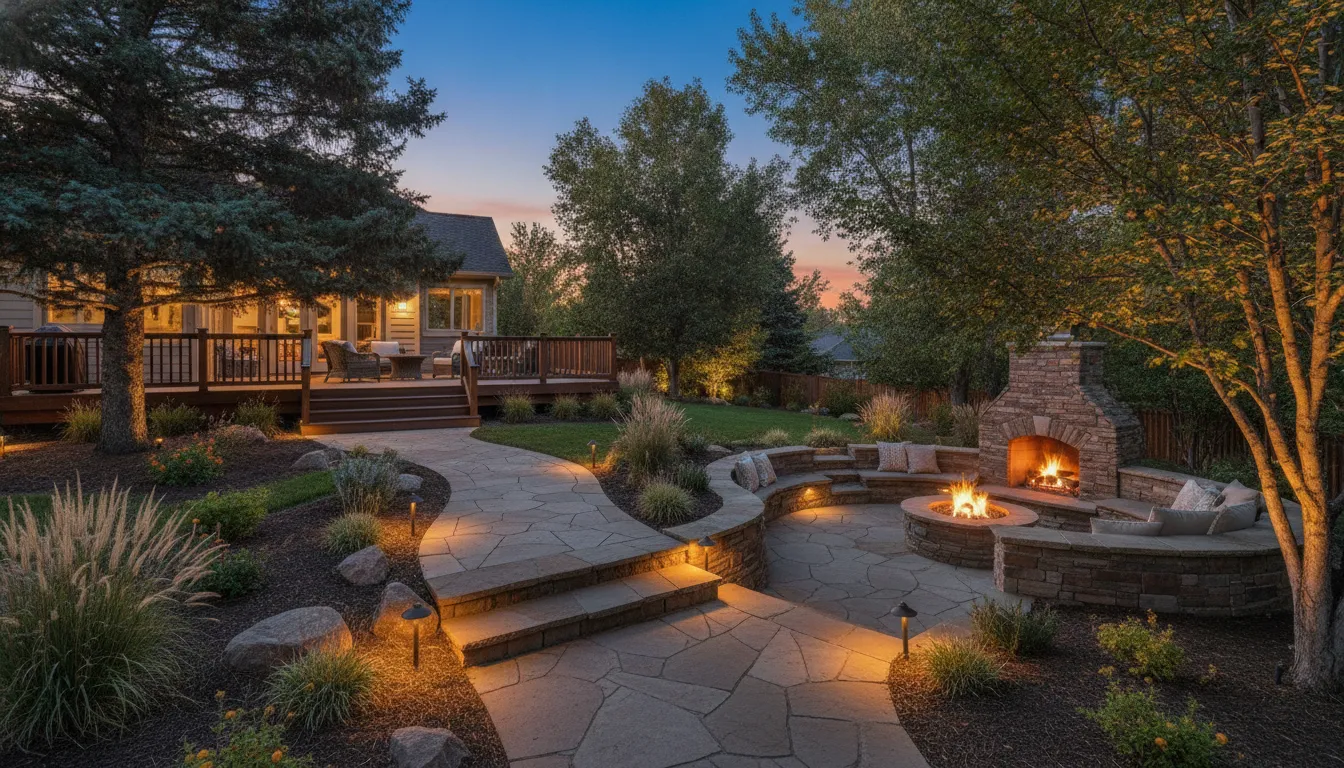
A strong design uses several layers. Path and step lighting support movement. Accent lighting draws attention to trees, walls, architectural details, or planting beds. Wash lighting can create a softer background on a fence or vertical surface. Lighting near a deck or patio can support conversation and dining without turning the space into a glare-filled work area.
Installers should also consider spacing, rhythm, and the areas that will remain intentionally darker. A line of identical fixtures can look flat and overly bright. Separate pools of light can guide visitors more naturally and give the nighttime view a sense of depth.
Route cable and complete the handoff
Low-voltage cable routing needs to work with the landscape and any future maintenance. The installer should identify routes that reduce the risk of damage, keep connections accessible, and avoid conflicts with irrigation, planting, hardscape, and other work. Fixtures should then be installed, aimed, and tested after dark.
The handoff should explain the controls, transformer location, seasonal observations, cleaning expectations, and what to do if a fixture or connection stops working. Ask for this information before the project begins so responsibilities are clear after installation.
How Should You Plan Landscape Lighting Design in the Denver Metro Area?
Plan landscape lighting by defining the activities and transitions that need support, then dividing the property into zones. Faros Construction Services recommends considering visibility, glare, drainage, seasonal exposure, planting growth, and future construction before selecting individual fixtures.
Define goals and zones first
Walk the property during both daylight and darkness. Note where people enter, walk, gather, dine, use stairs, carry items, or work around the home. Entries, steps, paths, patios, decks, retaining walls, planting beds, and entertaining areas may need different levels and directions of light.
Zoning makes the system easier to use. A path can be illuminated when guests arrive, while a seating area can use a separate setting later in the evening. Accent fixtures can highlight a focal point without requiring every area to be fully illuminated. Your installer should be able to explain the purpose of each zone in plain language.
Control glare through placement and aiming
Glare often occurs when people see the bright face of a fixture instead of the surface the fixture is meant to illuminate. Ask about shielded or recessed placement, concealed cable routes, and aiming angles that keep light out of windows and neighboring properties. A nighttime test is important because a layout that looks balanced during the day can feel excessive once the system is operating.
Good lighting is not the same as maximum brightness. The goal is useful, comfortable illumination with enough contrast to preserve the character of the property. Consistent fixture finishes and light colors can support unity, while selective accents add visual interest. North Dakota State University Extension offers additional landscape lighting design guidance on unity, rhythm, spacing, and focal points.
Plan for weather, drainage, and growth
Denver Metro Area properties experience snow, frozen ground, thawing soil, irrigation, and changing plant growth. Discuss how fixtures, connections, and cable routes will be protected from seasonal exposure. Keep drainage paths clear and avoid placing equipment where runoff or shifting soil could undermine it.
Plants change as well. Trees grow, shrubs spread, and ornamental grasses can eventually block a beam or alter the intended pattern. A durable plan leaves room for pruning, access, and future aiming adjustments. If you are planning a patio, deck, pergola, walkway, or wall, coordinate the lighting before construction begins. Sleeves, conduits, steps, and built-in features are easier to address when they are part of one design conversation.
Which Outdoor Lighting Fixtures Fit Your Property?
The right outdoor lighting fixtures depend on the surface, activity, beam direction, mounting location, and daytime appearance of the property. Faros Construction Services can help homeowners compare fixture roles so the final design supports the whole landscape instead of relying on one fixture style everywhere.
Path and step fixtures
Path lights can define walking routes and make changes in elevation easier to see. Their placement should guide movement without producing a repetitive runway effect. Steps may require careful attention to edges and transitions, especially where a person approaches from more than one direction. The installer should consider the walking line, fixture height, spacing, and whether nearby plants may eventually interfere with the light.
Accent, bullet, and wash fixtures
Narrow-beam bullet fixtures can emphasize a tree trunk, column, architectural feature, or other focal point. Wider beams may be better for a wall, fence, planting bed, or gathering area. Wash fixtures can add a softer layer across a vertical surface. The choice should follow the target, not the other way around.
Beam spread matters because it affects both coverage and glare. A narrow beam can create a focused effect, while a wider beam can distribute illumination over a broader surface. Poorly aimed fixtures may create bright spots, dark gaps, or unwanted light in a window. A nighttime adjustment session helps the installer judge the actual result.
Canopy, deck, and control considerations
A canopy fixture can direct light downward onto a path or garden. Fixtures integrated into a deck, porch, or pergola may support movement and entertaining while remaining less visible during the day. The system also needs a compatible low-voltage transformer and controls that suit the number of fixtures and the way you want to operate the zones.
Ask how fixture finishes will relate to railings, fences, siding, masonry, and other visible hardware. A consistent finish can help the system recede into the landscape. Selective variation may be appropriate when a focal feature needs emphasis, but every choice should have a clear design reason.
| Fixture type | Common purpose | Planning question |
|---|---|---|
| Path light | Guide movement along paths and transitions | Will placement improve visibility without creating a runway effect? |
| Step light | Make edges and changes in elevation easier to see | Are stairs approached from more than one direction? |
| Bullet light | Emphasize a tree, column, or architectural detail | What focal point deserves a narrow beam? |
| Wash light | Add a softer layer to a wall, fence, or planting bed | What surface needs broad, even illumination? |
| Canopy or integrated fixture | Support lighting under a deck, porch, pergola, or tree canopy | Can the fixture stay discreet while serving the activity below? |
What Happens During a Professional Outdoor Lighting Installation?
A professional installation moves from evaluation to design, preparation, wiring, fixture placement, aiming, testing, and handoff. For a Denver Metro Area property, Faros Construction Services also considers drainage, seasonal exposure, and coordination with patios, decks, hardscape, and planting.
- Review the property and goals. Walk the site, discuss how you use it, and identify paths, steps, gathering areas, focal points, glare concerns, and future work.
- Develop the lighting layout. Assign a purpose to each zone and identify fixture locations, beam directions, control areas, and intentionally darker spaces.
- Select compatible equipment. Match fixture types, finishes, beam spreads, transformer capacity, and controls to the design rather than choosing products in isolation.
- Prepare the work areas. Coordinate access, planting, irrigation, existing hardscape, and any construction that could affect cable routes or fixture locations.
- Route low-voltage cable. Place wiring along planned routes, protect it from likely disturbances, and keep important connections accessible for future service.
- Install and aim fixtures. Secure each fixture, direct light toward the intended surface, and keep glare away from eyes, windows, and neighboring properties.
- Test the system after dark. Check operation, coverage, alignment, zone controls, transitions, and the balance between illuminated and darker areas.
- Complete the handoff. Explain controls, transformer location, seasonal care, cleaning, adjustment expectations, and the process for reporting a problem.
When lighting is part of a larger patio, deck, hardscape, or landscape project, planning the work together can reduce conflicts between trades. It also creates a clearer maintenance path because cable, access, drainage, and built-in features are considered as one system.
Ask Faros Construction Services to review your Denver Metro Area lighting goals and site conditions.
How Can You Compare Outdoor Lighting Installers?
Compare outdoor lighting installers by reviewing their process, site-specific recommendations, communication, and understanding of the entire property. Faros Construction Services encourages homeowners to ask questions that reveal how design decisions will translate into a finished system.
Questions about design
- How will you identify the areas that need visibility, atmosphere, or accent lighting?
- How will the layout limit glare and avoid unwanted light in windows or neighboring properties?
- Which areas will remain intentionally darker, and why?
- How will mature trees, growing shrubs, and future planting affect the design?
Questions about equipment and installation
- Which fixture types fit the paths, steps, walls, trees, deck, or patio?
- How will beam direction, fixture finish, transformer capacity, and controls work together?
- How will cable routes coordinate with irrigation, drainage, planting, and hardscape?
- Will the system be tested and aimed after dark before the final handoff?
Questions about communication and care
- Who will oversee the project and answer questions during installation?
- What will the written scope explain about fixture locations, access, controls, and testing?
- What maintenance and seasonal observations should the owner expect?
- What is the process for requesting an adjustment when plants grow or the property changes?
A careful comparison should leave you with a clear design rationale, defined responsibilities, and confidence that the installer understands the whole site. Those details are stronger indicators of a well-managed project than a generic promise of professional service.
Why Integrate Lighting With a Complete Outdoor Living Plan?
Lighting works best when it is planned alongside the surfaces, structures, landscape, and activities it will support. Faros Construction Services can coordinate lighting conversations with broader outdoor living plans so pathways, seating areas, decks, patios, and hardscape feel connected.
Coordinate lighting with movement and entertaining
A patio may need soft light near dining or seating, while a transition from the patio to the lawn may need a different approach. A deck, pergola, porch, or outdoor kitchen can introduce vertical surfaces, stairs, railings, and controls that affect fixture placement. Thinking through those transitions early helps the design support real use instead of decorating the property after everything else is finished.
Coordinate with hardscape and landscape work
Lighting cable and fixtures should not be an afterthought around new concrete, retaining walls, planting beds, or walkways. The layout can be reviewed alongside Denver hardscaping services so access, drainage, wall details, and walking routes are considered together. If you are still deciding how the space should function, Faros outdoor living spaces provide a broader starting point for coordinating multiple elements.
Keep the nighttime view balanced
A complete plan should make the property feel comfortable from several viewpoints. Use light to guide movement and highlight selected details, but preserve enough contrast that trees, walls, planting, and architecture retain depth. A lighting design that works with the entire outdoor environment can look intentional in daylight and useful after sunset.
Homeowners who are still gathering ideas can also review landscape lighting ideas for Denver properties before scheduling a site discussion. The most useful next step is a conversation about goals, existing conditions, and the improvements you may want to make over time.
Frequently Asked Questions
These answers address common questions homeowners ask when evaluating outdoor lighting installers for a Denver Metro Area property. Faros Construction Services can discuss the details of your site, goals, and broader outdoor living plans through the project contact page.
How do I choose outdoor lighting installers for my property?
Look for outdoor lighting installers who begin with a site assessment and explain how the design will address movement, gathering, glare, drainage, wiring, and future maintenance. Ask for a clear scope, fixture rationale, testing plan, and communication process. Faros Construction Services takes an owner-led approach and can review how lighting fits the property’s larger construction or outdoor living goals.
Do you need an electrician to install outdoor lighting?
The appropriate professional depends on the equipment, wiring, controls, and existing electrical conditions. A qualified installer should explain the system being proposed and identify when additional electrical expertise or permitting may be needed. Before work begins, ask who is responsible for each part of the installation and how the completed system will be tested.
What happens during an outdoor lighting installation?
The installer typically evaluates the property, develops a layout, selects fixtures and controls, prepares cable routes, installs and aims the fixtures, tests the system after dark, and completes a handoff. The exact sequence may change when lighting is coordinated with a deck, patio, hardscape, landscape, or other construction. Faros Construction Services can explain the expected steps for your Denver Metro Area project.
What should I ask about the project scope?
Ask the scope to identify the lighting goals, fixture types, locations, beam directions, wiring conditions, controls, access, testing, handoff, and coordination with other work. It should also explain how seasonal conditions and future plant growth may affect the system. A detailed scope helps everyone understand what the installation is intended to accomplish.
Why should I add outdoor lighting to my property?
Outdoor lighting can improve visibility along paths and steps, support evening use of patios and decks, highlight selected landscape or architectural features, and make the approach to a home feel more welcoming. Its value depends on thoughtful placement rather than simply adding more fixtures. A balanced design can support safety, comfort, and the way you want to experience the property after sunset.
Contact Faros Construction Services to plan outdoor lighting for your Denver Metro Area property.