
Choosing a fire feature for a Denver Metro yard is not only a style decision. The location of the feature, the way people will gather around it. And the amount of exposure to wind, snow, and seasonal moisture all shape how well it serves the space.
The best choice in a fire pit vs outdoor fireplace comparison depends on how you want to use the yard. A fire pit usually creates an open, social arrangement with seating around the flame. While an outdoor fireplace creates a stronger architectural focal point and directs attention, and often heat, toward one side. Fuel, maintenance, clearances, drainage, materials, and local review also belong in the decision.
Before selecting a finish or fuel system, consider whether the feature belongs at the center of a patio, along its edge, or within a larger outdoor room. That starting point clarifies the core difference between these two options and helps connect the feature to the rest of your layout.
How Does a Fire Pit vs Outdoor Fireplace Choice Differ?
The central difference is how each feature organizes the experience around the flame. A fire pit is an open, generally 360-degree gathering point, while an outdoor fireplace is an upright structure that creates a more directional focal point.
A fire pit usually sits within the seating area, so people can face one another while enjoying the fire from multiple sides. That arrangement feels informal and interactive. Guests can move around the circle, carry on conversations across the flame, and use the feature as the social center of a patio or backyard gathering area. Because the fire is exposed on all sides, the surrounding layout becomes especially important. Seating, walking paths, nearby structures, and the direction of prevailing breezes all need to be considered together.
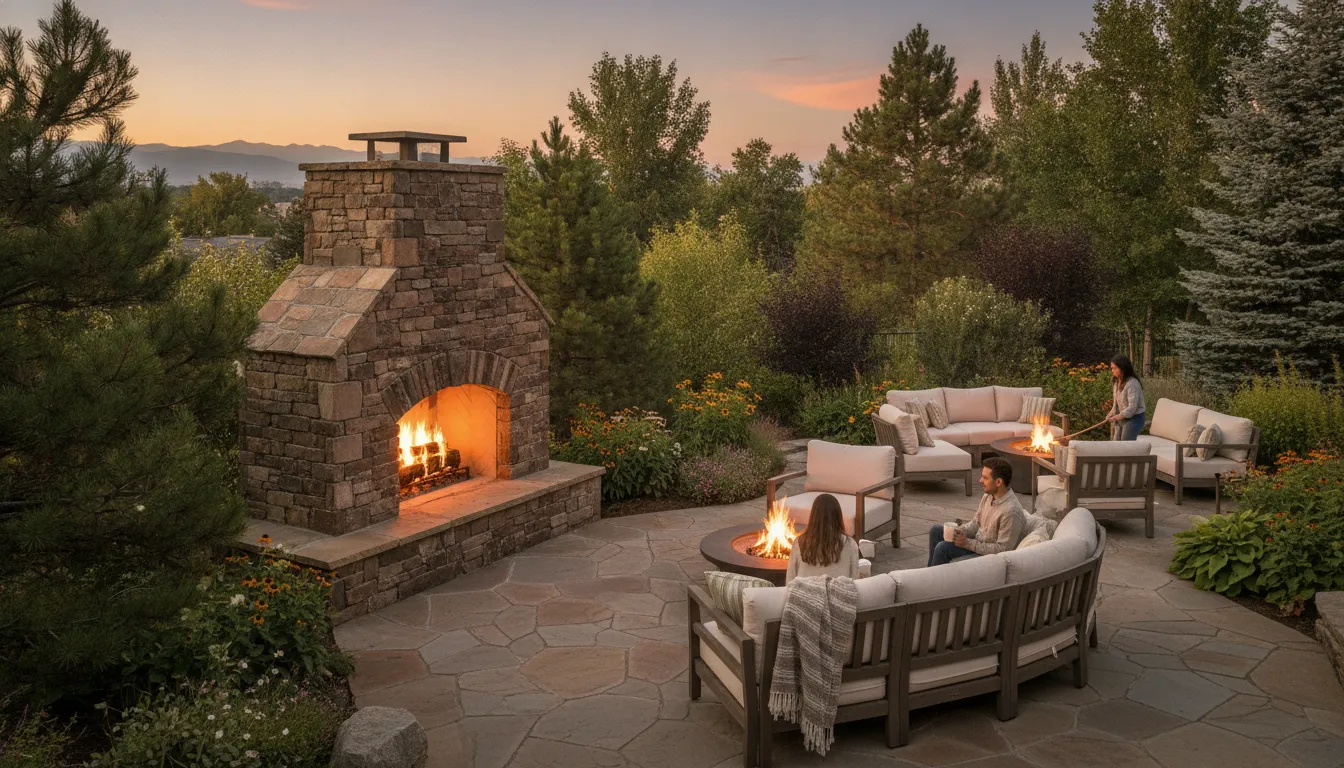
An outdoor fireplace typically has a defined front, a back, and an upright profile. Seating is concentrated in front of the opening rather than distributed evenly around it. The structure can create the visual effect of an outdoor room, especially when it is coordinated with a patio, retaining wall, pergola, or other architectural element. Its vertical form may also make it a stronger backdrop or focal point when the available patio floor area is limited.
These different shapes influence the atmosphere as much as the heat source does. A fire pit supports a shared, open conversation area and often works best when the fire itself is meant to be approached from several directions. A fireplace gives the space a more composed orientation. It can frame a view, anchor one end of a seating arrangement, or establish a clear destination within a larger landscape.
Neither option is automatically better for every Denver Metro property. The right choice depends on the yard’s circulation and the number of people you want to seat. It also depends on the relationship between the fire and the home. Faros approaches that decision as part of a complete plan for outdoor living spaces, rather than treating the fire feature as an isolated installation.
It is also important to distinguish a design tendency from a performance guarantee. A fireplace may direct warmth forward, while an open pit is more exposed to shifting wind. But the actual experience depends on the design, fuel system, placement, weather, and site conditions. Those details should be reviewed during planning before the final feature and surrounding materials are selected.
Which Layout Works Better for Your Denver Metro Yard?
A fire pit usually works best at the center of a seating plan. While an outdoor fireplace often fits more naturally along the edge of a patio or against a wall. The better layout depends on how people will gather, how much open circulation the yard allows. And whether the feature should serve as a social center or an architectural backdrop.
Start by mapping movement through the yard rather than placing the fire feature wherever there is unused space. Guests should be able to walk between the home, patio, grill, dining area, and lawn without cutting through the primary seating zone. In a center-of-yard plan, a fire pit becomes the organizing point. Chairs or built-in benches can form a circle around it, giving people a shared view and making conversation feel informal and inclusive.
That arrangement needs enough patio footprint for seating, comfortable passage, and safe separation from nearby features. A small patio can feel crowded when the pit, chairs, tables, and walking paths compete for the same surface. Built-in seating or a smaller gathering area may create a more efficient plan. Measure the layout around actual furniture and everyday use, not just the fire feature itself.
An outdoor fireplace takes a different approach. Set at the far side of a patio, beside a garden wall, or along the edge of an outdoor room, it directs attention toward one primary sightline. Seating typically faces the structure, which can preserve more open floor area in the middle of the patio. The fireplace may also help define a destination, especially when it is coordinated with a covered area, dining zone, outdoor kitchen, or other connected feature.
Think about what people should see when they step outside. A center fire pit keeps the yard visually open and supports views in multiple directions. An edge fireplace can frame a focal point and make a broad or irregular yard feel more intentional. Existing windows, fences, mature trees, slopes, and neighboring sightlines can all affect which placement feels balanced.
Hardscape integration matters in both layouts. A properly planned patio can establish durable circulation and a level setting, while planting beds. Retaining elements, seat walls, and pathways can make the fire area feel connected rather than added on. Faros can coordinate outdoor living spaces with related hardscape and landscape contractor work, including concrete patios and hardscape surfaces. A site assessment can then account for slope, access, drainage, utilities, and the property’s existing conditions before the final location is selected.
How Do Fuel, Heat, Smoke, and Safety Needs Compare?
Fuel selection and fire-feature safety depend on the specific yard, layout, equipment, and local requirements. Wood and gas can both be practical planning paths, but they create different maintenance, utility, smoke, and supervision considerations. An outdoor fireplace may direct more heat toward seating, while an open fire pit exposes the flame to changing wind from multiple directions. Neither feature should be treated as universally safer or automatically suitable without a site and code review.
Wood and gas create different planning responsibilities
Wood-burning features can provide a traditional fire experience, but they also require a plan for storing fuel, managing ash, and monitoring sparks and smoke. The location should account for nearby structures, furnishings, plantings, property lines, and the way people move through the patio. A screen may be appropriate in some designs, but it does not replace active supervision or the operating instructions for the selected appliance.
Gas configurations can offer a more controlled start and shutdown experience, yet they require careful planning for the fuel source, shutoff access, ventilation, components, and installation conditions. Utility availability and the selected system affect what is feasible. A qualified review should confirm the requirements before construction begins rather than assuming that a gas feature can be placed anywhere a wood feature would fit.
Heat direction, wind, and smoke affect comfort
A fireplace enclosure and chimney can help direct heat forward and influence how smoke moves. That can suit a seating arrangement focused in front of the feature. An open pit creates a more flexible gathering pattern, but wind can shift smoke and heat across the circle. In the Denver Metro Area, exposure, elevation, prevailing wind, and nearby walls or structures should be considered during design. A drawing that looks comfortable on paper may feel different when wind crosses the patio.
Clearances are also site-specific. The feature, seating, rooflines, pergolas, fences, doors, windows, trees, and combustible materials all deserve review together. Local building requirements, fire regulations, permits, inspections, and HOA rules may apply depending on the property and system. Those details should be confirmed with the appropriate local authorities and qualified professionals before installation.
A thoughtful site assessment can review slope, drainage, access, existing surfaces, utilities, and the intended seating plan at the same time. That integrated approach helps connect the fire feature to durable concrete and hardscape work while leaving safe access for operation and maintenance. For Denver Metro homeowners comparing a fire pit vs outdoor fireplace. The best choice is the one that fits the actual site, fuel plan, weather exposure, and supervision habits.
What Changes in Denver Weather and Seasonal Maintenance?
Denver Metro weather makes seasonal planning an important part of choosing and building an outdoor fire feature. Freeze-thaw cycles, snow, drainage, strong sunlight, and changing exposure can affect the surrounding patio, masonry, finishes, covers, and fuel components. The best maintenance plan depends on the selected system, materials, site conditions, and manufacturer guidance, so a project-specific review should happen before construction.
Freeze-thaw cycles deserve attention because water can enter joints, porous materials, or small surface imperfections, then expand as temperatures drop. Good drainage and appropriate material selection help reduce unnecessary moisture exposure, but they do not eliminate the need for periodic inspection. Look for standing water, shifting surfaces, cracked joints, deteriorated sealants, or areas where snowmelt repeatedly collects near the feature.
Plan for snow, drainage, and sunlight
Snow should not be allowed to remain against sensitive components longer than necessary, particularly where meltwater can drain toward the fire feature or into a low point. A cover may help protect a fire pit or fireplace opening from precipitation and debris. But it should be used only when the unit is fully cool and in accordance with the system manufacturer’s instructions. Covers also need to fit the feature without trapping avoidable moisture.
High-altitude sunlight and daily exposure can gradually affect finishes, sealants, cushions, screens, and other adjacent elements. A maintenance plan can include cleaning debris, checking exposed surfaces, and watching for fading, weathering, or separation at transitions between materials. The surrounding patio and seating areas should be reviewed as part of the same system rather than treated as unrelated components.
Use seasonal checks for the fire feature
Wood-burning features need ash and combustion-area attention. Remove ash safely after the feature is completely cool, keep the area clear of accumulated debris, and inspect the firebox and surrounding surfaces for visible damage. A fireplace also calls for high-level chimney and cap checks, with qualified evaluation when buildup, cracking, obstruction, or smoke-drawing concerns appear.
Gas systems require a different review. Inspect visible burner components, connections, ignition behavior, protective media, and control access according to the manufacturer’s instructions. Do not operate a system that smells of gas, shows damaged components, or behaves unexpectedly. Shut it down and arrange appropriate professional evaluation.
A practical schedule often includes a check before the main outdoor season, brief observation during regular use, and a winterizing review before extended cold or snow. Faros can evaluate the surrounding outdoor living spaces, drainage, materials, and layout together, then discuss maintenance guidance suited to the project rather than relying on a universal checklist.
Which Feature Fits Your Design and Hosting Style?
The better choice depends on how you want people to use the space. A fire pit supports relaxed conversation around a shared center, while an outdoor fireplace creates a stronger architectural backdrop for seating arranged in front of it.
| Planning factor | Fire pit | Outdoor fireplace |
|---|---|---|
| Social layout | Encourages a circular arrangement where guests can see and talk with one another. | Creates a front-facing arrangement that focuses attention toward the fire and surrounding structure. |
| Visual role | Acts as a practical centerpiece within a patio, gathering area, or broader landscape. | Acts as a vertical architectural feature that can anchor an outdoor room. |
| Placement | Often works near the center of an open seating zone, with circulation planned around it. | Typically fits along an edge, wall, or defined boundary, leaving more open floor area in front. |
| Heat direction | Heat spreads more openly, so comfort can vary with seating position and wind movement. | The structure can direct more heat forward, although actual performance depends on design, fuel, and conditions. |
| Fuel flexibility | May be designed for wood or gas, subject to the site, utilities, appliance, and local review. | May also support wood or gas configurations, but the structure, venting, clearances, and fuel system require coordinated planning. |
| Maintenance focus | Keep the bowl or burner area clear, protect surrounding surfaces, and manage ash or seasonal exposure as applicable. | Maintain the firebox, finish, venting or chimney components, and surrounding masonry or cladding as applicable. |
Choose a fire pit when hosting usually means casual group gathering, shared conversation, and movement between seats. It can make a patio feel more social because no one has to sit outside the primary viewing angle. The surrounding surface, seating distance, and circulation still need careful planning, especially where children, pets, or changing wind conditions are part of everyday use.
An outdoor fireplace is often better suited to an architectural outdoor room. Its height and solid form can define a destination within the yard. Support a more structured seating plan, and visually connect with walls, pergolas, built-in seating, or other outdoor elements. That does not automatically make it the warmer or more practical option. It means the feature plays a larger role in the composition of the space.
Denver Metro projects also benefit from treating the fire feature as part of the complete design rather than as an isolated purchase. Freeze-thaw exposure, snow, drainage, ultraviolet exposure, material transitions, and access for maintenance can affect the long-term result. A site assessment can confirm whether the desired feature fits the patio footprint, utilities, surrounding structures, and applicable local requirements.
How Should You Plan the Build Before Choosing?
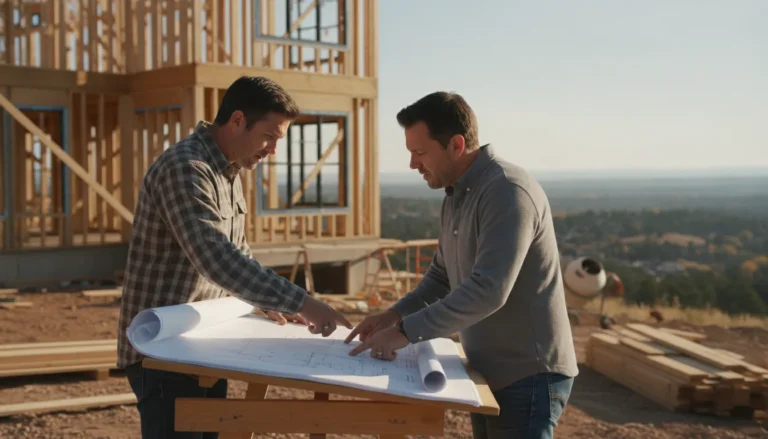
Plan the site and the way you will use it before committing to a fire pit or outdoor fireplace. A clear sequence helps connect the feature to seating, circulation, utilities, approvals, materials, construction, and long-term care.
- Define the goal and hosting style. Decide whether the feature will support casual conversation, larger gatherings, quiet evenings, or a more architectural outdoor room. Note how many people you typically host, whether guests need an unobstructed view. And whether you prefer an open center-of-seating arrangement or a stronger visual focal point at the edge of the yard.
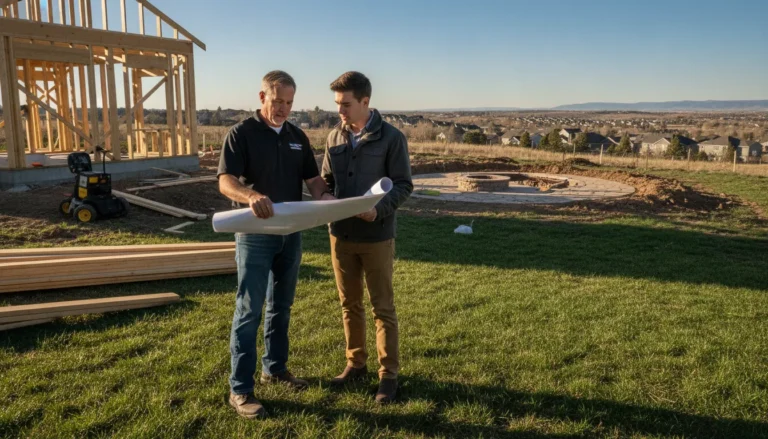
- Assess the site. Review soil, slope, drainage, access for construction, existing structures, utilities, property boundaries, and the condition of nearby patios or walls. Denver Metro properties can also face snow, freeze-thaw cycles, and strong UV exposure, so the actual site conditions should guide the layout and material selection. Existing constraints may favor one configuration even when the other looks appealing in a photograph.
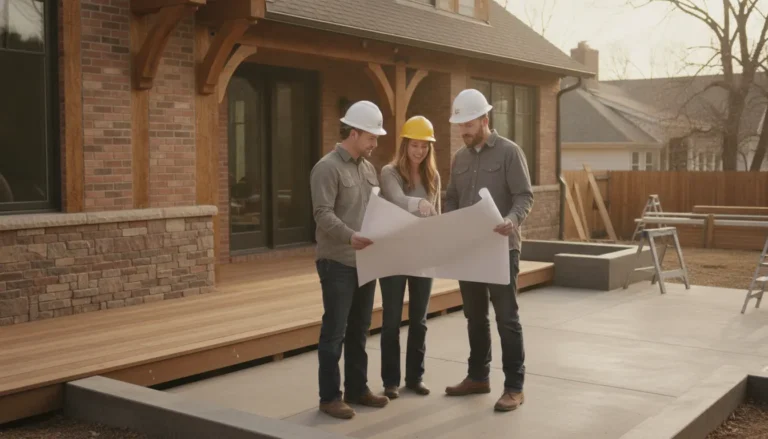
- Integrate the layout and materials. Place the feature in relation to seating, walking paths, doors, lighting, planting, and connected outdoor spaces. Select durable surfaces and finishes for function, appearance, and long-term performance. A patio, retaining element, built-in seat, deck, or pergola should feel like part of one environment rather than a collection of separate additions. Faros documents this coordinated approach through its construction services.
- Review approvals and fuel requirements. Ask which permits, inspections, HOA approvals, utility coordination, and fuel-system reviews may apply to the specific project. Requirements vary by location and installation details, so do not rely on a universal clearance or code assumption. Confirm access to the proposed fuel source, shutoff locations where relevant, and the maintenance responsibilities associated with the selected system.
- Plan construction and safety. Establish the work area, access route, protection for existing property, sequencing, supervision expectations, and site cleanup before construction begins. The plan should account for safe operation, appropriate screens or barriers where needed, ventilation and clearances based on the actual design, and responsible supervision. A site-specific review is more useful than a generic rule applied to every yard.
- Complete a walkthrough and maintenance plan. At closeout, review the finished surfaces, drainage, controls, access points, and surrounding transitions. Request practical guidance for seasonal cleaning, ash or burner care, covers, masonry or chimney checks where applicable, and winter preparation. Faros describes a process that includes consultation, site assessment, design, preparation, construction, final walkthrough, and maintenance guidance. Contact Faros to discuss how the feature could fit your Denver Metro property.
This planning process keeps the decision grounded in how the space will function, not just how the feature appears on its own. It also gives the builder a stronger basis for coordinating the fire feature with the rest of the outdoor environment.
FAQs: Fire Pit vs Outdoor Fireplace
Do outdoor fireplaces actually keep you warm?
They can make warmth feel more concentrated in the seating area because the structure and opening orient heat forward. A fire pit spreads the experience more evenly around the flame, so comfort depends on wind, seating distance, clothing, and the specific design. Neither feature should be treated as a substitute for an indoor heating system.
Is a gas or wood fire better for an outdoor fire feature?
Gas is often simpler for on-demand use and produces less smoke than burning wood. Wood creates a traditional fire experience but requires dry, seasoned fuel, appropriate storage, and more ash and smoke management. The EPA recommends burning only seasoned, dry wood and avoiding wood fires during air-quality alert days. See the EPA backyard recreational fire guidance before choosing a fuel system.
What maintenance does each option require?
Both need regular cleaning, weather protection, and inspection of their fuel components. A wood-burning feature also needs ash removal and responsible firewood storage. An outdoor fireplace may require additional attention to its chimney or flue, while a gas fire pit needs burner, connection, and ignition checks. Denver Metro snow, moisture, freeze-thaw cycles, and UV exposure should be included in the maintenance plan.
Is a fire pit or outdoor fireplace better for a small yard?
There is no universal answer. A compact fire pit can work well when circulation and all-around seating matter. While an outdoor fireplace may use an edge of the yard and create a stronger vertical focal point. Start with clearances, access, utilities, smoke movement, and the space needed for chairs and walking routes. A site assessment can confirm which arrangement fits the existing patio and property constraints.
Plan the Right Outdoor Fire Feature for Your Yard
The right fire feature should fit your seating, circulation, fuel preferences, and the way your Denver Metro yard handles weather. A thoughtful site discussion can help connect those decisions with the surrounding patio, hardscape, and outdoor living design before construction begins.
Contact Faros to discuss your outdoor fire feature, site conditions, layout, and build planning.