
Choosing a general contractor in Broomfield CO is about more than finding someone who can start a project. The right partner should understand your home’s existing conditions, explain the work clearly, coordinate the right trades, and stay accountable from the first consultation through the final walkthrough. Use this guide to compare contractors for residential improvements and outdoor construction across the Denver Metro Area.
Talk with Faros Construction Services about your Broomfield project.
What should a general contractor in Broomfield CO explain during a consultation?
A useful consultation turns a broad idea into a shared understanding of the property, the desired result, and the work required to get there. The contractor should listen first, inspect relevant conditions, and explain the decisions that will shape design, sequence, access, and construction.
Bring a short list of goals to the meeting. You may be planning a deck, porch, concrete patio, retaining wall, outdoor kitchen, room improvement, or several connected upgrades. Explain how you want to use the space, what currently works, what does not, and which parts of the project matter most to your household.
- What outcome should the finished space provide?
- Which existing surfaces, structures, utilities, or drainage patterns need review?
- Will the work connect several trades, such as concrete, framing, masonry, electrical, or landscaping?
- What access, staging, parking, and daily-use constraints should be planned?
- What decisions must be made before work can begin?
A strong contractor will also identify questions you may not know to ask. On an outdoor project, that can include grade changes, water movement, freeze-thaw exposure, snow shedding, footing locations, material transitions, and how the new work will meet the existing house. For an interior or whole-home improvement, the conversation may focus on sequencing, protection of occupied areas, structural conditions, and trade coordination.
How should you compare written scopes for a Broomfield construction project?
Compare written scopes by checking whether each one describes the same work in enough detail to guide construction. A clear scope should show what is included, what decisions remain open, how the work will be sequenced, and who is responsible for coordination.
A short description such as “build a patio and improve the backyard” leaves too much room for different interpretations. A useful written scope identifies the approximate work area, demolition or preparation, structural elements, surface materials, drainage considerations, finish details, cleanup, and closeout. It should also note any owner decisions that could affect the schedule or final selections.
| Scope area | Questions to ask | Why it matters |
|---|---|---|
| Site preparation | What must be removed, graded, protected, or tested? | Existing conditions affect sequence and site readiness. |
| Construction details | What dimensions, materials, assemblies, and finish standards are planned? | Specific details make the intended result easier to verify. |
| Trade coordination | Who schedules specialty trades and inspections? | One accountable coordinator reduces gaps between phases. |
| Communication | When will updates, decisions, and issue notices be shared? | Defined communication keeps the project understandable. |
| Closeout | How will the punch list, care guidance, and documentation be handled? | A project is not finished until the details are reviewed. |
Ask each contractor to identify allowances, exclusions, owner-supplied items, and conditions that require confirmation. You are not looking for the longest document. You are looking for a scope that is specific enough for both sides to recognize what success looks like.
For a broader view of the services that may be combined in a residential improvement, review the Faros Construction Services overview before your consultation. It can help you organize questions when a project includes both home improvements and outdoor construction.
What permitting responsibilities should you clarify before work begins?
Permit responsibility should be discussed before construction starts, not after a question arises at the jobsite. Ask which parts of the proposed work require review, who prepares the documents, who submits them, and how inspections are scheduled and recorded.
The City and County of Broomfield provides official guidance for contractor licensing and building permits. Requirements can depend on the project, property, and current local rules, so use the city and county as the final source for jurisdiction-specific information. A responsible contractor should be willing to explain how the project’s permit path fits into the work plan rather than treating permits as an afterthought.
Clarify these points in writing:
- Which department or jurisdiction reviews the project.
- Which party prepares and submits permit materials.
- Which inspections are expected at each stage.
- How inspection timing affects the construction sequence.
- Who communicates corrections or required changes.
- What documentation you will receive at closeout.
For outdoor structures and concrete work, ask how footings, structural connections, drainage, setbacks, and property conditions will be evaluated. For remodeling or home-building work, ask how structural, electrical, plumbing, and other specialty reviews will be coordinated. The goal is not to memorize building rules. The goal is to know that the contractor has a plan for responsible coordination.
When a contractor refers you to public requirements, check that the link goes to a current official source. Broomfield’s inspection scheduling guidance is a useful reference for understanding why inspection timing belongs in the project conversation.
How will the contractor communicate during construction?
Clear communication gives you a reliable view of progress, upcoming decisions, access needs, and issues that need attention. Before signing, ask who your primary contact will be, how often updates are shared, and how urgent questions are handled.
Good jobsite communication is specific. A progress update should tell you what was completed, what is planned next, whether a decision is needed, and whether site access or household routines need to change. A contractor should not make you guess whether a quiet day means normal sequencing, an inspection wait, a material delay, or an unresolved field condition.
Ask about the communication rhythm that fits your project. A smaller outdoor improvement may need milestone updates, while a multi-trade renovation may benefit from a regular written summary and a standing check-in. The method matters less than consistency and accountability.
During the consultation, notice whether the contractor explains tradeoffs in plain language. You should be able to ask why a sequence is recommended, how a material will perform in Denver Metro Area weather, and what needs to happen before the next phase can begin. A patient explanation is an early sign that the working relationship may remain productive when the project becomes more complex.
Share your goals with Faros Construction Services and plan the next conversation.
What should a prepared construction jobsite look like?
A prepared jobsite protects the property, gives workers a safe and organized place to work, and makes progress easier to inspect. The contractor should explain how access, staging, debris, materials, tools, and existing features will be managed throughout the project.
For a Broomfield outdoor project, discuss driveway and walkway access, nearby landscaping, irrigation, fences, patios, exterior walls, and areas that need protection. Ask where materials will be placed and how delivery vehicles will reach the property. If the home remains occupied, discuss pedestrian routes, dust control, work hours, pets, children, and areas that must stay available.
Organization also affects quality. Materials should be protected from weather where appropriate, work areas should be kept orderly, and changes should be communicated before they create confusion. A contractor who plans the jobsite carefully is more likely to recognize how construction affects your property beyond the immediate work area.
How do you confirm workmanship at the final walkthrough?
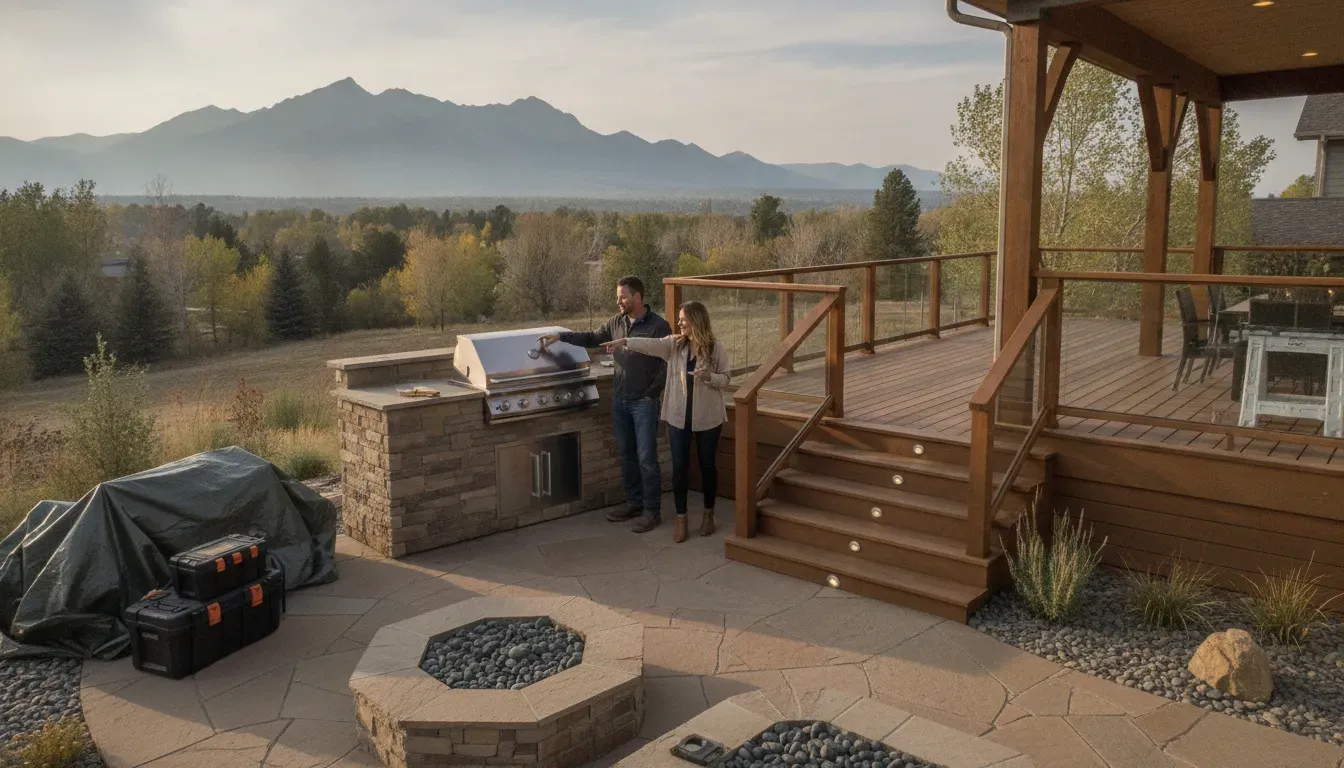
The final walkthrough is a structured review of the completed work, not a quick goodbye. Use it to compare the finished project with the written scope, identify punch-list items, review care guidance, and confirm that the site is ready for normal use.
Walk the project with the contractor and review each area in daylight when possible. Look at transitions between new and existing work, edges and joints, railings and stairs, drainage paths, gates, finishes, hardware, lighting locations, and surfaces that need special care. The exact checklist will depend on the project, but the review should be thorough and easy to follow.
Ask the contractor to explain:
- What routine cleaning or seasonal care each material needs.
- How to report a concern after the project is complete.
- Which documents, product information, or warranty materials will be provided.
- Which punch-list items remain and when they will be addressed.
- How completed permits or inspection records will be handled.
A final walkthrough should leave you with a clear record of what was completed and what happens next. Contractors who plan this phase from the beginning are more likely to treat closeout as part of the work rather than an administrative detail.
Why does Denver Metro Area experience matter for Broomfield projects?
Local experience matters when it improves project decisions, not simply when a contractor repeats a city name. A team familiar with the Denver Metro Area should understand how seasonal weather, soil, snow, sun exposure, drainage, and local review processes can affect residential improvements and outdoor construction.
Broomfield homes can have different site conditions even within the same neighborhood. A sloped yard, an older patio, a narrow access path, or a connection to an existing deck can change the planning conversation. Ask the contractor how the site visit will account for those conditions and how findings will be reflected in the written scope.
Faros Construction Services works across the Denver Metro Area with an owner-led approach centered on consultation, construction coordination, communication, and closeout. Its outdoor living spaces service is relevant when a project combines a patio, deck, shade structure, hardscape, or other connected improvements. Homeowners considering a larger residential improvement can also review the home building and remodeling service to understand the broader project categories Faros supports.
How can Broomfield homeowners choose with confidence?
Choose the contractor who makes the project understandable, demonstrates a disciplined process, and can connect your goals to a realistic plan. Confidence should come from clear answers, written accountability, relevant experience, and a willingness to discuss the details that protect your home and the finished result.
Use this final comparison checklist:
- Confirm that the contractor has experience with the type of residential improvement or outdoor construction you are planning.
- Ask for a site-specific consultation rather than a generic description of services.
- Review a written scope that identifies inclusions, exclusions, responsibilities, and open decisions.
- Clarify permit, inspection, trade-coordination, and closeout responsibilities.
- Agree on the primary contact, update rhythm, decision process, and issue-escalation path.
- Discuss jobsite access, property protection, staging, cleanup, and household routines.
- Confirm that the final walkthrough includes a punch list, care guidance, and completion documentation.
NC State Extension’s contractor-selection guidance also emphasizes checking references, reviewing the agreement, and clarifying responsibilities before work begins. Use those principles alongside Broomfield’s official requirements and the project-specific questions above.
For a Broomfield deck or porch project, Faros also has a dedicated Broomfield deck contractors page. Use the service page for project context, then use the consultation and scope questions in this guide to evaluate the working relationship.
Choosing a General Contractor in Broomfield CO: FAQ
These questions address the practical decisions homeowners commonly face before selecting a contractor for residential improvements or outdoor construction in Broomfield.
What should I bring to a contractor consultation?
Bring your goals, photos of the existing space, a rough description of how you want to use it, and any known property constraints. Be ready to discuss access, household routines, preferred timing, and which decisions you have already made. The contractor should help identify the remaining questions.
Should a written scope include permitting?
It should identify who will confirm permit requirements, prepare submissions, coordinate inspections, and communicate any required corrections. Ask for the responsible party and expected sequence in writing, then verify jurisdiction-specific requirements through the City and County of Broomfield.
How often should a contractor provide project updates?
The right rhythm depends on the scope, but updates should be consistent and useful. A good update explains completed work, the next milestone, decisions needed from you, and any change to access or household routines. Agree on the method before work begins.
What belongs on a final walkthrough checklist?
Review the completed scope, transitions, finishes, access features, drainage, cleanup, punch-list items, care instructions, warranty materials, and permit or inspection documentation. Walk the entire project rather than checking only the most visible feature.
Can one contractor coordinate several types of work?
Yes, a general contractor can coordinate connected work when the company has the appropriate experience and a clear process for managing specialty trades. Ask who is responsible for scheduling, quality checks, inspections, communication, and closeout across each phase.
Written by Ricardo Alfaro.