

Deck waterproofing Denver projects should not be treated as one layer of coating added after construction. It is a coordinated water-management system that protects the deck surface, framing, ledger connection, nearby wall, and the space below from rain, snowmelt, and repeated freeze-thaw exposure. For Denver Metro homeowners, the right plan starts with the way water moves through the entire assembly.
Written by Ricardo Alfaro
What Does Deck Waterproofing Denver Include?
Effective deck waterproofing in Denver combines surface materials, positive drainage, ledger protection, flashing, sealed penetrations, and a maintenance plan. Each part has a different job, and a failure at the wall connection can cause more damage than a worn finish on the walking surface.
Homeowners often use the word waterproofing to describe several different improvements. A surface sealer helps limit water absorption in compatible wood, while a membrane or under-deck drainage system manages water that passes between deck boards. Flashing protects the ledger and directs water away from the wall. None of these steps replaces sound framing or correct slope.
The system should account for five water paths:
- Water landing directly on the deck surface.
- Water passing between boards toward joists and the area below.
- Water collecting where the deck meets the exterior wall.
- Snowmelt draining toward the ledger, stairs, or foundation.
- Moisture held against end grain, fasteners, trim, or cladding.
The U.S. Department of Energy Building America ledger guidance explains why the ledger must be integrated with the wall drainage plane instead of treated as an isolated board. That principle is especially important when an existing deck is being repaired or when new decking is attached to an older wall assembly.
Which Materials Support Deck Waterproofing Denver Homes?
The best deck waterproofing materials depend on the deck structure, exposure, drainage design, maintenance expectations, and how the deck connects to the home. Wood, composite decking, membranes, metal flashing, and compatible sealants can all be useful, but they should be selected as parts of one assembly rather than as unrelated upgrades.
Pressure-treated wood
Where it helps: Traditional framing and decking applications.
Planning point: Protect cut ends and keep water moving away from the structure.
Maintenance focus: Inspect for checking, soft spots, fastener movement, and finish wear.
Cedar or redwood
Where it helps: Natural wood appearance and outdoor living designs.
Planning point: Use compatible fasteners and allow boards to dry between wet periods.
Maintenance focus: Clean gently and renew the appropriate exterior finish as needed.
Composite decking
Where it helps: Low-maintenance walking surfaces and consistent appearance.
Planning point: Follow the product installation details for spacing, ventilation, and framing.
Maintenance focus: Clear debris, wash carefully, and inspect the supporting frame.
Flashing and membrane
Where it helps: Ledger, rim joist, wall, and other water-sensitive transitions.
Planning point: Integrate with the wall drainage plane and avoid trapped water.
Maintenance focus: Check exposed edges, laps, sealant joints, and penetrations.
Under-deck drainage
Where it helps: Managing water below an elevated deck and protecting a lower area.
Planning point: Provide a continuous route to a safe discharge point.
Maintenance focus: Remove leaves and confirm outlets are open before winter.
Decking itself is not the same as waterproofing. A composite surface may resist routine moisture, but water can still reach framing through joints, perimeter gaps, screw penetrations, and the ledger connection. Conversely, a membrane can manage water below the boards while the surface and framing still require routine inspection.
For a broader project that combines a deck with shade, seating, stairs, or a porch, review Faros Construction’s decks, pergolas, and porches services before choosing a single material. The design should support how the entire outdoor living area will be used.
How Do Ledger Protection and Flashing Stop Water Intrusion?
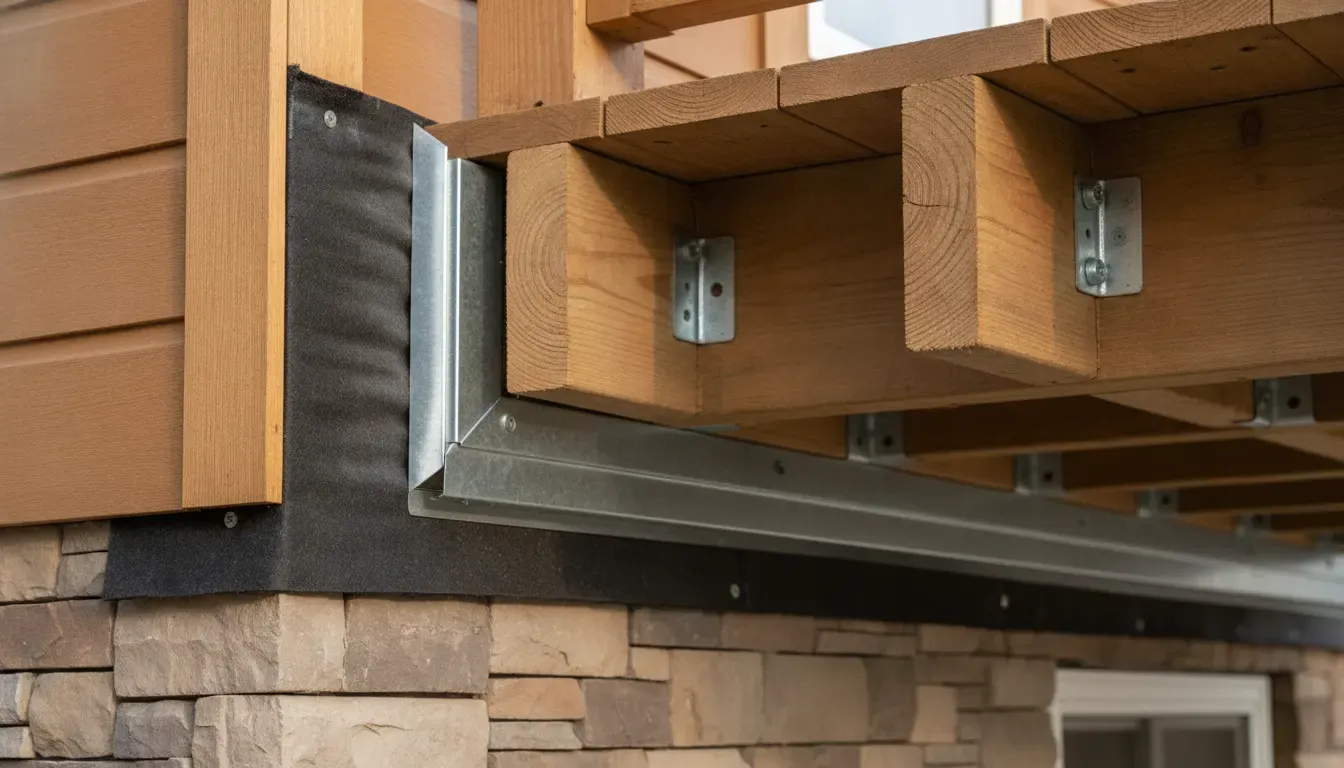
Ledger protection works by keeping water from entering the wall and framing where the deck is attached. The ledger should be securely connected and separated from vulnerable materials as required by the assembly. It should also be covered with flashing that ties into the wall’s water-control layers and directs water outward.
The ledger is a high-risk transition because fasteners pass through the exterior wall and because the deck can interrupt the wall’s normal drainage path. If the flashing stops behind siding, ends short at the corners, or is punctured without a compatible detail, water can move behind the ledger and remain hidden.
A practical inspection or design review should ask:
- Is the ledger connection visible enough to inspect?
- Does the flashing shed water past the face of the ledger?
- Does the upper flashing integrate with the wall drainage plane?
- Are the ends and corners protected from sideways water movement?
- Are joist ends, rim boards, and penetrations protected without trapping moisture?
- Can water drain away from the wall instead of pooling at the attachment?
The Building America guidance also calls for attention to the joist ends and the relationship between the ledger, sheathing, membrane, and drainage plane. This is why applying caulk over an accessible seam is rarely a complete repair. The correct fix may require opening a portion of the assembly to identify the water path.
Why Does Deck Drainage Matter After Snowmelt?
Deck drainage matters because snow and ice can deliver a long, slow period of moisture to the same joints and transitions. A deck that appears dry during a summer inspection may still direct snowmelt toward the wall. Do not hold debris against framing, and do not discharge water where it can affect the lower structure.
Good drainage begins with the deck’s layout and continues below the surface. Board spacing should follow the decking manufacturer’s guidance, framing should not create unintended low points, and any membrane or under-deck system should lead water to a planned outlet. Downspouts and splash areas also deserve attention so discharge does not saturate posts, stairs, or the foundation edge.
Drainage is also a safety and usability issue. Standing water can make surfaces slippery, accelerate finish wear, and leave ice in walking areas. Water that drops directly onto a patio or lower deck can create staining, erosion, or a damp area that homeowners cannot use comfortably.
For detailed planning of the drainage portion, Faros has a separate guide to deck drainage solutions in the Denver Metro Area. That article addresses the drainage-planning intent directly. This guide focuses on how drainage works with waterproofing materials, ledger protection, and long-term care.
How Should You Maintain a Waterproofed Deck Through the Seasons?
Seasonal maintenance keeps a deck waterproofing system observable and functional. The goal is not to seal every surface indefinitely. The goal is to remove debris, identify early changes, keep discharge paths open, and address small failures before moisture reaches concealed framing or the wall assembly.
Spring inspection
After snowmelt, clear leaves and organic debris from board gaps, drainage channels, flashing edges, stairs, and the area beneath the deck. Look for lifted boards, cracked sealant, loose fasteners, rust staining, soft wood, and water marks on the wall or underside. Check whether downspouts and outlets discharge away from the deck and foundation.
Summer care
Clean compatible surfaces with a method approved for the decking material. Avoid aggressive pressure washing that can damage wood fibers, remove finish unevenly, or force water into joints. Move planters and furniture occasionally so trapped moisture and debris do not create hidden wear. Trim nearby vegetation where it blocks ventilation or holds wet leaves against the deck.
Fall preparation
Remove leaves before they become a wet mat. Inspect the ledger, rim joist, stairs, railings, and exposed membrane transitions while conditions are still easy to access. Confirm that the planned drainage route is open before the first significant snow. If the deck includes a lower area, check that channels and outlets are not blocked by soil or stored items.
Winter observation
Do not chip ice aggressively against decking, flashing, or membranes. Watch for unusual icicles, repeated freeze-up at one edge, water entering the wall, or snow being pushed against the ledger. These patterns can reveal a drainage or flashing problem that should be reviewed when conditions allow.
Maintenance instructions should match the actual material and system. For example, care for a composite surface is not the same as care for stained wood, and a membrane edge needs different inspection points than a deck board. Faros also offers a related guide to composite deck maintenance for Colorado weather for homeowners with that surface type.
When Does a Deck Need Repair or Rebuilding?
A repair may be appropriate when the water path is localized and the supporting structure remains sound. Rebuilding becomes more likely when moisture has affected multiple framing members, the ledger connection is compromised, and the deck moves under normal use. It may also be appropriate when prior changes have left the assembly without a reliable drainage route.
Watch for these signs:
- Soft, split, or darkened wood near the ledger, joists, posts, stairs, or rim board.
- Visible rot or persistent dampness where the deck meets the wall.
- Water stains, peeling finishes, or damaged siding below the ledger.
- Fasteners that pull out, corrode quickly, or no longer hold boards tightly.
- Deck boards that remain wet long after nearby surfaces dry.
- Pooling, dripping, or overflow from an under-deck drainage system.
- Railing movement, uneven areas, bouncy framing, or shifting stairs.
- A history of leaks that returns after surface sealing or patching.
Surface wear alone does not prove that the whole deck needs to be replaced. A qualified review should trace moisture from the visible symptom to the source. Inspect the framing and connection, and determine whether the repair can preserve the intended water-management system. If the existing structure cannot support a dependable repair, a new deck plan may reduce repeated disruption and produce a more coherent result.
What Should Denver Homeowners Ask Before Work Begins?
A good deck waterproofing conversation should connect the homeowner’s goals to observable site conditions. Ask how the work will protect the ledger and where water will discharge. Also ask what framing will be opened for inspection and how the finished system will be maintained.
Useful questions include:
- What is the primary water path causing the current concern?
- Will the ledger and wall transition be inspected before surface work begins?
- How will flashing tie into the existing wall drainage plane?
- Where will water from the deck and any under-deck system discharge?
- Which materials are compatible with the existing framing and exterior wall?
- What signs would indicate that repair is not enough for the current structure?
- Which permits, drawings, inspections, or HOA approvals may apply to the project?
- What cleaning and inspection steps should be followed after completion?
Permit requirements vary across the Denver Metro Area. The City and County of Denver homeowner permit page is a useful starting point for projects in Denver, while homeowners in other jurisdictions should confirm requirements with their local building department. A Colorado deck building guide also illustrates why drawings may need to show framing, ledger connections, flashing, and guard details. Requirements can change, so use the authority having jurisdiction for the current answer.
Faros Construction approaches outdoor structure work through consultation, site assessment, planning, construction, and a final walkthrough. That owner-led process helps keep waterproofing details connected to the larger deck or outdoor living design instead of treating them as an afterthought.
Frequently Asked Questions About Deck Waterproofing in Denver
These answers summarize the most important deck waterproofing decisions for Denver Metro homeowners. The correct solution still depends on the existing structure, wall assembly, material, drainage route, and local requirements.
Is deck waterproofing the same as sealing deck boards?
No. A compatible sealer can reduce surface water absorption on some wood decks, but waterproofing also includes ledger flashing, membranes, drainage, protected transitions, and sound framing. A surface product cannot correct a failed wall connection or blocked discharge path.
Can a waterproof coating fix a leaking ledger?
Usually not by itself. A ledger leak may involve the wall drainage plane, flashing laps, fastener penetrations, siding, or concealed framing. The repair should identify and correct the water path rather than cover the visible symptom with a coating.
How often should a Denver deck be inspected?
Inspect it at least seasonally, with a closer review after winter snowmelt, major storms, or any change in the wall or deck surface. Pay special attention to the ledger, flashing, drainage outlets, joist ends, stairs, railings, and areas that stay damp.
Does composite decking eliminate the need for waterproofing?
No. Composite boards can reduce some surface maintenance, but water still travels through joints and around the deck perimeter. The framing, ledger connection, flashing, and under-deck drainage plan remain important.
Should I repair or rebuild a deck with water damage?
That depends on the extent and location of the damage. A localized issue with sound framing may be repairable, while widespread rot, a compromised ledger, movement, or an unreliable drainage route may support a rebuild discussion.
Who should review deck waterproofing in the Denver Metro Area?
Choose a qualified construction professional who can evaluate the deck surface, framing, wall connection, drainage, and project requirements together. Faros Construction Services builds and plans decks, pergolas, and porches for Denver Metro homeowners and property owners.