
Choosing a general contractor in the Denver Metro Area is about more than finding someone who can start soon. The right partner should understand your project type, explain the work clearly, coordinate qualified trades, manage permits, and stay accountable from the first site visit through the final walkthrough. This guide gives homeowners and property owners a practical way to compare contractors before committing to a construction, remodeling, or outdoor living project.
Talk with Faros Construction Services about your project goals and next steps.
Written by Ricardo Alfaro
What Does General Contractor Selection Denver Metro Area Involve?
General contractor selection Denver Metro Area homeowners can trust involves matching the contractor’s experience, process, documentation, communication style, and local readiness to the actual project. A polished website or a quick phone response is only a starting point. The stronger decision comes from asking consistent questions and comparing complete answers.
Start by defining the kind of help you need. A contractor who regularly builds outdoor living spaces may be a strong fit for a deck, pergola, patio, or outdoor kitchen, while a ground-up home build or major addition may require a different design and engineering team. A good general contractor will tell you where the company’s strengths fit and where another specialist may be more appropriate.
1. Define the Project Before You Interview Contractors
A clear project brief helps each contractor respond to the same goals and site conditions. It also gives you a better way to compare proposals because you are evaluating the same scope rather than a collection of assumptions.
- Describe the spaces or structures you want to change.
- List must-have functions, materials, finishes, and accessibility needs.
- Identify any known drainage, grading, structural, utility, or access concerns.
- Collect inspiration photos, measurements, surveys, drawings, or HOA guidance you already have.
- Separate essentials from ideas that could be added later.
- Set your preferred timing and note any seasonal or personal deadlines.
Do not worry if the brief is not a finished design. A capable contractor should help identify what needs to be designed, measured, engineered, or reviewed before construction begins. The more openly you describe the desired outcome, the easier it is to identify the right planning path.
2. Match Contractor Experience to Your Scope
Project fit is one of the most important parts of choosing a general contractor. Look for demonstrated experience with the type of work you are planning, the materials involved, and the conditions of your property.
Ask for examples that are similar in complexity, not only similar in appearance. For example, a contractor who has installed a simple patio may not have the same experience coordinating a multi-level outdoor living space with retaining work, lighting, drainage, and an outdoor kitchen. Likewise, a contractor who focuses on cosmetic updates may not be the best fit for structural changes or a full addition.
Review the contractor’s project portfolio and customer proof for evidence of craftsmanship, organization, and completed work. Ask what role the company played, which trades were coordinated, and what challenges were addressed. Specific answers are more useful than broad claims about doing every type of work.
3. Verify Licensing, Insurance, and Local Readiness
Before you compare proposals, verify that the contractor can legally perform and manage the work for the municipality where the property is located. Requirements can vary by jurisdiction and trade, so a vague statement about being licensed is not enough.
Use the applicable local contractor licensing information to understand what credentials and certificates apply. You can also review the state professional license verification resource for regulated trade credentials. Ask the contractor which license, registration, or supervisor credential applies to your scope and who will be responsible for the permit.
Request current proof of general liability coverage and workers’ compensation coverage where applicable. Confirm that the legal business name on the documents matches the party named in the proposal and contract. If trade partners will perform electrical, plumbing, mechanical, or other specialized work, ask how those credentials and insurance requirements are managed.
4. Ask Who Handles Permits and Inspections
Permitting should be part of the project plan, not a last-minute question. Ask which approvals may be required, who prepares the submittals, who communicates with the permitting office, and who schedules inspections.
The official homeowner permitting guidance explains that the permit holder carries responsibility for the work covered by the permit. That makes it important to understand whose name appears on each permit and who is accountable for corrections or inspection questions.
A reliable contractor will explain the sequence in plain language. The sequence may include site review, design or engineering, plan submission, permit approval, preparation, construction, inspections, and a final walkthrough. Be cautious if a contractor suggests skipping required approvals, asks you to take responsibility for work the contractor is managing, or cannot explain how inspections will be handled.
How Does General Contractor Selection Denver Metro Area Work?
General contractor selection Denver Metro Area property owners can manage with confidence follows a repeatable process: prepare a scope, interview a short list, verify credentials, request site-specific proposals, compare the written details, and confirm communication before signing.
Plan to speak with more than one qualified contractor, but do not treat the process as a contest for the shortest response or the lowest number. The goal is to find the clearest and most complete plan from a contractor whose experience matches the work.
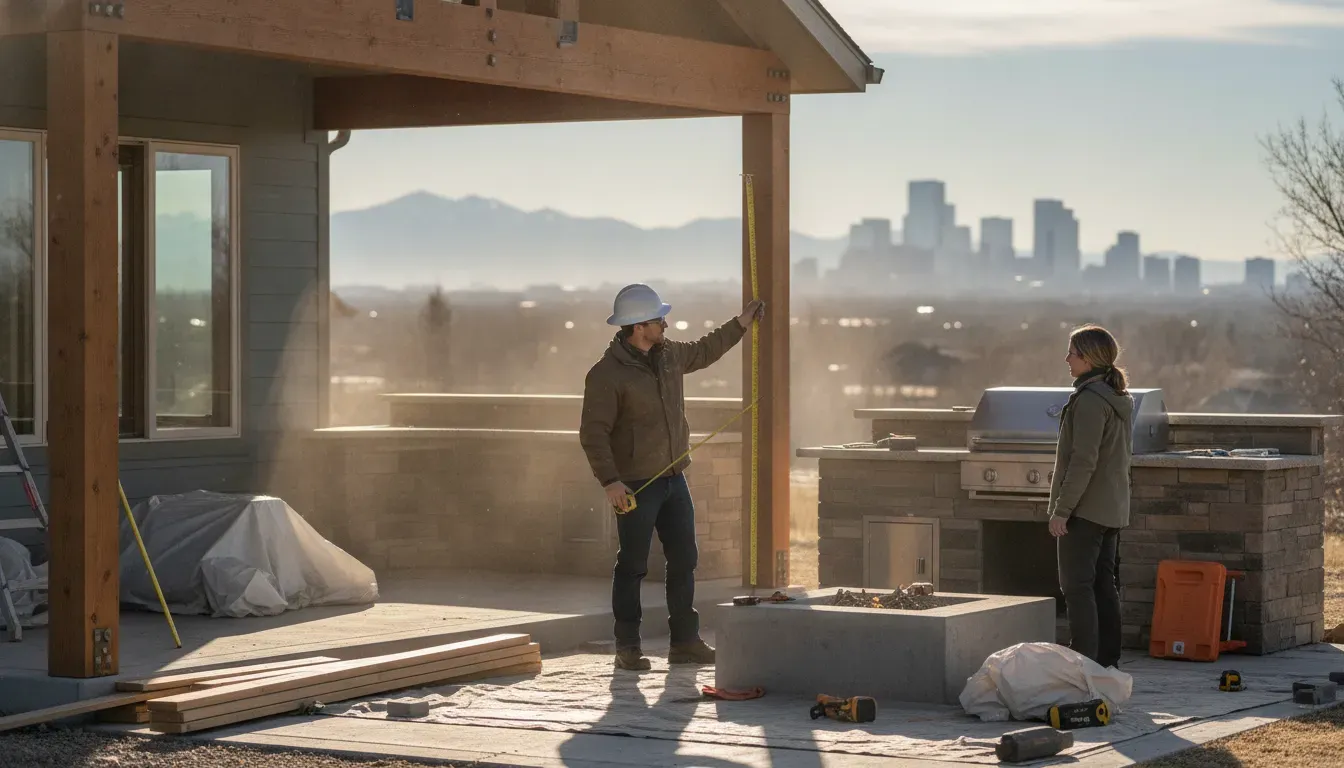
5. Use the First Consultation to Test Communication
The first consultation shows how the contractor thinks. A strong conversation should include questions about your goals, property conditions, daily routines, desired timeline, decision points, and concerns. The contractor should listen before recommending a solution.
Ask questions such as:
- Who will be my primary point of contact?
- Who will be involved in the design, planning, and field supervision?
- How do you coordinate subcontractors and specialty trades?
- How will I receive updates during the project?
- What decisions need to be made before work starts?
- How do you document changes to the agreed scope?
- What site protection, cleanup, and access planning should I expect?
- How do you handle an unexpected condition discovered during work?
Pay attention to whether the answers are specific and whether the contractor documents the discussion. Clear communication early often prevents confusion later. You should also feel comfortable asking basic questions without being rushed or dismissed.
6. Compare Proposals by Scope, Not Just the Bottom Line
A useful proposal lets you understand what will be built, what materials are included, what the contractor is responsible for, and what decisions remain open. If one proposal is much shorter than another, the difference may be missing scope rather than a better deal.
Look for these elements:
- A plain-language description of the work and the intended result.
- Dimensions, quantities, materials, finishes, and allowances where relevant.
- Design, drafting, engineering, permit, inspection, and utility responsibilities.
- Site preparation, demolition, protection of existing property, and cleanup.
- A project schedule with major phases and decision deadlines.
- Payment milestones tied to documented progress.
- A written change process that explains how additions or revisions are approved.
- Warranty or workmanship information and the process for raising concerns.
Ask every contractor to clarify exclusions. A proposal should not rely on you to guess whether a line item, permit, finish, trade, or cleanup activity is included. Comparing scope first helps you evaluate value, quality, and risk more fairly.
7. Check References and Look for Consistent Follow-Through
References can reveal how a contractor performs after the contract is signed. Ask for recent customers whose projects resemble yours, then ask focused questions rather than only asking whether they were satisfied.
- Did the contractor communicate changes promptly?
- Did the completed work match the agreed scope?
- Were the jobsite and surrounding property treated respectfully?
- Did the contractor coordinate inspections and specialty trades effectively?
- How were questions or warranty concerns handled after completion?
Look for patterns across reviews and references. One complaint may not tell the whole story, but repeated concerns about missed communication, unclear documentation, or unfinished details deserve attention. Also ask to see work that has had time to weather, especially for exterior structures, concrete, hardscape, and other outdoor improvements.
8. Review the Contract Before You Commit
The contract should turn the proposal into a shared plan. Read it slowly and confirm that the legal business name, property address, scope, materials, schedule, payment milestones, change process, insurance responsibilities, warranty language, and completion expectations are clear.
Make sure verbal promises appear in writing. If an allowance, finish, fixture, design service, cleanup task, or permit responsibility was discussed during the consultation, it should be addressed in the proposal or contract. Ask what happens if a selection is delayed, a material becomes unavailable, or an existing condition changes the work.
Do not sign under pressure. A professional contractor should give you time to review the documents, ask questions, and confirm that the project is a good fit for both sides. A clear contract protects the relationship by reducing assumptions before work begins.
9. Choose the Best Project Fit, Not the Fastest Yes
The best contractor is not always the one who promises the earliest start or agrees with every idea immediately. Look for a partner who is realistic about planning, explains tradeoffs, and protects the quality of the finished project.
For a complex residential or outdoor living project, owner involvement can make communication and accountability easier. Faros Construction Services uses an owner-led approach and connects planning with concrete work, decks, pergolas, porches, hardscape, landscape, remodeling, home building, and outdoor living. You can explore the outdoor living services page or decks, pergolas, and porches services to see how those project paths may fit your goals.
Frequently Asked Questions
These answers summarize the most important checks to make before selecting a general contractor for a Denver Metro Area project.
How many contractors should I interview?
Speak with enough qualified contractors to compare experience, communication, scope, and documentation. Three serious consultations can provide useful contrast, but project fit matters more than reaching a specific number.
What should I ask a general contractor first?
Start with questions about experience with your project type, who will manage the work, how permits and inspections are handled, what the proposal includes, and how updates and changes are documented.
How can I compare two contractor proposals fairly?
Compare the written scope, materials, allowances, preparation, permits, inspections, schedule, payment milestones, change process, cleanup, and warranty terms. A shorter proposal may leave important responsibilities undefined.
Who should pull the permits for a construction project?
The answer depends on the project and local rules, but the contract should clearly state who is responsible. Confirm whose name appears on each permit and who manages required inspections before work starts.
What is a warning sign during contractor selection?
Be cautious when a contractor avoids written details, will not provide current insurance information, dismisses permit questions, pressures you to sign immediately, or gives confident answers without visiting the property.
When should I contact Faros Construction Services?
Contact Faros when you are ready to discuss a home building, remodeling, concrete, deck, porch, pergola, hardscape, landscape, or outdoor living project in the Denver Metro Area. An early conversation can help clarify the right planning steps.