
If you notice a retaining wall leaning, bulging, cracking, or changing after rain or snowmelt, do not ignore it. Common retaining wall repair warning signs can point to drainage, soil, erosion, loads, or structural concerns, but a visible symptom alone does not prove that a wall has failed.
The most important warning signs include movement, spreading cracks, displaced blocks, soil loss, pooling water, and new drainage patterns. Document what you see, keep people away from an unstable area, and arrange a site-specific evaluation before attempting any repair.
Contact Faros to discuss a retaining wall concern.
The right next step depends on the wall type, height, soil, slope, drainage, nearby loads, and overall condition. The guide below explains what to look for, what may require prompt precautions, and how a professional assessment can clarify the path forward in the Denver Metro Area.
What Are the Most Common Retaining Wall Repair Warning Signs?
The clearest retaining wall repair warning signs are changes in alignment, cracking, displaced materials, soil movement, and unusual water behavior. These conditions deserve documentation and evaluation, especially when they are new, worsening, or appearing together.
Movement in the wall face
Step back and view the wall from several angles. A wall that leans toward the lower side, bows outward in the middle, or appears to have shifted from a straight alignment may be responding to pressure behind it or changes in the supporting soil. Small variations in older masonry can be difficult to interpret, so compare current photos with older images when available.
Bulging or bowing is more concerning when it comes with separated joints, displaced blocks, open gaps, or movement that continues after a storm. Do not push, brace, dismantle, or excavate around the wall based on a photograph or general online formula. The wall type and what is behind it determine how it should be evaluated.
Cracks, gaps, and displaced units
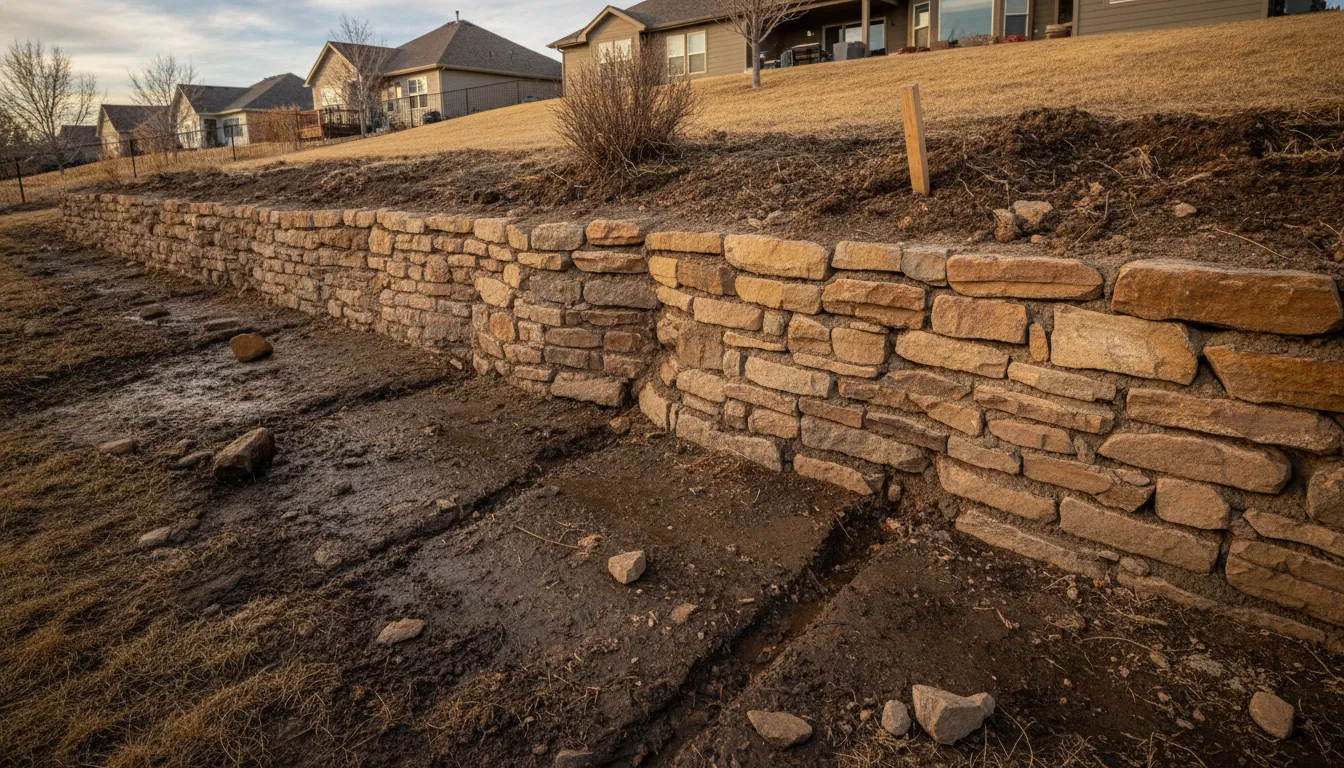
Look for cracks that are spreading, stepping through masonry, widening near corners, or appearing with a visible lean. Concrete walls may show cracks, while segmental systems may show gaps or shifted units. A single hairline crack can have several possible causes. The pattern, location, change over time, and surrounding grade provide more useful information than the crack alone.
Also check for gaps beneath caps, displaced coping, broken edges, and joints that have opened. These details can show that different parts of the wall are no longer moving together. Photograph them with a nearby fixed feature for scale, and note when you first noticed the change.
Soil loss and drainage changes
Water and soil clues can appear behind, beside, or below a wall. Watch for pooling, persistent dampness, muddy discharge, soil washing through joints, exposed base material, new channels, or sediment collecting at the toe. A clogged outlet or altered downspout can change how much water reaches the retained soil. New erosion does not automatically mean structural failure, but it can reveal a drainage path that needs attention.
In the Denver Metro Area, compare the wall after rain, rapid snowmelt, and freeze-thaw conditions. A dated photo record helps show whether the condition is stable or changing. If several signs appear together, arrange an assessment rather than treating each symptom as a separate cosmetic issue.
Which Retaining Wall Problems Need Immediate Attention?
Immediate attention is appropriate when a wall is moving rapidly, appears close to collapse, has created an unsafe area, or is affecting a home, walkway, vehicle area, utility, or neighboring property. Other signs may be suitable for a scheduled assessment, but uncertainty should not be treated as reassurance.
Separate safety precautions from diagnosis
No photograph can establish the full condition of a retaining wall. A professional needs to consider the wall system, retained height, soil, slope, drainage, loads above the wall, and what may be hidden behind the face. A stable crack may mean something different from a spreading crack beside a new lean, bulge, or soil loss.
Use a simple urgency screen. If blocks or masonry are actively falling, the wall is rapidly shifting, the ground above it is opening, or material threatens a place where people or vehicles pass, keep everyone away and seek prompt professional guidance. Do not stand below the wall to inspect it closely or attempt to hold it in place.
Conditions that should not be ignored
- Rapidly widening cracks, sudden leaning, or a new outward bulge.
- Displaced blocks, loose caps, falling material, or an opening at the base.
- Soil, water, or debris moving through the wall or washing out its support.
- Pooling or concentrated runoff directed toward the wall, home, walkway, or adjacent property.
- Damage near a driveway, structure, utility, stair, patio, or frequently used route.
These signs do not tell you which repair is appropriate. They do indicate that adding a load, digging behind the wall, redirecting water, or pushing the wall back could make conditions worse. Keep children, guests, and pets away from an area that appears unstable while you arrange an evaluation.
When a scheduled review is still important
Gradual settlement, staining, a small crack, or minor erosion may not require an emergency response. But it should still be recorded and reviewed when it is new or changing. An early assessment can connect the symptom to grading, soil, drainage, or wall construction before the issue affects a larger part of the property. Note whether the change followed heavy rain, irrigation, snowmelt, or a freeze-thaw cycle.
Take photos from consistent locations and share the timeline with the contractor. Clear observations help the site review focus on what changed without encouraging an unsafe structural diagnosis.
Why Do Retaining Walls Develop These Warning Signs?
Retaining wall warning signs usually develop when water, soil pressure, erosion, or changing loads are not controlled as part of the original site plan. In the Denver Metro Area, freeze-thaw movement, snow, rapid snowmelt, and seasonal drainage can add stress to a wall and the grade it supports.
Water is often the first factor to investigate. Saturated backfill can create hydrostatic pressure against the back of a wall. If water cannot move through a suitable drainage path, pressure may contribute to bowing, leaning, cracking, separated joints, or wet areas that remain after rainfall.
How backfill and drainage affect the wall
Backfill material and installation matter because they determine how easily water reaches the drainage system. Fine soil can hold moisture against the wall, while poorly compacted or unevenly placed fill can settle and leave voids. Those voids may appear as depressions behind the wall, gaps beneath nearby surfaces, or areas where water collects. A blocked outlet, missing drain path, or clogged weep opening can make a wall behave differently after a storm or snowmelt event.
Drainage should be considered at the wall, upper grade, and nearby hardscape. A new surface can increase runoff if its slope directs water toward the wall. Homeowners can review Faros’ water and drainage solutions for Denver yards as a related planning resource.
Why slope, loads, and local weather matter
Slope increases the soil a wall may need to retain. Nearby driveways, patios, structures, tree roots, or stored materials can add loads above it. These conditions should be assessed together rather than treating a crack or lean as an isolated cosmetic defect. Erosion at the base, washouts, exposed soil, and sediment buildup can indicate that runoff is removing support.
Freeze-thaw cycles can widen existing cracks or move masonry and concrete when moisture enters vulnerable areas and freezes. Snow piled near the wall, spring snowmelt, and drainage from an upper yard can repeatedly wet the backfill. A site assessment can trace water flow and review soil and slope conditions.
How Are Retaining Wall Problems Evaluated in the Denver Metro Area?
Retaining wall problems are evaluated by connecting visible symptoms with site conditions that may affect the wall. A useful review considers the wall system, soil, slope, drainage, access, nearby loads, utilities, and measurements instead of relying on one crack or generic repair rule.
- Document the change safely. Photograph the full wall, cracks, displaced units, nearby grade, drainage outlets, and soil loss. Note dates and changes after rain, irrigation, snowmelt, or freezing weather.
- Review the surrounding site. Identify patios, driveways, structures, stairs, planting, stored materials, and walking routes above and below the wall. These features can add loads or change water movement.
- Assess soil, slope, and water. Review soil, grade, runoff, saturated areas, erosion, drainage paths, outlets, and signs of voids or settlement. Snowmelt and freeze-thaw cycles should be considered alongside rainfall.
- Confirm measurements and constraints. Wall height, length, alignment, access, property boundaries, utility locations, and construction access help define options. See the Denver retaining wall design guide and retaining wall base material guide.
- Plan the appropriate response. The next step may involve monitoring, drainage or grading work, targeted repair, partial reconstruction, or replacement. The recommendation should follow the assessment and any required design or engineering input.
This process clarifies what the wall needs without encouraging a DIY structural repair. It also helps coordinate retaining-wall work with drainage, landscape features, and access.
Faros uses consultation and site assessment before design and construction planning. Direct owner involvement and clear communication help homeowners understand which questions need answers before work begins.
Can a Retaining Wall Be Repaired, or Does It Need Replacement?
A retaining wall may be considered for targeted repair when the underlying system remains suitable and the affected area can be addressed safely. Reconstruction or replacement may be more appropriate when movement is extensive, drainage is inadequate, the foundation has lost support, or the wall no longer fits the site’s loads and grade.
| Evaluation area | May support a repair discussion | May point toward reconstruction or replacement |
|---|---|---|
| Movement | Localized movement that is stable and limited after assessment. | Progressive leaning, broad bulging, widespread displacement, or uncertain stability. |
| Drainage | A drainage issue can be safely corrected without undermining the wall system. | Water pressure, blocked paths, or missing drainage affects the wall and requires rebuilding related components. |
| Base and soil | The base remains supported and surrounding soil can be addressed without destabilizing the wall. | Settlement, voids, erosion, or poor foundation preparation affects a substantial section. |
| Site demands | The existing wall can suit the current grade, loads, access, and planned landscape. | New patios, driveways, structures, grade changes, or loads exceed what the system should support. |
Why the visible symptom is not enough
A wall that leans may have a drainage issue, foundation problem, soil movement, added load, or a combination of conditions. Replacing a face without understanding the cause can leave the same pressure or water path in place. Rebuilding an entire wall may also be unnecessary when a properly designed, localized intervention addresses the actual problem.
Assessment should consider materials, wall height, retained soil, slope, access, property boundaries, and nearby improvements. A wall that performed acceptably before a patio, downspout change, or grading alteration may need a different plan after the site has changed.
Coordinate the next design decision
Repair and replacement discussions should include water management, landscape connections, and construction access. Faros’ Denver retaining wall construction guide offers broader process context. The recommendation should follow an assessment and, when appropriate, additional design or engineering review.
Until that review occurs, avoid adding heavy materials near the wall, excavating at its base, or attempting to push it back into alignment. Document the condition and seek a clear, site-specific path forward.
What Should Homeowners Do After Spotting a Warning Sign?
After noticing movement, cracking, water buildup, or soil loss, document the condition and arrange a site assessment before making repairs. Keep people away from any unstable area and avoid adding loads nearby.
Make a useful record
Take photos from the same locations, including wide views and close-ups of cracks, leaning, separated joints, damp areas, drainage features, or soil washing away. Add the date to each photo. Note changes after rain, snowmelt, irrigation, or a freeze. A timeline can help distinguish an isolated appearance from a broader pattern.
Observe water without disturbing the wall
Watch for pooling, muddy discharge, blocked outlets, new channels, or water flowing toward a patio or structure. Do not probe behind the wall, remove soil, dismantle units, or open drainage components. A safe review should consider the connected site.
Reduce immediate risks
- Keep children, guests, and pets away from a wall that is leaning, bulging, cracking rapidly, or shedding material.
- Do not place vehicles, heavy materials, planters, firewood, furniture, or other concentrated loads close to the affected wall.
- Avoid unnecessary irrigation or redirected downspouts near the concern. Make sure runoff does not create a problem for a neighboring property.
- Do not dig, brace, dismantle, or attempt structural repair without a site-specific plan.
Gather information about earlier construction, landscaping, drainage work, property improvements, and applicable HOA or local questions. Share those details during an assessment. The review may need to consider grade, soil, access, wall height, nearby surfaces, and loads.
A coordinated hardscape and landscape contractor can evaluate how retaining-wall work relates to grading, planting, patios, and other improvements. Faros uses consultation and site assessment before planning work in the Denver Metro Area.
Frequently Asked Questions About Retaining Wall Repair Warning Signs
What are the signs that a retaining wall is failing?
Possible signs include new or worsening leaning, bulging, spreading cracks, displaced blocks, soil loss, pooling, persistent dampness, or drainage changes. These symptoms do not prove failure by themselves. Their significance depends on the wall type, height, soil, slope, water movement, and nearby loads, so document changes and arrange an assessment.
Does a small retaining wall need drainage?
Drainage still deserves attention on a small wall, although the approach varies by wall type and site. Soil, slope, groundwater, runoff, nearby loads, and the final discharge point all matter. A site-specific review is safer than assuming wall height answers the question.
Should I repair a leaning retaining wall myself?
A leaning wall should be evaluated before repair work begins. Do not push it back, excavate at its base, add loads nearby, or dismantle the wall without a plan. Keep people and pets away from an unstable area and seek professional guidance.
What should I do if water pools behind a retaining wall?
Photograph the pooling and note when it appears, including after rain, irrigation, snowmelt, or freezing weather. Avoid redirecting water toward another property and do not dig behind the wall to search for a drain. An assessment can review grading, outlets, soil, and the wall together.
When should I request a retaining wall assessment?
Request an assessment when you notice new movement, spreading cracks, bulging, displaced blocks, erosion, pooling, or drainage changes. Prompt review is important when the wall is near a structure, walkway, driveway, utility, or frequently used area. Faros serves the Denver Metro Area.
Plan the Next Step for Your Retaining Wall
A site-specific review can clarify how the wall, drainage, grade, soil, and surrounding outdoor space work together. Faros provides owner-led consultation and hardscape planning for Denver Metro Area homeowners and property owners.
Contact Faros through the contact page to discuss your retaining wall concern and arrange a site assessment.