
Stucco can give a Denver Metro Area home a durable, distinctive exterior, but repainting it requires more than choosing a new color. Successful stucco exterior painting planning starts with understanding the wall’s condition, locating moisture problems, allowing time for repairs and drying, and choosing an application plan that respects the stucco surface.
What Should Stucco Exterior Painting Planning Include?
Stucco exterior painting planning should connect the condition of the surface with the coating approach, work sequence, weather window, site protection, and final inspection. Treating those decisions as one plan helps prevent a fresh finish from hiding a repair or moisture issue that needed attention first.
A useful plan answers five questions before work begins:
- What type of stucco and previous finish are on the home?
- Are cracks, loose areas, stains, or failed joints allowing water to enter?
- What cleaning, patching, sealing, and drying steps are needed?
- Which coating system is compatible with the existing surface and local exposure?
- How will the crew protect windows, trim, plants, walkways, and neighboring surfaces?
The answers should be based on an on-site assessment rather than a quick look at a photograph. Stucco texture, prior repairs, shade patterns, drainage, and access can all change the work plan.
Start With a Stucco Condition Assessment
The first planning step is a close inspection of the stucco, trim, penetrations, and transitions where different materials meet. The goal is to separate normal surface variation from conditions that require repair before any coating is applied.
Look for these warning signs:
- Hairline cracks that continue across a broad area or reappear after prior repairs.
- Wider cracks, soft spots, bulging, hollow-sounding sections, or loose material.
- Dark staining, efflorescence, peeling finish, or algae and mildew growth.
- Open joints around windows, doors, vents, hose bibs, and roof or deck connections.
- Areas that stay damp longer than nearby walls after rain or snow.
- Previous paint that is flaking, chalking, or separating from the stucco below.
Stains are not automatically a paint problem. They can point to splashback, a leaking gutter, a failed flashing detail, irrigation overspray, or moisture moving through the wall. A coating can improve appearance, but it should not be used to conceal an unresolved source of water.
Documenting the exterior by elevation is helpful. A north-facing wall may stay cooler and damper, while a south or west-facing wall may receive stronger sun and show faster fading. Marking cracks, repairs, outlets, downspouts, and access limitations gives the contractor a practical scope for the next conversation.
How Do Moisture and Repairs Affect Stucco Painting?
Moisture management is central to stucco exterior painting planning because stucco and its finish need to dry properly and remain compatible with the wall assembly. Repairs should address both visible damage and the condition that caused it whenever possible.
Before painting, the plan may include:
- Tracing moisture paths: Check roof edges, gutters, downspouts, window details, hose connections, irrigation, and soil or paving that directs water toward the wall.
- Removing unstable material: Loose paint, friable stucco, and failing patches need to be removed carefully so the repair can bond to a sound surface.
- Repairing cracks with compatible materials: The repair method should reflect crack size, movement, texture, and the surrounding stucco system. A rigid patch is not the right answer for every crack.
- Recreating texture: A patch that is structurally sound can still remain visible if its texture does not match the surrounding wall. A good plan addresses appearance as well as performance.
- Allowing repairs to cure and dry: Coating over a damp or uncured repair can create adhesion and appearance problems later.
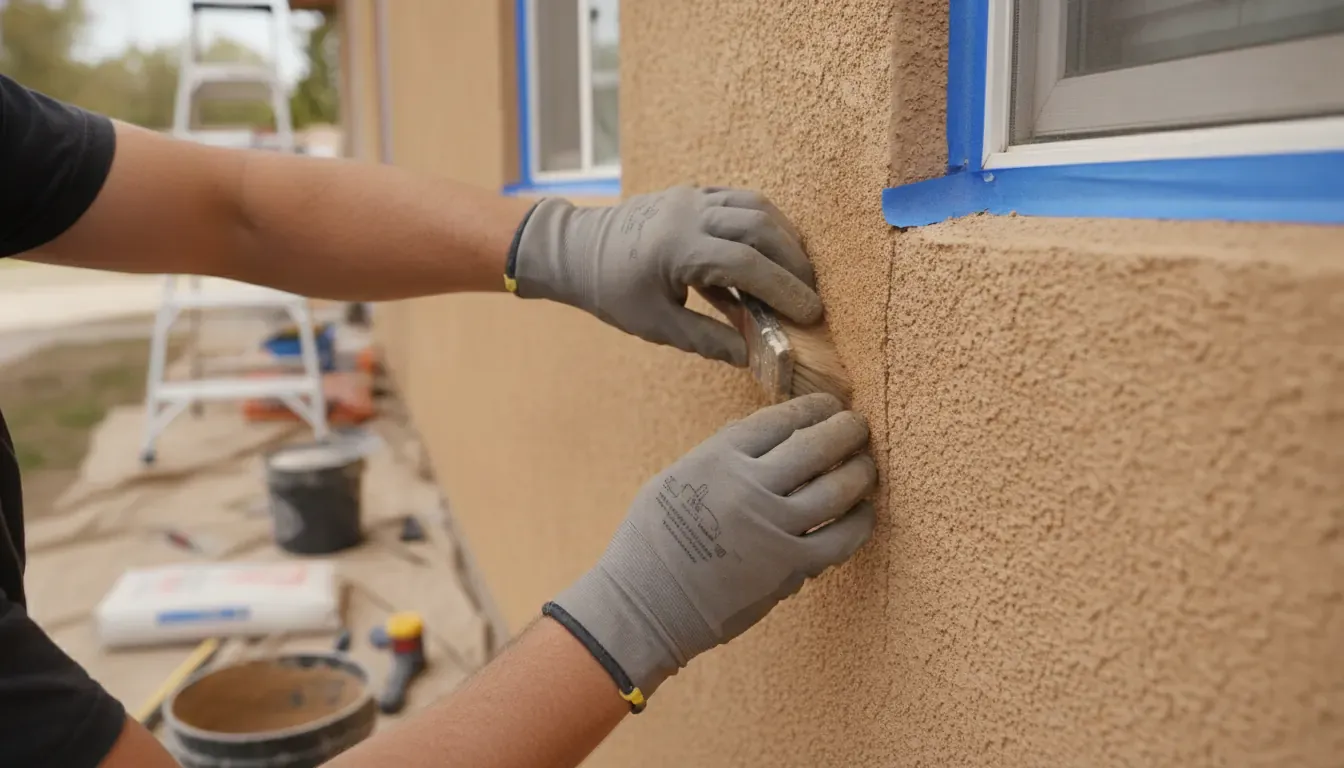
Do not assume every crack needs the same treatment. The best repair conversation considers whether the crack is isolated, recurring, associated with a joint, or part of a larger movement or drainage concern. If the wall appears significantly damaged, the project should be evaluated by an appropriately qualified professional before painting begins.
Plan Cleaning and Surface Preparation Before Coating
Preparation determines whether the new finish can adhere consistently and follow the texture of the stucco. The plan should specify how the wall will be cleaned, what pressure or method is appropriate, and how long the surface must dry before primer or finish is applied.
A careful preparation sequence commonly includes:
- Protecting windows, doors, exterior fixtures, plants, paving, and nearby property.
- Removing dust, dirt, chalking residue, cobwebs, and biological growth with a method appropriate for stucco.
- Addressing peeling or unstable previous coatings rather than sealing them beneath a new layer.
- Completing crack, patch, joint, and trim repairs before the final cleaning pass.
- Checking the wall for a uniform, dry condition before coating.
Cleaning too aggressively can damage the texture or force water into openings. Cleaning too lightly can leave residue that interferes with adhesion. A contractor should explain the cleaning method, how overspray will be controlled, and how the wall will be checked after it dries.
This is also the stage to review exterior details that affect the finished appearance. Trim, vents, downspouts, light fixtures, and sealant joints may need coordinated preparation. If a color change is planned, edges and transitions should be identified before masking begins.
Choose a Compatible Stucco Coating Strategy
Paint and coating selection should follow the stucco condition, existing finish, texture, moisture behavior, and exposure of each elevation. The objective is a compatible system that provides the desired appearance without trapping moisture or creating uneven coverage.
During planning, ask the contractor to explain:
- Whether the existing coating is sound and compatible with the proposed finish.
- Whether a primer or conditioner is needed for porosity, chalking, repairs, or color transition.
- How the selected coating handles the texture and movement expected on the wall.
- How the system supports moisture movement and where it should not be applied.
- How color, sheen, and touch-up expectations may vary across textured elevations.
A stucco wall can look uniform from a distance while absorbing coating differently across repairs, shaded areas, and previously painted sections. A small test area can help confirm color, texture, coverage, and adhesion before the full project begins. It also gives the homeowner a chance to see the finish in morning, midday, and late-day light.
For broader guidance on evaluating a repainting partner, review Faros’ guide to choosing a residential painter in Denver. For a service-oriented view of interior and exterior work, see the page about interior and exterior repainting specialists.
Schedule Around Denver Metro Area Weather
Exterior stucco painting needs a stable weather window for cleaning, repairs, drying, and application. Denver Metro Area conditions can change quickly, so the schedule should include flexibility rather than treating one calendar date as guaranteed.
Planning should account for:
- Rain or snow that can delay drying and leave the surface unsuitable for coating.
- Strong sun and high surface temperatures that can change how a coating levels or dries.
- Cold nights that affect cure times and the next morning’s readiness.
- Wind that can carry dust onto a prepared wall or create overspray concerns.
- Hail or sudden storms that can interrupt work and create new surface damage.
The contractor should describe the weather conditions that would pause work and how the project will be protected if conditions change. The product instructions for the selected system should guide temperature, humidity, drying, and recoat decisions. A homeowner should be wary of a schedule that ignores drying time simply to keep a crew moving.
Seasonal planning also affects household routines. Decide where vehicles will be parked, whether windows need to remain closed during application, how walkways will stay accessible, and how pets and children will be kept away from work areas. These details reduce last-minute interruptions.
Plan Access, Protection, and Worksite Logistics
Stucco exteriors often include tall walls, roofline transitions, tight side yards, landscaping, and windows that require careful protection. The access plan should be clear before materials arrive so the crew can work safely and maintain consistent coverage.
Confirm the following items:
- Where ladders, lifts, drop cloths, materials, and equipment will be placed.
- How landscaping, outdoor furniture, lighting, vents, and hardscape will be protected.
- How gates, driveways, walkways, and exterior doors will remain usable.
- Whether nearby neighbors or an HOA need advance notice of access or color changes.
- How daily cleanup, material storage, and storm protection will be handled.
Access is also a quality issue. A crew that cannot safely reach a high or recessed section may rush coverage or leave an inconsistent finish. A complete site walk should identify those areas and include the right equipment and protection plan.
What Questions Should You Ask a Stucco Painting Contractor?
The right questions help a homeowner compare work plans rather than comparing promises alone. Ask for clear answers about diagnosis, preparation, materials, scheduling, communication, and final review.
- How will you inspect the stucco before preparing a proposal?
- What cracks, joints, stains, or moisture indicators did you find?
- Which repairs are included before cleaning and coating begins?
- How will you protect windows, landscaping, paving, and exterior fixtures?
- What coating system is being considered, and why is it compatible with this wall?
- What conditions would cause you to pause application?
- How will you handle a weather delay or a newly discovered repair?
- How will the completed work be inspected from the ground and at height?
- Who will communicate updates and document any scope changes?
Look for a contractor who is willing to explain the reasoning behind the sequence. Owner-led oversight, clear communication, and a written plan can make a complex exterior project easier to manage. Faros also provides a broader overview of painting and pressure washing services for homeowners comparing exterior maintenance needs.
Use a Written Sequence From Inspection to Final Walkthrough
A written sequence keeps the project focused and gives everyone the same definition of ready. It should describe the condition review, repairs, cleaning, drying, masking, primer or preparation coat, finish application, cleanup, and final walkthrough.
A practical sequence may look like this:
- Consultation and site assessment: Review goals, wall condition, access, drainage, and appearance priorities.
- Detailed preparation plan: Identify repairs, cleaning methods, protection steps, and the intended coating system.
- Repairs and drying: Complete approved repairs and confirm that affected areas are ready for the next step.
- Cleaning and masking: Prepare the surface and protect adjacent materials before application.
- Test area and application: Confirm the selected appearance, then apply the system consistently by elevation.
- Inspection and care guidance: Review coverage, edges, repairs, cleanup, and recommended maintenance.
Keep the final walkthrough specific. Check corners, trim lines, transitions, repaired cracks, shaded elevations, and areas behind or beside exterior fixtures. Ask what normal color variation is expected on textured stucco and what maintenance signs should prompt a future inspection.
For related planning about exterior paint performance in local conditions, read how long exterior house paint lasts in Denver. That article addresses lifespan and maintenance timing, while this guide focuses on the decisions to make before a stucco painting project begins.
Frequently Asked Questions About Stucco Exterior Painting Planning
These answers summarize the planning decisions that matter most before a Denver Metro Area stucco exterior is repainted.
Can every stucco exterior be painted?
Many stucco exteriors can be painted, but the existing surface, previous coating, moisture condition, repairs, and compatibility of the proposed system should be evaluated first. A contractor should confirm that the wall is sound, clean, dry, and ready for the planned finish.
Should cracks be repaired before stucco is painted?
Cracks and unstable areas should be assessed before painting. The appropriate repair depends on the crack’s size, location, movement, texture, and possible relationship to moisture or building movement. Painting first can hide a condition that should have been addressed.
How does Denver Metro Area weather affect the schedule?
Rain, snow, wind, cold nights, strong sun, and sudden storms can affect cleaning, drying, application, and cure time. A good schedule includes weather checks and enough flexibility to pause when the surface or coating instructions require it.
Is a test area useful before choosing the final color?
Yes. A test area can show how the color and coating look across the stucco texture and in changing natural light. It can also help reveal differences between repaired and previously coated areas before the full application.
What should be included in a project plan?
The plan should identify the existing condition, repairs, cleaning, drying, coating strategy, access, protection, weather contingencies, communication process, and final inspection. Written details make it easier to confirm what happens before, during, and after application.
Written by Ricardo Alfaro, owner and general contractor at Faros Construction Services.